REVIEW · NEW DELHI
4-Days Private Golden Triangle Tour India – Delhi Agra Jaipur Tour
Book on Viator →Operated by Private Car and Driver in India · Bookable on Viator
A four-day Golden Triangle hits a lot of landmarks. This private tour is built to move fast without feeling rushed, with private local guiding and a clear route through Delhi, Agra, and Jaipur. I like that it mixes signature icons with “wow, I didn’t know that existed” stops like Itmad-ud-Daula and Fatehpur Sikri.
The other thing I like is the comfort factor: AC private transportation, bottled water during drives, and help with getting tickets so you’re not stuck in lines. One drawback to plan for: entrance fees are not included, and the total cost can rise quickly once you add sites like Qutub Minar on top of the standard monument fees.
In This Review
- Key things to know before you go
- How this 4-day Golden Triangle tour actually works
- Price and value: what $300 covers (and what it doesn’t)
- Day 1 in Delhi: Qutub Minar, Lotus Temple, and the government-landmark loop
- Day 2 in Agra: Taj Mahal, Agra Fort, Itmad-ud-Daula, then Fatehpur Sikri
- Day 3 in Jaipur: from Hawa Mahal and City Palace to Amer Fort
- Your private driver and guide: why service quality matters here
- The little logistics wins: buses, AC comfort, water, and flexible add-ons
- Where this tour fits best (and where it might not)
- Should you book this 4-day Delhi–Agra–Jaipur private tour?
- FAQ
- What is included in the 4-day Golden Triangle tour?
- Are entrance fees included?
- How many hotel nights are included?
- Do you get a private car for your group?
- Is pickup offered?
- Is lunch included?
- What happens at the Taj Mahal parking area?
- Are guides available in English?
- Is the tour really private or is it shared?
- What is the cancellation policy?
Key things to know before you go
- Private car, private local guide: you’re not sharing the experience with random groups.
- Meals and hotel included (with a catch): breakfast and dinners are included, but the page notes both two and three nights in different places.
- Taj Mahal logistics handled: you’re using a battery-powered bus from the parking area.
- Delhi sees more than the “usual” highlights: Qutub Minar plus major government landmarks are on the route.
- Good pacing for first-timers: sunrise timing is referenced for the Taj Mahal in the tour overview.
- Flexibility during the trip: the driver is available for dinner or shopping by request during the day.
How this 4-day Golden Triangle tour actually works
A Golden Triangle tour sounds like a checklist. This one feels more like a guided route with smooth handoffs: you start in New Delhi, roll into Agra, and finish in Jaipur, with private guiding at each city stop. The value isn’t just that you’ll see famous monuments—it’s that you’re getting local interpretation while someone else handles the driving.
Because it’s private, you control the “how fast” part more than you would on a group tour. You still cover a lot of ground—Delhi sights on Day 1, Taj Mahal and Agra Fort on Day 2, Jaipur’s major palaces and forts on Day 3—but your guide can adjust the pace within the stop durations.
You should also know the trip leans into “high impact landmarks.” That’s perfect for first-time India visitors who want the big names without spending days plotting transportation and tickets. If you’re hoping for deep-side-street time, you’ll likely want to add extra days on your own after this.
You can also read our reviews of more private tours in New Delhi



Price and value: what $300 covers (and what it doesn’t)
The headline price is $300 for the tour, but the real budgeting decision is the entrance fee layer. The listing says entrance fees for monuments are $60 per person, and it also separately flags Qutub Minar entrance as $60 per person. Your total can be higher than you expect if you’re assuming everything is included.
Here’s why the price still can make sense: you’re paying for three major city days of private guiding, hotel nights, and private AC transport with pick-up and drop-off. In India, that combination—car + driver + guide + timed city routing—adds up fast if you book piece by piece.
One more value question: hotel nights. The overview says two nights’ accommodation, but the included section says three nights when booking with the hotel option. Before you pay, confirm which hotel option length you’re actually getting. It’s the one spot where your “what you thought you bought” could drift.
Day 1 in Delhi: Qutub Minar, Lotus Temple, and the government-landmark loop
Day 1 is a classic Delhi starter pack, but it’s not only “monument selfies.” It’s arranged to give you a quick sense of Delhi’s layers—ancient fortified-city remains, modern religious architecture, and the look of India’s political center.
Qutub Minar (Qutb complex area)
You’ll start at Qutub Minar in the Mehrauli area, part of the Qutb complex tied to Delhi’s older fortified city. Expect a focused visit (about an hour on the schedule). Since admission isn’t included, you’ll pay separately—so if you’re doing budget math, this is one of the big ticket items.
Lotus Temple
Next is the Lotus Temple, known for its lotus-flower design and inaugurated in 1986. This stop is short (around 30 minutes). I like this kind of contrast early in the trip: it breaks up the heavy history feel with something visually calm and modern.
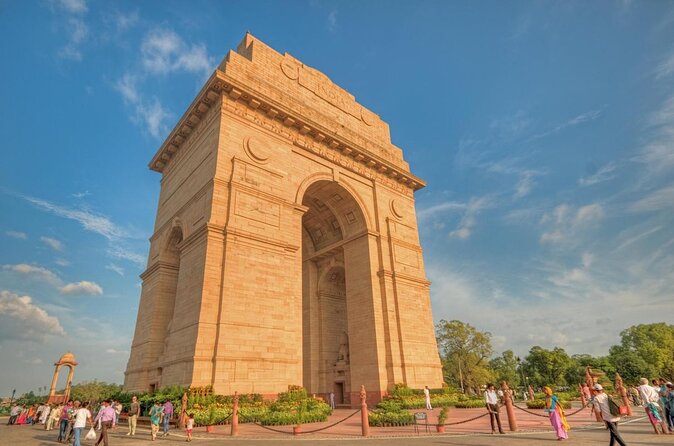
India Gate, Parliament House, Rashtrapati Bhavan
Then the route shifts into the ceremonial and political heart of Delhi: India Gate (about 30 minutes), plus brief looks at Parliament House and Rashtrapati Bhavan. These are quick stops on purpose. They help you understand how the city’s public identity works—monuments of sacrifice and symbols of the state.
Lunch and then the drive to Agra
The day includes time for lunch at a local restaurant, then a 3-hour drive via Yamuna Expressway to your Agra hotel. That drive matters because it affects your energy levels. If you want a smoother Day 2 morning, keep lunch simple and plan to rest when you arrive in Agra.
Day 2 in Agra: Taj Mahal, Agra Fort, Itmad-ud-Daula, then Fatehpur Sikri
Agra is where the tour earns its reputation. Day 2 is built around the big one, then adds two “make the Taj feel even bigger” complements.
Taj Mahal (timing + access)
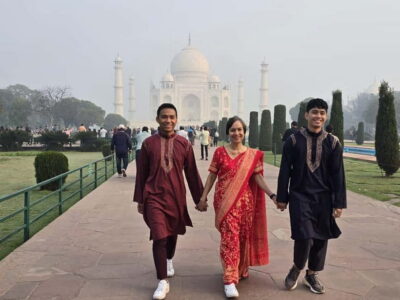
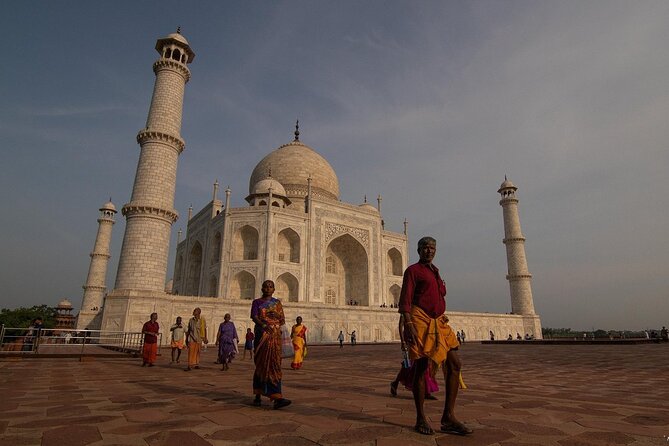
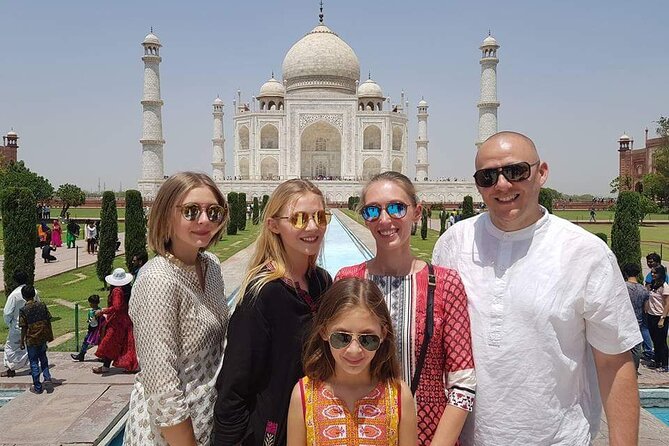
The overview calls out the Taj Mahal at sunrise, and that’s the right kind of first-time sightseeing moment. Bright morning light makes the marble look more alive, and fewer crowds can make the walk feel more spacious (timing will depend on the day you go). The itinerary time on site is about two hours.
Entrance isn’t included, so you’ll rely on your guide’s help for tickets. A standout included detail: you get a battery-powered bus between the parking lot and the monument itself. That’s a practical win when you’re dealing with the on-foot distance and heat.
Agra Fort
After the Taj, you go to Agra Fort for about an hour. This is Mughal-era power in stone, and you’ll get the context from a private guide rather than just reading plaques. It’s a good “history engine” after the Taj’s beauty because it anchors what empire-building looked like.
Itmad-ud-Daula (Baby Taj)
Then comes Itmad-ud-Daula, described as a Mughal mausoleum and often nicknamed the Baby Taj. Your stop is shorter (about 30 minutes). I like placing this here: it gives you another angle on Mughal architecture right after the main attraction, so the style stays fresh in your head.
Lunch, then the long push to Jaipur
Lunch is scheduled at a local restaurant, then you’ll drive 4 to 5 hours via NH-21 to Jaipur.
En route Fatehpur Sikri
On the way, you stop at Fatehpur Sikri, a small city west of Agra. This is the kind of extra stop that turns a “quick transfer day” into something memorable. If you only had time for one off-route landmark, Fatehpur Sikri is the one your itinerary chooses—and it’s a smart addition.
Day 3 in Jaipur: from Hawa Mahal and City Palace to Amer Fort

Jaipur day is set up like a staircase: start with the city’s most recognizable exterior (Hawa Mahal), move into royal power (City Palace and Amer), and then add atmospheric stops around water and stepped wells.
Hawa Mahal (Palace of Wind)
Hawa Mahal is short on time (about 30 minutes) but huge on impact. Built in 1799 with pink sandstone and famous for the jharokha windows, it’s basically a “Jaipur postcard” in architecture form. Even if you don’t go deep into interiors, seeing it up close helps you understand why Jaipur earned its Pink City identity.
City Palace
Next is the City Palace complex (about two hours). This is where the Maharaja reigned, and it includes landmarks such as Chandra Mahal and Mubarak Mahal. Your guide’s role matters here, because a palace complex can feel like a list unless someone gives you the story of how it was used.
Jantar Mantar (astronomy instruments)
You’ll also stop at Jantar Mantar, described as having 13 architectural astronomy instruments. The itinerary places it on Day 3; the notes for the site say it’s in New Delhi, but you should treat it as a stop for the instruments themselves, since that’s what the listing highlights. Expect around 30 minutes—enough time to understand the “measuring the heavens” idea without getting overwhelmed.
Jal Mahal
Jal Mahal is next (about 30 minutes). It’s a palace set in the middle of Man Sagar Lake. Even with limited time, this stop gives you a softer visual break from forts and palaces.
Panna Meena ka Kund (the stepped well)
Panna Meena ka Kund is a square-design baori with eight levels of crisscrossing steps down to a green pool of water. This is one of those stops that makes the tour feel more than just a greatest-hits route. It’s also short (about 30 minutes), so it doesn’t steal your day.
Amer Fort (2 hours) and the payoff
Finally, you get the Amer Fort, with a scheduled two-hour guided tour of its fort, palaces, squares, and monuments. Expect ramparts, gates, and the “walk through a power center” feeling that Jaipur does best. This is the point in the trip where everything clicks: you connect the palace views from Hawa Mahal type exteriors with how rulers actually lived and controlled space.



Your private driver and guide: why service quality matters here
This type of trip rises or falls on logistics. You’re moving between cities on set routes, and your comfort depends on whether the driver can handle traffic and the guide can manage timed entries and explanations.
The listing emphasizes English-speaking guides and the option to request another language in special requirements. It also states guides and drivers are fully vaccinated, and that your guide can help you buy entrance fees so you do less paperwork on arrival.
In the feedback that informed my understanding of this operator’s style, names like Rajendra Dewan (Raj/Raju) show up as key contacts, and drivers such as Sandip, Param, and Aman are mentioned. That matters because it hints at a consistent human element: you’re not just renting a car and hoping for the best. You’re working with people who coordinate your days.
Practical tip: bring patience for India traffic and parking. The itinerary lists approximate drive times, and your exact timing will depend on the day’s traffic. A reliable driver is the difference between a tour that runs like a plan and one that turns into stress.
The little logistics wins: buses, AC comfort, water, and flexible add-ons
Golden Triangle tours often get described as a “see it all” sprint. What makes this one easier is the operational support built into the schedule.
AC transport and hydration
The vehicle is air-conditioned, and you’ll have bottled water bottles and soft drinks during journeys. That’s not a luxury detail—it’s a comfort and safety detail when you’re doing long drives and sun-heavy sites.
Taj Mahal parking-to-monument shuttle
That battery-powered bus is included for the Taj Mahal area, and it helps you avoid extra walking in heat. It also keeps the timeline manageable for sunrise-style timing.
Driver availability for dinner or shopping
The listing says the driver can be available if you want a cab for dinner at a city restaurant or for shopping. That flexibility is useful because Jaipur and Delhi evenings can be when you’re most tempted to wander off-script.
Lunch is scheduled, but costs aren’t spelled out
Lunch time is built in on Day 1 and Day 2, at local restaurants. The listing doesn’t clearly state lunch is included. You should plan to pay lunch separately unless your confirmation message says otherwise.
Where this tour fits best (and where it might not)
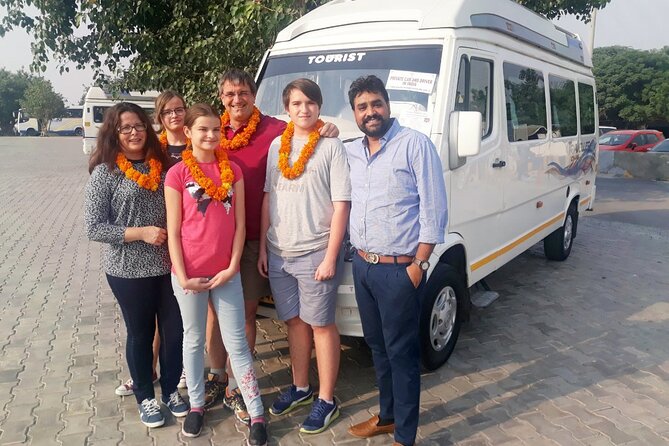
This itinerary is built for first-time visitors who are short on time and want a coherent Golden Triangle with private guiding. It’s also ideal if you dislike the DIY headache of coordinating tickets and transport across three cities.
It’s also a good fit if you enjoy big monuments but want someone to explain what you’re seeing. On this tour, the guides aren’t optional extras—they’re part of the value because stops like City Palace, Agra Fort, and Fatehpur Sikri can feel like walls and courtyards without context.
Where it may not fit: if you want slow travel, deep neighborhoods, or flexible day-by-day wandering. This tour is structured. You’ll have personal attention, but you’ll still be following a route designed to cover a lot.
The listing notes a moderate physical fitness level is required. Most stops are short to medium in duration, but you’re still walking, climbing, and moving through active sites.
Should you book this 4-day Delhi–Agra–Jaipur private tour?
I’d book it if your priority is a smooth, high-coverage Golden Triangle with private guiding and comfortable transportation. The included hotel meals, the Taj Mahal shuttle, and the way the itinerary links Delhi history to Agra’s Mughal icons and then to Jaipur’s forts make the trip feel efficient and complete.
I would pause and confirm a few things before you click pay:
- Check whether your hotel option is two nights or three nights, since the information differs.
- Budget for entrance fees, including the extra Qutub Minar entrance fee noted in the listing.
- Ask what time your Taj Mahal visit is set for if sunrise timing is important to you.
If you want the major highlights without assembling a dozen bookings yourself, this is the kind of private tour that can save you time and friction.
FAQ
What is included in the 4-day Golden Triangle tour?
You get private transportation, city sightseeing with a private local guide, breakfast daily (if you book the hotel option), dinners (as noted in the overview), hotel or airport pickup and drop-off, and bottled water during journeys. The Taj Mahal parking-to-monument portion includes a battery-powered bus.
Are entrance fees included?
No. Entrance fees for monuments are listed as $60 per person, and there is also a separate note for Qutub Minar entrance fee.
How many hotel nights are included?
The overview says two nights’ accommodation, while the included section mentions three nights when booking with the option including hotels. Confirm which option you are selecting.
Do you get a private car for your group?
Yes. It’s a private tour with private transportation. The vehicle type depends on group size (sedan for 1–3, SUV for 4–6, and minivan/tempo traveller for 7–10).
Is pickup offered?
Yes. Pickup is offered from the airport, railway station, hotel, or other pickup locations in Delhi, Noida, and Gurugram.
Is lunch included?
Lunch time is scheduled at a local restaurant on the itinerary, but the listing does not clearly state that lunch costs are included.
What happens at the Taj Mahal parking area?
You use a battery-powered bus to travel between the Taj Mahal parking lot and the monument itself.
Are guides available in English?
Yes. You’ll get an English-speaking guide. If you need another language, you need to request it in special requirements when booking.
Is the tour really private or is it shared?
It’s private. Only your group participates.
What is the cancellation policy?
Free cancellation is offered. You can cancel up to 24 hours in advance for a full refund. Changes less than 24 hours before the experience start time are not accepted.