REVIEW · NEW DELHI
5-Day New Delhi to Agra and Jaipur Tour – India Golden Triangle
Book on Viator →Operated by Taj Trek Travels · Bookable on Viator
Some trips feel like a checklist. This one feels like a story.
You start in Delhi and work your way to Agra for the sunrise Taj Mahal, then finish in Jaipur with major UNESCO and royal-site stops—all handled with a private AC car and city-by-city guidance so you spend less time figuring things out and more time looking closely. I like that the plan hits the big names without turning every moment into a scramble.
I also like that the tour price covers a lot of the hard costs upfront: hotel nights (3-star), breakfast, and a long list of included sights. The one catch I’d flag is simple: lunch and dinner aren’t included, so you’ll want to budget for meals on your own each day.
In This Review
- Key highlights you’ll feel right away
- Why the Delhi–Agra–Jaipur route makes sense in 5 days
- Day 1 in Delhi: Jama Masjid, Humayun’s Tomb, Qutub Minar
- Jama Masjid (Old Delhi)
- Humayun’s Tomb (UNESCO)
- Qutub Minar (UNESCO)
- Day 2 in Agra: sunrise Taj Mahal, Agra Fort, and Mehtab Bagh
- Taj Mahal (UNESCO)
- Agra Fort (UNESCO)
- Mehtab Bagh (across the Yamuna)
- A quick pacing reality check
- Day 3 near Agra: Fatehpur Sikri, the UNESCO Mughal capital
- Day 4 in Jaipur: City Palace, Hawa Mahal, and Jantar Mantar
- City Palace (Jaipur)
- Hawa Mahal (Palace of Wind)
- Jantar Mantar (astronomy instruments)
- Day 5 in Jaipur: Galtaji Temple and the Aravalli hillside pause
- What you’re really getting for the $362.65 price
- Hotels, breakfasts, and the pace you’ll feel
- Guides matter here: what the feedback strongly suggests
- Who this 5-day private tour suits best
- Should you book this Delhi–Agra–Jaipur Golden Triangle tour?
- FAQ
- What cities does this 5-day tour cover?
- How long is the tour?
- What’s included with transportation?
- Is there a guide?
- Are hotel stays included?
- Which major attractions have entry tickets included?
- Is lunch or dinner included?
- Is there a mobile ticket?
- Who is this tour for if it’s private?
- What’s the cancellation policy?
Key highlights you’ll feel right away
- Guides who tell the story behind the stone, not just dates and facts
- Included entry tickets for the main monuments, so your time stays smoother
- A true Golden Triangle flow from Delhi to Agra to Jaipur in 5 days
- Comfort on the road with pickup/drop-off and an AC car for the whole route
- Real variety each day: tombs, forts, forts’ gardens, a UNESCO capital, and Jaipur’s science-and-palace mix
- Value-added extras spotted in the feedback, like photo help and practical local add-ons
Why the Delhi–Agra–Jaipur route makes sense in 5 days
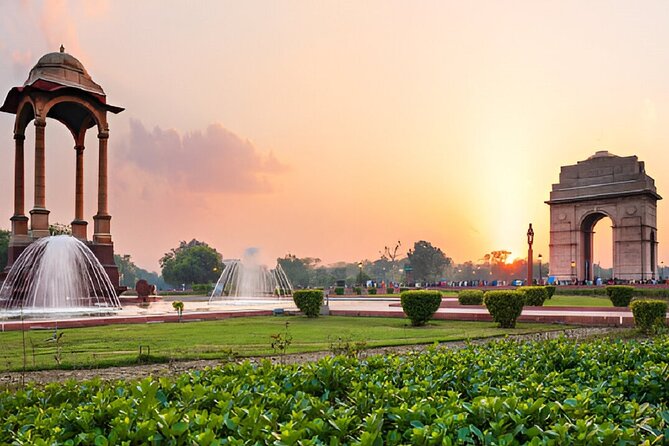
The Golden Triangle works when you respect one rule: move with purpose, but don’t rush the details. This tour’s biggest strength is the balance between major landmarks and human-scale timing. Each day is built around a handful of stops with set time blocks, so you can actually look up at carvings, read the layout, and understand how the places connect.
You also get a private setup. That matters more than you might think in India, where navigating between sites can be the slow part of sightseeing. Here, the logistics are handled with pickup and drop-off plus a professional guide in each city, which keeps you oriented when streets shift from one neighborhood to another.
And yes, the Taj Mahal is the star. But the plan doesn’t treat it like the only show in town. You also get Agra Fort and Mehtab Bagh, which help you see how the Taj sits in a whole complex world, not as a single postcard moment.
You can also read our reviews of more tours and experiences in New Delhi



Day 1 in Delhi: Jama Masjid, Humayun’s Tomb, Qutub Minar
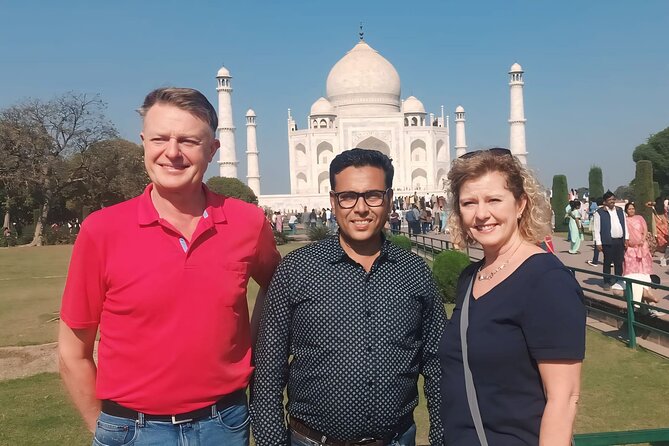
Delhi day one is an efficient jump into the city’s layers—Mughal grandeur, then the earlier power symbol of the Delhi Sultanate, with Old Delhi’s energy in the middle.
Jama Masjid (Old Delhi)
You’ll start at Jama Masjid, one of Old Delhi’s most important mosques. The visit is timed at about 30 minutes, with admission included. This is the kind of stop where your guide’s voice really helps: you’re not just looking at an impressive building—you’re learning what made it central to the area and why it still feels like a living landmark.
A practical note: mosques often have visitor rules, and it’s smart to dress with that in mind and plan for a bit of walking around courtyards and viewpoints.
Humayun’s Tomb (UNESCO)
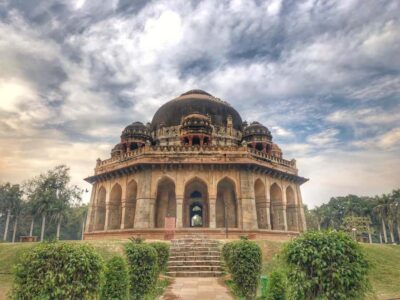
Next comes Humayun’s Tomb, a UNESCO World Heritage Site and a major Mughal architecture milestone. You’ll get around 2 hours here, with admission included. I like this stop because it bridges eras. Even if you’ve never studied Mughal design, it’s easy to spot why people later copied elements from this style—symmetry, gardens, and the way the monument sits in its setting.
Qutub Minar (UNESCO)
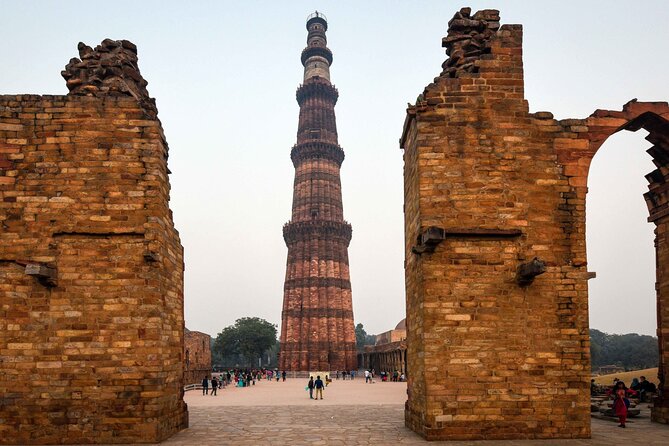
Then Qutub Minar: about 1 hour, UNESCO-listed, and included admission. It’s known for its height and its role in the Delhi Sultanate story. For many people, this is the first time the trip really starts to feel like architecture history rather than sightseeing.
My tip for this day: pace your photos. Take a few wide shots early, then come back to the details after you understand what you’re looking at. With a guide, it’s much easier to focus your attention instead of spraying the camera nonstop.






Day 2 in Agra: sunrise Taj Mahal, Agra Fort, and Mehtab Bagh
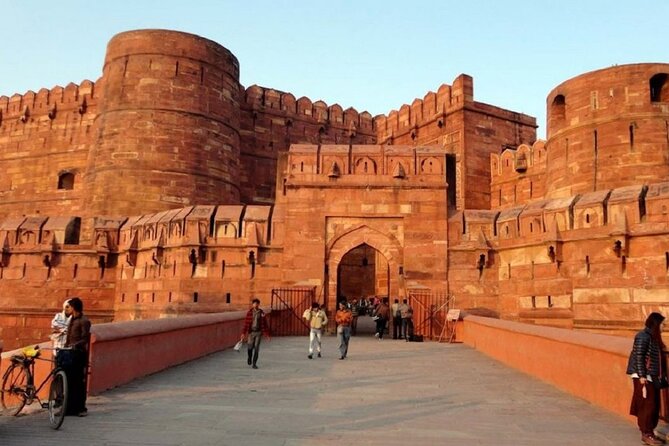
Agra is where the trip earns its reputation. This day is built around three perspectives of the Taj area: the Taj itself, the imperial fortress world next door, and the garden view across the river.
Taj Mahal (UNESCO)
The Taj Mahal stop is scheduled for sunrise in the tour plan, with about 3 hours allocated and admission included. Sunrise timing is a big deal here because the light changes quickly and you get a calmer rhythm before the day fully ramps up.
What I like most is that you’re not rushed through. Three hours gives you time to move between angles, notice how the white marble reads differently across light, and actually let the place land instead of just ticking it off.
Agra Fort (UNESCO)
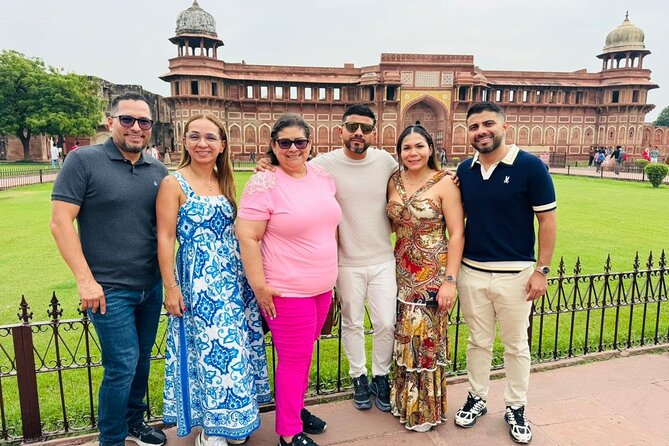
Then you’ll head to Agra Fort, with about 2 hours and admission included. This is where many visitors feel the trip becomes more “real.” Fort life explains power: who lived where, how buildings relate to defense, and why the royal complex looked the way it did.
The feedback I’ve seen highlights this stop in particular. One guide in Agra Fort stood out for turning the fort into a memorable story—lots of people remember the moment a guide makes the walls feel alive.
Mehtab Bagh (across the Yamuna)
Finally, Mehtab Bagh for about 1 hour, with admission included. It’s a garden space across the Yamuna, laid out in a charbagh style. Even if you only do one garden stop on a trip, this one helps you understand the Taj’s setting and how visual symmetry was part of the design thinking.
A quick pacing reality check
This is a long “big day” stacked with major monuments. You’ll get comfort from the private AC car, but bring a flexible mindset: you’re spending time seeing, not sitting in cafés. If you like guided sightseeing with breaks between sites, this day fits you well.
Day 3 near Agra: Fatehpur Sikri, the UNESCO Mughal capital
Day three shifts away from “one monument at a time” into an entire city-scale experience. Fatehpur Sikri is UNESCO-listed and built as a Mughal capital in the 16th century. You’ll get about 2 hours here, and entry is listed as free in the plan.
This stop is valuable because it’s not just a single building—it’s the idea of power expressed through an entire urban plan. You can connect architecture to empire logic: where things were placed, what the city was designed to do, and how the complex reflects Indo-Islamic influences.
If you’ve ever wondered what it means when people say a place is more than a photo, Fatehpur Sikri is where you’ll feel that. The best way to enjoy it is to let your guide point out the logic behind the layout, not only the decorative details.
Day 4 in Jaipur: City Palace, Hawa Mahal, and Jantar Mantar
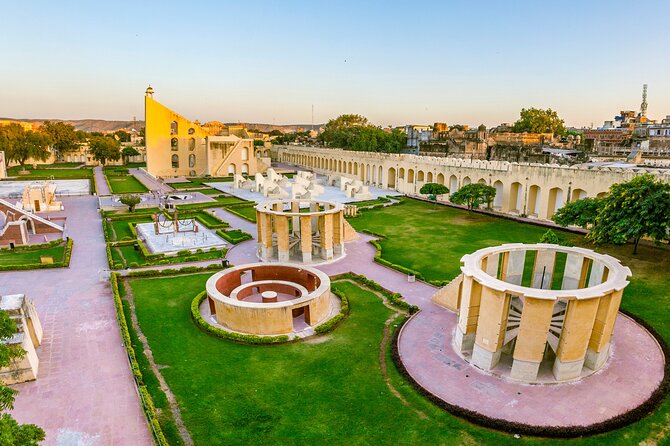
Jaipur day four mixes royal residence, palace street-view design, and a surprising stop for science history. This is a strong day because each monument answers a different question about Jaipur’s rulers.
City Palace (Jaipur)
City Palace takes about 1 hour with admission included. It’s a blend of Rajput, Mughal, and European architectural influences. I like this because it shows cultural mixing in a way that feels practical: courtyards, museums, and spaces designed for how a palace actually functioned.
You’ll also get time to understand the palace as a living royal compound rather than a museum hallway. For many people, this is where the trip shifts from “buildings” to “how people lived.”
Hawa Mahal (Palace of Wind)
Then comes Hawa Mahal for about 30 minutes, with admission included. This is the famous facade palace—what makes it special is the design logic. It’s not only about looks; it’s about how the structure worked for views and daily life.
This is a quick stop, but a good one. If you’re someone who likes famous landmarks, this one pays off fast and then lets you move on without draining the day.
Jantar Mantar (astronomy instruments)
Next is Jantar Mantar for about 1 hour, with admission included. It’s an astronomical observatory built in 1734 and filled with architectural instruments. The key here is that it’s not just “science stuff”—it’s science made visible in stone. If you thought Jaipur was only about pink walls and forts, this stop will change that thought.
Day 5 in Jaipur: Galtaji Temple and the Aravalli hillside pause
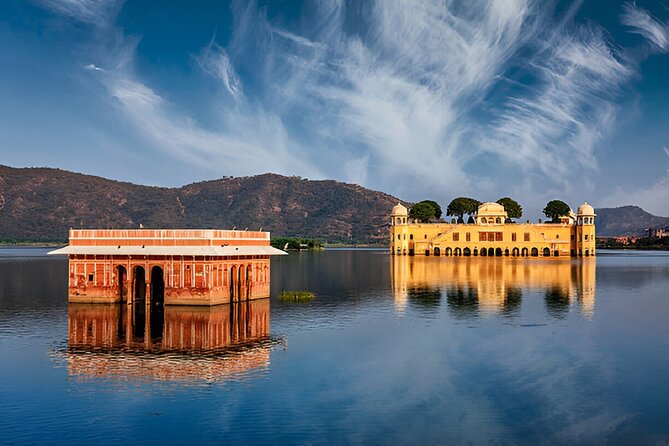
Your final day adds a different flavor: Galtaji Temple in the Aravalli Hills. You’ll get about 1 hour here, and admission is included.
This stop is a good closing move because it’s less about royal palaces and more about sacred place and setting. The complex is known for natural springs and sacred water tanks (kunds), and it includes pavilions and temple structures built for pilgrimage.
If you want an emotional landing after a full week of big monuments, this is the kind of place that lets you slow down. Don’t overpack the day with extra plans—keep it light so you don’t feel rushed on your last hours.
What you’re really getting for the $362.65 price
At $362.65 per person, the value comes from what’s bundled, not just the route name.
Here’s what the tour includes that usually costs real money on your own:
- Private AC car with pickup and drop-off for the full activity
- Professional tour guides in each city
- 3-star hotel accommodation for the trip length
- Breakfast in the hotel every morning
- Entry tickets for many major sites (Taj Mahal, Agra Fort, Humayun’s Tomb, Qutub Minar, Jama Masjid, Fatehpur Sikri as listed free, City Palace, Hawa Mahal, Jantar Mantar, Mehtab Bagh, and Galtaji)
- Toll taxes and parking, plus a mineral water bottle
The “hidden value” is time saved. With private transport and guides, you avoid the classic Golden Triangle problem: spending hours figuring out ticket lines, entrance logistics, and local directions. Instead, you can show up, walk in, and start learning quickly.
The drawback on the value side is straightforward: lunch and dinner aren’t included. That doesn’t mean it’s expensive overall, but it does mean you’ll be making meal decisions during sightseeing days.
Hotels, breakfasts, and the pace you’ll feel
You’re staying in 3-star hotels and getting breakfast included. That choice usually means the tour aims for comfort without turning sightseeing into a luxury retreat.
Pace-wise, you should expect a schedule built around guided walking and short site windows:
- Delhi has three major stops in one day (Jama Masjid, Humayun’s Tomb, Qutub Minar).
- Agra stacks Taj Mahal plus two more Agra-area sights.
- Jaipur mixes palace and observatory highlights, then ends with Galtaji.
If you like to linger, you may want to ask your guide where you can spend an extra minute on details without pushing the group. Private doesn’t automatically mean flexible on timing, but guides can often help you choose what matters most to you.
Guides matter here: what the feedback strongly suggests
A theme from the feedback is clear: the guide makes the monuments stick. In Agra Fort, one guide’s storytelling turned the visit into something truly memorable, with passionate explanations about Mughal heritage and architecture. Another guide, Shahid, was specifically praised for explaining historical details and significance in a way that made the experience feel meaningful.
There’s also a practical angle: one Taj-focused guide helped with photo support and even arranged useful local services like a tuk tuk when it helped the plan. That kind of small on-the-ground assistance can be the difference between a smooth day and one with extra stress.
If your ideal trip includes someone who can translate what you’re seeing into human meaning, this tour’s guide setup is a real selling point.
Who this 5-day private tour suits best
This tour fits you well if:
- You want the Golden Triangle without self-planning
- You like guided monuments, especially when the guide connects architecture to story
- You prefer the comfort of a private AC car over public transport hopping
- You’re okay spending your days on-site rather than building in lots of free time
It may feel too structured if you’re the kind of traveler who wants hours of unscheduled wandering every afternoon. Still, private can give you some room to breathe—the key is how you communicate your interests to your guide each morning.
Should you book this Delhi–Agra–Jaipur Golden Triangle tour?
I’d recommend booking if you want a smooth, organized route that covers the core sights with included entry tickets and proper guidance. The price feels more reasonable when you look at what’s bundled: transport, guides, hotel nights, breakfast, and major admissions all in one package.
I’d hesitate only if you strongly rely on getting lunch and dinner “handled for you.” Since meals aren’t included beyond breakfast, you’ll need to budget and choose where to eat on your own.
If that’s fine, then you’re set up for a well-paced Golden Triangle week: Delhi’s Mughal and Sultanate landmarks, Agra’s Taj-and-fort storyline, and Jaipur’s palaces plus Jantar Mantar’s science history—finished with a calmer temple day in the Aravalli Hills.
FAQ
What cities does this 5-day tour cover?
It covers New Delhi, Agra, and Jaipur, following the Golden Triangle route.
How long is the tour?
The duration is 5 days (approximately).
What’s included with transportation?
You get pickup and drop-off and a private AC car for the entire tour activity, plus toll taxes and parking.
Is there a guide?
Yes. You’ll have a professional tour guide in each city.
Are hotel stays included?
Yes. The tour includes 3-star hotel accommodation, and breakfast is included.
Which major attractions have entry tickets included?
Entry tickets included are listed for: Jama Masjid, Humayun’s Tomb, Qutub Minar, Taj Mahal, Agra Fort, Mehtab Bagh, Fatehpur Sikri (free as listed), City Palace, Hawa Mahal, Jantar Mantar, and Galtaji Temple.
Is lunch or dinner included?
No. Lunch and dinner are not included, and you’ll need to cover personal expenses as well.
Is there a mobile ticket?
Yes. The tour includes a mobile ticket.
Who is this tour for if it’s private?
It’s a private tour/activity, meaning only your group will participate.
What’s the cancellation policy?
You can cancel for a full refund if you cancel up to 24 hours in advance. If you cancel less than 24 hours before the start time, the amount paid is not refunded.