REVIEW · NEW DELHI
Old Delhi Tour with Local Experience
Book on Viator →Operated by Delhi by Locals · Bookable on Viator
Old Delhi moves fast, but you won’t get lost. This tour keeps you oriented with local transit plus a guide who explains what you’re seeing as you go. I especially like the mix of metro and rickshaw rides with the quick, guided stops that turn markets into real stories, not just photos. One thing to consider: in three hours, you’ll cover a lot, so you need to be comfortable with short walks through busy areas.
I also love the small comforts that make the day easier: a stop for local tea and bottled water so you can stay focused instead of thirsty. With a small group size (up to 5 per booking, and no more than 10 total), the guide can pace things without feeling like a stampede. A possible drawback is that the stops are brief, so if you want long, slow browsing, you may feel slightly rushed.
You’ll meet at Connaught Place (Inner Circle) and finish back there, which is a big deal in a city where traffic can steal your time. Even if you’re only in Delhi for a quick afternoon, this format gives you a solid slice of Old Delhi culture—markets, temples, and the food street feeling—without requiring you to figure it all out yourself.
In This Review
- Key points I’d bank on
- Why this Old Delhi route works in just a few hours
- Starting from Connaught Place: a calmer beginning
- Riding the metro like a local, then switching to street-level
- Chandni Chowk: the stories behind the famous lane
- Nai Sarak market walk: focus on food, not souvenirs
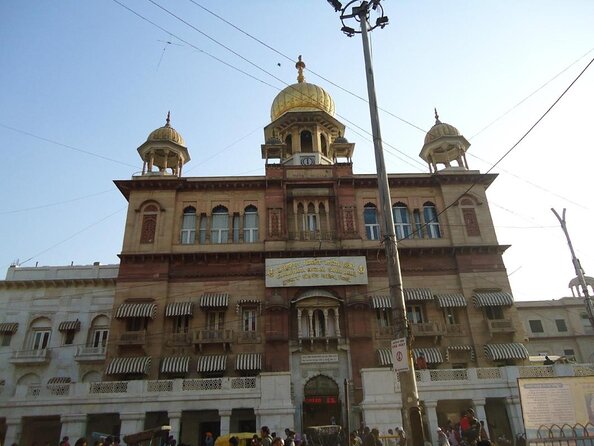
- Gurudwara Sis Ganj Sahib: Sikhism, service, and a hands-on feeling
- Kinari Bazaar wedding market: watching festivals change the colors
- Gali Paranthe Wali: learning how paranthas really happen
- The hidden superpower: tea and bottled water included
- Price and value: what $30 actually buys you
- Group size and pacing: small, not chaotic
- Guide quality: the difference between seeing and understanding
- Who should book this Old Delhi tour
- Should you book this Old Delhi tour?
- FAQ
- FAQ
- How long is the Old Delhi tour?
- What is the price per person?
- Is bottled water included?
- Is tea included?
- What transportation is part of the tour?
- Where does the tour start, and where does it end?
- How many people are in a booking?
- What is the maximum group size for the activity?
- Are admissions required for the stops?
- What’s the cancellation policy?
Key points I’d bank on
- Metro + rickshaw: you get the real transport rhythm, not just a car tour.
- Brief guided stops: landmarks and food spots explained before they blur together.
- Gurudwara Sis Ganj Sahib: learn Sikhism with a clear focus on community service.
- Kinari Bazaar wedding market: see how festival seasons change the look and mood.
- Tea and water included: practical comfort built into the route.
- Small group limits: up to 5 per booking, and max 10 on the activity.
Why this Old Delhi route works in just a few hours
Old Delhi is the kind of place where you can lose the thread easily. Streets are narrow. People are moving. Signs come and go. That’s exactly why this tour format is smart: you get a lead guide, and you’re not left playing navigation guesswork while trying to read a city that doesn’t slow down.
I like that the tour is designed for you to enjoy the sights, not to manage a checklist. You’ll hit major anchors like Chandni Chowk and a Sikh gurdwara, plus you’ll move through market streets where everyday life is the main event. The price is also refreshingly straightforward for what you get: professional guiding plus local transit and a couple of included refreshment stops.
And since it’s about 3 hours, it fits neatly into an arrival day or a one-afternoon sightseeing plan. You won’t come home with 40 half-seen “I think we were there” memories. You’ll come home with a clearer understanding of what you actually saw.
You can also read our reviews of more tours and experiences in New Delhi.



Starting from Connaught Place: a calmer beginning
You start at Inner Circle, Block A, Connaught Place—right in the New Delhi zone most visitors already use as a base. That matters. When your meeting point is a well-known hub, it’s easier to arrive on time and easier to return afterward.
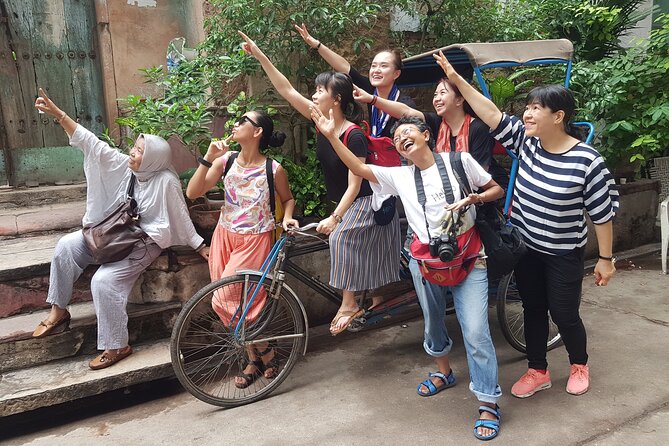
From there, the tour uses metro and then a rickshaw ride as part of the experience. This is one of those rare tours where transport isn’t just “how we get there.” It’s part of how you understand the city. Metro gives you a fast, local way to move. Rickshaws show you what street-level life feels like—close, loud, and immediate.
Also, the tour uses a mobile ticket. That’s a small detail, but in Delhi, small details can save you time when you’re trying to organize a few different activities.
Riding the metro like a local, then switching to street-level
The metro piece is what I’d call the sanity saver. You get in, you move, and you don’t have to negotiate traffic stress for every step. You’ll also pick up a better sense of how the city layers together—big-city infrastructure, then sudden drops into narrow, market-packed lanes.
Then you transition to the street with a rickshaw ride. It’s not just a scenic add-on. A rickshaw compresses the whole experience. You feel the flow. You see shops and crowds from a different height and angle. And you get carried past parts of Old Delhi you’d likely miss if you were trying to walk there yourself efficiently.
If you’re the type who likes to understand how locals move, this combo hits the right notes: modern transit, then the human-scale street.
Chandni Chowk: the stories behind the famous lane
Chandni Chowk is famous for a reason. It’s one of the places where Old Delhi’s identity becomes obvious quickly—food smells, shopfronts, and the sense that everything has a purpose.
What makes this stop worth paying attention to is the guided storytelling. You’re not just seeing a landmark. You’re hearing the why behind it—how the area shaped life in Old Delhi and why it became known the way it did. The stop is brief (about 5 minutes), so you’ll want to listen closely during the first moments rather than try to take in everything at once.
Practical tip: wear shoes that handle uneven sidewalk edges and crowded corners. This stop is free to enter, but you’ll still spend your time navigating people, not ticket lines.
Nai Sarak market walk: focus on food, not souvenirs
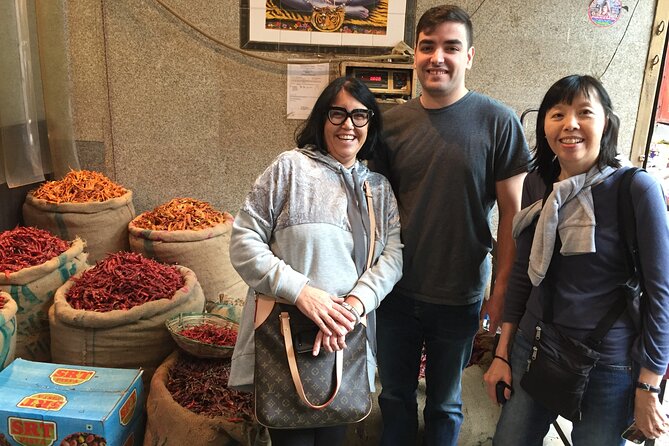
After Chandni Chowk, you move into Nai Sarak (around 2584–2585). This is where the tour shifts from landmark sightseeing to a more everyday kind of exploration: a walk through a market street where food and ingredients are part of the atmosphere.
The short duration (about 10 minutes) means you should treat this as a guided orientation. Look for the signs of how Indian food is built—spices, packaged goods, and the logic of market specialization. Your guide’s commentary is the key here. Without it, these lanes can feel like one long blur of stalls. With it, you start noticing the patterns.
This stop is also free to enter. And because personal shopping isn’t included, you can think of this as a tasting of the idea of the market—what to look for, what questions to ask, and what kinds of goods these streets are known for—without turning it into a spending spree.






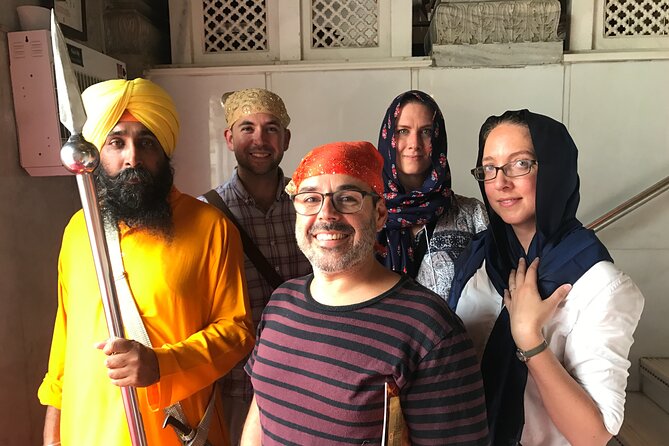
Gurudwara Sis Ganj Sahib: Sikhism, service, and a hands-on feeling
Gurudwara Sis Ganj Sahib is one of the most meaningful stops on the route. Here, the focus isn’t on commerce. It’s on faith and community service.
Your guide will explain Sikhism’s culture of service, which changes how you experience the space. Instead of treating it like just another religious monument, you understand the intention behind what’s happening there. And there’s an added element that I find appealing: if you’re up for it, you can try your hand at cooking in the community kitchen.
To be clear, you might not get a hands-on moment every time. But the fact that the tour offers the possibility is what makes this stop special. You’re getting a glimpse of the community aspect, not only a look around.
The stop is free to enter and lasts about 15 minutes. That length is just enough for respect and context without making you feel like you’re rushing out before you’ve learned anything.
Practical tip: dress in a way that feels comfortable for a place of worship, and keep your attention on your guide’s instructions. The space asks for a calm, respectful rhythm.
Kinari Bazaar wedding market: watching festivals change the colors
Kinari Bazaar is famous for wedding items and the visual energy that comes with them. The tour gives you a structured, time-efficient way to understand what you’re seeing.
The big value here is the guide’s explanation of how festivals can transform the market. You’ll notice the difference in materials, colors, and overall vibe as celebrations approach. This makes Kinari Bazaar more than a set of pretty shop windows. It becomes a window into how communities prepare for major life events.
The time at this stop is short (about 10 minutes), but it’s set up well: you’ll learn what to notice, then you’ll have enough time to look without feeling lost or pressured to buy anything.
Also, because it’s free to enter, you can treat this stop as pure observation and photo planning—especially if you’re traveling with a phone camera and want to capture details like fabrics and ornament types rather than just wide street shots.
Gali Paranthe Wali: learning how paranthas really happen

Paranthas are one of those foods people think they already know. Then you watch the process, and you realize it’s more technique than mystery.
This stop at Gali Paranthe Wali (about 5 minutes) is designed as a quick education moment. Your guide explains the process of preparing paranthas, helping you understand why the end result tastes the way it does. It’s not just “here’s a food street.” It’s “here’s how the food is made.”
Since personal shopping isn’t included, don’t count on the tour to feed you. But you will leave with a better sense of what to look for if you decide to order later on your own.
Practical tip: if you’re sensitive to spice or heavy frying smells, keep your expectations realistic. Markets smell. That’s part of the experience.
The hidden superpower: tea and bottled water included
The best tours don’t just show you sights. They also help you keep your body on the same page as your brain.
You get a stop for tea in a local shop. It’s simple, but it does two important things. First, it breaks up the constant walking. Second, it gives you a short pause where you can digest what you’ve learned so far.
You also get bottled water included. In Old Delhi heat or even in mild weather with strong sun, that matters. The goal is to keep you from turning sightseeing into survival. When you’re not dehydrated, you’re more present, and you listen better.
In my book, this combination is part of the tour’s value. It’s not a luxury add-on. It’s built into the schedule so you don’t have to hunt for it.
Price and value: what $30 actually buys you
At $30 per person, this tour sits in the budget-friendly zone. But the key isn’t only the number. It’s what the tour includes for that money: a professional guide, a metro ride, a rickshaw ride, local tea, and a bottled water bottle.
Most low-cost tours either skip guidance or skip meaningful transport. Here, you’re paying for direction and for local movement you likely wouldn’t coordinate comfortably on your own without taking extra time.
Stops are free to enter, which keeps spending under control. You’re not being pushed into paid attractions at each point. The only area where you might spend extra is personal shopping, which isn’t included—so you’ll want to decide ahead of time if you’re browsing, buying, or both.
One more value point: it’s typically booked about 47 days in advance on average. That suggests it’s in demand, but it also hints you don’t want to wait until the last minute if your schedule is tight.
Group size and pacing: small, not chaotic
A maximum of 5 people per booking, and a max of 10 travelers total, keeps the experience more personal. That matters because Old Delhi is not calm. A smaller group helps your guide manage where you stop, how you move, and when you listen.
The stop durations are also short and intentional—5 to 15 minutes at each point—so you get exposure without turning the day into a slow crawl. If you like to bounce from place to place and learn quickly, this pacing works.
This tour asks for moderate physical fitness, mainly because you’ll be walking in market areas and moving between transit and streets. If you need long rests or have mobility constraints, you might find the schedule demanding. But if you’re generally able to walk around a busy neighborhood for a few hours, you should be fine.
Guide quality: the difference between seeing and understanding
The guide is the heart of this experience. When you get a guide who’s kind, attentive, and good at explaining what you’re looking at, Old Delhi stops being overwhelming and becomes readable.
In the past, guides named Pradeep and Salmon have been highlighted for being kind and knowledgeable, and for keeping the mood friendly and engaging. That’s not just nice to hear. It affects how much you absorb—especially with short stops.
If your goal is to learn the culture behind the sights, not just check them off, you’ll appreciate the way the guide ties each market and landmark to a bigger picture.
Who should book this Old Delhi tour
This is a great fit if:
- you want a first-time Old Delhi experience without figuring out transit and routes on your own
- you like food markets and learning what different areas are known for
- you prefer small groups and a guide who keeps you oriented
- you’re planning only a few hours and still want real cultural context
This may be less ideal if:
- you want long browsing time in markets or a slower pace
- you don’t do well with crowds or lots of standing and short walks
- you’re mainly looking for shopping time rather than guided cultural viewing
Should you book this Old Delhi tour?
If you’re choosing between DIY wandering and a guided format, I’d lean guided for this part of Delhi. For about $30, you’re buying direction, local transport, and a practical comfort break (tea and water) inside a short, efficient 3-hour window.
Book it if you want to understand Old Delhi faster, without getting stuck in the wrong lanes or missing the meaning behind the places. Skip it only if you’re hoping for a slow, shopping-heavy afternoon or you need long rest periods.
FAQ
FAQ
How long is the Old Delhi tour?
The tour is about 3 hours.
What is the price per person?
It costs $30.00 per person.
Is bottled water included?
Yes. A bottled water bottle is included.
Is tea included?
Yes. You’ll stop for local tea, and it’s included.
What transportation is part of the tour?
The tour includes a metro ride and a rickshaw ride.
Where does the tour start, and where does it end?
It starts at Inner Circle, Block A, Connaught Place, New Delhi, and it ends back at the meeting point.
How many people are in a booking?
There’s a maximum of 5 people per booking.
What is the maximum group size for the activity?
The activity has a maximum of 10 travelers.
Are admissions required for the stops?
The listed stops have free admission.
What’s the cancellation policy?
You can cancel for a full refund up to 24 hours in advance of the experience start time.