Five days, three cities, one rail rhythm. This tour strings together Delhi, Agra, and Jaipur with included train tickets, so you spend less time stuck on logistics and more time on UNESCO sites like Humayun’s Tomb plus Taj Mahal sunrise. I like how guided and timed it feels, with pickups and an air-conditioned car for the city days. One thing to consider: early mornings happen (dawn starts twice), and the trains are in second class.
What makes it especially appealing is the handoff system. A chauffeur gets you to the station, your guide meets you near the coach exit, and you’re assisted at each step—ideal if you want the Golden Triangle without playing transportation roulette.
In This Review
- Key takeaways before you go
- The Golden Triangle rhythm: how train travel shapes the trip
- Day 1 in Delhi: Humayun’s Tomb, Qutub Minar, and Jama Masjid by rickshaw
- Day 2 early to Agra: Shatabdi timing and Mughal icons
- Taj Mahal sunrise: the best use of your early wake-up call
- Jaipur day that actually hits: Amber Palace, City Palace, Jantar Mantar
- Getting to and from Delhi: day five’s early train and airport drop
- Price and value: what $200.54 buys you in real terms
- Should you book this 5-day Golden Triangle by train?
- FAQ
- What cities are included in the Golden Triangle tour?
- Are train tickets included?
- What time does the Delhi sightseeing start on day 1?
- Is Taj Mahal included, and do we see it at sunrise?
- Which UNESCO World Heritage Sites are visited in Delhi?
- What monuments are included in Agra?
- What are the main sights in Jaipur?
- How long is the tour?
- What’s included in the price besides the hotel and guide?
Key takeaways before you go
- UNESCO hits in Delhi: Humayun’s Tomb and Qutub Minar are built into day one.
- A real sunrise Taj Mahal block: you’re scheduled early in Agra for the first light experience.
- Agra in a tight Mughal arc: Agra Fort, Itmad-ud-Daula (Baby Taj), and Mehtab Bagh sunset viewing.
- Jaipur monuments that cover the classics: Amber Palace, City Palace, Jantar Mantar, plus Galta (Monkey Temple).
- Station-to-sight transitions are handled: you get guidance at Delhi and Jaipur rail stations.
- Value is built around logistics: guide, entrance fees, local transport, and 4 nights in 5-star hotels are included.
The Golden Triangle rhythm: how train travel shapes the trip
The Golden Triangle works best when you respect distance. Delhi to Agra and Agra to Jaipur are not “quick hop” distances, and the big win here is that the long stretches are handled by train. That means fewer long road days, less guessing about schedules, and more consistent timing for sightseeing.
You also get a practical mix of transport styles: private, fully air-conditioned cabs for the city legs, and then trains for the between-city legs. In cities with chaotic traffic, that car time is the piece you want—short, planned, and comfortable. The rail time is the piece you want too, especially when you’re trying to cover a lot in only five days.
One more detail that matters: this tour is private in the sense that only your group participates. That usually makes the pace feel more controlled than big, multi-group bus tours.
You can also read our reviews of more tours and experiences in New Delhi



Day 1 in Delhi: Humayun’s Tomb, Qutub Minar, and Jama Masjid by rickshaw
Your day begins at 9:00 am with Delhi sightseeing that starts in the older core, the Old City of Shahjahanabad. That choice sets the tone. Instead of bouncing straight to modern landmarks, you start where the city’s Mughal-era story is easiest to read on foot and through the architecture.
Humayun’s Tomb is the first big stop. It’s described here as the first great example of a new distinctive style, and that framing helps you look past “pretty tomb” and notice the design ideas that influenced later Mughal architecture. It also has a calm, garden-and-mausoleum feel that works well after you’ve checked in and met your guide.
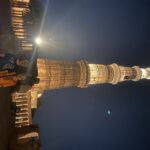
Next comes Qutub Minar, the tall stone tower built to establish the might of Islam and the onset of Muslim rule in India. It’s a straightforward landmark visit, but the payoff is scale. You’ll feel how the tower dominates the skyline, which is exactly what it was built to do.
A few classic Delhi landmarks slot in around those UNESCO stops:
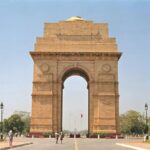
- India Gate, as a war memorial arch you pass by.
- Raj Ghat, the cremation site of Mahatma Gandhi.
- A drive-by view of the Red Fort from the roadside.
Then you finish with Jama Masjid, the largest mosque in Asia, built by Shahjahan. The tour includes a bicycle rickshaw ride for getting around the area, which adds local texture without turning it into a long, tiring detour. You’ll have about 45 minutes there, and importantly, admission is free for this stop.
What to watch for on day one: you’ll be outside and walking between sights. Comfortable walking shoes matter here, not later.
Day 2 early to Agra: Shatabdi timing and Mughal icons
Agra starts with an early train plan. You leave Delhi around 6:00 am on the Shatabdi train. The chauffeur is scheduled to be at your hotel by 5:15 am to get you to New Delhi Railway Station, with assistance so boarding isn’t a puzzle.
That’s the biggest day-two value: the transition is handled. Your guide waits at the exit gate of the coach area and meets you with a greeting, then escorts you through the next steps and helps with hotel check-in after you arrive.
Once you’re in Agra, the sightseeing block is a strong “Mughal power” sequence:
- Agra Fort (about 1 hour, entry included). It’s framed as an outstanding example of Mughal architecture and a stronghold of the Mughal Empire. You’ll also get context around Shah Jahan spending his last years imprisoned there, which makes the fort feel less like a museum and more like a living part of the story behind the Taj.
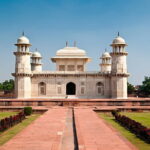
- Itmad-ud-Daula’s Tomb (about 30 minutes, entry included), also called the Baby Taj. It’s described as a marble mausoleum built by Nur Jahan in memory of her father, Ghiyas Beg. This is the kind of place where you slow down without meaning to; the scale is smaller than the Taj, so details feel more readable.
- Mehtab Bagh (about 30 minutes, entry included) for a sunset view of the Taj Mahal from the Moonlight Garden by the river. Even if your photos are just for your camera roll, the point is the perspective: it’s a different angle than the main Taj approach.
A practical note: day two is not about rushing through everything. It’s about clustering the best Mughal sites while the light changes—fort and mausoleum in daylight, then a river-side Taj viewpoint at sunset.
Taj Mahal sunrise: the best use of your early wake-up call
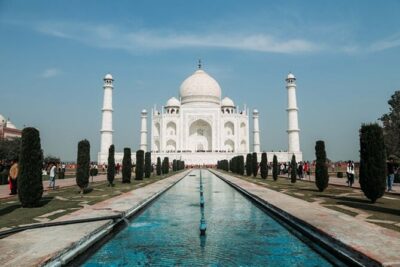
Day three is built around one of the Golden Triangle’s main reasons people come: the Taj Mahal at sunrise. The tour schedules a sunrise visit with an about 2-hour window, and entrance is included.
This is not just a “go see the Taj” moment. The tour’s framing matters: it highlights Emperor Shah Jahan and the architectural magnificence and aesthetic beauty. When you’re standing there in early light, that description stops being vague. You can see how the white marble responds to the changing sky, and you get that calm feeling you don’t get at peak daytime hours.
Then the day moves outward with Fatehpur Sikri, Akbar’s abandoned capital, located about 37 km from Agra. The tour notes it as a stop en route toward Jaipur, with about 1 hour and free admission noted here.
Fatehpur Sikri is a great “contrast” stop. After the Taj’s perfection, you shift to an abandoned capital site, which makes the whole empire storyline feel more real: not just monuments, but places that rose, changed, and were left behind.
One thing to flag in the schedule: after Fatehpur Sikri, the plan includes driving toward Jaipur (listed as 237 km / about 6 hours) and then boarding a train to Jaipur later in the evening, with your guide assisting you to board and find your seat. That’s unusual enough that it’s worth confirming the flow with the operator when you get your final voucher. Still, the intent is clear: you get classic stops plus a managed rail leg into Jaipur.
Jaipur day that actually hits: Amber Palace, City Palace, Jantar Mantar
Jaipur day (day four) is a full, classic trio, and it’s well paced because you get time inside the main sights rather than speed-walking everything.
First is Amber Palace (about 1 hour 30 minutes, entry included). It’s positioned on a ridge outside the city with battlements and overlooks Moata Lake. The best part of starting here is the setting. Even before you reach the interiors, you’re already looking at the “why” behind the fortress layout—views, defense, and status all at once.
After Amber, you get outside photo breaks:
- Jal Mahal from outside, with time for pictures from the lake.
- A pass by Hawa Mahal, the five-storey Palace of Winds with its pyramidal facade and overhanging windows.
Then you move into City Palace of Jaipur (about 1 hour, entry included). The tour includes the City Palace Museum and calls out a collection of Rajasthani costumes and armories of Mughals and Rajputs, including swords of different shapes and sizes with chiselled handles. That detail matters because it tells you what the interiors emphasize: craft, power, and daily visual culture, not only grand hall spaces.
Next is Jantar Mantar (about 30 minutes, entry included), the stone astronomical observatory built by Maharaja Jai Singh in the 18th century. It’s a good late-afternoon stop because you can scan the instruments and still feel productive even if you’re museum-weary.
A quick reality check: Jaipur can be hot and dusty depending on the month. You’ll be walking in open areas between sights, so hydration and a hat help, even if drinks aren’t included.





Getting to and from Delhi: day five’s early train and airport drop
Day five keeps the “train logistics” theme consistent. You board an early morning train from Jaipur to New Delhi, with the chauffeur arriving at your hotel by 5:00 am. The chauffeur assists you with finding your seat and coach, and then after you arrive in Delhi, a chauffeur waits and drops you at New Delhi airport or your chosen place.
This is the kind of finish that many Golden Triangle tours struggle with—either the ending is chaotic, or you lose time on the way to the airport. Here, the tour is designed so your final day stays functional rather than just scenic.
Price and value: what $200.54 buys you in real terms
At $200.54 per person, the real question isn’t just the number. It’s what’s folded into the package.
Here’s what’s included:
- 4 nights in 5-star hotel accommodations
- Buffet breakfast (and multiple buffet lunches)
- A professional guide
- Hotel pickup and drop off, plus airport pick up and departure
- Private fully air-conditioned cab for local transportation
- Train tickets for the second-class rail segments
- Entrance fees for the monuments you visit
- Mobile ticket (helpful for day-of ease)
So what are you paying for?
You’re paying for a “managed schedule.” You’re not paying just for sights—you’re paying for the handoffs. The chauffeur timing in the morning, the guide meeting you near the coach exit, and the fact that entrance fees and local transport are covered all reduce time-wasting friction.
If you were to DIY it, you’d likely spend a bunch of time figuring out train seats, coordinating hotel check-ins around exact arrival windows, and booking entrance tickets. Those tasks add up fast, and they also increase the odds you lose time due to delays or missed connections. This tour is designed to smooth those edges.
The main trade-off: you give up some freedom in exchange for structure. If you love wandering at your own tempo for hours, you may find the schedule tight. If you want a guided, efficient circuit across three cities with sunrise and top UNESCO stops, the structure is the point.
Should you book this 5-day Golden Triangle by train?
I’d book it if you want:
- A classic Golden Triangle route with UNESCO stops in Delhi
- A planned sunrise Taj Mahal experience with a real early wake-up payoff
- Convenience that’s built into transport timing, with guide and chauffeur support
- A package that covers entrances, guide time, local cabs, and most meals so you can focus on the sights
I might skip it if:
- You dislike early starts and second-class train segments
- You expect fully “free time” days (this is a structured itinerary)
- You’re the type who needs a lot of flexibility to change plans on the fly
If your goal is to see Delhi, Agra, and Jaipur efficiently and correctly—with sunrise Taj Mahal and top stops handled in order—this tour is a practical way to do it without turning your vacation into a schedule-management project.
FAQ
What cities are included in the Golden Triangle tour?
The tour covers New Delhi, Agra, and Jaipur.
Are train tickets included?
Yes. The tour includes 2nd class train tickets for the rail segments between the cities.
What time does the Delhi sightseeing start on day 1?
Day 1 starts at 9:00 am in Delhi.
Is Taj Mahal included, and do we see it at sunrise?
Yes. The itinerary includes a sunrise visit to the Taj Mahal in Agra, with admission included.
Which UNESCO World Heritage Sites are visited in Delhi?
Humayun’s Tomb and Qutub Minar are both included as UNESCO World Heritage Sites.
What monuments are included in Agra?
The tour includes Agra Fort, Itmad-ud-Daula’s Tomb (Baby Taj), and a sunset view of the Taj Mahal from Mehtab Bagh.
What are the main sights in Jaipur?
Jaipur includes Amber Palace, City Palace of Jaipur, Jantar Mantar, and also includes Galta (Monkey Temple) as a highlight.
How long is the tour?
It’s a 5-day tour (approx.).
What’s included in the price besides the hotel and guide?
The package includes hotel pickup and drop off, private fully air-conditioned cab for local transport, buffet breakfast and lunch, entrance fees, and airport pick up and departure. Drinks and personal expenses are not included.