REVIEW · NEW DELHI
5 Days Golden Triangle Tour. Delhi-Agra-Jaipur-Delhi
Book on Viator →Operated by INDIA through my eyes · Bookable on Viator
Golden Triangle trips can feel like a race—this one feels like a plan. You’ll see major Mughal and Rajput landmarks across Delhi, Agra, and Jaipur with a comfortable private car and a guide who keeps logistics moving. I like that it’s paced for you to go at your own rhythm, not just herd-you-through speed, and I also like that some key sights are free (so your day isn’t built on ticket math). One consideration: monument entry tickets are not included, so you’ll want to budget for those extra costs.
The route works especially well for first-time visitors to North India because you get the big names without needing to figure out transit, timing, and street chaos every step. If you’re lucky with timing, your guide may even add in memorable extras like a Holi moment and a Krishna temple visit. And with guides such as Vishal and Prashant showing up in the feedback, it’s clear the human part matters here: English support, calm problem-solving, and even help with photo logistics at the Taj.
In This Review
- Key highlights worth paying attention to
- Why this Delhi–Agra–Jaipur route feels manageable
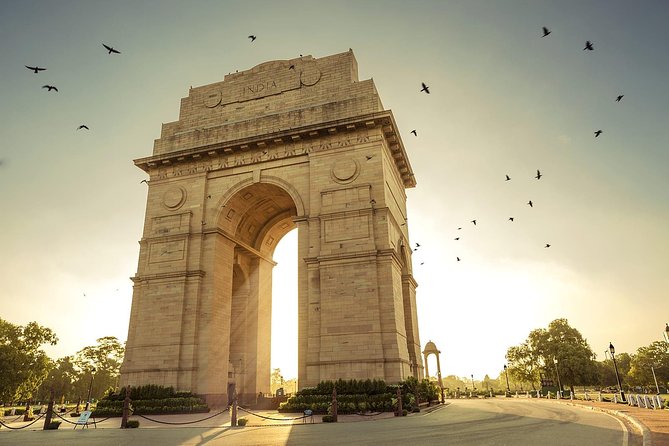
- Day 1 in Delhi: from Jama Masjid to Lotus Temple
- Jama Masjid (free, big-courtyard energy)
- Chandni Chowk by rickshaw (old market, fast context)
- Humayun’s Tomb (UNESCO stop, pay attention to the garden-tomb idea)
- Raj Ghat (a quiet pause)
- Qutub Minar (don’t skip the vertical landmark)
- Lotus Temple (free, calm final note)
- Day 2 evening: Birla Mandir and the feel of a ceremony
- Day 3 in Jaipur: Amber Palace, City Palace, and Jantar Mantar
- Amber Palace (your first real taste of Rajput grandeur)
- Jal Mahal (the quick picture stop)
- City Palace (more than one building, more than one mood)
- Jantar Mantar (science meets monument)
- The extra picture moment
- Day 4 toward Agra: Chand Baori’s steps and Agra Fort’s weight
- Chand Baori in Abhaneri (the stepwell that makes people pause)
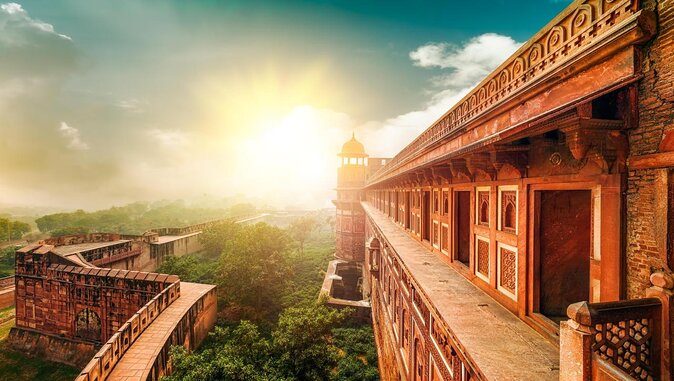
- Agra Fort (Mughal power, UNESCO-listed)
- Day 5: Taj Mahal sunrise and how to make it worth the early start
- Price and value: what $300 covers and what you must budget
- Guides matter: Vishal and Prashant set the tone
- Practical tips that will save you time and stress
- Expect ticket payments at the major landmarks
- Build in comfort for market and mosque areas
- Use the included drinking water
- Keep your phone ready for directions
- If you want photos, ask early
- Should you book the 5 Days Golden Triangle tour?
- FAQ
- What is included in the tour price?
- Are monument entry tickets included?
- How long is the Golden Triangle tour and where does it start?
- Can this private tour be adjusted to more or fewer days?
- Is it only for my group?
- What happens if you need to cancel or if weather affects the plan?
Key highlights worth paying attention to
- Private car + city guide: less friction between stops, more time actually looking
- Early Taj Mahal strategy: sunrise is the plan, when light is softer and crowds are often lighter
- Old Delhi in a classic way: Jama Masjid, plus a rickshaw ride through Chandni Chowk
- Jaipur architecture in full view: Amber Palace, City Palace, and Jantar Mantar in one run
- A stepwell detour that feels iconic: Chand Baori in Abhaneri before you reach Agra
- Guides who handle admin: support that can include translation and extra help with photos
Why this Delhi–Agra–Jaipur route feels manageable
The Golden Triangle is famous for a reason, but it’s also famous for feeling packed. This 5-day format is built to keep the day-to-day practical: you’re not switching between different tours or trying to interpret a new city on your own. You ride in an air-conditioned private car, and you get a city tour guide to handle the flow between major sights.
You also get the benefit of a customizable private setup. The tour is framed as private and adjustable (from 4 to 8 days), which matters if you want a slower Jaipur day or a longer Agra morning. Your group stays together the whole time, and the tour is described as only for your group, not a mixed crowd.
Value-wise, the price includes a lot of the “in-between” costs: private transportation, the city guide, packaged drinking water, and fees/taxes are listed as included. The tradeoff is that monument tickets are not included, so you’ll still need to plan for paid entries at several stops.
You can also read our reviews of more tours and experiences in New Delhi


Day 1 in Delhi: from Jama Masjid to Lotus Temple
Day 1 is your orientation day. It throws you into the historic core of Delhi first, then gradually eases you into some quieter, more spaced-out landmarks.
Jama Masjid (free, big-courtyard energy)
You start at Jama Masjid, described as the largest mosque in India. The sheer scale is the point: the courtyard can accommodate more than 25,000 persons. Even if you’re not chasing photos, it’s the kind of place that gives you an immediate sense of Delhi’s history and religious gravity.
Tip: Go in with comfortable shoes and patience. Old Delhi areas can move slowly, especially around major religious sites.
Chandni Chowk by rickshaw (old market, fast context)
Next comes Chandni Chowk, one of Old Delhi’s oldest and busiest markets, built in the 17th century by Mughal Emperor Shah Jahan. You’ll take a short rickshaw ride here, and that rides-you-through angle is smart. It helps you understand what the market is like without committing to hours of wandering on day one.
This stop includes entry, and it’s one of the few parts of the day that feels intentionally low-pressure: you see a lot quickly and can decide how much you want to absorb later.
Humayun’s Tomb (UNESCO stop, pay attention to the garden-tomb idea)
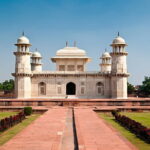
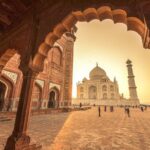
After the market energy, Humayun’s Tomb brings the Mughal story into sharper focus. It’s the tomb of the second Mughal emperor, Humayun, and it’s described as the first garden-tomb on the Indian subcontinent. It’s also a UNESCO Heritage Site.
Here’s the drawback: admission is not included. So treat this as a meaningful stop and plan to pay for it when the time comes.




Raj Ghat (a quiet pause)
Then you hit Raj Ghat, Mahatma Gandhi’s resting place. It’s shorter on the clock, and that contrast matters. After a day of architecture and crowds, this feels like a reset button.
Admission is free, which is a nice win.
Qutub Minar (don’t skip the vertical landmark)
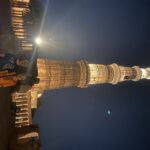
Next is Qutub Minar, noted as the tallest brick minaret in the world. It’s the kind of landmark that looks better once you’re physically close and can track the scale.
Admission is not included, so again: budget, and treat it as a “payoff stop.”
Lotus Temple (free, calm final note)
You end the day at the Lotus Temple, the Baháʼí House of Worship. It’s open to everyone, regardless of religion, and it’s listed as free. The building’s flower-like shape is striking, but what I like most is that it gives you an emotional gear change from the heavy-historic feel of Old Delhi.
Day 2 evening: Birla Mandir and the feel of a ceremony
Day 2 is built around one main stop: Birla Mandir Temple in the evening. The idea isn’t just to see another temple. It’s to catch an evening ceremony at a temple dedicated to Lord Vishnu (Narayan), with Lakshmi mentioned as well.
It’s free, and that makes a difference when you’re watching your total spending. More importantly, an evening visit can shift a site from sightseeing to something closer to local routine. Even if you don’t understand every spoken detail, you can usually follow the rhythm of what’s happening.
If you’re sensitive to crowds, this might still be busy, but it’s generally the kind of stop where the mood matters more than the pace.
Day 3 in Jaipur: Amber Palace, City Palace, and Jantar Mantar
Jaipur day is where the route gets very “big-hits.” You’re not going for slow museum time. You’re going for major architecture and classic views.
Amber Palace (your first real taste of Rajput grandeur)
Start with Amber Palace, the principal tourist attraction. It’s described as Rajput architecture shaped by Mughal influence, and it was the residence of the Rajput Maharajas. Time on this stop is 1 hour 30 minutes, which is enough to see the palace’s key areas without feeling trapped.
Admission is not included, so this is a stop where paying attention pays off.
Jal Mahal (the quick picture stop)
Next is Jal Mahal. This one is mostly a drive-past with a quick picture pause for about 10 minutes. That’s not a lot of time, but it’s a good “visual memory” stop if you’re collecting iconic Jaipur imagery.
It’s listed as free.
City Palace (more than one building, more than one mood)
Then comes City Palace of Jaipur, set up alongside the founding of Jaipur by Maharaja Sawai Jai Singh II. The palace complex includes multiple buildings, courtyards, and galleries.
You get about 1 hour here, and like many palace complexes, the challenge is not the time—it’s choosing what you actually want to look at. Admission is not included.
Jantar Mantar (science meets monument)
Finish with Jantar Mantar, described as an equinoctial sundial with a giant triangular gnomon and quadrant sections aligned to Earth’s axis. This is a great stop if you like the idea that old buildings weren’t just for show. They were instruments.
Time is 45 minutes, and admission is not included.
The extra picture moment
There’s also a short picture stop (10 minutes). It’s usually a flexible buffer, which helps keep the day from running late.
Day 4 toward Agra: Chand Baori’s steps and Agra Fort’s weight
Day 4 works like a build-up. You start with something visually unusual in Abhaneri, then shift into a heavier fort day in Agra.
Chand Baori in Abhaneri (the stepwell that makes people pause)
Chand Baori is a stepwell in Abhaneri, described as having 3,500 narrow steps across 13 stories, extending about 30 meters into the ground. This is one of those places that looks like a photo until you stand there and realize it’s a whole vertical world.
Time is about 30 minutes, and admission isn’t included.
Tip: This is a good stop for photos, but also for a quiet moment. The geometry is the story here.
Agra Fort (Mughal power, UNESCO-listed)
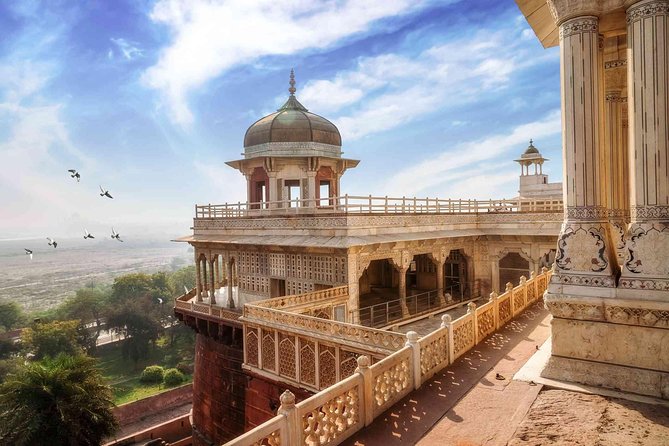
Next you visit Agra Fort, built during 1565–1573 for Mughal Emperor Akbar. It’s listed as UNESCO World Heritage Site in the information.
You’ll have 1 hour 30 minutes, and admission isn’t included. The upside is that forts give you a real sense of control: thick walls, strategic placement, and layers of time.
Day 5: Taj Mahal sunrise and how to make it worth the early start
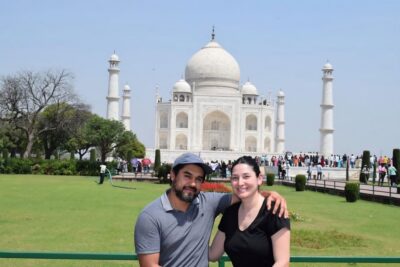
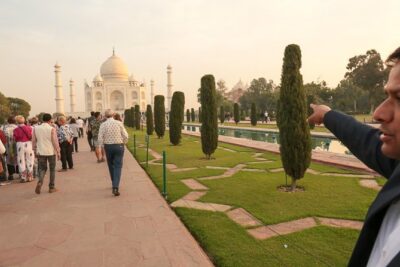
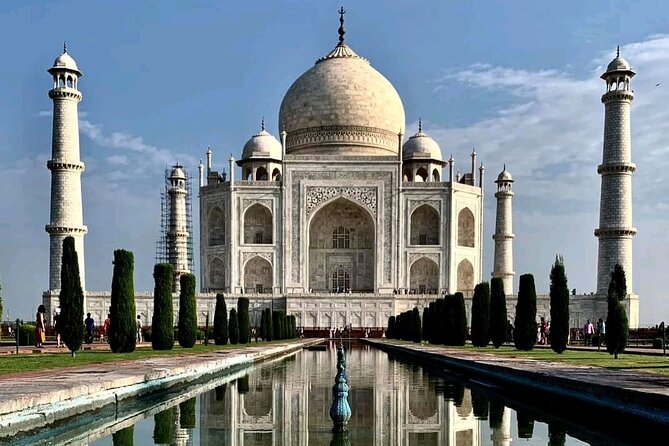
Taj Mahal is the final day’s big headline: sunrise is recommended as the best time to visit. The reason is practical and visual. Early light turns the dome a soft golden color, and it’s also when there are said to be fewer crowds.
The time allocated is 2 hours, which is enough to see it properly without feeling like you’re in a stampede.
Admission is not included, so this is one of the first places where you’ll feel the difference between what the tour covers and what you pay separately.
What to expect (and how to plan):
- You’ll be moving early, so sleep and hydration matter.
- Bring basic essentials for comfort because mornings in North India can feel cooler but still change fast.
- If your guide is strong on logistics (and the feedback suggests many guides are), you’ll usually get smoother pacing around photo stops and timing.
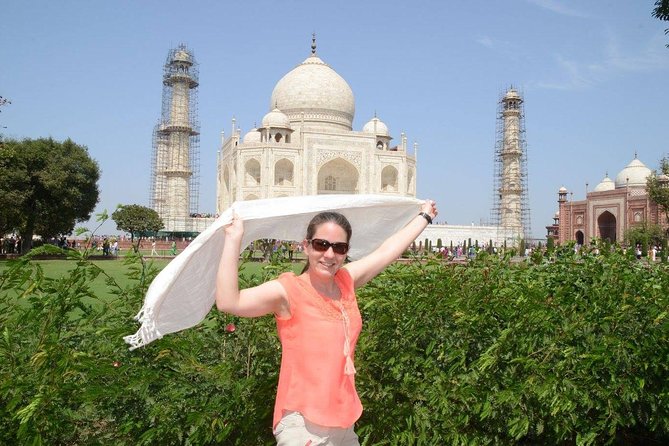
There’s also a nice human layer mentioned in the feedback: guides like Prashant have helped with extra photo logistics at the Taj, including arranging photo moments when possible. If you care about pictures, it’s worth asking your guide what’s realistic for the timing you have.
Price and value: what $300 covers and what you must budget
At $300 per person for about 5 days, the deal is strongest if you’re valuing convenience and guidance over self-planning.
Here’s what’s explicitly included:
- Air-conditioned vehicle
- City tour guide
- Private transportation
- Packaged drinking water
- All fees and taxes (as listed)
What is not included:
- Accommodation (listed under not included), and yet the overview describes three-star hotels with breakfast
- Monument entry tickets (not included)
- Tips and personal expenses
So how do you judge value? I’d do it this way: this package is paying for the “moving parts.” You’re buying someone else’s work—transport, route flow, and a guide to make each place more readable. If you were doing it alone, you’d still pay for private transit or taxis and you’d still need to solve timing and ticket rules.
Money planning reality: since many major monuments are marked as not included, you should expect extra spending at stops like Humayun’s Tomb, Qutub Minar, Amber Palace, City Palace, Jantar Mantar, Chand Baori, Agra Fort, and the Taj Mahal. The good news is that several stops are free (Jama Masjid, Raj Ghat, Lotus Temple, Chandni Chowk’s market ride, Jal Mahal picture stop, and Birla Mandir), which helps balance the paid entries.
Guides matter: Vishal and Prashant set the tone
The most praised part of this tour is not the car. It’s the guide.
In the feedback, Vishal is repeatedly described as amazing, considerate about health needs, and willing to go out of his way. Another guide, Prashant, shows up as helpful with logistics and admin, with a professional approach and a sense of humor. English support is mentioned as strong, and there’s also a clear theme of safety-first care—watching out for your well-being and handling the chaos of busy streets with calm.
This matters because the Golden Triangle can feel overwhelming. A great guide turns a list of monuments into a sequence that makes sense, like why you’re seeing one stop next and how the day will end.
If you’re the kind of traveler who wants to ask questions and get straight answers, this format usually fits well. You’re not stuck reading plaques alone.
Practical tips that will save you time and stress
A few small moves can make this route feel far easier.
Expect ticket payments at the major landmarks
Since monument tickets aren’t included, keep a little budget ready and plan to pay as you go. Also remember that a few stops are listed as free or included, so don’t assume every sight costs the same.
Build in comfort for market and mosque areas
Old Delhi sights can involve crowds and walking. Comfortable shoes matter more than fashion. If you’re sensitive to heat or crowds, tell your guide early so they can adjust pacing.
Use the included drinking water
Packaged drinking water is included, which is helpful on travel days when you’re moving between stops.
Keep your phone ready for directions
Mobile ticket delivery is noted, so having your ticket accessible on your phone can make start times smoother. Also, it’s practical to have offline maps ready because signal can vary.
If you want photos, ask early
The feedback suggests guides may help with photo logistics at the Taj Mahal. If photos are a priority, ask your guide at the start of the day so you don’t scramble in the moment.
Should you book the 5 Days Golden Triangle tour?
Book it if you want a private, guided Golden Triangle that reduces decision fatigue. This is a strong choice for first-timers who want the big Delhi-Agra-Jaipur hits—Jama Masjid, Chandni Chowk, Humayun’s Tomb, Qutub Minar, Amber Palace, City Palace, Jantar Mantar, Chand Baori, Agra Fort, and the Taj Mahal—without doing route math and ticket wrangling all on your own.
Skip it or consider a different setup if monument tickets are a dealbreaker for you, because the tour covers the structure and movement, not every entry fee. Also, since this is paced across multiple major stops, it’s best if you’re okay with a busy day rather than a slow, deep-dive museum vacation.
If you like smooth logistics, and you value a guide who takes care of safety and timing—then this one makes sense. Just remember to budget for the paid monuments, especially Taj day.
FAQ
What is included in the tour price?
The tour includes an air-conditioned vehicle, private transportation, a city tour guide, packaged drinking water, and all fees and taxes as listed. The overview also describes three-star hotel accommodation with breakfast, but monument tickets are not included.
Are monument entry tickets included?
No. Monument tickets are listed as not included, even though some specific stops are free or included in the visit plan (for example Jama Masjid, Raj Ghat, and the Lotus Temple).
How long is the Golden Triangle tour and where does it start?
It’s listed as 5 days (approx.) in New Delhi, following a Delhi–Agra–Jaipur–Delhi route.
Can this private tour be adjusted to more or fewer days?
Yes. It’s described as customizable as a private tour, with a minimum of four days and a maximum of eight days.
Is it only for my group?
Yes. It’s described as a private tour/activity, meaning only your group participates.
What happens if you need to cancel or if weather affects the plan?
Cancellation is listed as free up to 24 hours in advance for a full refund. If it’s canceled due to poor weather, you’re offered a different date or a full refund.