REVIEW · NEW DELHI
5 Days Golden Triangle Tour-Delhi Agra Jaipur Tour
Book on Viator →Operated by Joyful Holidays · Bookable on Viator
Taj Mahal at dawn changes everything. This five-day Delhi-Agra-Jaipur Golden Triangle tour is designed around sunrise timing and a private guide so you can move at your pace and ask questions as you go. It also wraps in a lot of iconic sights without forcing you to stitch together tickets, drivers, and timing blocks on your own.
I particularly like the pickup-to-dropoff setup. You get airport or hotel pickup in Delhi and daily private air-conditioned car transport, which matters a lot on these long intercity drives.
One thing to plan for: the big monuments have separate entry fees. The tour price doesn’t include monument fees (listed as $69.00 per person), so you’ll want that money ready.
In This Review
- Key things to know before you go
- Value and price for a 5-day Golden Triangle
- Delhi day 1: Old Delhi by rickshaw and the Mughal-meets-modern mix
- Jama Masjid, the Friday Mosque
- Chandni Chowk Market and the rickshaw ride
- Red Fort from outside
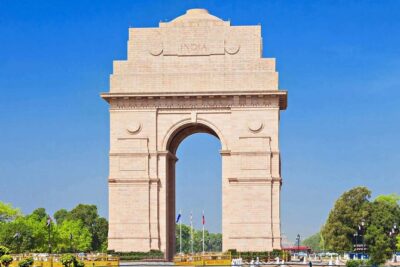
- Gandhi memorial, India Gate, and photo stops
- Qutub Minar to close the day
- Day 2 Agra: Fort + the Taj area views after you arrive
- Agra city visit and Agra Fort
- Mehtab Bagh across the Yamuna
- Sleep in Agra
- The Taj Mahal morning: sunrise timing and the battery van help
- Why sunrise is worth the very early start
- Taj Mahal sunrise → breakfast → Fatehpur Sikri
- Fatehpur Sikri: Akbar’s short-lived capital
- Arrive in Jaipur and settle in
- Day 4 Jaipur: Fort, palaces, the winds, and Jantar Mantar
- Jaipur Fort (Amer Fort): the big centerpiece
- Jal Mahal photo stop
- City Palace: old city royal center
- Hawa Mahal photo stop
- Jantar Mantar: geometry for sky-watchers
- Day 5 wraps: drive back to Delhi and dropoff where you need to land
- My take: who this Delhi Agra Jaipur tour fits best
- Should you book this 5-day Golden Triangle tour?
- FAQ
- What time is pickup in Delhi?
- Is the tour fully private?
- Are monument entry tickets included in the price?
- Do I get hotel accommodations and breakfasts?
- Does the tour include transport between cities?
- Is there free cancellation?
Key things to know before you go
- Private-only group: your party stays together with a live guide and driver.
- Sunrise Taj Mahal day: you’ll meet at 5.45 AM for the early visit.
- Delhi Old City + modern landmarks: Jama Masjid, rickshaw through Old Delhi, then photo stops like India Gate and Parliament area buildings.
- Taj Mahal comfort perk: a battery van ride at the Taj is included.
- Hotel choice, not one-size-fits-all: you select 3-, 4-, or 5-star accommodations.
- Separate monument fees: entry costs are not included in the base price.
Value and price for a 5-day Golden Triangle
This is priced at $399.00 per person for about five days, with private guiding and all transportation handled. The biggest value here is not just the sights; it’s the removal of the planning headache. When you’re moving between Delhi, Agra, and Jaipur, that logistics work can eat your energy fast.
The tour includes hotels for your chosen category and daily breakfasts (listed as 4). It also includes bottled water in the car, parking, gasoline, and tolls, plus an experienced licensed driver. In plain terms: you’re paying for smooth movement and someone else managing the day-of details.
What’s not included is also clear: monument fees, listed at $69.00 per person, plus anything not stated as included. That’s normal for India sight tours, but it’s important for budgeting so the trip doesn’t feel like it’s running on surprise add-ons.
If you care about comfort and timing, this tour fits well. A private A/C vehicle and a guide who can tailor commentary beats the usual scramble of larger group tours, especially when the schedule includes an early-morning Taj Mahal.
You can also read our reviews of more tours and experiences in New Delhi



Delhi day 1: Old Delhi by rickshaw and the Mughal-meets-modern mix
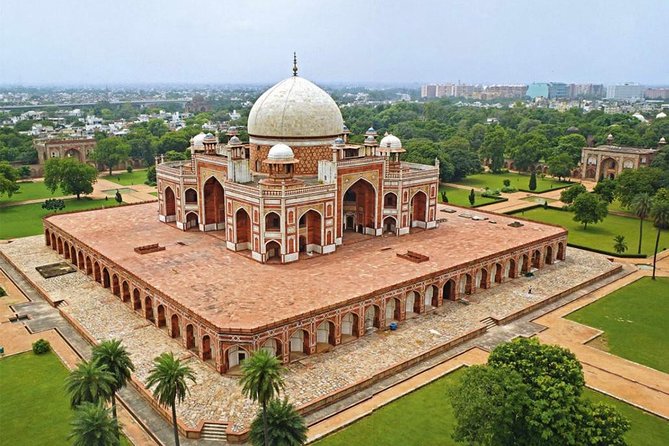
Day 1 starts with pickup in Delhi from your airport or hotel, or your chosen location, typically between 0700 and 1000 hours. Meet your guide and get a first look at the capital as a city of layers: Mughal-era landmarks, colonial-era architecture, and modern government buildings.
Jama Masjid, the Friday Mosque
You’ll visit Jama Masjid, one of India’s best-known mosques. It’s built in red sandstone and marble by Mughal Emperor Shah Jahan, and you’re there long enough to take in both the scale and the details.
Practical note: you’ll want to dress respectfully and be ready for crowds. Even if you’re only there for about 30 minutes, this is one of those places where the visual impact hits fast.
Chandni Chowk Market and the rickshaw ride
After Jama Masjid comes one of the fun parts: a rickshaw ride through Chandni Chowk. The experience is short, but it’s a great way to get your bearings in Old Delhi without walking yourself into exhaustion on day one.
This is also where the tour switches from monuments to everyday life—street energy, narrow lanes, and constant movement. Bring patience. You’ll get more by staying calm and letting your guide position you for photos and crossings.
Red Fort from outside
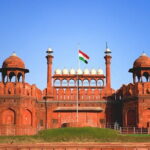
You’ll see the Red Fort from the outside rather than doing a full visit. The reason is practical: a large portion is used by the Indian Army, so the experience is primarily photo time and quick impressions.
If Red Fort is your top priority, this is the one stop that can feel a little lighter. The tradeoff is that you’ll pack in a lot more Delhi landmarks in the same day.





Gandhi memorial, India Gate, and photo stops
You’ll then pass by Raj Ghat, the memorial for Mahatma Gandhi, which marks the spot where he was cremated in 1948. Next up is India Gate, the war memorial gateway aligned with the First World War.
You’ll also have photo stops for Parliament House and Rashtrapati Bhavan (the President’s official residence). These are quick, but they help you connect the city’s political core to what you’re seeing on the ground.
Qutub Minar to close the day
Day 1 finishes with Qutub Minar, a UNESCO site. The plan gives you about an hour here, which is helpful because the minaret and surrounding structures deserve more than a rushed look.
Tickets aren’t included, so make sure you’re ready to pay monument entry fees on the spot or as directed by your guide. After the long Delhi day, you’ll head back to your hotel for the overnight stay.
Day 2 Agra: Fort + the Taj area views after you arrive
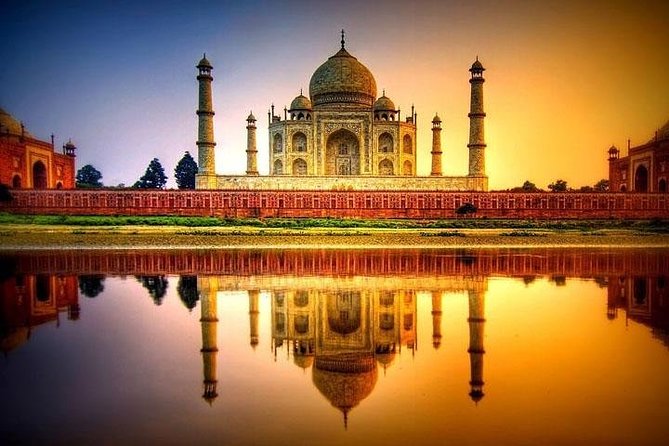
You drive from Delhi to Agra after breakfast, with the transfer taking about four hours. When you arrive, you check into your pre-booked hotel and get time to freshen up before meeting your guide.
Agra city visit and Agra Fort
You’ll have a guided visit in Agra and then spend time at Agra Fort (about one hour). The fort is a major UNESCO World Heritage site and was built by Emperor Akbar in the 1500s. It’s also known as Lal Qila, or Qila-i-Akbari, and it gives you a strong sense of how power worked along the Yamuna River.
This is one of those sights where your guide’s commentary matters. Even when you’re just seeing parts of the complex, the context helps you read the fort’s layout instead of just admiring walls.
Mehtab Bagh across the Yamuna
Next is Mehtab Bagh, the Moonlight Garden on the opposite bank of the Yamuna. The plan gives you about 40 minutes total and the big idea is the perspective—views toward the Taj Mahal’s area across the river.
Entry isn’t included here, so again plan for the monument fee component. If you’ve been saving the Taj Mahal for a sunrise visit later, this stop becomes a teaser: you’re getting framing and location cues for what you’ll see properly the next day.
Sleep in Agra
Day 2 ends with return to your hotel. This matters because the following day starts at 5.45 AM, and you’ll be glad you’re not improvising.
The Taj Mahal morning: sunrise timing and the battery van help
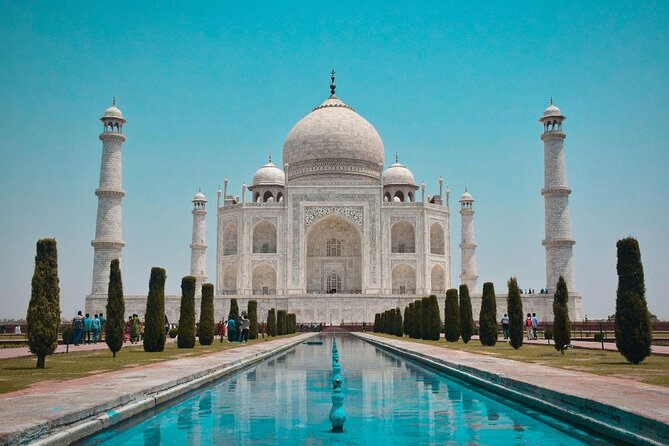
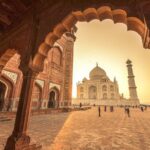
Day 3 is built around an early Taj Mahal start. You’ll meet your guide in the hotel lobby at 5.45 AM to visit at sunrise. Sunrise is the whole point here: light shifts fast, shadows soften, and the Taj’s surface looks different than it does in midday crowds.
The plan lists the Taj Mahal visit time at around two hours, with the monument ticket not included. Expect to pay entry fees, and give yourself time for security lines so you don’t feel rushed.
Why sunrise is worth the very early start
At sunrise, the Taj Mahal’s colors shift. The plan notes a pink shade at this time, and that’s the kind of detail you’ll actually notice when you’re standing in front of the building instead of viewing photos later.
Also, earlier timing generally means less chaos. Not empty, but more manageable, which makes it easier to take in the symmetry and the craftsmanship without constantly weaving around people.
Taj Mahal sunrise → breakfast → Fatehpur Sikri
After the sunrise Taj experience, you return to the hotel to freshen up and have breakfast. Then you check out and head toward Jaipur with a stop at Fatehpur Sikri.
Fatehpur Sikri: Akbar’s short-lived capital
Fatehpur Sikri was built by Emperor Akbar in the 16th century to serve as the capital of his empire. The plan also includes the key story: it was mysteriously abandoned after about 15 years due to water scarcity.
That single detail changes how you understand the place. You’re not just looking at ruins; you’re seeing a capital that failed for practical reasons, which makes it feel more real and less like an exhibit.
Arrive in Jaipur and settle in
You drive into Jaipur—often called the pink city—and check into your hotel for the overnight stay. This is where choosing your hotel category pays off. If you go 4- or 5-star, you’ll appreciate the quieter recharge time after two long drive days.
Day 4 Jaipur: Fort, palaces, the winds, and Jantar Mantar
After breakfast, you begin Jaipur sightseeing with your guide. Jaipur is spread out, so having a private driver reduces the stress of moving between hilltop viewpoints and the old city core.
Jaipur Fort (Amer Fort): the big centerpiece
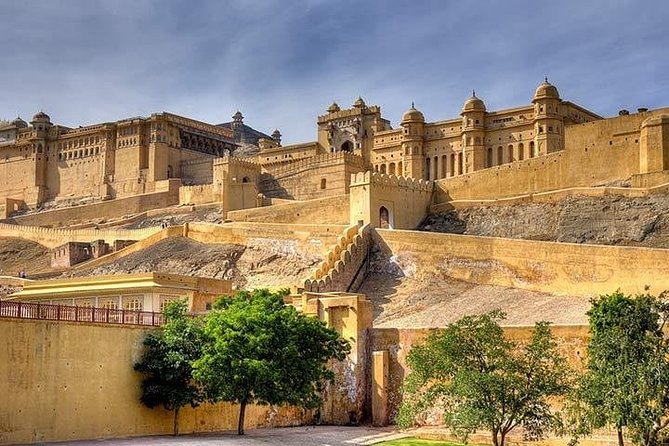
You visit Jaipur Fort (listed as about two hours). The fort rises from a rocky mountainside and is a must-see for Rajput architecture. Because it’s a palace complex, you’ll get more than one type of view—courtyards, viewpoints, and the sense of how daily life blended with defense.
A good rule: go slow at the top. The climb isn’t the only work; the visual details take time.
Jal Mahal photo stop
You’ll stop at Jal Mahal, the Water Palace, for a photo opportunity. It’s short (about 10 minutes), so treat it like a view and then move on rather than expecting a full visit.
City Palace: old city royal center
The City Palace is next, with about one hour on-site. This is the royal family’s residence area and sits in the center of the old city. The plan highlights courtyards, gardens, and a mix of Rajasthani and Mughal architecture.
This stop can be one of the most satisfying if you like “how people lived” spaces. Even with limited time, you can walk away with a clearer mental map of Jaipur’s layout.
Hawa Mahal photo stop
Next comes Hawa Mahal, the Palace of Winds. It’s described as a distinctive pink honeycombed facade rising five stories, built in 1799. Your time here is brief and focused on photos.
The short visit is still worth it because the exterior is so iconic. Just don’t plan this as your main time for interior exploration.
Jantar Mantar: geometry for sky-watchers
Finally, you visit Jantar Mantar, a UNESCO observatory with geometric buildings designed to track movement of stars and planets. You’ll get around 40 minutes here.
This is the kind of stop where your guide’s explanation helps you see the math. If you’re the type who enjoys patterns, you’ll likely like it more than you expect.
Then you head back to your hotel for the overnight stay.
Day 5 wraps: drive back to Delhi and dropoff where you need to land
Day 5 is a travel day. After breakfast, you drive back to Jaipur Airport or return to Delhi, with the transfer taking about five hours. You’ll then be dropped off at your hotel, Delhi airport, railway station, or another chosen point in the region.
That flexibility is underrated. Golden Triangle tours often end with one fixed drop, but here you get options based on what you’re doing next—fly out, take a train, or just head to your hotel and crash.
My take: who this Delhi Agra Jaipur tour fits best
This tour is a strong match if you want three big-ticket cities with minimal hassle. The private guide and driver help a lot when you’re seeing sights that have different ticket rules and different crowd rhythms.
It’s also a good fit if you care about comfort during long days. The A/C car, hotel choice from 3 to 5 stars, bottled water, and a battery van ride at the Taj Mahal are all “small” things that add up.
Where I’d be cautious: if you’re trying to keep total costs low, you’ll need to budget the monument fees. The base price doesn’t include them, and that’s especially important if you plan to add optional experiences at top sites.
Should you book this 5-day Golden Triangle tour?
Book it if you want a clean, private route through Delhi, Agra, and Jaipur—with the Taj Mahal timed for sunrise. The structure helps you spend your time on the sights rather than on coordinating transport and timing.
Skip or compare if your priority is full, extended visits to every major monument and you’re trying to avoid extra entry fees. Also check your comfort with very early mornings, since the Taj Mahal day starts at 5.45 AM.
If you like having a named, consistent driver, it can make the trip feel personal. One driver name that comes up for standout service is Ajay Kushwaha, praised for being attentive right from the Delhi pickup onward.
If you want a safe, efficient Golden Triangle circuit with a private guide guiding the story at your pace, this one is a solid choice.
FAQ
What time is pickup in Delhi?
Pickup is offered from the airport or your desired location/hotel between 0700 to 1000 hours, or at your given time.
Is the tour fully private?
Yes. This is listed as a private tour/activity with only your group participating.
Are monument entry tickets included in the price?
No. Monument fees are listed as $69.00 per person and are not included, along with anything not mentioned in the inclusions.
Do I get hotel accommodations and breakfasts?
Yes. You’ll have accommodation in 3-, 4-, or 5-star hotels (based on your option) and 4 breakfasts are included.
Does the tour include transport between cities?
Yes. All transportation is provided, including Delhi transfers, using a private air-conditioned car with an experienced licensed driver.
Is there free cancellation?
Yes. Cancellation is free up to 24 hours in advance for a full refund, based on local experience start time.