Delhi shocks you with scale, then calms you in 6 hours. I love the door-to-door pickup that turns a chaotic city into a smooth route, and I love how Humayun’s Tomb anchors the day with Mughal-level craftsmanship. The main drawback is the schedule is packed, so you’ll need practical shoes and patience for traffic.
This is a real private tour, not a hop-on hop-off fantasy. You’ll bounce between Old Delhi’s monumental highlights and New Delhi’s government-and-memorial zone, with a guide in the car the whole way and stops timed for photos and a bit of breathing room.
Before you go, plan for two things: strict dress code at religious sites and a photo ID check at monuments. Lotus Temple also has a weekly closure, which the tour adjusts for.
In This Review
- Key things I’d circle before you book
- How the 6-hour route actually feels: Old-to-New Delhi in one stretch
- Pickup and private transport: comfort that helps you keep your energy
- Jama Masjid: architecture you can read at a glance
- Mughal fort photos: Red Fort from the outside in 15 minutes
- Chandni Chowk: the market stop that needs your street-smart side
- Gurudwara Bangla Sahib: marble calm in the middle of the city
- Agrasen Ki Baoli: legends, photos, and a quick curiosity stop
- Humayun’s Tomb (UNESCO): the best hour on the itinerary
- India Gate: short stop, big symbolism
- Parliament and Rashtrapati Bhavan: what you’ll get is outside viewing
- Lotus Temple: modern faith with clear rules (and a Monday workaround)
- Lunch break: the included pause that keeps the day from burning out
- Price and value: $15.40 per person for a private guide day
- Who this tour fits best
- Should you book this private Old & New Delhi tour?
- FAQ
- How long is the private guided tour?
- Is lunch included, and are monument entrance fees included?
- Where do you offer pickup and drop-off?
- What dress code do I need for mosques and temples?
- What happens if my day includes Monday and Lotus Temple is closed?
- Is there free cancellation?
Key things I’d circle before you book
- Door-to-door pickup and drop across Delhi, Noida, Gurugram, Ghaziabad, and Faridabad
- A private guide plus a private vehicle sized to your group
- Rickshaw ride included during the Old Delhi portion
- UNESCO-listed Humayun’s Tomb with dedicated time on-site
- Temples and mosques dress code to avoid last-minute hassles
- Lotus Temple Monday closure handled by visiting Birla Temple instead
How the 6-hour route actually feels: Old-to-New Delhi in one stretch
This tour is designed to fix a common Delhi problem: you want to see a lot, but you don’t want to spend half your day figuring out where to go next. With private pickup from your chosen location, you start already “in motion,” and you end with a drop back where you want to go.
The itinerary flows in a smart order. It starts in Old Delhi with iconic Mughal sights and a famous market area, then moves to New Delhi’s broader, more spaced-out monuments. That matters because Delhi traffic can steal time. A guided route helps you avoid dead ends and repeated backtracking.
Time is the only real limitation. The day runs about six hours, so each stop gets a focused window—enough for photos, a walk-through, and context, not enough for a slow personal wander. If you like to linger, you may want extra time on one or two favorites.
Your guide experience can vary, but the guides used on this kind of tour tend to be friendly and clear. Names like Aman and Nikhil G have shown up as guides leading smooth, explanatory days—especially when it comes to explaining what you’re seeing instead of just reciting dates. That’s the difference between a checklist and an actually enjoyable route.
You can also read our reviews of more guided tours in New Delhi



Pickup and private transport: comfort that helps you keep your energy
The pickup is offered from anywhere in Delhi, Noida, Gurugram, Ghaziabad, and Faridabad. That’s more than a convenience. It can save you from adding extra taxi rides, waiting time, and the stress of “where do we meet?” right at the start of your day.
The vehicle also scales by group size:
- 1–2 people: four-seater sedan
- 3–5 people: six-seater car
- 6–8 people: ten-seater mini van
- 9–12 people: fifteen-seater van
You get air-conditioning plus parking and tolls handled, which is a big deal in Delhi. You’re not fighting for a place to park near crowded sights, and you’re not spending the day negotiating logistics while everyone else inside the vehicle is trying to keep cool.
One more small win: mineral water bottles are included. You’ll still want to bring your own refill habits, but it’s one less thing to hunt down mid-route.
Jama Masjid: architecture you can read at a glance
Jama Masjid is the kind of place that hits immediately. It’s considered one of India’s largest mosques, built in the 17th century by Shah Jahan. You’ll get about 30 minutes here, with the admission ticket included.
What I like about timing it early is that you can actually take in the scale without feeling rushed. The complex can handle an enormous crowd, and even if you don’t count every detail, you’ll feel the planning behind it: the entrances, the courtyard space, and the way the architecture frames the worship area.
Practical tip: follow the dress requirements for temples and mosques. That means your upper clothing should cover shoulders, chest, navel, and upper arms, and your lower clothing should be at least below the knee. If you forget, you can end up dealing with limitations right when you’re trying to enjoy the first stop.
Also, bring your photo ID. Some monuments do checks, and having the document ready keeps everything calm.
Mughal fort photos: Red Fort from the outside in 15 minutes
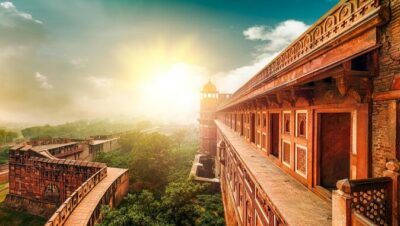
After Jama Masjid, the tour includes a short stop for a Mughal fort-palace built by Shah Jahan in the 17th century. You won’t go inside—you’ll spend about 15 minutes taking photos from outside.
Could you spend longer at Red Fort? Sure. But this quick photo-and-gawk stop works as a pressure release valve between the mosque and the market. It lets you clock the location and get a visual anchor for Old Delhi without losing the momentum of the day.
If you’re the type who loves stepping inside major monuments, you may feel the tradeoff. The day is set up for breadth over deep detail, so if Red Fort interiors are high on your list, you’ll want to plan that separately.
Chandni Chowk: the market stop that needs your street-smart side
Chandni Chowk is Old Delhi’s famous, oldest, and busiest market area, built in the 17th century by Shah Jahan and designed by his daughter Jahanara. You’ll have about 1 hour here, with admission free.
This is where the rickshaw ride fits in. It’s a fast way to move through the tighter lanes and still get a feel for how the neighborhood works. And because you’re not navigating every turn yourself, you can spend attention on what’s around you instead of worrying about logistics.
What makes this market stop valuable is context. A good guide helps you understand what you’re seeing—how areas like this historically organized trade and how Delhi’s everyday life overlaps with major monuments.
Practical note: wear shoes you can walk in. Market streets can be uneven and busy, and even with a guide keeping the route tight, you’ll still do real walking.
You can also read our reviews of more private tours in New Delhi





Gurudwara Bangla Sahib: marble calm in the middle of the city
Next up is Gurudwara Bangla Sahib, built in the 17th century with white marble. The tour includes about 30 minutes and the admission ticket.
The story connected to this place adds depth: Guru Har Krishna stayed here in 1664 during his visit to Delhi and provided aid to people in need. You’ll feel the focus of the site in the way people move and gather—more calm and intentional than the surrounding city energy.
This stop is a good reset. After market intensity, a place of worship with an emphasis on community can help your day feel balanced rather than nonstop sightseeing.
Again, dress code matters. Even if you’re not religious yourself, it keeps the experience respectful and smooth.
Agrasen Ki Baoli: legends, photos, and a quick curiosity stop
Agrasen Ki Baoli is known for urban legends, including stories of haunted events. You’ll have about 30 minutes, and the admission ticket is included.
Here’s the deal: this is more atmosphere than museum. The value comes from standing where a legend lives and seeing the structure up close, then letting the guide fill in cultural and local context. If you like quirky history, supernatural lore, and dramatic architecture, you’ll probably enjoy this stop.
If you’re more into hands-on history that you can verify with exhibits, you might find the time brief. The tour keeps it short on purpose, so it doesn’t swallow the schedule.
Humayun’s Tomb (UNESCO): the best hour on the itinerary
Humayun’s Tomb gets about 1 hour and the entrance fee is included. It’s also a UNESCO World Heritage Site and one of the earliest and most important Mughal-era complexes in Delhi, with the main tomb of Emperor Humayun and additional tombs of other royals.
This is often the stop that makes the tour feel worth it. The architecture is easier to appreciate when you’re not sprinting. The grounds, symmetry, and monumental feel give you a “slow down” moment even in a fast day.
It’s also one of the safest picks for first-timers because you can appreciate it from multiple angles, not just from one viewpoint. If your group has one person who likes photos and another who likes explanations, this is the place that serves both.
The best part of booking it as part of this private route is that the guide can connect it to the other Mughal sights earlier in the day. You’ll start noticing patterns: how power gets expressed in stone, and how aesthetics become politics.
India Gate: short stop, big symbolism
India Gate is a 43-meter-high monument and a key landmark in New Delhi, designed in 1931. You’ll spend about 30 minutes here, and the admission fee is included.
This stop is quick for a reason: it’s not about long-walk exploration. It’s about getting your orientation. If you’re new to New Delhi, India Gate helps you understand the layout of this part of the city—wide avenues, memorial space, and the way the government area “feels” compared to Old Delhi.
If you’re into photography, 30 minutes is usually enough to catch a good angle and a clear view of the monument’s height and proportions.
Parliament and Rashtrapati Bhavan: what you’ll get is outside viewing
The tour includes time at Parliament House and the President House area. These stops are included as important national symbols of how India runs today.
One practical point: the schedule indicates these are visit-in-public-area style stops rather than interior visits. You’ll get the big-picture experience and a chance for photos, but don’t build expectations for full access to the buildings.
Still, it’s a useful pairing with the Mughal sites earlier. Old Delhi teaches power through empires; New Delhi shows power through modern institutions.
Lotus Temple: modern faith with clear rules (and a Monday workaround)
Lotus Temple is a Bahá’í house of worship near Delhi’s capital area. You’ll spend about 30 minutes here, with the admission ticket included. The design is unique, and the tour notes there are no idols and no religious rituals performed during visits.
The temple’s approach makes it a strong final stop: it tends to feel calmer than the busy road corridors, and it’s easy to appreciate even if you’re not following any specific religion.
Dress code still applies, so keep your shoulders and upper arms covered and stay below the knee for your lower clothing.
Here’s the important schedule detail: Lotus Temple is closed every Monday. On Mondays, the tour visits Birla Temple instead. If your trip lands on a Monday, this matters for your planning.
Lunch break: the included pause that keeps the day from burning out
Lunch is included only if you select the lunch option. When lunch is included, it’s part of the six-hour structure, which is smart. Food breaks keep your energy stable, especially when you’re switching between concentrated Old Delhi walking and the more open New Delhi driving zones.
One catch: drinks served with lunch aren’t included. So if you’re sensitive to hydration or prefer something specific, plan to cover it yourself.
If you have dietary restrictions, this is something to confirm ahead of time, since the tour data here only states lunch inclusion, not menu specifics.
Price and value: $15.40 per person for a private guide day
At about $15.40 per person, this tour can feel almost too good to be true, especially because it includes private transportation, a private guide, and pickup/drop-off across multiple cities.
Here’s where the value gets real:
- Air-conditioned private vehicle with tolls, fuel, parking, and taxes handled
- Private guide for the whole route
- Rickshaw ride included
- Mineral water bottles included
- Monument entrance fees included only if you select that option
- Lunch included only if you select that option
That means your final value depends on your chosen add-ons. If you select entrance fees, more of the major sights become “no surprise” costs. If you skip them, you’ll likely pay some tickets separately.
Even with possible add-on costs, this setup can still be great value compared to cobbling together a guide plus taxis plus tickets on your own. The biggest “hidden” cost in Delhi is time—this tour buys back your time with route planning and door-to-door service.
Who this tour fits best
I’d point you toward this tour if:
- You want a structured highlights day without navigating transit
- You like a mix of Old Delhi intensity and New Delhi landmarks
- You want a guide to explain what you’re seeing (not just where to stand for photos)
- Your group can benefit from a private vehicle size matched to your numbers
I’d think twice if:
- You prefer long, slow museum-style visits at fewer places
- You’re very sensitive to crowds and tight walking windows
- You’re hoping for guaranteed interior access at every major monument
Should you book this private Old & New Delhi tour?
Yes, if you want an efficient, guide-led sampler that still includes serious monuments. Jama Masjid, Chandni Chowk, and Humayun’s Tomb give you the “Delhi story” from multiple angles—Mughal faith, everyday market life, and UNESCO-level architecture—then the day closes with national icons and modern spiritual calm at Lotus Temple.
Book it if you’re practical about timing. This is not a leisurely stroll across Delhi. It’s a well-planned sprint with smart stops, private transport, and a guide who can turn stone and street corners into something you understand.
If you’re the type who wants to linger at just one place (Humayun’s Tomb, for example), you can always add extra time before or after the tour on your own. But for a first or second day in Delhi, this is a strong way to get your bearings fast.
FAQ
How long is the private guided tour?
The tour lasts about 6 hours.
Is lunch included, and are monument entrance fees included?
Lunch is included only if you select the lunch option. Monument entrance fees are included only if you select the option for monument entrances.
Where do you offer pickup and drop-off?
Pickup and drop-off are offered to anywhere in Delhi, Noida, Faridabad, Ghaziabad, and Gurugram.
What dress code do I need for mosques and temples?
You should cover your shoulders, chest, navel, and upper arms, and wear lower clothing at least below knee length.
What happens if my day includes Monday and Lotus Temple is closed?
Lotus Temple is closed every Monday. On Mondays, the tour visits Birla Temple instead.
Is there free cancellation?
Yes. Free cancellation is available, and you can cancel up to 24 hours in advance for a full refund.