REVIEW · NEW DELHI
5-Day Golden Triangle Tour with Cultural Heritage-Taj & More
Book on Viator →Operated by Magic Carpet Tours · Bookable on Viator
Delhi to Jaipur in five days can feel fast. This tour turns speed into focus, with a tight route through Delhi, Agra, and Jaipur and a guide who helps you connect the buildings to the people behind them. You’ll see UNESCO highlights like Humayun’s Tomb and Jantar Mantar, plus the Taj Mahal on an included ticket day.
I especially liked the door-to-door pickup and the comfort factor: private, air-conditioned transport with bottled water and light snacks. I also love that the stops are time-boxed (like Taj Mahal at 2 hours) so you’re not stuck waiting around or rushed into the next photo spot. One possible drawback: since meals and lodging are not included, you’ll want to budget for hotels and breakfast or lunch on your own.
In This Review
- Key things I’d pay attention to
- Golden Triangle, with a real sense of order
- Price and what $325 buys in practice
- Day 1 in Delhi: devotion, spices, memorials, and Mughal architecture
- Gurudwara Bangla Sahib: calm in the middle of the city
- Khari Baoli: Asia’s spice market with real smell power
- India Gate: a war memorial with a central-city feel
- Humayun’s Tomb: where Persia meets Mughal Delhi
- Lotus Temple: unity by design
- Agra travel time: getting there without losing the day
- Day 2: Taj Mahal plus Agra Fort, with Fatehpur Sikri pivoting you toward Jaipur
- Taj Mahal: the ticketed centerpiece
- Agra Fort: power on red sandstone
- Fatehpur Sikri: Akbar’s stone city, without an extra ticket cost
- Jaipur arrival: time to settle into the Pink City mood
- Jaipur Day 3: Jaigarh, Jal Mahal, and Chokhi Dhani culture night
- Jaigarh Fort: military architecture with a view
- Jal Mahal: a quick, scenic break
- Chokhi Dhani: Rajput-themed evening entertainment
- Jaipur Day 4: City Palace, Jantar Mantar, and Hawa Mahal in one clean arc
- City Palace of Jaipur: the royal seat and its rooms
- Jantar Mantar: UNESCO observatory, 18th-century thinking made visible
- Hawa Mahal: the honeycomb façade for wind and views
- Day 5: the practical endgame back to Delhi (or drop-off at Jaipur airport)
- How the guide quality can change your whole experience
- Comfort details that make long sightseeing days easier
- Is this tour a good fit for you?
- Should you book it?
- FAQ
- What is included in the tour price?
- Do you get pickup in Delhi?
- Is accommodation included?
- Are meals included?
- Are tickets for the Taj Mahal included?
- Is this tour private or shared?
- What is the cancellation policy?
Key things I’d pay attention to
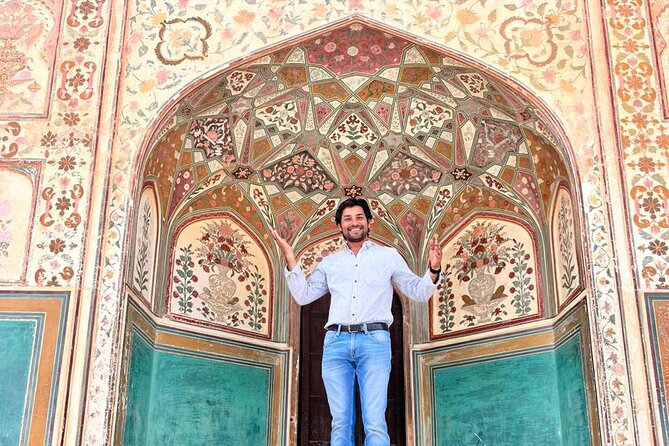
- Private, air-conditioned transport for a calmer route across three cities
- Guide-led context tied to what you’re looking at, not just dates and names
- Admission included for several major sights (and free-entry time where noted)
- UNESCO stops including Humayun’s Tomb and Jantar Mantar
- A guide match that can make or break the experience, with names like Ali, Aman, Raj, and Mehraj coming up in reviews
- Cultural add-ons like Chokhi Dhani and time at markets such as Khari Baoli
Golden Triangle, with a real sense of order
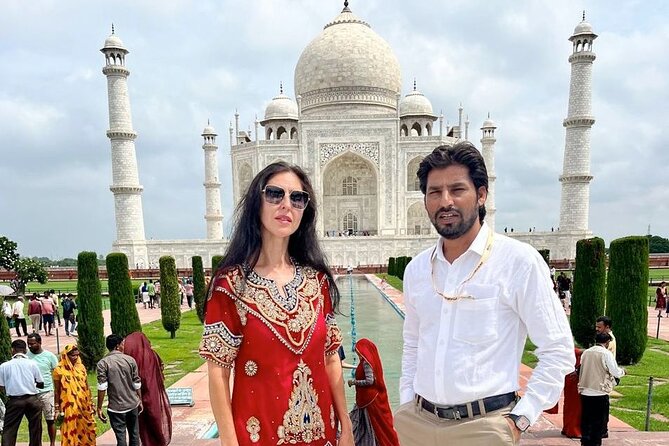
The Golden Triangle usually gets sold as a grab-bag of famous monuments. What I like about this plan is that it follows a clear story line: Mughal power in Delhi and Agra, then Rajput grandeur in Jaipur, with stops that help you understand how those eras built the India you see today.
This tour is also structured to keep your day moving. You get a set sequence of sights, plus private transport between them. That matters on a 5-day run, because you don’t want your energy spent negotiating routes or searching for where the next place is.
And because it’s a private tour/activity with only your group participating, the pace tends to feel more controlled. If you want to ask questions, you can. If your group needs a bathroom break or a breather, you can usually work it into the day.
You can also read our reviews of more historical tours in New Delhi



Price and what $325 buys in practice
At $325 per person, this is priced like a serious sightseeing package rather than a budget-only ride. The big reason is what’s included: private air-conditioned transport, in-car refreshments (bottled mineral water and light snacks), and all fees and taxes.
It’s also not “just transport.” Several stops have admission tickets included, including the Taj Mahal and multiple Delhi monuments. A few places are listed as free-entry, so you still get meaningful time without extra ticket costs there.
The part that you must plan for: accommodation and meals are not included. That means your total trip cost will depend on where you stay in Delhi, Agra, and Jaipur, and how you handle lunch and dinner each day. If you’re expecting the entire trip price to cover hotels and every meal, this package won’t match that expectation.
For value, I’d look at it this way: you’re paying to avoid the headaches of timing and logistics across three cities, while still getting access to key sights. If you’d otherwise book a guide and transport separately, the package math often gets more favorable.
Day 1 in Delhi: devotion, spices, memorials, and Mughal architecture
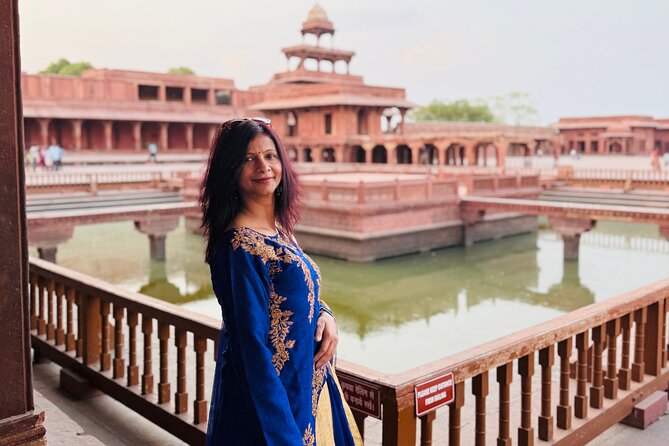
Day 1 is a strong mix because it doesn’t start with a palace. It starts with daily-life and belief.
Gurudwara Bangla Sahib: calm in the middle of the city
The day begins at Gurudwara Bangla Sahib, a Sikh gurdwara connected to Guru Har Krishan. Even if you’re not a frequent temple-goer, this stop works because it sets a quieter mood before the monument marathon begins.
You get a 30-minute visit with admission included. That’s enough time to take in the setting and understand why this place feels like more than a photo stop.
Khari Baoli: Asia’s spice market with real smell power
Next is Khari Baoli, described as Asia’s largest spice market. This is one of those places where your camera can’t fully keep up, because the real experience is the air full of saffron, cardamom, dried chilies, and that busy market energy.
It’s also time-efficient: about 30 minutes with admission included. I’d treat this like a sensory stop. If you’re shopping, bring your patience. If you’re not, you can still enjoy it by watching how people move through the market lanes.
You can also read our reviews of more tours and experiences in New Delhi





India Gate: a war memorial with a central-city feel
Then you get India Gate in about 15 minutes. It’s a short stop, but it fits the itinerary because it’s one of Delhi’s best-known landmarks and it anchors the idea of a modern national capital.
Humayun’s Tomb: where Persia meets Mughal Delhi
Humayun’s Tomb is a highlight, and it’s the kind of UNESCO site that rewards attention. This 1-hour stop includes admission, and the architecture is the story: Persian influence mixed with Mughal style, tied to the Mughal era’s scale of power and grief.
If you want to learn how architectural style communicates politics, this is a good place to slow down.
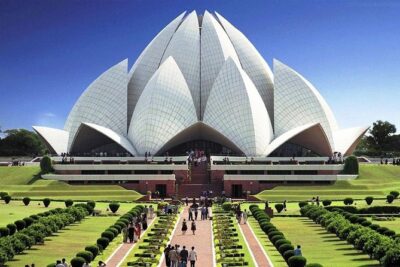
Lotus Temple: unity by design
After the tomb, you visit the Lotus Temple. It’s a peaceful stop with about 30 minutes, admission included, and it’s open to people of all faiths.
The design is the draw here. You’ll get a breather after the busier city sights, without losing momentum for the day.
Agra travel time: getting there without losing the day
Day 1 ends with Agra and about 4 hours on the ground. It’s listed as admission free, which suggests you’ll be using the time for transit positioning, orientation, and getting your bearings in the city rather than only ticketed sights.
This is also where private transport helps. You’re not splitting into multiple local rides or spending your evening stuck figuring out where you’ll start tomorrow.
Day 2: Taj Mahal plus Agra Fort, with Fatehpur Sikri pivoting you toward Jaipur
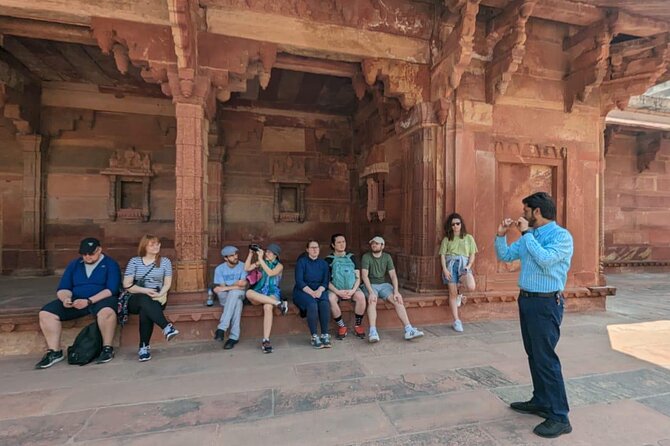
Day 2 is where most people come for the Taj Mahal. It’s also where the itinerary makes a smart pivot: you’ll see imperial architecture in Agra, then switch gears to Akbar’s grand idea of a fortified “world” at Fatehpur Sikri.
Taj Mahal: the ticketed centerpiece
Taj Mahal gets about 2 hours with admission included. That time window is important. Two hours is long enough to see it from multiple angles and still feel like you’re not rushing through.
Also, since you’re on a guided tour, you’re not just looking at a building. You’ll have someone available to explain what you’re seeing and connect it to what came before.
Agra Fort: power on red sandstone
Next is Agra Fort, with about 1 hour and admission included. Where the Taj is about marble beauty and emotion, the fort is about control and defense—Mughal strength made visible.
It’s a good contrast stop because it keeps the day from becoming one-note. You’ll see empire through two different visual languages.
Fatehpur Sikri: Akbar’s stone city, without an extra ticket cost
Then you’re off to Fatehpur Sikri, listed as free admission with about 2 hours. Even with no ticket requirement, you still get a full-feeling stop.
This place is special because it’s described as Akbar’s vision in red sandstone, with grand courtyards and silent arches. It’s the kind of site where guided storytelling helps you track what you’re looking at.
Jaipur arrival: time to settle into the Pink City mood
Day 2 ends with Jaipur on the ground for about 4 hours, also listed as admission free. That’s useful because it gives you time to get oriented without treating arrival as a forced-ticket sprint.
You’re walking into a city that looks different from Delhi and Agra right away. This timing helps you adjust your expectations before tomorrow’s forts and observatory stops.
Jaipur Day 3: Jaigarh, Jal Mahal, and Chokhi Dhani culture night
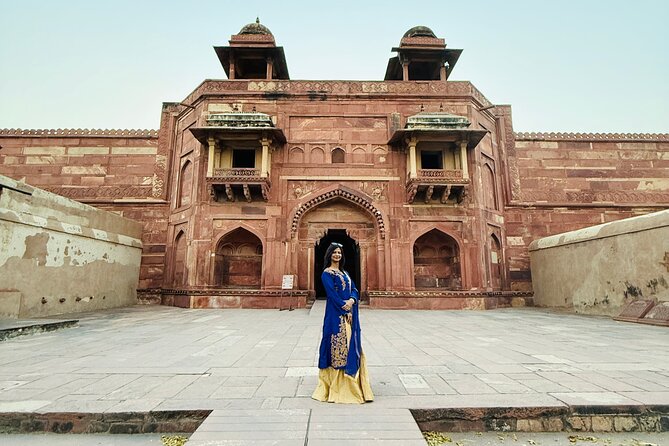
Jaipur Day 3 keeps the theme of Rajput design while adding more “life” into the schedule than pure sightseeing.
Jaigarh Fort: military architecture with a view
You start at Jaigarh Fort, about 2 hours, with admission included. It’s positioned on the hill of Cheel ka Teela and built in 1726 to safeguard the royal treasury.
This stop tends to satisfy people who like fortifications, because the purpose of the structure is built into the experience. You’re not just touring halls; you’re seeing a system designed to protect power.
Jal Mahal: a quick, scenic break
Then comes Jal Mahal at about 15 minutes, with admission included. The idea is simple: you get a short visual pause, floating in Man Sagar Lake, surrounded by water and distant hills.
Even as a shorter stop, it helps break up the stronger fort-and-city visuals. It gives you a moment to reset before the day’s cultural activity.
Chokhi Dhani: Rajput-themed evening entertainment
Finally, Chokhi Dhani gives you about 3 hours with admission included. It’s a cultural stop built around folk dances, puppet shows, fire performances, and a bazaar-style shopping area.
This is where I’d expect most people to feel the value of the “experience” part of the package. Instead of only monuments, you get a performance-style window into Rajputana culture and rural charm.
If you’re the type who likes to learn through atmosphere, this is one of the stops that can stick with you.
Jaipur Day 4: City Palace, Jantar Mantar, and Hawa Mahal in one clean arc
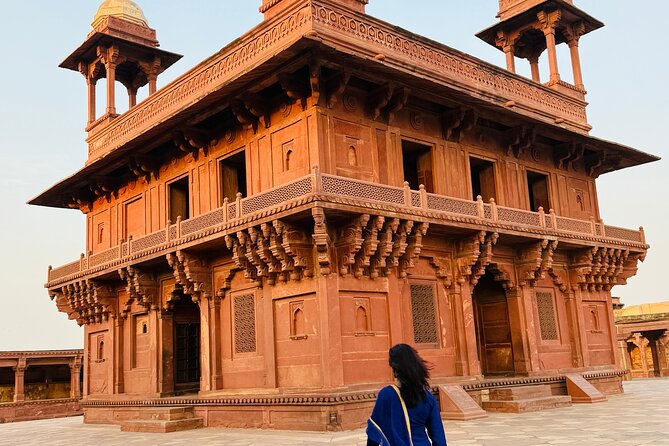
Day 4 is a smart trio: palace life, science-as-power, and palace architecture made for visibility and shade.
City Palace of Jaipur: the royal seat and its rooms
The City Palace gets about 1 hour with admission included. It’s described as rising since the early 18th century from Maharaja Sawai Jai Singh II’s vision.
This is a practical stop because you get to see how a palace complex functions—courtyards, ornate halls, and the idea of a royal center rather than a single iconic building.
Jantar Mantar: UNESCO observatory, 18th-century thinking made visible
Next is Jantar Mantar, about 1 hour, with admission included. It’s a UNESCO World Heritage site and an open-air observatory built by Maharaja Sawai Jai Singh II.
Even if astronomy isn’t your hobby, this works because it shows how rulers used tools and measurement as a kind of authority. You’ll probably find it easier to appreciate with a guide explaining what the instruments are for.
Hawa Mahal: the honeycomb façade for wind and views
To close Day 4, you get Hawa Mahal, about 45 minutes, with admission included. The façade with thousands of tiny windows is the centerpiece, built as an extension of the City Palace.
It’s a good finale because it’s visually distinctive and quick to understand: architecture designed for airflow and sightlines.
Day 5: the practical endgame back to Delhi (or drop-off at Jaipur airport)
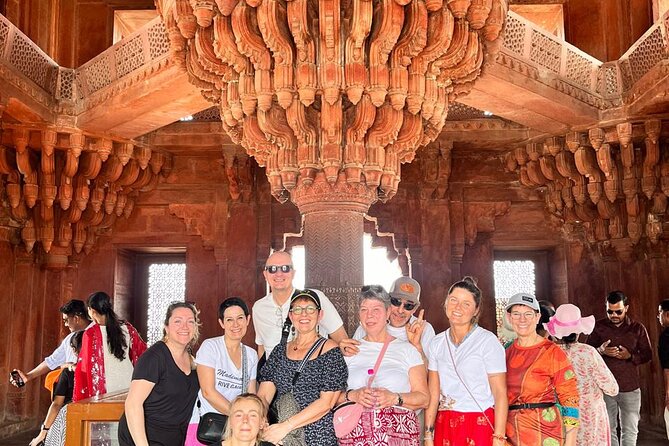
Day 5 is listed as return to New Delhi or a convenient drop-off at Jaipur Airport. You get about 4 hours.
This structure matters if you’re trying to catch a flight. It also helps you avoid wasting a full extra day in transit after you’ve already seen the key sights. You end with a less frantic final day and more control over where you need to be.
How the guide quality can change your whole experience
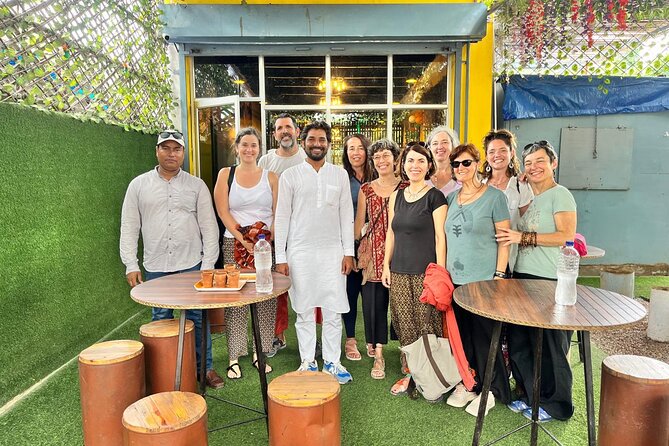
One of the most praised parts of this tour is the human factor: the guides. Names that come up include Ali, Aman, Raj, and Mehraj, and the common theme is simple: they answer questions patiently, explain history clearly, and keep things fun without losing accuracy.
That means you’re not just ticking off buildings. You’re getting the stories tied to the architecture, especially on the harder-to-read sites like Fatehpur Sikri and the tomb/fort complexes.
If you value a guide who makes you feel at ease asking anything—why something looks the way it does, what a building’s purpose was—this tour style matches that.
Comfort details that make long sightseeing days easier
A Golden Triangle trip can feel like constant movement. This one tries to reduce stress with the basics.
- You travel in a private, air-conditioned vehicle
- You get bottled mineral water and light snacks in the car
- Pickup is offered from your Delhi accommodation
- You carry a mobile ticket and benefit from group discounts
Those might sound small, but after a day of walking and heat, you’ll care about them. It’s also easier for families and mixed-age groups when the transport plan is predictable.
Is this tour a good fit for you?
This works best if you want classic Golden Triangle highlights without turning your trip into a logistics project. It’s also a strong choice if you like guided context, because several sites are the kind where understanding improves the experience quickly.
You’ll likely enjoy it if you:
- want UNESCO stops plus the Taj Mahal without piecing together multiple bookings
- prefer a set route with a private vehicle
- want an included cultural evening at Chokhi Dhani
- are okay handling meals and lodging on your own
If you’re the type who hates structured schedules, or you want lots of free time to wander without an itinerary, you might find the pace a bit firm.
Should you book it?
If you’re planning the Golden Triangle for the first time, I think this tour is a solid pick. The price looks reasonable for what you get: private transport, a guided route across three cities, and ticketed access to several of the big-name sights, all wrapped in a 5-day plan that avoids major downtime.
Book it if comfort and clarity matter to you, and if you want to learn as you go. I’d only hesitate if you dislike the idea of arranging your own hotel and meals, or if your schedule requires lots of custom changes—this plan is built around a fixed sequence of stops.
FAQ
What is included in the tour price?
The tour includes private air-conditioned transportation, in-car refreshments (bottled mineral water and light snacks), all fees and taxes, and a private tour with personalized attention. Admission tickets are included for several listed stops, while some stops are marked as free admission.
Do you get pickup in Delhi?
Yes. Pickup is offered from your Delhi accommodation.
Is accommodation included?
No. Accommodation is not included in the package price.
Are meals included?
No. Meals and beverages are not included.
Are tickets for the Taj Mahal included?
Yes. The Taj Mahal stop is listed with an admission ticket included.
Is this tour private or shared?
It’s private. Only your group will participate.
What is the cancellation policy?
Free cancellation is available. You can cancel up to 24 hours in advance for a full refund, and refunds are not available if you cancel less than 24 hours before the experience starts.