REVIEW · NEW DELHI
Day Trip to The Taj Mahal, Agra with Mathura & Vrindavan from Delhi
Book on Viator →Operated by Hire Taxi India · Bookable on Viator
One packed day, three spiritual worlds. You’ll get the Taj Mahal at a calm morning pace, then shift gears to Krishna-focused Vrindavan and Mathura sites in the afternoon and evening. I like how the schedule connects these places into one clear story—Mughal Agra, then Krishna’s birth region, then devotional stops at night. One drawback to plan for: it’s a long day in the car, and the most meaningful moments (like the Krishna birthplace area) can feel time-compressed if you’re hoping for a slow, lingering visit.
The early 6:30am pickup is real, and that matters. Starting before crowds thickens your best photo and lets you tour with less stress. You’ll ride in an air-conditioned private vehicle, with water bottles along the way.
This tour also comes with practical guardrails: you’ll want smart casual clothes, and a passport is required to enter the monuments. If you’re the type who hates being rushed, bring patience—and talk to your guide about pacing early in the day.
In This Review
- Key points before you go
- Why a Delhi-to-Agra early start matters for the Taj Mahal
- Taj Mahal logistics: tickets, timing, and what to watch for
- Agra Fort and the maze of Mughal red sandstone
- Agra handicrafts stop: a useful break or a time sink?
- Lunch timing in an AC restaurant: plan around extra costs
- Mathura and Shri Krishna Janambhoomi: birthplace meaning and tight time
- Prem Mandir on the Vrindavan outskirts and the walk with 80 panels
- Shri Banke Bihari Temple in the evening: the emotional finish
- Price and what you really get for around $72
- Practical tips: passports, smart casual, and pacing yourself
- Should you book this Taj Mahal + Mathura + Vrindavan day trip?
- FAQ
- What time does the tour pick me up in Delhi?
- How long is the trip from Delhi to Taj Mahal, Mathura, and Vrindavan?
- Is the Taj Mahal visit included, and do I get any help with walking?
- Is lunch included?
- Do I need to bring my passport?
- Where does the tour end?
Key points before you go
- 6:30am Delhi pickup means a long but efficient day across Agra, Mathura, and Vrindavan
- Taj Mahal morning timing plus a golf cart ride can save your legs for later temples
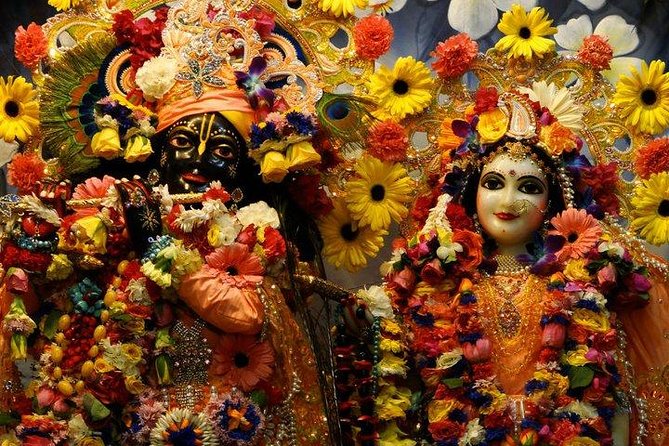
- Krishna-focused stops at Shri Krishna Janambhoomi, Prem Mandir, and Shri Banke Bihari Temple
- Private guide + driver keeps navigation and queueing simpler than DIY
- All-inclusive option check: entrance fees and buffet lunch are included only if booked that way
Why a Delhi-to-Agra early start matters for the Taj Mahal
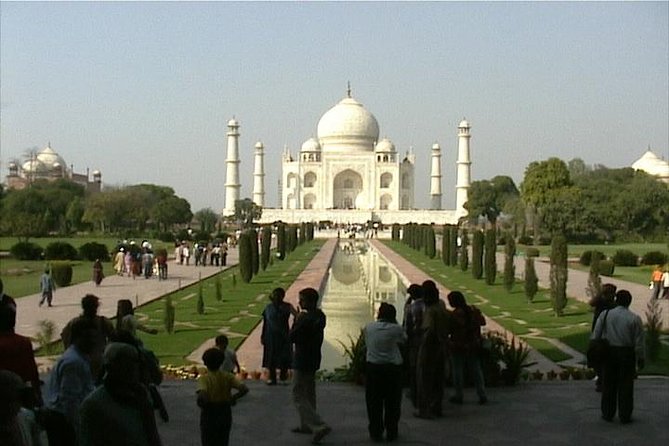
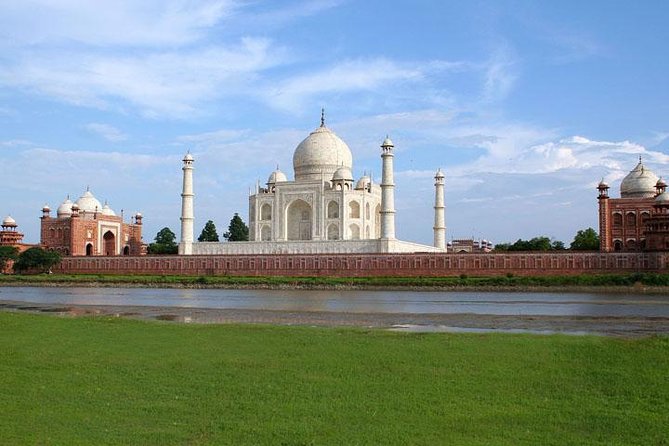
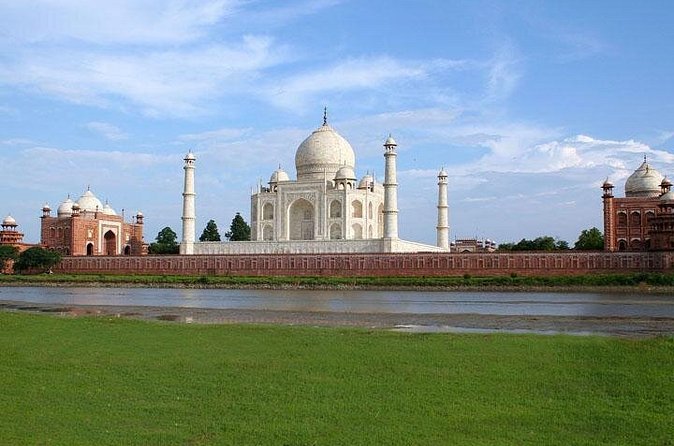
The Taj Mahal experience is all about timing. This day trip starts with pickup at 6:30am from your Delhi hotel or the airport, then it’s about three hours to Agra in an air-conditioned private vehicle. Getting there early helps you see the monument before the heaviest crush, and it also sets up a morning visit when the building’s light is at its best.
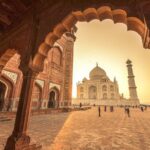
You’ll spend about two hours at the Taj Mahal with your guide. The tour plan specifically notes the monument was built for a Mughal emperor’s sunrise viewing, and that idea fits the early arrival rhythm. You’ll also get a golf cart ride to and from the Taj Mahal, which is a huge time-saver when you know the rest of the day includes multiple temple stops.
If you come for the Taj and want the rest of the day to feel like more than a checklist, this structure is smart. You’re not sprinting through Krishna sites on empty legs—you’re getting the biggest landmark out first.
You can also read our reviews of more tours and experiences in New Delhi


Taj Mahal logistics: tickets, timing, and what to watch for
Your entry to monuments is not a casual detail on this tour. The tour information notes that passports were compulsory for guests to enter the monuments, so don’t show up with just a booking email.
Also, come prepared for movement. Even with a golf cart ride, you’ll still walk and stand for parts of the visit. That’s normal for the Taj, but the rest of the day is also active, so comfortable footwear is your friend.
Dress code is listed as smart casual. That doesn’t mean you need to look formal; it just means avoid anything too sloppy or overly casual for temple areas later. If you’re carrying a small bag, keep it minimal—temple and monument checks can slow you down.
Agra Fort and the maze of Mughal red sandstone
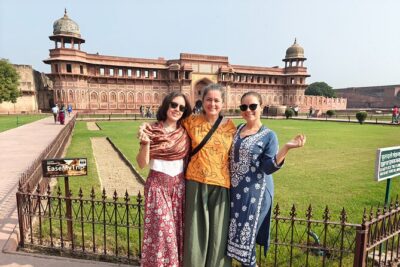
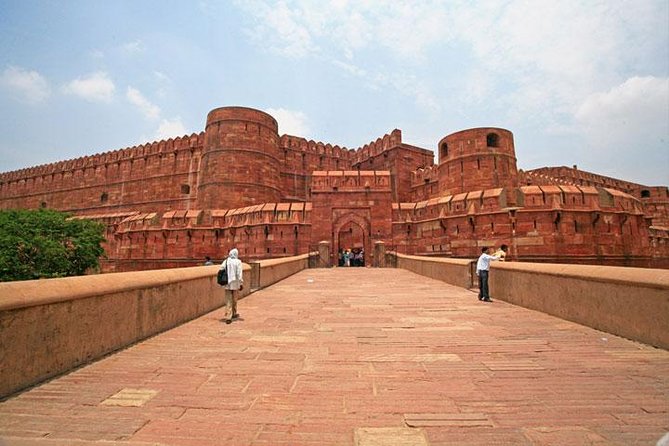
After the Taj Mahal, the tour heads to Agra Fort, a UNESCO World Heritage Site. You’ll get a guided tour for about one hour, with the fort described as built by Emperor Akbar in 1565 A.D. and made of red sandstone.
This is the part of the day where you can catch your breath a bit. The fort is big, but the guided experience helps you connect courtyards, mosques, and the feel of Mughal power without having to read everything on your own. It’s a different mood than the Taj—less “perfect postcard,” more “real architecture and real stories.”
One caution: the itinerary shows some “own expense” wording in places, while the inclusions mention entrance fees if you book the all-inclusive option. If your plan depends on having all monument fees covered, confirm you’ve selected the option that includes them before you go.
Agra handicrafts stop: a useful break or a time sink?
Agra is known for crafts, and the tour gives you a dedicated one-hour shopping stop. The stop is listed as Sanskriti’s Imperial Gems, described as a place selling items made with marble and softstone inlay work, plus leather, carpets, and jewelry.
Here’s the practical way I’d handle this: treat it like a stretch break with an option, not a must-buy window. You’ll likely feel the pressure that can come with shopping stops in general, so decide ahead of time what you’re comfortable paying for—if anything.
If you’re curious about craft techniques, this is a decent spot to at least look closely. If you just want photos and temples, you may want to keep your spending plan tight and focus on browsing quickly.
Lunch timing in an AC restaurant: plan around extra costs
Lunch is scheduled after Agra Fort and shopping, and the tour mentions lunch at a local AC restaurant. The included list says there’s a buffet lunch with the all-inclusive option, while the itinerary line marks lunch as not included and notes own expense.
So, the simplest advice: assume lunch cost details depend on the package you chose. Drinks are listed as not included, so you may pay extra for bottled beverages beyond the water you already get.
This meal matters because after lunch you’re heading into Krishna pilgrimage territory. If you eat lightly, you’ll feel better during temple visits that include stairs, crowds, and long periods of standing.



Mathura and Shri Krishna Janambhoomi: birthplace meaning and tight time
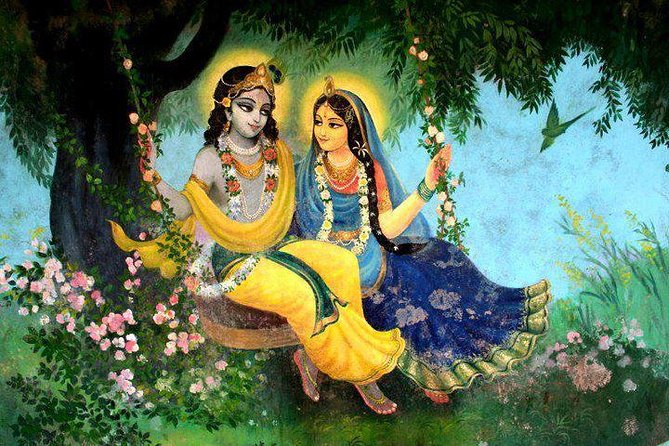
Next comes Mathura, described as one of Hinduism’s seven sacred cities and closely tied to Krishna’s story. The tour includes a visit to Shri Krishna Janambhoomi temple and a live kirtan performance inside the kirtan room.
This is one of the tour’s strongest cultural moments because it’s not only about seeing a site—it’s about hearing devotion in a place where the meaning is local and lived-in. Kirtan can be powerful, even if you don’t speak the language. You’ll feel it more than you’ll analyze it.
Still, here’s the consideration: the day is packed, and the Mathura stop is about one hour 30 minutes. That’s enough time to enter, experience, and understand what you’re looking at—but if you’re hoping for a slow, deep visit at the single most significant spot, be vocal with your guide early. Ask for a little breathing room so you don’t feel like you’re being herded through the important parts.
Also note: the guide language can vary. The tour includes a private live guide in Agra, and good English is a common theme when the guide is excellent. If communication matters to you (it usually does for context-heavy sites), ask your guide to slow down if something is unclear.
Prem Mandir on the Vrindavan outskirts and the walk with 80 panels
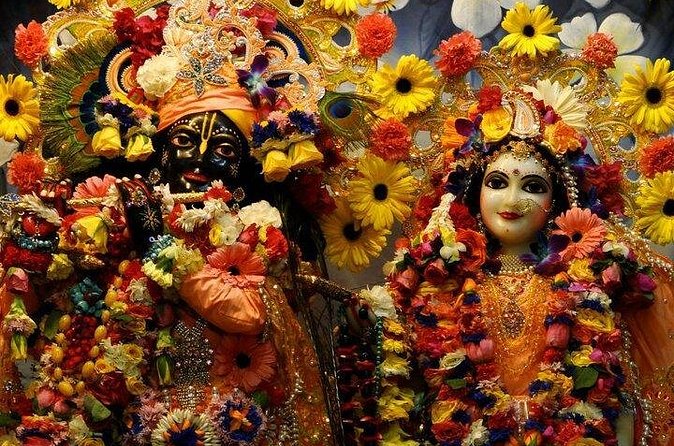
After Mathura, the tour heads to Prem Mandir – Shyama Shyam Dham, a spiritual complex on a 54-acre estate on the outskirts of Vrindavan. This is a short stop—about 30 minutes—but it’s visually structured and easy to understand fast.
The site includes 80 panels depicting Krishna’s life. There’s also a planned 40-foot (12-meter) circumambulation route, which gives you a built-in way to walk the space rather than just stand and look.
I like this stop for two reasons. First, it’s a “show, then explain” kind of place—if you don’t catch every detail, the layout still makes sense. Second, because the stop is scheduled with a defined time window, you can enjoy it without wondering when the next transfer will happen.
If you’re traveling with anyone who loves architecture, symmetry, and devotional storytelling through visual panels, this one will land well. If you’re exhausted, it’s still manageable because it’s not a long endurance walk.
Shri Banke Bihari Temple in the evening: the emotional finish
The day’s final spiritual highlight is an evening visit to Shri Banke Bihari Temple, described as the most famous Krishna temple. The stop runs about 30 minutes, which means you’ll experience it as a concentrated burst rather than a long ritual.
Even in short time, evening temple visits tend to feel different than midday. You’re likely to catch a more devotional atmosphere as the day cools and worship intensifies. If you want one emotional “capstone” moment after Taj Mahal and fort history, this temple visit is built to do that job.
From there, you return to your vehicle for the two-hour drive back to Delhi, with the tour ending at hotel drop-off.
Price and what you really get for around $72
At about $72 for a roughly 14-hour day, the value comes from the big-ticket items the itinerary bundles together: a private air-conditioned vehicle, a guide, and major landmark access. This isn’t a “hop on a bus and cross your fingers” type of outing.
What makes it feel more reasonable is the private setup. You’re not sharing transport with strangers in a crowded coach. The tour also includes water bottles throughout the tour and a golf cart ride connected to the Taj Mahal visit, which is the kind of small add-on that costs money on its own.
The key pricing variable is the all-inclusive option. The inclusions list says entrance fees and buffet lunch are included only if you book that version. If you book a base option, expect that some fees (or lunch) may be extra. So when you compare prices, compare packages, not just the headline number.
The tour also mentions a mobile ticket and group discounts, and it’s explicitly a private tour where only your group participates. That’s a good match for couples, small families, and anyone who wants control over the pace inside each stop.
Practical tips: passports, smart casual, and pacing yourself
Here’s how to make the day feel smoother and more meaningful:
- Bring your passport. The tour notes it’s required to enter the monuments.
- Wear smart casual. You can stay comfortable, but keep it respectful for temples.
- Keep expectations realistic about time. The day is structured to hit big highlights in sequence, and that can compress the deepest moments—especially at Shri Krishna Janambhoomi.
- Ask your guide for a pacing adjustment at the start of the Krishna section. If you want a calmer visit, request it when you still have leverage.
- Use the included water bottles, and keep a small snack plan in your head in case lunch is not included in your selected package.
- If you’re sensitive to language barriers, choose a guide option with strong English. In this style of tour, clarity makes the cultural stops much better. One guide and driver team named in the experience info is Manoj (guide) and Sanju (driver), and that name recognition is useful if you can request or confirm staff through your operator.
If you handle the day like a marathon—hydration, timing, and calm expectations—it works. If you treat it like a leisurely stroll, it’ll feel like you’re rushing. The difference is how you set your own mindset.
Should you book this Taj Mahal + Mathura + Vrindavan day trip?
Book it if you want maximum variety in one day: Mughal-era Agra icons, Krishna birthplace meaning in Mathura, and devotional temple atmosphere in Vrindavan’s evening. The private car and guide turn what could be a stressful DIY day into a managed route—especially if you’re pressed for time while in Delhi.
Skip it (or consider a different pace) if you hate long days and you need lots of quiet time at each site. This itinerary is built for coverage, not for deep wandering. Also confirm your all-inclusive choice if entrance fees and lunch must be covered in your budget.
If you go, I’d treat the day like this: enjoy the Taj first, switch your brain to devotion after lunch, and don’t let the clock steal the moment at Mathura. This tour gives you that chance—it’s up to you how gently you hold onto it.
FAQ
What time does the tour pick me up in Delhi?
Pickup starts at 6:30am from your hotel in Delhi or from the airport.
How long is the trip from Delhi to Taj Mahal, Mathura, and Vrindavan?
The total duration is about 14 hours (approx.), including the drive times and sightseeing.
Is the Taj Mahal visit included, and do I get any help with walking?
Yes. The Taj Mahal is visited in the morning with a guided tour for about two hours, and you also get a golf cart ride to and from the Taj Mahal.
Is lunch included?
Lunch is included only if you book the all-inclusive option. Drinks are not included.
Do I need to bring my passport?
Yes. The tour notes that passports were compulsory for guests to enter the monuments.
Where does the tour end?
The tour ends back in Delhi with hotel drop-off at the meeting point.