REVIEW · NEW DELHI
Delhi: Best 4 to 8 hour Old and New Delhi City Tour-All Inclusive
Book on Viator →Operated by Tajmahal Tour Holidays · Bookable on Viator
Mughal monuments meet market chaos in one sweep. This 4–8 hour Delhi circuit strings together major sights across Old and New Delhi, starting at Qutub Minar and ending at Jama Masjid after a rickshaw ride through Chandni Chowk. Along the way, you’ll also pass key New Delhi landmarks and get a contrast-filled stop at the Lotus Temple.
I like two things a lot: the guided storytelling that makes each stop click fast, and the comfort of an air-conditioned car with a driver so you spend less time stuck in traffic fatigue. The schedule is built around sensible time windows, so you get to look up close without feeling like you only waved from a bus.
One consideration: you pack in many sites, so you’ll spend some time driving and doing short photo moments at the New Delhi stops. If you want slow, stay-a-while museum energy, this half-day format may feel a bit too efficient.
In This Review
- Key highlights worth marking on your map
- A 4–8 hour mix of Mughal monuments and modern Delhi
- Price and logistics: what $19 really includes
- Getting picked up and staying comfortable on the move
- Qutub Minar: the 1192 brick minaret that anchors your UNESCO morning
- Humayun’s Tomb: the first garden tomb of India
- India Gate and Parliament House: quick New Delhi context with real photo value
- Lotus Temple: a calm reset designed in the shape of a lotus
- Old Delhi by rickshaw and mosque courtyards: Jama Masjid and the market weave
- Agrasen Ki Baoli: the 14th-century stepwell pit stop (and why it’s worth it)
- The guide factor: what makes this tour feel smooth
- Should you book this Old and New Delhi tour?
- FAQ
- How long is the Delhi Old and New City Tour?
- Is pickup available?
- What sites will I see in Old and New Delhi?
- Are monument tickets included?
- Do I get a rickshaw ride?
- What’s included in the tour price?
- What is not included?
- Is this tour private?
- What is the cancellation policy?
Key highlights worth marking on your map

- UNESCO start to finish: Qutub Minar and Humayun’s Tomb both land you in UNESCO territory early.
- Rickshaw through Chandni Chowk: a fun, practical way to experience the market vibe without trying to navigate it yourself.
- New Delhi landmarks with quick photo time: India Gate and Parliament House are handled as drive-pasts with stops timed in.
- All-inclusive entry option at the big sites: tickets are included if you choose the monument-entry option (several top stops).
- A private group feel: it’s only your group, with a guide and driver.
- A short detour to Agrasen Ki Baoli: a 14th-century stepwell break that fits neatly into the route.
A 4–8 hour mix of Mughal monuments and modern Delhi
This tour is designed for a specific goal: see the big Delhi highlights without spending your whole trip on planning. You’ll move through two different worlds—Mughal-era Delhi around Qutub Minar and Humayun’s Tomb, then New Delhi’s official monuments, then back into the bustle of Old Delhi’s markets and mosques.
The time structure matters. You’ll typically get about 45 minutes at Qutub Minar and Humayun’s Tomb, a 15-minute stop at India Gate (plus another 15-minute moment for Parliament House as a photo opportunity), and then you’ll get 45 minutes at the Lotus Temple. In Old Delhi, Jama Masjid gets about 30 minutes, with shorter add-ons like Agrasen Ki Baoli and Chandni Chowk.
That pacing is great for first-time visitors because it gives you enough time to look carefully and still keep the day moving. Just don’t book this if your only vacation style is staying put for hours—this is a “see a lot, learn as you go” format.
You can also read our reviews of more city tours in New Delhi


Price and logistics: what $19 really includes
At $19 per person, the value comes from what’s bundled. You’re not just paying for a guide’s presence; you’re paying for transportation, parking/taxes, and key experiences that would cost you time (and stress) on your own.
Here’s what’s included:
- air-conditioned car with a driver
- tour guide
- parking and taxes
- bottled water
- rickshaw ride in Old Delhi
- monument tickets if you select the all-inclusive option
What’s not included: personal expenses and tips.
One practical note: this is offered with a mobile ticket, and pickup is available. That matters in Delhi, where “meet-up chaos” can eat up your energy. You’ll also see group discounts mentioned, which can make the price even more attractive if you’re traveling with others.
Getting picked up and staying comfortable on the move
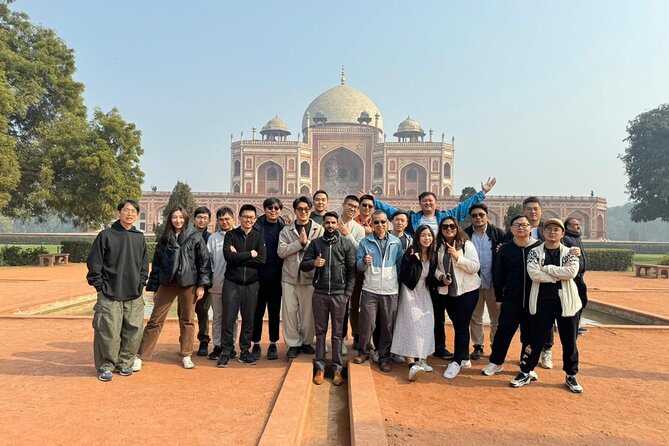
Delhi is big, and site-hopping means a lot of in-between time. This tour reduces that pain with an air-conditioned car and a driver doing the steering while your guide runs the show.
Pickup is offered, and the transport setup is especially helpful if you’re juggling jet lag or limited daylight. The guide helps you stay oriented: where you are, why the site matters, and what to notice while you’re there.
You’ll also benefit from the “in-the-car” rhythm. Between stops, the driver gets you to the next location while the guide sets context—so when you arrive at places like Qutub Minar or Humayun’s Tomb, it’s not just sightseeing. You know what you’re looking at and why it matters.
Finally, bottled water is included. It’s a small thing, but it keeps the day smoother when you’re walking some steps and waiting your turn to enter.
Qutub Minar: the 1192 brick minaret that anchors your UNESCO morning
Your first major stop is Qutub Minar, described as the world’s tallest brick minaret. It was built in 1192 and sits inside the Qutub complex, which is part of the UNESCO World Heritage Site.
What I love about starting here: the scale hits quickly. Even when you’re not a big architecture person, you’ll feel the vertical drama. A minaret built from brick carries a kind of visual confidence—you get a clear sense of how monumental this era of Delhi planning was.
You also get a proper amount of time: about 45 minutes. That’s long enough to walk around the area, take photos from different angles, and actually look at details rather than rushing through the first view.
Potential drawback: since this is an early anchor point, your comfort depends on how you manage your pace at the start of the day. If you’re easily tired, slow down and take breaks rather than trying to “win the photo game” immediately.
Humayun’s Tomb: the first garden tomb of India
Next comes Humayun’s Tomb, another UNESCO site and noted as the first garden tomb of India. This is a powerful contrast to Qutub Minar: instead of focusing on a single tall structure, you move through a planned garden setting.
The story detail you’re given makes the place more personal: it was built after Humayun’s death, with the sole purpose credited to his wife. That turns what could be “just another tomb visit” into a human narrative about grief, power, and legacy.
You get about 45 minutes here as well. In that time, you can walk the grounds, look at how the garden layout supports the tomb’s presence, and slow down enough to understand why this site became a reference point for later Mughal architecture.
As a tip for how to experience it: don’t only aim your camera at one angle. Let your eyes adjust to the relationship between the tomb and the garden plan. That’s where the meaning lands.






India Gate and Parliament House: quick New Delhi context with real photo value
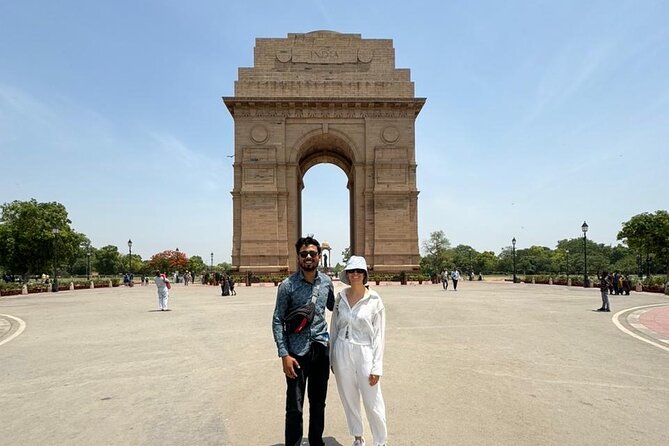
After the UNESCO focus, the tour shifts into New Delhi’s ceremonial geometry. You’ll stop at India Gate, described as the 1921 Tomb of the Unknown Soldier, where names of 13,300 Indian servicemen who died during the First World War are carved on the walls.
Then you’ll drive past Parliament House. This one is more of a photo-and-position moment than a full deep stop, with around 15 minutes allocated for viewing.
This New Delhi segment is useful even if you’ve never studied Indian history. India Gate acts like a national memory wall, and it gives you a sense of how public space and commemoration work here. The Parliament House pass adds a little modern governance context—enough to spot it, capture an image, and keep moving.
Consideration: these are shorter stops (15 minutes each), so keep expectations realistic. You’re getting orientation and key visuals, not a long, slow wander.
Lotus Temple: a calm reset designed in the shape of a lotus
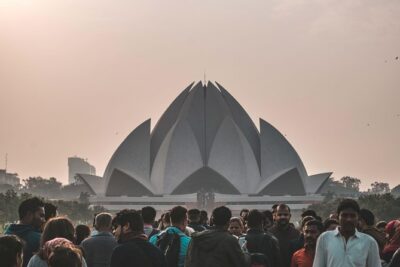
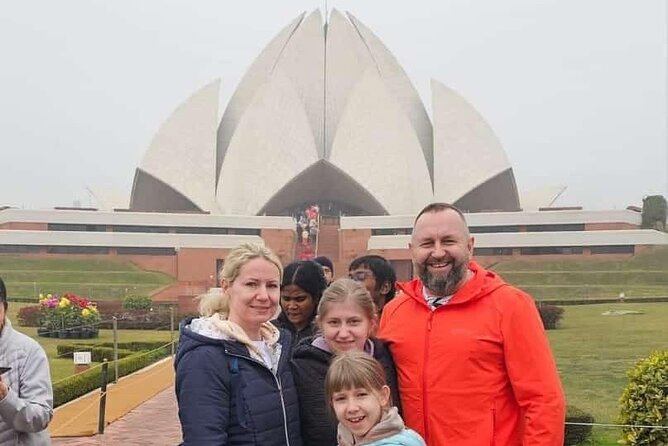
Then you head to the Lotus Temple, famous for its lotus-flower shape. The design is meant to reflect the beauty and symmetry of the lotus, which is important across many Eastern and Indian faith traditions, including the Bahá’í Faith.
This stop is a nice change of pace after the tighter historical density of the UNESCO sites. You’ll likely appreciate the spacious feeling that the design encourages, plus the way the architectural concept becomes the main attraction instead of just the story around it.
You’ll get about 45 minutes. That’s enough to take in the form, watch people move through the space, and gather photos without being rushed out.
Practical reminder: because it’s a religious space, your best experience will come from slowing down and acting like a respectful visitor rather than treating it like a photo set. The temple experience works best when you let it be quiet and reflective.
Old Delhi by rickshaw and mosque courtyards: Jama Masjid and the market weave
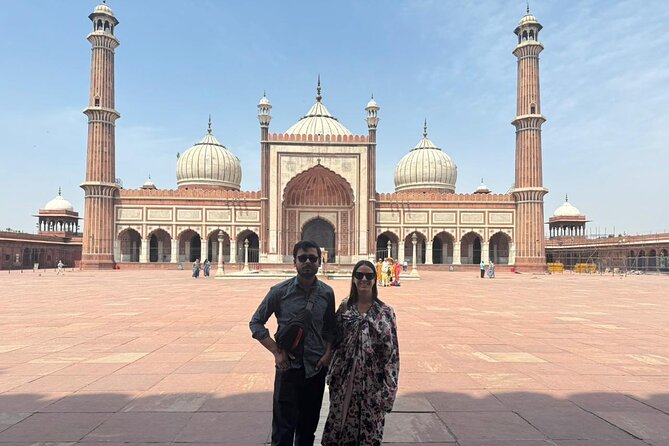
Old Delhi is where the tour turns energetic. The route pushes you toward Chandni Chowk, and you’ll get a rickshaw ride in Old Delhi as part of the experience.
From there, you end at Jama Masjid, described as the 17th-century mosque and the largest mosque in India. It was built in 1656 with the help of 5,000 workers and sits in front of the royal residence area tied to Red Fort.
You’ll spend about 30 minutes at Jama Masjid, which gives you time to walk the red sandstone courtyard and take in the scale. This is one of the best moments for understanding Old Delhi’s lived-in character. The architecture is impressive, but the daily rhythm is the real context.
Chandni Chowk itself also gets about 30 minutes. It’s framed as one of the oldest and most iconic marketplaces in Delhi—ideal for quick browsing and sampling the vibe through shopping and street-food culture.
One caution: Old Delhi can be crowded and active, and rickshaw rides can feel bumpy. If you’re sensitive to motion or want a more relaxed pace, don’t plan anything tight right after this portion of the day.
Agrasen Ki Baoli: the 14th-century stepwell pit stop (and why it’s worth it)
Between the big hitters, you’ll stop at Agrasen Ki Baoli, a historic stepwell in the heart of Delhi built in the 14th century by Maharaja Agrasen. The description includes 103 steps, which is part of what makes it memorable: it’s not just a structure; it’s an entire descending system of space.
This stop is short—about 15 minutes—so it’s perfect for a breather and a change of texture. You go from tomb and temple forms to something more utilitarian in design, yet still architectural and historical.
Why I think it works in a half-day tour: it prevents the day from becoming a straight line of “monument, monument, monument.” It also gives you a calmer, more niche sight to focus on when you’re tired of crowds.
The guide factor: what makes this tour feel smooth
The tour’s strongest praise centers on the guide experience and how the day is handled in real time. Names that show up include Anil, Adil, Singh, and Gurvinder, with guidance described as professional, approachable, and able to answer questions clearly. On the driver side, Rameshwar is named in the feedback.
That matters because Delhi navigation can be confusing if you’re doing it alone. Having a guide means you’re not just “at the sight,” you’re understanding what to notice while you’re there—especially at places like Humayun’s Tomb, where garden design is part of the meaning.
You also see consistent notes about the tour not feeling rushed. With a schedule that runs through multiple locations, that’s a big deal. It helps you avoid that common half-day problem where you’re sprinting and trying to remember what you even saw.
Should you book this Old and New Delhi tour?
You’ll probably like this tour if you want a high-yield Delhi introduction in 4–8 hours, with an air-conditioned car, a guide, and built-in experiences like the Chandni Chowk rickshaw ride. It’s especially smart if you’re short on time and want both UNESCO-style monuments (Qutub Minar and Humayun’s Tomb) and the Old Delhi street-and-mosque atmosphere (Jama Masjid).
I’d skip or choose a longer tour instead if you hate tight time windows or you want deep, slow study time at fewer places. This is designed to cover a lot, so it won’t feel like a leisurely museum day.
If you do book, consider selecting the all-inclusive option for monument tickets, since several major stops are listed with admission tickets included. With bottled water, transport, and guide coverage bundled, that’s where the value gets strongest.
FAQ
How long is the Delhi Old and New City Tour?
The tour runs about 4 to 8 hours, depending on how the day flows and the time spent at each stop.
Is pickup available?
Yes. Pickup is offered, and you’ll meet the guide as part of the tour setup.
What sites will I see in Old and New Delhi?
You’ll visit Qutub Minar and Humayun’s Tomb, then head to India Gate and the Parliament House area, visit the Lotus Temple, and spend time in Old Delhi at Jama Masjid, plus stops that include Agrasen Ki Baoli and Chandni Chowk.
Are monument tickets included?
Monument tickets are included if you select the all-inclusive option. India Gate and Agrasen Ki Baoli are listed as free admissions in the schedule.
Do I get a rickshaw ride?
Yes. A rickshaw ride in Old Delhi is included.
What’s included in the tour price?
Included features include an air-conditioned car with a driver, a tour guide, parking and taxes, bottled water, rickshaw ride in Old Delhi, and monument tickets if you choose the all-inclusive option.
What is not included?
Personal expenses and tips are not included.
Is this tour private?
Yes. It’s private, meaning only your group will participate.
What is the cancellation policy?
Cancellation is free. You can cancel up to 24 hours in advance for a full refund.