REVIEW · NEW DELHI
Golden Triangle 2-Day Tour to Agra and Jaipur from Delhi by Train
Book on Viator →Operated by Nikita Holidays · Bookable on Viator
A sunrise pickup can turn a tight schedule into a great one. This Delhi–Agra–Jaipur trip packs the big Golden Triangle sights fast, with hotel pickup plus train travel handled for you. I like that the basics are covered—entrance fees, select meals, and lodging—so you spend your time looking at monuments instead of planning the logistics.
The best part is the pacing: you’re on the Shatabdi AC Chair Car to Agra early, then back to Delhi late on Day 2. My main caution is simple: it’s a full-on two days, with very early mornings and a shopping stop that may feel optional to you… or may not.
In This Review
- Key highlights to know before you go
- Why this Delhi-to-Agra-to-Jaipur plan starts before sunrise
- Taj Mahal: morning timing, tickets included, and what to watch for
- Agra Fort after the Taj: a different kind of wow
- Lunch in Agra plus a shopping stop you can control
- The 4-hour ride to Jaipur and your one-night reset
- Amber Fort: the big Jaipur start you actually need
- Jal Mahal and Hawa Mahal: photo stops that make Jaipur click
- City Palace and Jantar Mantar: where the tour turns into understanding
- Jaipur textiles and carpets: a quick stop you should handle with a plan
- Train back to Delhi: AC Chair Car comfort with a late arrival
- Price and logistics: is $264 per person fair for what you get?
- Should you book this Golden Triangle 2-day train tour?
- FAQ
- What time does the pickup start in Delhi?
- Which train is used for the Delhi to Agra and Jaipur to Delhi legs?
- Are entrance fees included for the monuments?
- What meals are included during the 2 days?
- Is there an overnight hotel stay?
- What are the main sights in Agra?
- What are the main sights in Jaipur?
- What ID do I need to bring?
- Is it refundable if I cancel?
Key highlights to know before you go
- 5am Delhi pickup + Shatabdi train: less indecision, more sightseeing
- All entrance fees included for major monuments
- Two Taj-to-Fort hours then straight onward to Jaipur
- Amber Fort + photo stops (Jal Mahal, Hawa Mahal) timed for good viewing
- City Palace + Jantar Mantar on the Jaipur day, not “just a drive-by”
- Guide support in multiple languages (I’ve seen guides like ManoJ, Tony, Sundal, and others)
Why this Delhi-to-Agra-to-Jaipur plan starts before sunrise
This tour works because it treats time like a budget. You’re picked up at 5:00am from Delhi, Gurgaon, or Noida, then transferred to New Delhi Railway Station to catch the fast train to Agra. Starting early is not romantic, but it’s practical: you lose fewer daylight hours and you get into the big-ticket sights while the day is still fresh.
The other “makes it easy” factor is the way transportation is handled end to end. You get air-conditioned private vehicle transfers plus a professional private tour guide. Even when you’re switching from car to train, there’s someone coordinating the handoffs—so you’re not bouncing between ticket counters and meeting points.
If you’re the type who hates rushing, this one might feel intense. But if you want a guided “best of” route without the DIY headache, it’s a smart way to do the Golden Triangle in two days.
You can also read our reviews of more tours and experiences in New Delhi


Taj Mahal: morning timing, tickets included, and what to watch for
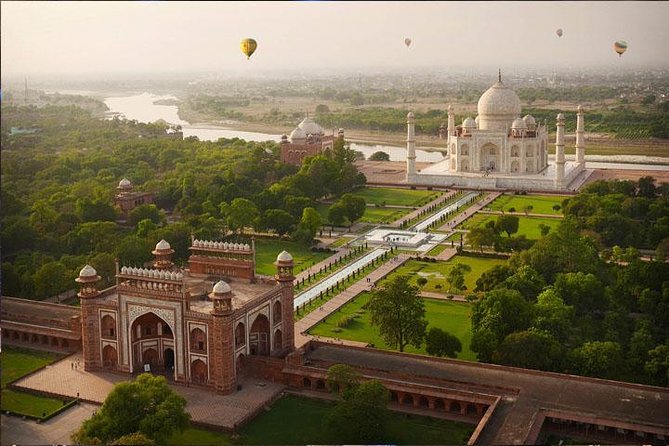
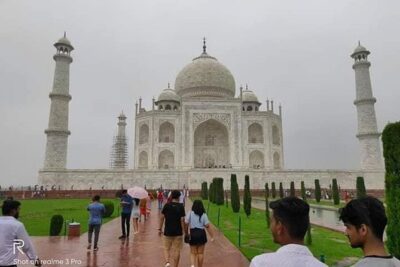
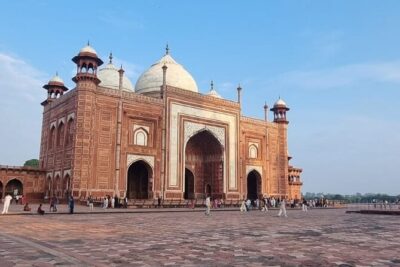
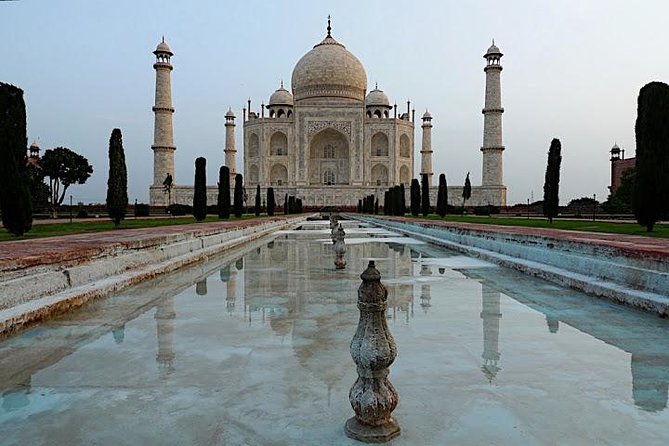
On Day 1, you arrive in Agra around 8:00am, meet your representative at the station exit, and head straight to the Taj Mahal. You get about 2 hours there, and admission is included. That matters because the Taj isn’t a quick peek. It needs time for the changing light, the details in the white marble, and the calm that comes from not feeling like you’ll miss your train.
I like that a guide is part of the experience here. In real-world setups I’ve seen, guides like Rocky have helped people focus on strong photo angles and practical routes through the grounds. You’ll also get explanations that connect what you’re seeing to the people who built it and the empire that shaped it.
Practical note: the Taj Mahal is popular, so you’ll want comfy shoes and a little patience with crowds. Also, if you need accessibility support, it’s worth mentioning your needs early—some guides have arranged extra help like a wheelchair pusher for visitors at the Taj.
Agra Fort after the Taj: a different kind of wow
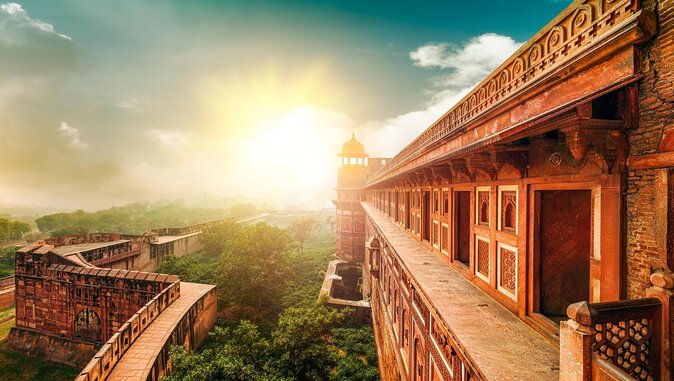
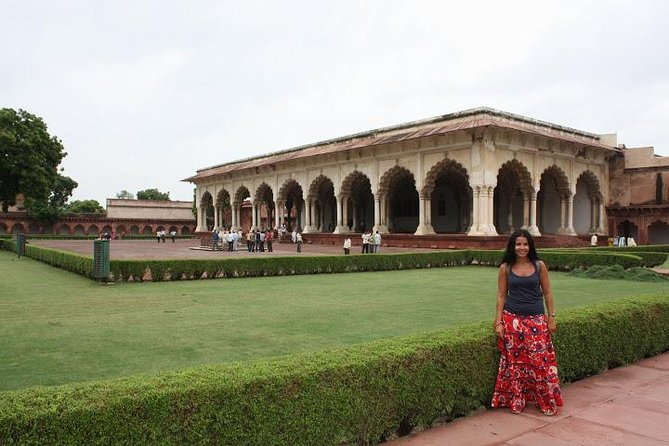
After the Taj, you move to Agra Fort, another UNESCO site, with about 1 hour and included admission. This is not just a pretty backdrop. It’s a fortress built of red sandstone, with courtyards, mosques, and inner chambers. It’s the kind of place where you’ll understand the “power” side of the story right after seeing the “legacy” side at the Taj.
This stop is valuable because it balances the day. The Taj Mahal is about artistry and symbolism. Agra Fort is about defense, rule, and daily life inside a complex. If you want your Golden Triangle to feel like more than a checklist, Fort is the moment that turns the tour from sightseeing into understanding.
Guide choice can really shape this part. I’ve seen Agra guides like ManoJ offer very clear, language-friendly context (including fluent Spanish for at least one group). Even if you’re not speaking multiple languages, good guiding helps you find what’s worth your time instead of getting lost in large spaces.
Lunch in Agra plus a shopping stop you can control
Between monuments, you get lunch provided at a local restaurant. After that, the tour includes time at Sanskriti’s Imperial Gems—market-style shopping focused on Agra’s handicrafts, especially marble and softstone inlay work.
Here’s how I’d handle this segment if you’re budget-minded or not into shopping: treat it like a short cultural break, not a commitment. You’re given around 2 hours, and admission for this part is listed as free. So you can browse, learn what you’re looking at, and walk away without the pressure of it being your only activity.
If you do want something as a souvenir, this is one of the better moments to consider it—because you’re in the region where these crafts are made and you have a guide who can clarify what’s genuine versus what’s just presented as “local.”
The 4-hour ride to Jaipur and your one-night reset
After Agra sightseeing and shopping, you start a ~4-hour journey to Jaipur, the “pink city.” This transfer is where the tour feels most efficient. You don’t waste hours negotiating transport or searching for a workable schedule.
You also get one night of accommodations (twin sharing, with breakfast if your option includes hotels). Even though the tour doesn’t specify every detail like the exact hotel name here, the key point is that you’re not walking straight from Agra to Day 2 without a break. You’ll have a place to sleep between the two sightseeing blocks, which makes the second day much more manageable.
My practical advice: if your hotel pickup timing is tight, keep essentials in your day bag—passport/ID, sunglasses, water bottle if allowed, and anything you need for the next morning. Then let the car ride do what it’s supposed to: transport you.






Amber Fort: the big Jaipur start you actually need
Day 2 begins at 8:00am with Amber Fort. You get about 2 hours there, and admission is included. Amber Fort sits on a ridge just outside Jaipur, and it’s known for its dramatic setting—often reflected in the lake below. The fort interiors give you a visual mix of architecture and royal power.
I like Amber Fort as a starting point because it’s where Jaipur feels most “real.” You get away from the modern street level and step into the scale of historic rule. Also, the fort is built for wandering—so 2 hours is the right amount of time to see main areas without feeling like you’re running.
One consideration: in at least one account, an elephant-ride issue came up around Amber Fort. This tour data doesn’t clearly say elephant rides are part of the package, but it’s enough of a flag that I’d ask directly what activities are included versus optional when you’re there. If you care about animal welfare, you’ll feel better having the answer in hand.
Jal Mahal and Hawa Mahal: photo stops that make Jaipur click
Next you have a photo stop at Jal Mahal around 11:00am, with about 30 minutes on site. Jal Mahal is a Rajput-style water palace sitting in the Man Sarobar lake. The tour notes that the lake is often dry during summer, but in winter monsoons it can be fuller—so the look may depend on when you go. That doesn’t make it useless; it just means your expectations should be flexible.
Then you go to Hawa Mahal (Palace of Breeze) for additional photo time, also around 30 minutes. This is one of those Jaipur sights that makes sense even if you don’t “fully tour” it. Built in 1799, it’s a five-story facade designed along the main street. The best experience here is noticing the details from the street perspective and getting photos that show the sheer visual rhythm of the facade.
I’ve seen guides like Sundal help people time photos better and explain the building’s purpose, not just its appearance. You’ll get more out of it when someone points out what you’re looking at.
City Palace and Jantar Mantar: where the tour turns into understanding
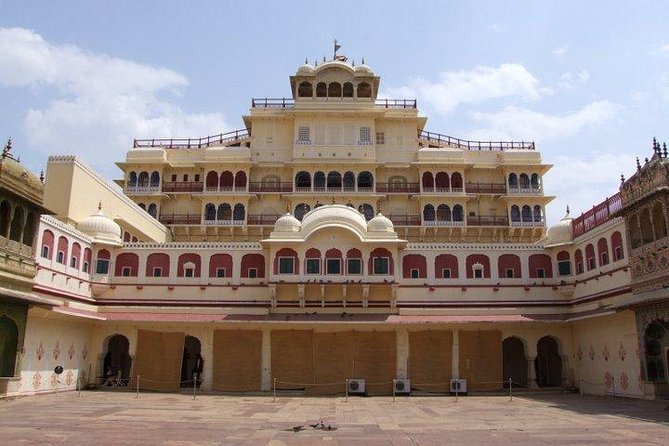
After lunch, the tour moves to City Palace, with about 2 hours and included admission. City Palace is described as the principal residence of the ruling family and includes architecture that now functions partly as a museum. This stop helps you see how Jaipur’s royal identity continued long after the forts.
Right alongside City Palace time, the tour also references Jantar Mantar, the stone observatory. Even if you only get a structured overview, this is one of the most satisfying “stop-and-learn” locations in the Golden Triangle, because it connects art, science, and empire in a way that’s hard to fake.
If you want a memorable second day, this is the section that pulls it together. Amber Fort gives you size and setting. Hawa Mahal gives you streetscape beauty. City Palace and Jantar Mantar give you context.
Jaipur textiles and carpets: a quick stop you should handle with a plan
Early evening includes a shopping visit to a Carpet and Textile House. The time listed is short, but the emphasis is on seeing handcraft work—specifically how silk carpets are handmade. Admission is listed as free.
This part can be great if you treat it as a learning stop. Watch the process, ask questions, and decide calmly if you want to buy. If you don’t, you can still get value from the craft demonstration and the chance to see materials up close.
It helps to set a small rule for yourself before you go in. For example: only shop if it matches a budget you set earlier. With shopping stops, the tour’s job is to give you access; it’s still your job to keep control.
Train back to Delhi: AC Chair Car comfort with a late arrival
At the end of Day 2, you’ll be taken to Jaipur Railway Station around 5:30pm, then board the train back. The train arrives in New Delhi at about 10:40pm, and you’re dropped at your hotel or airport by your preferred location.
This late arrival is a trade-off. You’re maximizing sight time in Jaipur, but you’re also committing to a long day. I’d plan for a real wind-down when you get back—nothing complicated scheduled the same night.
On the plus side, the transport is AC Chair Car for both train legs, so you’re not stuck in a sweaty travel bubble. The private driver handoff also keeps you from hunting down connections at night.
Price and logistics: is $264 per person fair for what you get?
At $264 per person, this tour looks like it’s priced for convenience plus guided access. And in this case, a lot of the costs that usually add up on the Golden Triangle are included: entrance fees, select meals (dinner and breakfast plus two lunches), one night of accommodation (when booked with hotels), hotel pickup, and air-conditioned private transfers.
You also get train tickets in AC Chair Car for the Delhi–Agra and Jaipur–Delhi legs. For many travelers, that’s the hidden value: trains are one thing you can plan, but it’s easy to mess up timing, station logistics, or class availability when you’re tired and on a schedule.
Not included is also clearly stated: drinks and gratuities (recommended). That’s normal, but it matters for budgeting. If you tend to buy bottled water, soft drinks, or coffee at stops, you’ll want to budget for that extra cash.
Who this is best for: first-timers on the Golden Triangle, travelers who want a guided introduction without having to coordinate every transfer, and people with limited time who still want the key UNESCO stops—Taj Mahal, Agra Fort, Amber Fort, Hawa Mahal, and City Palace/Jantar Mantar.
Who should reconsider: if you hate early starts, if you want lots of unstructured free time, or if shopping stops make you grumpy, this schedule may feel too “managed.” You can still enjoy it, but you’ll need the mindset that you’re choosing a system.
Should you book this Golden Triangle 2-day train tour?
I’d book it if you want the Golden Triangle in a tight window with the hard parts handled: early morning pickup, AC trains, guides, monument entry, and most meals taken care of. You’re paying for less friction and more time at the places that matter.
I’d be cautious if you’re sensitive to crowding and rushing, or if you prefer fully independent travel where you control every stop. And do ask one direct question before you go: what’s included versus optional around Amber Fort, especially if you’re concerned about animal-related activities.
If you’re ready to trade a little sleep and flexibility for big-name sights—and you like having someone sort the logistics—this is a strong value way to see Agra and Jaipur in just two days.
FAQ
What time does the pickup start in Delhi?
Pickup starts at 5:00am from Delhi, Gurgaon, or Noida, with transfer to New Delhi Railway Station.
Which train is used for the Delhi to Agra and Jaipur to Delhi legs?
The tour uses AC Chair Car train service, including the Shatabdi Exp for the Delhi–Agra portion, and a return train from Jaipur to New Delhi.
Are entrance fees included for the monuments?
Yes. Monument entrance fees are included, including sites like the Taj Mahal and Agra Fort, and the Jaipur monuments listed in the tour.
What meals are included during the 2 days?
The tour includes breakfast and dinner, plus lunch twice during the sightseeing days.
Is there an overnight hotel stay?
Yes, it includes 1 night of accommodation on a twin sharing basis with breakfast, if you booked the option that includes hotels.
What are the main sights in Agra?
In Agra you visit the Taj Mahal and Agra Fort, plus a lunch break and time for shopping related to local handicrafts.
What are the main sights in Jaipur?
In Jaipur you visit Amber Fort, have a photo stop at Jal Mahal, visit Hawa Mahal, and then see City Palace and Jantar Mantar, followed by a textiles/carpet stop.
What ID do I need to bring?
You should carry a valid ID with a photograph (passport, driving license, or student ID). Passport details like DOB, gender, passport number, and nationality are required at booking.
Is it refundable if I cancel?
Yes. Free cancellation is available if you cancel at least 24 hours before the experience starts for a full refund.