REVIEW · NEW DELHI
New Delhi: Akshardham Temple Tour with Water and Light Show
Book on GetYourGuide →Operated by Sameday Taj Mahal · Bookable on GetYourGuide
A laser-lit temple story in the heart of Delhi. What makes this tour compelling is the mix of classic landmarks and Akshardham’s massive scale, then the night finale: a Sahaj Anand Water and Light Show built around a spiritual narrative. I like that the exhibition areas are designed as stop-by-stop experiences, and I also like the real help from guides such as Anmol and Jassi, who explain what you’re seeing so it lands faster. The main drawback to plan for: phones and cameras are not allowed inside, so this is a don’t-judge-your-photo-roll kind of visit.
The day starts with an easy, guided introduction to New Delhi before you head out to Akshardham. You’ll see India Gate and walk part of Rajpath, with Rashtrapati Bhavan and Parliament House viewed from the outside. Then comes the core experience inside the temple complex, including multimedia exhibition segments and a short cultural boat ride.
One more consideration: Swaminarayan Akshardham Temple is closed every Monday. If your dates land on Monday, you’ll want to switch tours or build your schedule around another day.
In This Review
- Key things to notice before you go
- From India Gate to Akshardham: how the day flows
- India Gate and Rajpath stops that make sense, even on limited time
- The Akshardham exhibitions: Sahaj Anand, Neelkanth, and Sanskruti
- Sahaj Anand Darshan: values taught through exhibits
- Neelkanth Darshan: an epic journey across India
- Sanskruti Darsham and the Cultural Boat Ride
- The 20,000-god carvings: the scale you feel in your feet
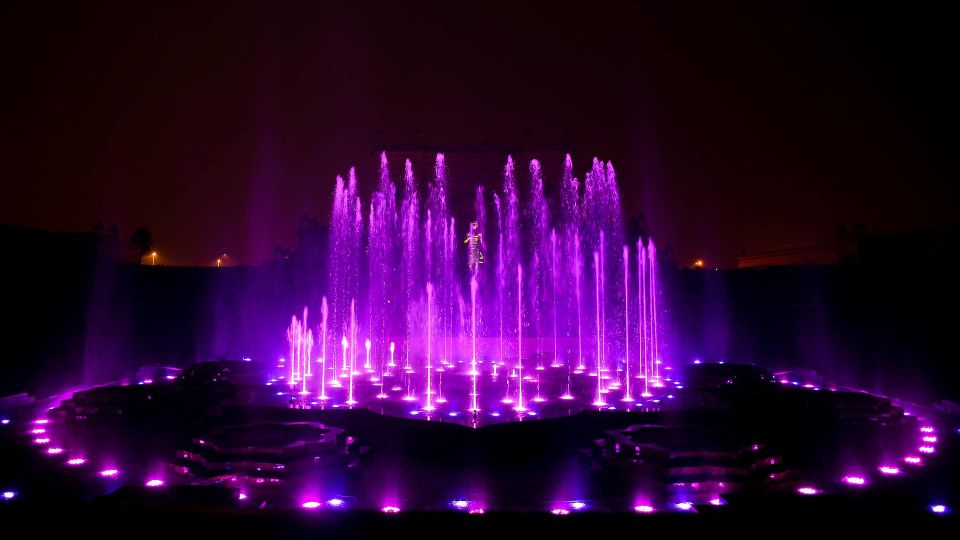
- The Sahaj Anand Water and Light Show: the real reason to time your visit
- Price and value: why $21 can be a smart use of time
- Practical tips: dress code, phones, and making the timing work
- Dress for a temple, not a city stroll
- No phones/cameras inside means you plan differently
- Expect Delhi traffic to influence your timeline
- Monday is a hard stop
- Who should book this Akshardham tour (and who might skip it)?
- Should you book this tour?
- FAQ
- FAQ
- How long is the Akshardham Temple tour with the water and light show?
- Where do you get picked up in New Delhi?
- What do you see before Akshardham?
- What are the Akshardham exhibition sections included in this tour?
- How long is the water and light show?
- Are skip-the-line entries included?
- Are phones and cameras allowed inside the temple?
- What languages are the guides available in?
- Is the temple open every day?
Key things to notice before you go
- Skip-the-line entry via a separate entrance, which really matters in a busy Delhi day.
- Three exhibition experiences: Sahaj Anand Darshan, Neelkanth Darshan, and Sanskruti Darshan.
- A 12-minute cultural boat ride tied to life in the Vedic era and world-shaping contributions.
- The 20,000-gods carved wall is the wow moment that people keep bringing up for a reason.
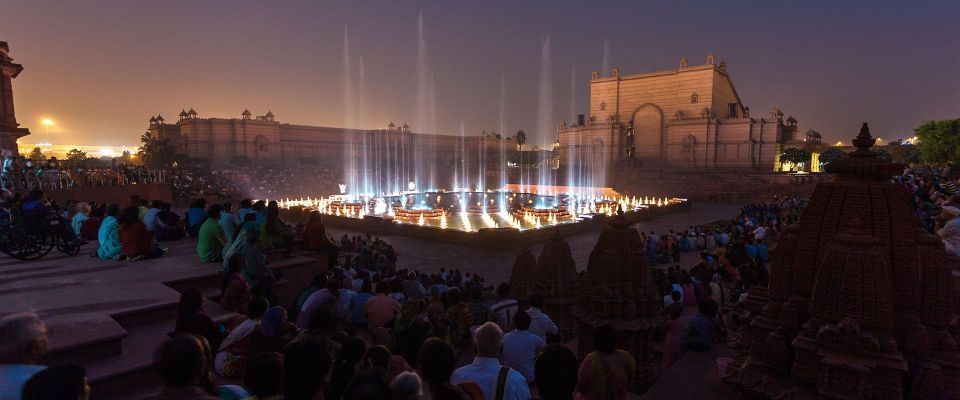
- A 24-minute Sahaj Anand water-and-light show with lasers, projections, water jets, and surround sound.
- Strict rules inside: no phones/cameras, plus clothing limits like short skirts not allowed.
From India Gate to Akshardham: how the day flows
This is a 3–5 hour “get oriented and get the big finale” tour. You start with pickup from your hotel or another chosen location in New Delhi (or nearby areas like Gurugram and Noida), then settle into a private car while your guide handles the story and the pacing.
What I like about this format is that it solves two common Delhi problems at once. First, traffic can feel random unless you have a driver focused on getting you through it. Second, Akshardham can be information-heavy once you’re inside; a good guide helps you make sense of the order, the themes, and what to pay attention to.
In reviews, names like Ronak and SK come up again and again for making the visit feel structured. The point isn’t just comfort. When you understand what the exhibitions are trying to say, the carvings and multimedia sections feel less like a checklist and more like one continuous spiritual message.
You can also read our reviews of more tours and experiences in New Delhi

India Gate and Rajpath stops that make sense, even on limited time
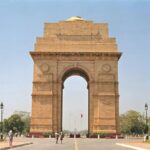
You’ll begin at India Gate, a war memorial and a major Delhi landmark. Even if you’ve seen plenty of monuments before, India Gate is worth a slow look because it’s also a classic “Delhi orientation” stop. It gives you a sense of the city’s scale and layout before you go deeper into cultural sites.
Next, you’ll walk along Rajpath, the ceremonial avenue that links to Rashtrapati Bhavan and Parliament House. You can’t enter those buildings, but you can admire the grandeur from the outside. This is a practical way to include a real sightseeing slice without getting stuck on access rules or time-consuming detours.
A small but useful tip: if your goal is photos, India Gate and Rajpath are where you’ll get the easy wins. Akshardham’s rules for phones and cameras mean your best “camera moments” will be earlier in the day.
The Akshardham exhibitions: Sahaj Anand, Neelkanth, and Sanskruti
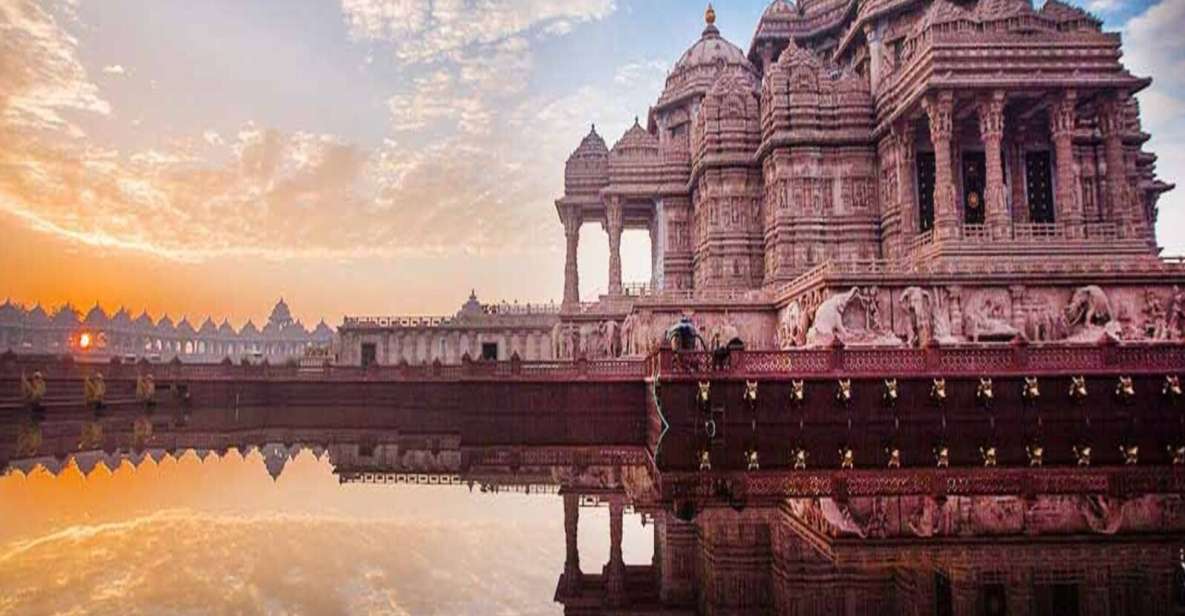
Akshardham’s exhibition areas are built like separate themed chapters. Instead of one long talk, you move through segments with multimedia presentations, narration, and story-based learning. That’s what makes this portion work well for different travel styles—whether you like films, visuals, or just a guided explanation that connects details.
Here’s what you’ll encounter:
Sahaj Anand Darshan: values taught through exhibits
Sahaj Anand Darshan uses a sequence of exhibits to communicate values such as non-violence, perseverance, prayers, morality, and family harmony. The presentations rely on different multimedia technologies, so it doesn’t feel like a static museum route.
This is one of those sections where a guide really helps. When someone like Anmol explains the message behind each exhibit, you tend to remember the takeaway more than the equipment or screen.
Neelkanth Darshan: an epic journey across India
Neelkanth Darshan follows Neelkanth Varni on an epic trek across the Indian subcontinent—about 12,000 kilometers in the story. The display follows a geographic arc from Himalayan peaks to southern coastlines, linking the journey to themes like sacrifice, service, faith, and the wisdom of the eternal soul.
If you like stories that connect place to meaning, this segment is a strong match. It turns distance into a spiritual lesson.




Sanskruti Darsham and the Cultural Boat Ride
Sanskruti Darshan leans toward culture and continuity. One highlight is the cultural boat ride: a 12-minute sailing experience through thousands of years of ancient Indian history. You’ll see a Vedic-era lifestyle portrayal and also pick up an angle on India’s contributions to the world.
In reviews, people frequently mention that this boat ride is part of what makes the overall visit feel complete rather than rushed. It’s short, but it breaks up the day and keeps energy up right before the evening show.
The 20,000-god carvings: the scale you feel in your feet
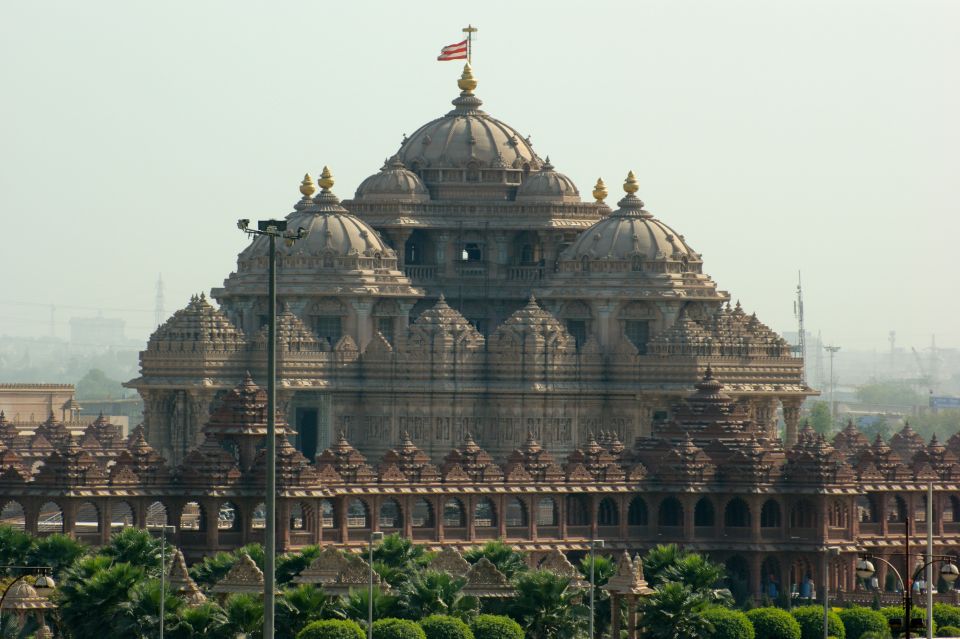
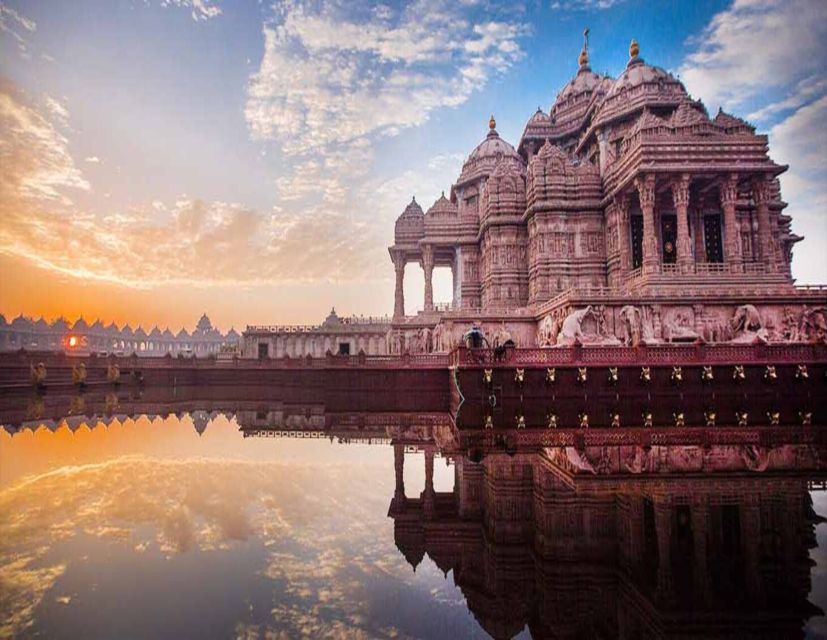
Akshardham’s visual impact is hard to describe until you’re there. The wall carving of 20,000 gods and goddesses is one of the signature facts, but the real experience is the way the scale spreads across your walking route.
As you move through the temple complex, you’re not just looking at one focal piece. You’re surrounded by layers: carvings, architectural details, and the sense that the whole site is designed to guide attention. That’s where a well-timed visit matters. Arriving in the late afternoon gives you a better chance to enjoy the carvings without feeling like you’re fighting midday heat or peak crowds.
One more rule to remember: inside the temple complex, phone and camera restrictions are strict. In multiple reviews, this shows up as both a frustration and a relief—frustration because people want pictures, relief because it forces you to look instead of frame.
The Sahaj Anand Water and Light Show: the real reason to time your visit
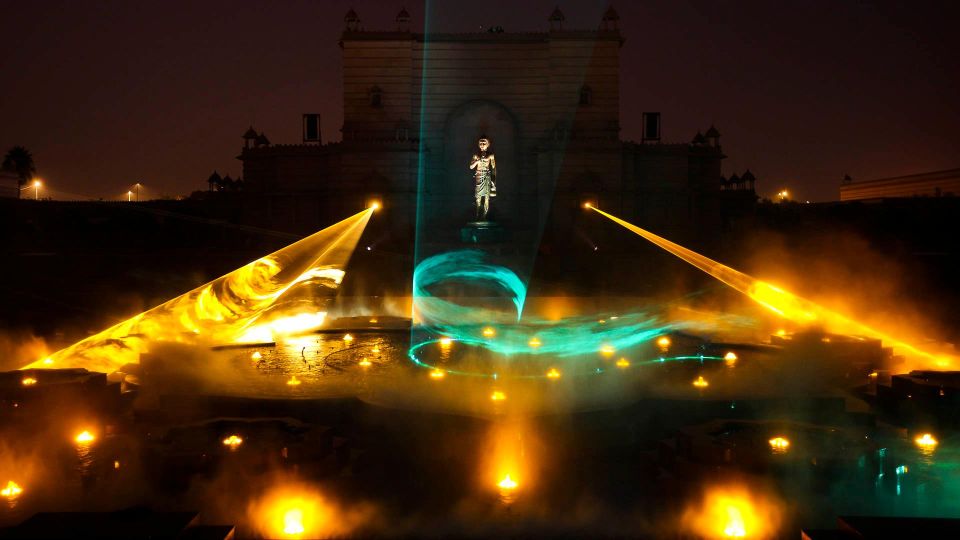
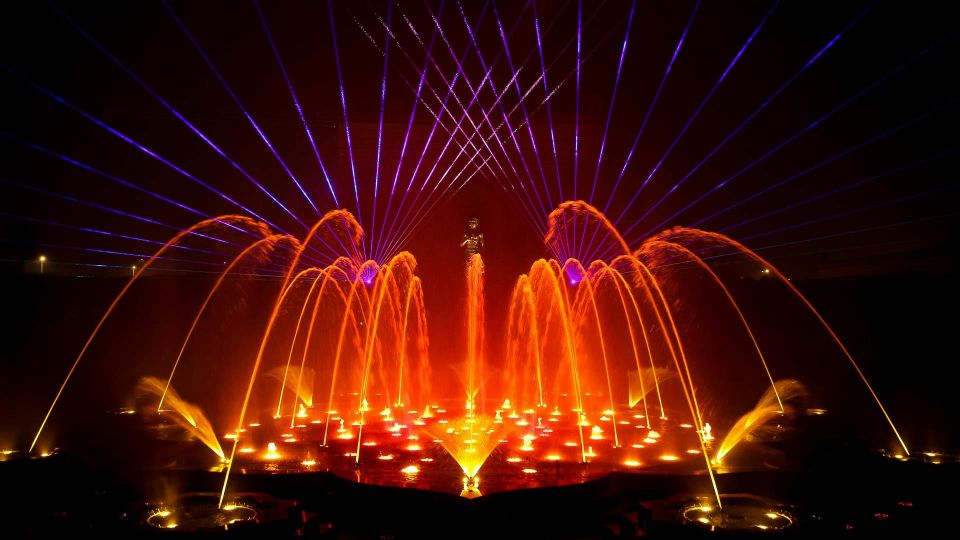
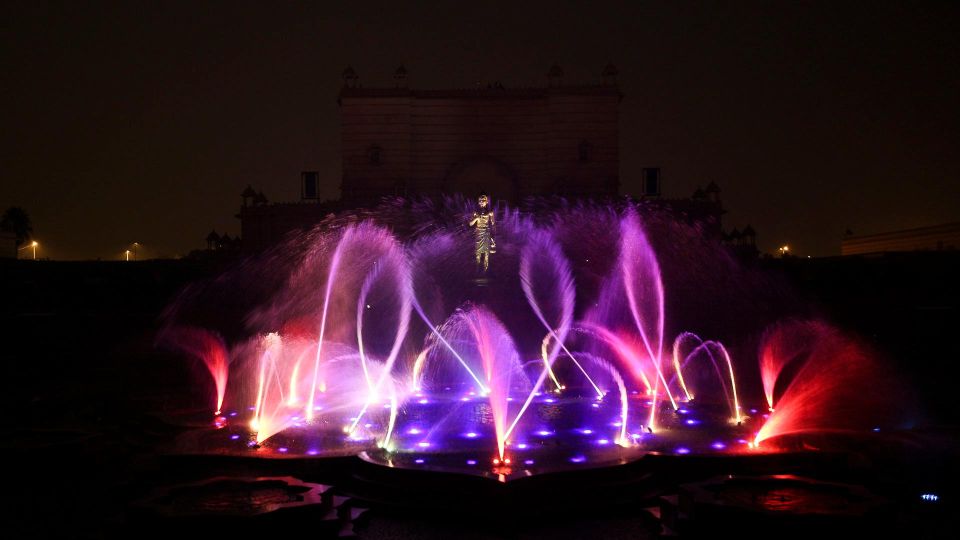
If you’re choosing this tour specifically for the evening, the Sahaj Anand Water and Light Show is the anchor. It’s a 24-minute presentation that blends a story from the Kena Upanishad with multi-color lasers, video projections, underwater flames, water jets, and surround sound.
What makes it effective is the layering. You’re not only watching water and light; you’re following a narrative. With translation support from English, Spanish, or French guides, the story can make more sense while you watch—especially if you’re not familiar with the text.
I also like how the show feels designed for different learning styles. If you focus on the visuals, you’ll still get the emotional arc. If you focus on explanation, the guide’s narration helps translate the symbolism into something you can hold onto after you leave.
Timing note: one review mentioned starting around 4 p.m. as a comfortable pace—enough daylight for the temple and exhibitions, then a smoother lead-in to the show. In Delhi, traffic can also throw timing off, so planning an earlier start in the afternoon often helps you avoid feeling rushed.
Price and value: why $21 can be a smart use of time
At around $21 per person for a 3–5 hour experience, the real value isn’t just the temple. It’s the bundle.
You’re paying for:
- Hotel pickup and drop-off
- A professional tour guide
- Private car transportation
- Parking fees and taxes
- A water bottle
- A ticket if the option you select includes it
For many people, the biggest “hidden cost” in India is time lost to coordination. A private car plus pickup/return from your hotel saves you from figuring out routes and entry logistics on your own. Add a guide who knows how to manage queueing and protocols, and the savings become less about dollars and more about stress.
Also, this tour targets a high-impact payoff: you get daytime sightseeing (India Gate and Rajpath) and then the main evening show. If you only have a short window in Delhi, that kind of combined value matters.
One thing to check before you pay attention to price: ticket inclusion depends on the option you select. If you care about guaranteed entry, confirm whether your chosen package includes the ticket.
Practical tips: dress code, phones, and making the timing work
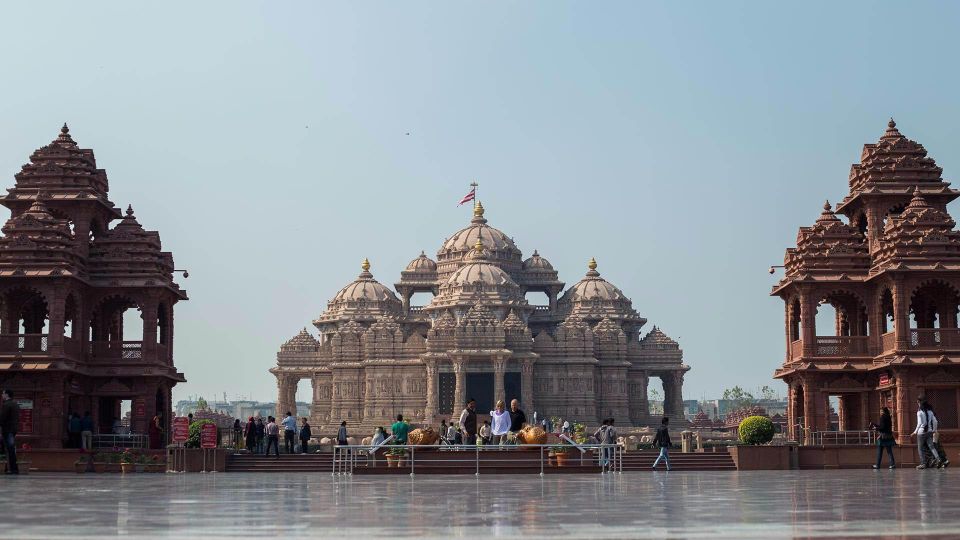
This tour has rules. Knowing them ahead of time makes your day smoother.
Dress for a temple, not a city stroll
Short skirts aren’t allowed, and alcohol and drugs are also not allowed. The site operates with a serious approach to respectful conduct.
If you’re used to flexible outfits for sightseeing, pack something modest and comfortable for walking. You’ll be on your feet for the temple and exhibition route.
No phones/cameras inside means you plan differently
Several reviews call out that phones are not allowed inside, and at least one mentions no cameras. That changes your photo strategy: take your pictures at India Gate and Rajpath earlier, then treat Akshardham as a hands-free experience.
Bring patience instead of gear. You’ll likely remember the carvings and the show more than a screenshot.
Expect Delhi traffic to influence your timeline
One review notes it took about an hour to reach the temple because of busy traffic. That’s a normal Delhi reality, not a tour failure.
This is exactly why a private driver helps. People like Arun and Inzman get praised for calm driving in traffic. The benefit isn’t speed—it’s fewer surprises and a smoother flow.
Monday is a hard stop
Akshardham Temple is closed every Monday. If your travel dates include a Monday, you’ll need to rearrange or choose another option.
Who should book this Akshardham tour (and who might skip it)?
This tour is a great fit if you:
- Want a short, high-impact day that mixes Delhi landmarks with a major spiritual site
- Appreciate explanations during exhibitions (guides like Ronak, Vikram, Sunil, and SK are frequently mentioned for making the story clearer)
- Plan to be in town for a first evening and want a strong finale with the water-and-light show
You might skip it if you:
- Need to photograph inside the temple complex. The phone and camera restrictions are real.
- Are traveling on a Monday (closure applies).
- Prefer self-guided wandering without rules. This tour works best when you follow the guide’s flow.
Should you book this tour?
Yes, if your priority is a well-paced Delhi intro plus Akshardham’s evening show. At about $21, the value comes from the combination: transport + guide + a structured route through exhibitions, then a 24-minute production that you’ll feel even if you don’t know every reference.
I’d only hesitate if you’re strongly photo-dependent, because the experience asks you to watch with your eyes, not through a screen. If you can accept that, you’ll likely walk away with that rare mix of architecture awe and story-driven spectacle.
FAQ
FAQ
How long is the Akshardham Temple tour with the water and light show?
The duration is listed as 3 to 5 hours.
Where do you get picked up in New Delhi?
Pickup is included from your hotel, the airport, or any desired location in New Delhi, Gurugram, Noida, or the airport.
What do you see before Akshardham?
You start at India Gate, then walk along Rajpath and view Rashtrapati Bhavan and Parliament House from the outside.
What are the Akshardham exhibition sections included in this tour?
The tour includes Sahaj Anand Darshan, Neelkanth Darshan, and Sanskruti Darshan, including a Cultural Boat Ride.
How long is the water and light show?
The Sahaj Anand Water and Light Show is described as a 24-minute presentation.
Are skip-the-line entries included?
Yes. There is a separate entrance for skipping the line.
Are phones and cameras allowed inside the temple?
Phones are not allowed inside, and cameras are also restricted according to reviews. Plan to enjoy the experience without taking photos inside.
What languages are the guides available in?
English, Spanish, and French are listed.
Is the temple open every day?
Swaminarayan Akshardham Temple is closed every Monday.