REVIEW · NEW DELHI
Private 5 Days Golden Triangle Tour ( Delhi – Agra – Jaipur )
Book on Viator →Operated by Markable Joy · Bookable on Viator
Delhi to Jaipur in five days sounds intense. It works well here because you get door-to-door transfers plus a private live guide who explains what you are seeing as you go. I like that you are not stuck bargaining for tickets or guessing what matters; admission is handled for you at the monuments you visit.
My other favorite part is the pacing choices built into the route: you can do the Delhi sights in the right order, then you hit Agra and time the big moment with sunrise at the Taj Mahal. One drawback to consider: several stops are timed pretty tightly (often 30 to 60 minutes), so you’ll want to be ready to move, take photos fast, and enjoy without expecting long, slow wandering in every single place.
In This Review
- Quick reasons this Golden Triangle tour makes sense
- Golden Triangle, handled for you: the value of private logistics
- The one thing you still control
- Day 1 in Delhi: Old Delhi sights plus grand monuments
- Pasar Chandni Chowk: the tuk-tuk bazaar ride
- Jama Masjid: scale you can feel
- Gurudwara Bangla Sahib: the tank story that lingers
- The memorial stop: Tomb of the Unknown Soldier
- New Delhi’s planned architecture: Lutyens and Baker
- Akshardham and Humayun’s Tomb: you get a choice
- Qutub Minar: the brick minaret that anchors the UNESCO complex
- Agra the practical way: Forts and Mughal-era beauty before the main event
- Agra Fort: Indian-Islamic architecture in a fortress setting
- Itmad-ud-Daula: another stop that rewards good guidance
- The Taj Mahal at sunrise: timing, photos, and what to expect
- After the Taj: a smooth shift to Fatehpur Sikri
- Jaipur arrival: take the rest day seriously
- Jaipur in a full day: Amber, Hawa Mahal, City Palace, and Jal Mahal
- Amber Fort: Hindu-style artistry that you can see from every angle
- Hawa Mahal: 953 windows with a purpose
- City Palace: museum space at the center of Jaipur
- Jal Mahal: a lake palace for slower moments
- Where the money goes: tickets, guide, car, and the hotel deal
- What can feel tight in a five-day sprint
- Who this tour fits best
- Should you book this 5-day Golden Triangle Tour?
- FAQ
- What cities are included in the Golden Triangle tour?
- What pickup options do you offer on Day 1?
- How long is the tour?
- Is there a private guide and private transport?
- Are monument tickets included?
- Do you visit the Taj Mahal at sunrise?
- What kind of hotel accommodations are included?
- Are meals included in the price?
- Can you drop off at Jaipur airport on the last day?
- Is there free cancellation?
Quick reasons this Golden Triangle tour makes sense
- Private guide with live commentary at the monuments, not just a driver
- All monument tickets included, so you skip the ticket-counter chaos
- Air-conditioned car and private transfers between Delhi, Agra, and Jaipur
- Sunrise Taj Mahal access timing, which is the best photo and atmosphere window
- Old Delhi tuk-tuk ride that turns the bazaar area into something you can actually experience
- Choose your hotel tier from mid-range to high-end, with breakfast included
Golden Triangle, handled for you: the value of private logistics

The Golden Triangle is famous for a reason. Delhi, Agra, and Jaipur each feel like a different chapter of India, and this route strings them together in a way that saves you from the biggest headache: figuring out how to travel between cities, who to hire for guiding, and how to time the major sights.
What you get here is a private format. That means you’re not sharing your day with strangers who might slow things down or vanish when you need them. You’re moving with a private AC car and driver, and you have a guide who gives context at each stop. That matters because these places are not just photo backdrops. Understanding what you are looking at makes the visit feel faster, not rushed.
You also get a small but useful comfort layer: complimentary water bottles and an umbrella. In real life, those two items can matter more than you expect, especially when the day’s heat or sun catches you between stops.
You can also read our reviews of more private tours in New Delhi



The one thing you still control
Meals are not included. So you’ll want to plan for lunches and dinners on your own. The good news is that it gives you flexibility to eat nearby and adjust if you want something quick or sit-down.
Day 1 in Delhi: Old Delhi sights plus grand monuments
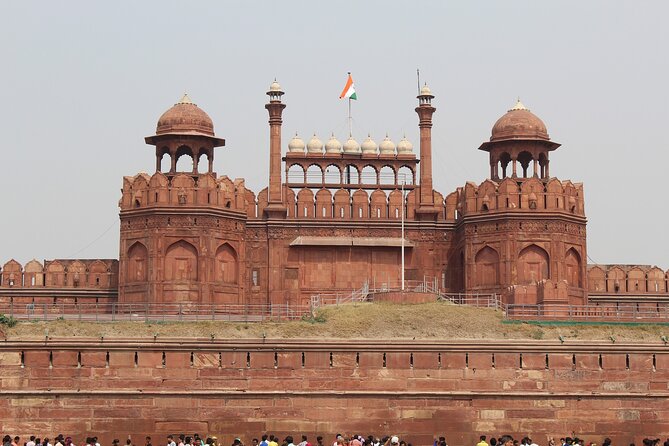
Day 1 is your orientation day, and it does a smart job of mixing lived-in Old Delhi with big, iconic landmarks. You can get picked up from across the Delhi region—Delhi, Noida, Gurugram, Ghaziabad, and Faridabad—with pickup time chosen between 9:00 AM and 11:00 AM. That window helps if you have morning plans or want a slower start.
Pasar Chandni Chowk: the tuk-tuk bazaar ride
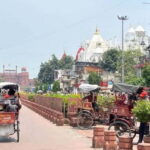
You start by meeting your guide and hopping into a tuk-tuk for a ride through Old Delhi’s colorful bazaars. This is not a museum stop. It is about seeing how the market area functions for locals, and having someone point out what you would likely miss on your own. It also keeps you from doing the wrong thing—walking too far in the wrong direction and ending up exhausted before you even get to the main sights.
Jama Masjid: scale you can feel
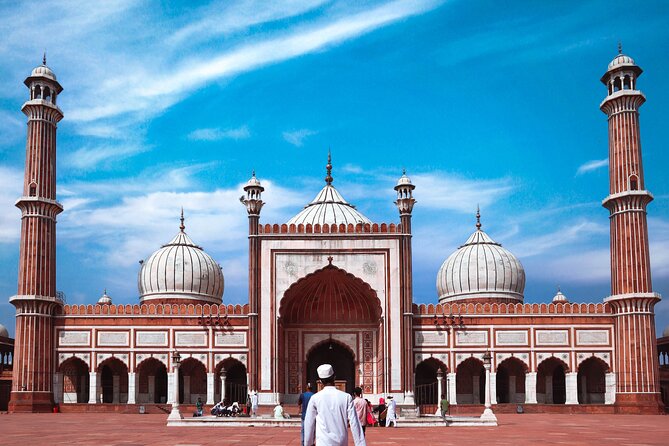
Jama Masjid is India’s largest mosque, built in 1656 with the help of 5,000 workers. The visit is about walking the red sandstone courtyard and taking in the mosque’s sheer presence. It’s a place where your sense of space changes—suddenly everything feels measured by the building.
A practical note: dress modestly and be ready for mosque rules. Even if you’ve visited religious sites before, this one’s scale can make you slow down without realizing it.
You can also read our reviews of more tours and experiences in New Delhi





Gurudwara Bangla Sahib: the tank story that lingers
Next is Gurudwara Bangla Sahib. The story tied to its tank is unforgettable: in 1664, the eighth Sikh Guru is said to have visited, and people were cured from smallpox and cholera by water from the tank. That single detail turns the visit into more than sightseeing; it makes you notice the place as something that served people, not just something built to impress.
The stop is shorter (about 30 minutes), so it’s best treated as a focused visit: look around, get your bearings, and move on.
The memorial stop: Tomb of the Unknown Soldier
You also pause at the Tomb of the Unknown Soldier. Names of 13,300 Indian army servicemen who died during the First World War are carved on the wall. It is heavy, quiet, and unexpectedly moving compared with the “wow” factor of the other landmarks.
New Delhi’s planned architecture: Lutyens and Baker
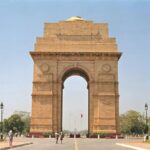
Another stop points you toward a planned part of New Delhi: built on 330 acres in 1929, designed by Sir Edwin Lutyens and Herbert Baker. You’ll see how the city’s layout was shaped on purpose, not just grown over time.
Akshardham and Humayun’s Tomb: you get a choice
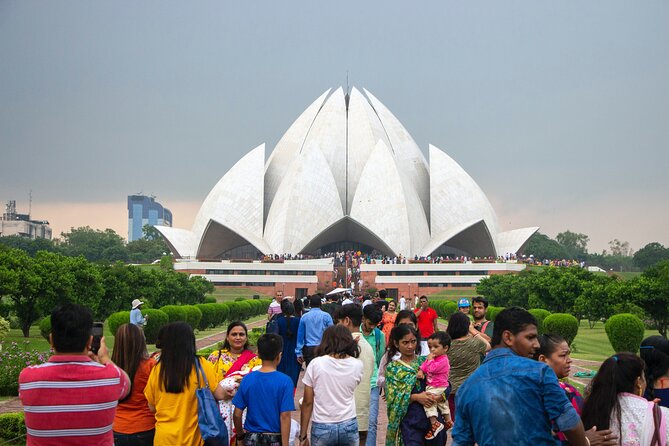
Day 1 includes Swaminarayan Akshardham (a huge Hindu temple complex built in 2005) and Humayun’s Tomb (a UNESCO World Heritage Site and India’s first garden tomb). The schedule gives flexibility so you can either visit Humayun’s Tomb or spend time at Akshardham. That choice is useful if you prefer architecture and gardens one day, or you want maximum temple spectacle the next.
Qutub Minar: the brick minaret that anchors the UNESCO complex
You finish with Qutub Minar, described as the tallest minaret built in 1192 using bricks, part of a UNESCO complex. Even in a 45-minute visit, Qutub Minar works as a visual anchor. It’s the kind of structure that makes you understand the skyline before you even look at everything else.
Agra the practical way: Forts and Mughal-era beauty before the main event
Day 2 is about getting to Agra and setting you up for the Taj Mahal. After breakfast, the day includes a drive of about 3 hours toward Agra, then you meet your guide and get help with a hassle-free check-in.
Agra Fort: Indian-Islamic architecture in a fortress setting
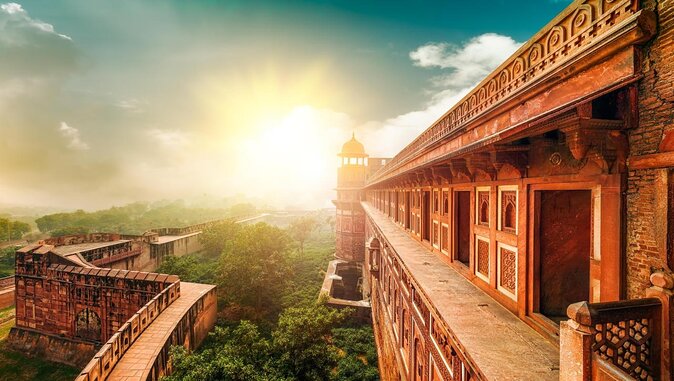
Agra Fort is a UNESCO site and is tied to the 17th century in the plan. You get about one hour here, with a guided walkthrough. The highlight is the blend of Indian and Islamic art and architecture, and you’ll come away seeing how styles were combined rather than kept separate.
Because your time is limited, go with a “look first, then ask” approach. Spend a few minutes just spotting patterns, then let your guide explain the details that make those patterns matter.
Itmad-ud-Daula: another stop that rewards good guidance
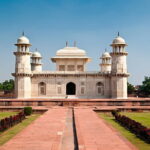
Itmad-ud-Daula is also on the schedule for one hour and is presented as another UNESCO site with a strong focus on the blend of Indian and Islamic art and architecture. This is the sort of place where a guide helps you read the building instead of just watching crowds.
One review detail that stands out for me: for the Agra segment, the guide Shain was highlighted for clear English, strong command of the stories behind the sites, and even helping with great photos. If you care about getting good angles and not just random snapshots, having that kind of guidance makes a real difference.
The Taj Mahal at sunrise: timing, photos, and what to expect
Day 3 is the emotional peak day. You start with early morning to explore the Taj Mahal at sunrise, and you’re given around three hours for it. The plan is photo-focused too: the guide helps you find the best spots to click pictures.
That timing is not a gimmick. Sunrise changes the whole experience. You get soft light for marble surfaces and fewer crowds than later in the morning (so you can actually slow down for a moment). Even if you’ve seen photos before, seeing it in person at that hour makes the scale feel more real.
After the Taj: a smooth shift to Fatehpur Sikri
Once you’ve done the Taj visit and drive back to your hotel, you head toward Jaipur. En route, you stop at Fatehpur Sikri, described as a fortified ancient city about 40 km west of Agra. You’re given one hour, and admission is listed as free in the plan.
Fatehpur Sikri is presented as the short-lived capital of the Mughal empire. Even if you don’t know every detail of who lived there, you can still feel what kind of city it was: built, concentrated, and designed with a strong sense of power.
Jaipur arrival: take the rest day seriously
You then relax on a roughly 4-hour drive to Jaipur, meet your guide, and get help with check-in. This is your chance to reset. If you try to cram dinner plus evening sightseeing right away, you’ll pay for it the next day at Amber Fort.
Jaipur in a full day: Amber, Hawa Mahal, City Palace, and Jal Mahal
Day 4 is your big Jaipur highlight loop. The plan starts after breakfast and keeps you moving through the most recognizable sights in a tight sequence.
Amber Fort: Hindu-style artistry that you can see from every angle
You visit Amber Fort, described as the principal tourist attraction of Jaipur. The visit is about two hours, with an emphasis on its artistic Hindu-style architecture. Amber is one of those places where your brain does two jobs at once: admire the design and also figure out how to move efficiently through it.
Go into Amber Fort expecting stairs, courtyards, and changing views. Two hours is enough if you stay focused and let your guide point out what to look for.
Hawa Mahal: 953 windows with a purpose
Next is Hawa Mahal (Palace of Wind). It’s decorated with 953 windows and was constructed specially for royal ladies. It’s listed as built in 1799. The stop is about one hour.
This is a great example of why a guide matters. Without context, you might just count windows and move on. With context, you start to understand why the windows were part of daily life and viewing.
City Palace: museum space at the center of Jaipur
Then you go to the City Palace of Jaipur, with about two hours here. It’s described as patterned gardens and architecture located in the center of Jaipur city. It was initially the seat of the Maharaja of Jaipur, and now some parts are reserved as a museum.
This stop gives you a calmer rhythm compared with Amber. If you’re tired from the fort walking, City Palace is where you can catch your breath without feeling like you wasted time.
Jal Mahal: a lake palace for slower moments
You also visit Jal Mahal, set in the middle of Man Sagar Lake, built in Rajput-style architecture, and described as a 17th-century architectural beauty. The stop is 30 minutes and positioned as the best spot for peace lovers.
This is where you intentionally take fewer photos and just look. The palace-in-water effect works best when you slow down for a few minutes instead of racing to the next stop.
Where the money goes: tickets, guide, car, and the hotel deal
At $219 per person for an approximately 5-day private tour, value depends on what you’d otherwise pay yourself. Here, the plan covers:
- All monument tickets
- Private transfers and sightseeing by an AC car and driver
- Private live tour guide at all monuments
- Four nights of hotel stay with breakfast if you choose the listed 3-star or 5-star options
- Complimentary water bottles and umbrella
That combination is the real selling point. Many Golden Triangle setups look cheap until you add individual admission tickets and pay separate guide costs in each city. This plan is built to keep those costs inside the package.
Just remember: meals are not included. So you’ll want to budget lunches and dinners separately, and you’ll also want to plan how much you eat when you’re in forts and big monuments.
What can feel tight in a five-day sprint
This tour is well paced, but the schedule is still a sprint. Several stops are only 30 to 45 minutes, and some days are loaded with multiple major sites. That’s great if you want structure and don’t mind moving with purpose.
If you tend to prefer long stays—lingering, sitting, reading every plaque, or stepping off the main path—then the “short stop” timing could feel like you are always heading somewhere else.
The best workaround is simple: decide your top priorities. For me, Taj Mahal at sunrise is a must. After that, let the rest of the day be about atmosphere and good guidance, not about collecting every possible detail.
Who this tour fits best
This private 5-day Golden Triangle tour suits you if:
- you want logistics handled between Delhi, Agra, and Jaipur
- you prefer a guide to explain what you’re seeing at monuments
- you like structure, especially for big hits like Jama Masjid, Qutub Minar, Agra Fort, and the Taj Mahal at sunrise
- you care about convenience like pickup options and AC car transfers
- you want control over comfort by choosing mid-range vs high-end accommodation
It may not fit as well if you want very slow travel, lots of free time, or you strongly dislike early starts for sunrise sightseeing.
Should you book this 5-day Golden Triangle Tour?
Yes, I’d book it if you want the Golden Triangle with less friction. The private guide, included admissions, and AC transfers do the heavy lifting, and the sunrise Taj timing is a smart use of time. The guide experience can be a standout too—Agra’s guide Shain was specifically praised for clear English, history storytelling, and photo help.
I’d skip or reconsider if you know you need long, unhurried visits at every site. In this plan, the major monuments are the focus, and the schedule assumes you are comfortable with shorter stops and fast movement.
If you want an efficient, guided, ticket-covered route through Delhi, Agra, and Jaipur, this is a strong match.
FAQ
What cities are included in the Golden Triangle tour?
You visit New Delhi, Agra, and Jaipur as part of the five-day route.
What pickup options do you offer on Day 1?
Pickup is available from anywhere in Delhi, Noida, Gurugram, Ghaziabad, and Faridabad, with a chosen pickup time between 9:00 AM and 11:00 AM.
How long is the tour?
The tour duration is about 5 days.
Is there a private guide and private transport?
Yes. This is a private tour/activity with a private live tour guide at the monuments, plus private sightseeing and transfers in an AC car with a driver.
Are monument tickets included?
Yes. All monument tickets are included, so you do not need to purchase your own admission for the listed monuments.
Do you visit the Taj Mahal at sunrise?
Yes. Day 3 includes an early morning visit to the Taj Mahal at sunrise.
What kind of hotel accommodations are included?
You can choose mid-range (3-star) or high-end (5-star) accommodation, with four nights stay with breakfast included based on your choice.
Are meals included in the price?
No. Meals are not included.
Can you drop off at Jaipur airport on the last day?
Yes. Day 5 keeps time for your return to Delhi, and you can choose drop-off at Jaipur airport if you wish.
Is there free cancellation?
Yes. Free cancellation is available if you cancel up to 24 hours in advance for a full refund.