REVIEW · NEW DELHI
Private Day Trip to Haridwar and Rishikesh from Delhi by Car
Book on Viator →Operated by Tours to Agra · Bookable on Viator
Ganga cities, in one long day. This private car trip strings together Haridwar and Rishikesh so you can see the holy ghats, ashrams, and Ganga rituals without wrestling public transport.
I love the basic idea: two spiritual hubs north of Delhi, packed into one workable schedule. I also like that the drive is handled by an English-speaking driver, and you get an English-speaking guide in Rishikesh for the stops that can use context.
The main drawback is simple: it’s a long haul (around 14 hours) by road. If you’re sensitive to traffic time, you’ll want to treat this as a day you plan around, not a quick side trip.
In This Review
- Key things to know before you go
- Why this Haridwar and Rishikesh route works from Delhi
- Entering Har Ki Pauri: the holiest steps with big atmosphere
- Lakshman Jhula: photos, pilgrims, and a long bridge walk
- Ram Jhula: an iron suspension bridge where bikes join the walk
- Sivananda Ashram: one place with a clear founder story
- Parmarth Niketan: scale matters, and you see it in the gardens
- Geeta Bhawan and Swarg Ashram: big complexes with practical purpose
- Anandamayee Ashram: a shorter stop with a character focus
- Timing the Ganga ritual moment back at Har Ki Pauri
- The private drive from Delhi: comfort, safety, and no-horn sanity
- Price and fees: what $80 really buys, and what to budget next
- What kind of traveler should book this?
- Should you book this Haridwar and Rishikesh day trip?
- FAQ
- How long is the tour?
- Is pickup and drop-off included?
- Do I get an English-speaking guide?
- What are the main stops during the day?
- Are entrance fees included in the price?
- Is this a private tour or a group tour?
- What if the weather is bad?
Key things to know before you go
- Hotel pickup and drop-off: included from the New Delhi City Center area, so you’re not scrambling at dawn.
- Har Ki Pauri twice: you get time at the famous ghat, plus the evening-style atmosphere that includes the aarti experience.
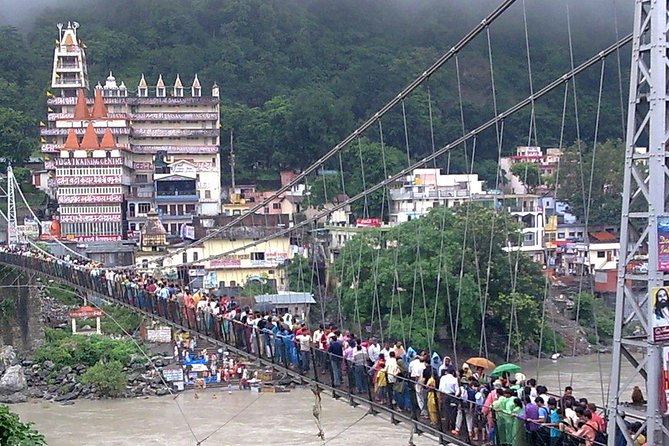
- Suspension-bridge walking time: Lakshman Jhula (about 450 ft long, around 70 ft above the river) and Ram Jhula each get dedicated time.
- Real ashram visits: Sivananda Ashram, Parmarth Niketan, Geeta Bhawan, Swarg Ashram, and Anandamayee Ashram are all on the route.
- Entrance fees are extra: monuments cost $30 per person on top of the tour price.
- One group only: it’s private, so your timing stays yours.
Why this Haridwar and Rishikesh route works from Delhi
From Delhi, Haridwar and Rishikesh sit far enough apart that doing both in a single day by bus or train becomes more stressful than spiritual. This is built around the practical reality: you leave Delhi by car, then you handle the river and temple areas on foot and at short stops.
What makes it click is the balance of “big sight” and “slow meaning.” In Haridwar, you focus on the Ganga ghats. In Rishikesh, you shift to bridges and ashrams, where the vibe is more about practice and quiet.
Also, it’s private. That matters. You’re not joining a shuffle of strangers every time the group needs to move through a crowded ghat or find a good viewing angle near ritual areas.
You can also read our reviews of more private tours in New Delhi
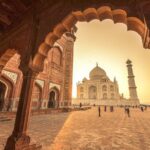

Entering Har Ki Pauri: the holiest steps with big atmosphere
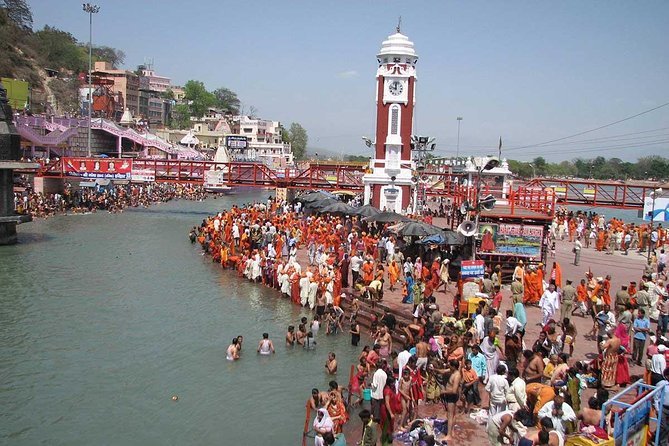
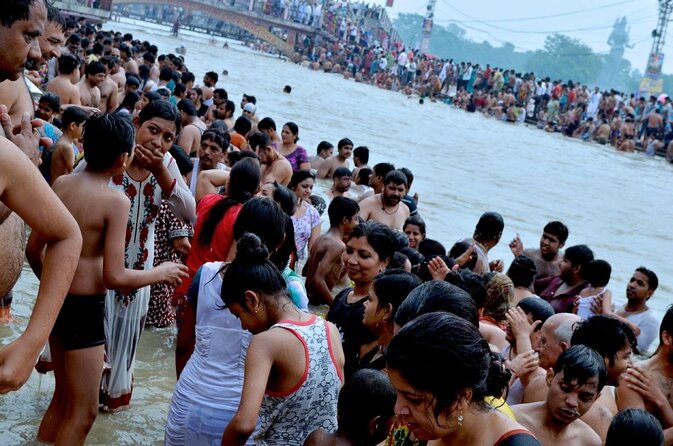
Your day starts at Har Ki Pauri, one of India’s best-known ghat areas. The lore is that it’s the first place where the Ganga reaches the plains after the Himalayan stretch—so the symbolism is baked into the geography, not just the religion.
You get about two hours here early on, which is a gift. It gives you time to orient yourself, watch pilgrims move through the space, and understand the flow before evening energy peaks.
A key point: Har Ki Pauri isn’t just architecture. It’s a working ritual space. The tour later returns to Har Ki Pauri again for around two more hours, timed for the aarti tradition. The aarti here is linked to Pandit Madan Mohan Malviya, and that tradition continues as the river evening gathers momentum.
If you want a day trip that actually feels like you saw the Ganga’s spiritual heartbeat, this is the anchor stop.
Lakshman Jhula: photos, pilgrims, and a long bridge walk
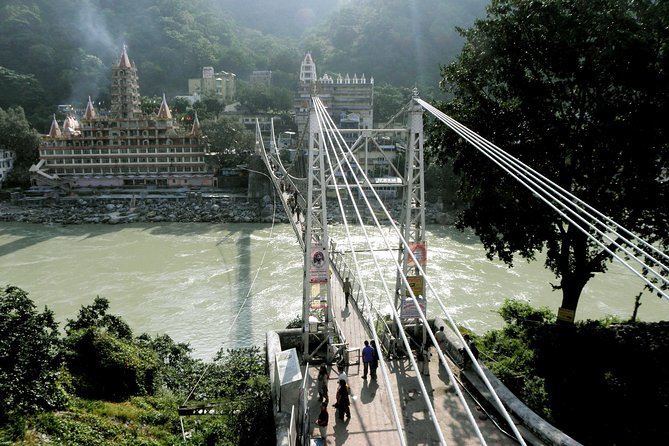
Next you head to Rishikesh and cross Lakshman Jhula, a landmark hanging bridge over the Ganga. It’s long (about 450 ft) and set high (around 70 ft above the river), which means you’ll feel the scale as you move along it.
You get about two hours at this stop. That timing works because it’s not only a photo moment. You’re walking through a corridor that’s constantly in use by people going to ghats, ashrams, and marketplaces nearby.
Practical tip: if you care about photos, go with a flexible plan. Bridge areas get busy fast, so a little patience helps you get the angle you want without turning your whole trip into a traffic standstill.
Ram Jhula: an iron suspension bridge where bikes join the walk
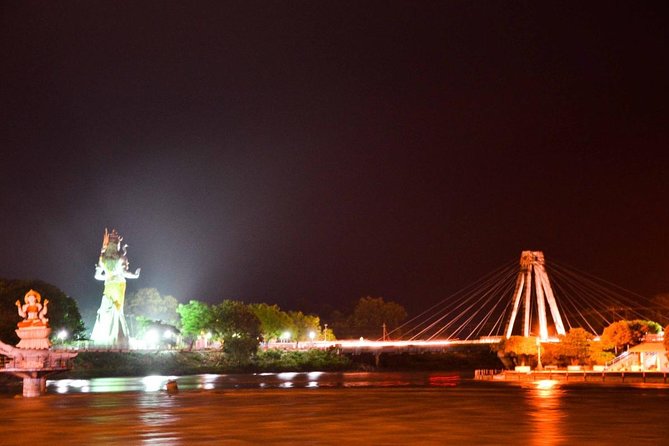
Your next bridge stop is Ram Jhula, described as an iron suspension bridge across the Ganga. It connects Muni Ki Reti with Swargashram, and it’s set up as a pedestrian crossing—though the route also allows bikes to use it.
You’ll have about one hour here. That’s usually enough to cross, look both directions, and get the feel of how Rishikesh people move between riverside areas.
This is also where your tour timing matters. With only one hour, you need to keep the shopping-snack detours short if you want to make the most of later ashram visits.
Sivananda Ashram: one place with a clear founder story
Then you shift from bridges to ashram life at Sivananda Ashram. The description you’ll encounter focuses on its founder, His Holiness Sri Swami Sivananda, and notes that the ashram’s construction grew brick by brick from 1936.
Your scheduled time is about 30 minutes. That’s not long, so think of it as a first look—enough time to see the complex, absorb the spiritual tone, and follow what your guide explains. Because this is a car-based day trip, this is one of those stops where you’ll get more value if you let the guide do the connecting work.
If you’re coming from Delhi mostly for meaning (not just sightseeing), this quick stop still earns its place.
You can also read our reviews of more tours and experiences in New Delhi




Parmarth Niketan: scale matters, and you see it in the gardens
Next up is Parmarth Niketan Ashram, described as the largest ashram in Rishikesh, with over 1000 rooms. You’re also told there are gardens, and the place hosts thousands of pilgrims.
You’ll have about one hour here. That extra time compared to Sivananda helps because a larger ashram needs breathing room. You can walk within the grounds, notice how visitors move, and get a better sense of what “living ashram” looks like versus what you might imagine from afar.
This is one of the stops where the English guide support in Rishikesh becomes especially useful. When you’re trying to understand what you’re looking at—rooms, halls, garden layouts, and daily rhythm—language support saves time and reduces guesswork.
Geeta Bhawan and Swarg Ashram: big complexes with practical purpose
After Parmarth Niketan, you stop at Geeta Bhawan, a large complex located by the banks of the Ganga in Swargashram. The description notes discourse halls and over 1000 rooms, aimed at comfortable lodging for visitors.
Your time here is about 30 minutes. Again, short, but meaningful if you focus on the overall layout: it’s a place built for talks, gatherings, and visiting pilgrims.
Then you visit Swarg Ashram, also described as a zone that includes bistros, stores, libraries, parks, contemplation areas, Ayurvedic dispensaries, eateries, and inns. You get about 30 minutes.
That mix matters. It’s not only temple doors and silence; it’s also the infrastructure that keeps a spiritual hub functioning for thousands of visitors.
If you’re the kind of traveler who likes to understand how places actually work, this part of the day is a good reality check.
Anandamayee Ashram: a shorter stop with a character focus
You’ll also visit Shree Shree Ma Anandamayee Ashram for about 30 minutes. The description emphasizes something more personal than architectural: the mysterious aloofness people associated with her, tempered by compassion and love for living creatures.
This is a “tone-setting” stop. It’s not trying to give you a long guided tour of rooms and halls. It’s more about letting the message and atmosphere land, then moving on while the rest of the day still has energy.
Timing the Ganga ritual moment back at Har Ki Pauri
The tour brings you back to Har Ki Pauri for another two-hour block. This is where you catch the aarti experience connected to the tradition started by Pandit Madan Mohan Malviya, and where the evening energy makes the Ganga feel present and alive.
The tour overview also highlights the floating lights ceremony in Haridwar. With evening timing, it’s the kind of moment that makes people say a day trip was worth it.
One more practical note: if you want to participate in something like bathing in the Ganga, the tour is structured to allow for that kind of experience. A solo traveler in the group shared that they managed to do a bath and even assist with the aarti. That doesn’t mean it’s guaranteed for every person, but it does signal that the schedule leaves room for people to act on the moment.
The private drive from Delhi: comfort, safety, and no-horn sanity
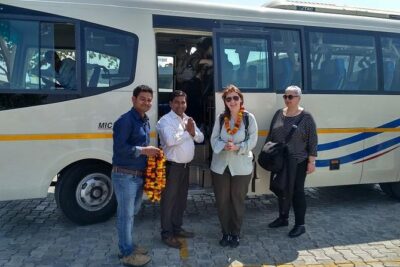
You’re picked up from New Delhi City Center area and transported by an air-conditioned private car. The driver is English-speaking, and you’ll have taxes and service charges included in the tour price.
The long road can be the hard part, so pay attention to the human variable: the quality of the driver. In the feedback you’ll see recurring praise for safe, calm driving. One group specifically called out that guide Ajay drove without honking for the entire journey, and that the trip felt safe and comfortable for a female solo traveler.
Another name you’ll see tied to good driving and explanations is Pawan, praised for English and safe handling through heavy pilgrimage traffic. Jyoti also came up for showing people a good spot for the river ceremony, even though English was less strong.
So here’s the takeaway: this isn’t just transportation. With a day like this, the driver affects your mood all day.
Price and fees: what $80 really buys, and what to budget next
The tour price is $80 per person, and that includes:
- Hotel pickup and drop-off (from the New Delhi City Center area)
- Air-conditioned private car
- English-speaking driver
- English-speaking guide in Rishikesh
- All taxes and service charges
Then there’s the added cost: entrance fees for monuments are $30 per person, not included. So your realistic total is closer to $110 per person once you budget for that.
Is it good value? For many people, yes—because you’re paying to solve two problems at once:
1) the logistics of fitting Haridwar and Rishikesh into one day from Delhi
2) the language and timing help that makes temples and ashrams easier to understand
If you’re the type who already knows exactly what you want at each stop and doesn’t care about guidance, a cheaper self-planned option might appeal. But if you want a smoother, guided, time-managed day with a private car, the pricing structure is pretty fair.
What kind of traveler should book this?
This is a strong fit if you:
- want spiritual and cultural sights more than shopping
- like guided explanation, especially in Rishikesh
- value private logistics so you can move quickly when crowds surge
It may feel less perfect if you:
- hate long car days (this runs about 14 hours)
- expect a relaxed, slow pace with lots of free time between stops
Also, this experience requires good weather. If conditions are poor, you may be offered a different date or a full refund, so keep an eye on timing.
Should you book this Haridwar and Rishikesh day trip?
I’d book it if you want one of the most efficient ways to experience both sides of the Ganga corridor: Haridwar’s ghat rituals and Rishikesh’s ashram and bridge culture. The private car setup reduces the biggest pain point from Delhi, and the English guide support in Rishikesh helps you get more out of the ashrams than just photos.
I’d think twice if you’re trying to pack too many other plans the same day, because the timing is long. And do budget for the $30 per person entrance fee so you’re not surprised at the counter.
If you’re ready for a full day, with meaningful stops and real river atmosphere, this one is a practical, worthwhile choice.
FAQ
How long is the tour?
It runs for about 14 hours (approx.).
Is pickup and drop-off included?
Yes. Pickup and drop-off are included from the New Delhi City Center area.
Do I get an English-speaking guide?
You get an English-speaking driver, and there is an English-speaking guide specifically in Rishikesh.
What are the main stops during the day?
The tour includes Har Ki Pauri (twice), Lakshman Jhula, Ram Jhula, Sivananda Ashram, Parmarth Niketan Ashram, Geeta Bhawan, Swarg Ashram, and Shree Shree Ma Anandamayee Ashram.
Are entrance fees included in the price?
No. Entrance fees for monuments are $30 per person and are not included.
Is this a private tour or a group tour?
It’s private. Only your group participates.
What if the weather is bad?
The experience requires good weather. If it’s canceled due to poor weather, you’ll be offered a different date or a full refund.