REVIEW · NEW DELHI
Private Golden Triangle Tour With Jodhpur From Delhi
Book on Viator →Operated by Raj Tour and Travel-Agra · Bookable on Viator
Delhi to Jodhpur in one go, with a private driver. What makes this 7-day tour worth a serious look is the private vehicle plus a live guide across all the main cities, so you’re not stuck translating your way through UNESCO stops. I also like that it includes hotel pickup/drop-off and Old Delhi Tuk-Tuk time, which keeps the day practical instead of just photo-chasing. The one thing to pencil in: entrance fees are not included (about $82 per person), and a few big sights close on specific weekdays.
This route is built for travelers who want the big names (Taj Mahal, Amber-area icons) and a real dose of Rajasthan’s fort culture in Jodhpur. You’ll be moving by private AC car between cities, and most days feel full, with early starts and structured sightseeing followed by some breathing room in the evening. Just be aware that hotel choice depends on availability, and early check-in isn’t always guaranteed—so if you arrive very late, plan extra time.
In This Review
- Key highlights you’ll actually feel during the trip
- Golden Triangle with Jodhpur: what this 7-day route really delivers
- Day 1 in Delhi: Old Delhi by Jama Masjid, Chandni Chowk, and the “get your bearings” sights
- Day 2 to Agra: Mehtab Bagh for sunset-style Taj views, plus the Baby Taj stop
- Day 3: Taj Mahal early, then Agra Fort and Fatehpur Sikri on the way to Jaipur
- Day 4 Jaipur: City Palace, Hawa Mahal, forts, Jantar Mantar, and a quick look at Jal Mahal
- Day 5 Jodhpur arrival: a slower start so you can enjoy the city instead of sprinting
- Day 6 Jodhpur’s big hits: Mehrangarh, Jaswant Thada, and the Umaid Bhawan Museum stop
- Day 7: fly back to Delhi or drive, and walk away with the full picture
- Price and value: what $443 includes, and what you should budget for
- Timing tips and closure planning (Taj on Fridays, Lotus on Mondays)
- How to get more out of each guided stop
- Who should book this private Golden Triangle with Jodhpur
- Should you book this tour?
- FAQ
- What cities are included in this tour?
- How much does the tour cost?
- What is included in the price?
- Are entrance fees included?
- Do I need a domestic flight as part of the tour?
- Are there closures that affect the itinerary?
Key highlights you’ll actually feel during the trip
- Private car + private guide in every city, which makes museum visits and mosque/fort stops far easier to understand
- Old Delhi Tuk-Tuk ride that turns cramped lanes into a manageable experience
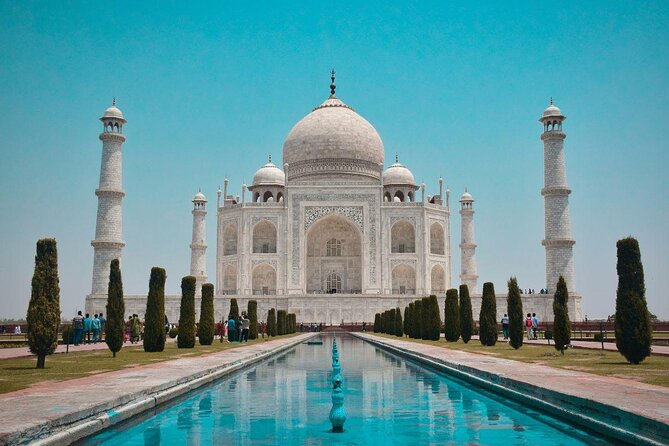
- Taj Mahal morning visit (timing matters for heat, crowds, and photos)
- Mehtab Bagh sunset views for a calmer Agra moment by the Yamuna
- Jodhpur fort day (Mehrangarh and Jaswant Thada) that shifts the feel away from the Golden Triangle loop
- Weekday closures to plan around: Taj Mahal closes Fridays, Lotus Temple closes Mondays
Golden Triangle with Jodhpur: what this 7-day route really delivers
This is a classic India first-timer plan, but with a smart upgrade: it doesn’t stop at the Golden Triangle. After Delhi, Agra, and Jaipur, you push west to Jodhpur, where the sightseeing leans toward forts, marble memorials, and hilltop views. That change of scenery is one of the best reasons to book this over a plain Golden Triangle.
The other big value is comfort and continuity. You’re picked up at the airport or hotel, you ride in a private AC car, and you get a professional guide in each city. That means fewer chaotic logistics days, less time lost, and more time spent asking the important questions.
You can also read our reviews of more private tours in New Delhi


Day 1 in Delhi: Old Delhi by Jama Masjid, Chandni Chowk, and the “get your bearings” sights
Day 1 is a strong orientation day that mixes major Mughal landmarks with the daily pulse of Old Delhi. You start with hotel or airport pickup, then meet your guide and head straight into the story of the city.
Jama Masjid is the first big stop. Built in 1656 by Shah Jahan, it’s one of India’s largest mosques, with red sandstone grandeur and Mughal-style architectural drama. You’ll spend enough time to notice how the courtyard and design guide you through the space, not just admire it from outside.
Then it’s into Chandni Chowk, one of Delhi’s oldest and liveliest old markets. This is the area where you feel the city’s rhythm fast—narrow lanes, shopfronts, and constant movement. It’s also where a guide helps you avoid getting turned around.
From there, the tour shifts into Mughal garden-tomb mode at Humayun’s Tomb, a UNESCO site and considered the first garden tomb in India. Even if you’re not a hardcore architecture person, you’ll see how the layout influenced later Mughal design, including the eventual inspiration for the Taj Mahal.
Qutub Minar follows, a 13th-century UNESCO brick minaret rising about 73 meters. The carvings and the Indo-Islamic design mix are usually what people remember after the height grabs your attention.
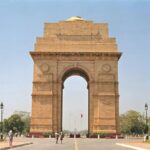
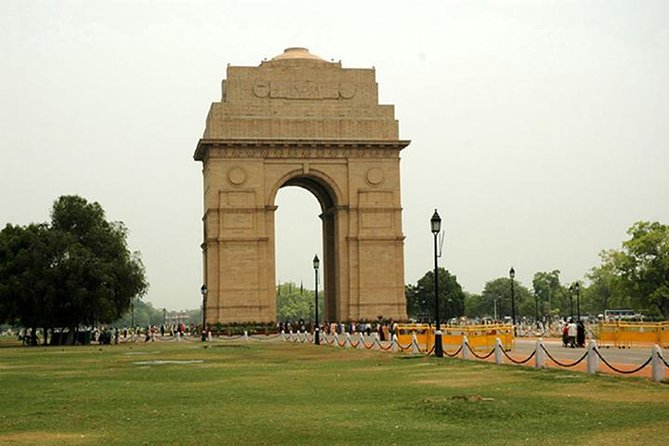
You also get a calmer contrast at Lotus Temple, a Bahá’í House of Worship open to all faiths. The outside looks like a flower in full bloom, and the inside is quiet in a way that feels rare in a packed city day. The last stretch includes India Gate, the World War I memorial with lawns and an eternal flame, plus a chance to view Rashtrapati Bhavan, the President of India’s official residence.
Practical note: this is a long first day. If you want energy for later shopping or dinner, treat your first night as recovery, not a second sightseeing day.
Day 2 to Agra: Mehtab Bagh for sunset-style Taj views, plus the Baby Taj stop
After breakfast in Delhi, you check out and go to Agra by private luxury AC car. The travel time is about 3 hours, and having the car makes it less stressful than trying to piece together trains and transfers.
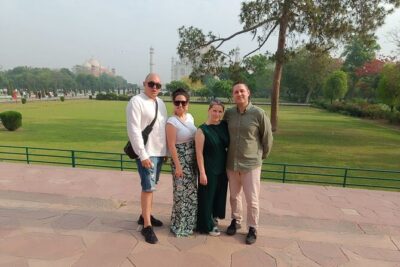
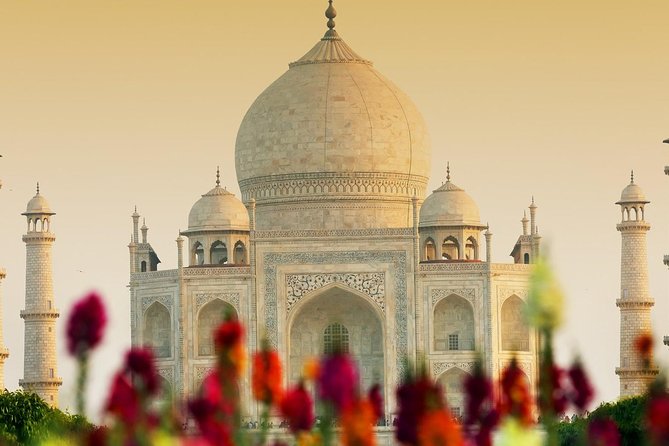
Agra day begins with a quieter highlight: Mehtab Bagh, a riverside garden opposite the Taj Mahal. This is where you can enjoy that iconic view when the light turns softer, especially around sunset. It’s a great balance to the more intense marble-and-crowds energy you’ll experience later at the Taj itself.
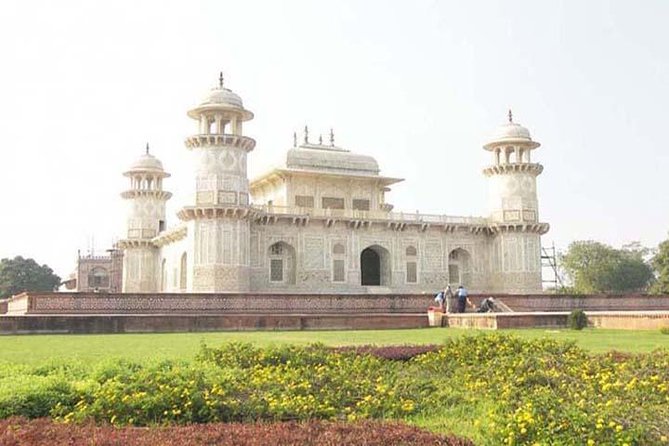
Then you visit Itmad-ud-Daula, often called the Baby Taj. It’s a marble tomb built by Empress Nur Jahan for her father, and it’s admired for its intricate inlay work and calm garden setting. This stop is valuable because it helps you understand the evolution of Mughal tomb style before you reach the Taj Mahal.
The night is spent in Agra, so you’re not scrambling for onward transport right after sightseeing. That’s a real comfort advantage on a route where daylight hours disappear quickly.
Day 3: Taj Mahal early, then Agra Fort and Fatehpur Sikri on the way to Jaipur
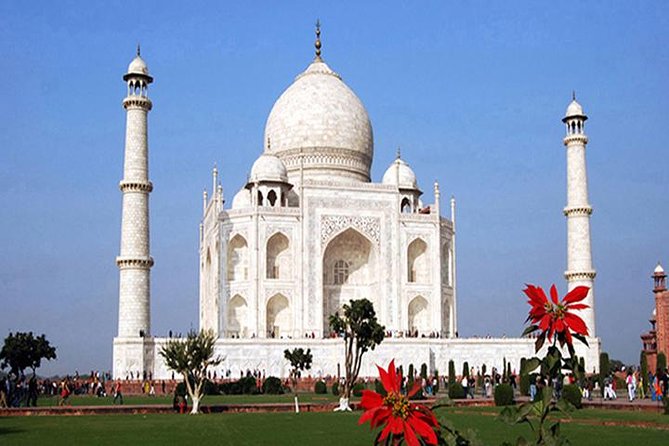
Day 3 starts with the Taj Mahal visit in the early hours. The timing is more than a schedule detail—it helps with heat, gives you nicer light for photos, and usually reduces some of the chaos that builds later in the day. Your guide escorts you, and you get the context of Shah Jahan building the monument in memory of Mumtaz Mahal.
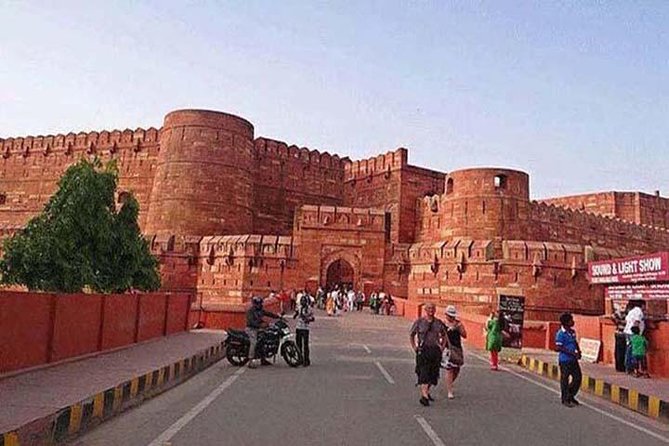
Then it’s on to Agra Fort, another UNESCO World Heritage Site. This fort is known for impressive Mughal architecture and the layered history of power inside its walls. If you’ve only seen the Taj from a distance before, Agra Fort helps you understand the political backdrop: this wasn’t just a love story in marble; it was also a center of rule.
After breakfast and these two major sights, you move toward Jaipur. Along the way you stop at Fatehpur Sikri, a historic city with a famous place in Mughal-era history. The stop is a good breather between two long drives, and it adds variety so you don’t feel stuck in one city style for the whole day.
By the end, you check into Jaipur for an overnight stay.
A big planning detail: the Taj Mahal is closed every Friday. If your travel dates fall on a Friday, ask your operator how the schedule adjusts so you’re not stuck with a half-day disappointment.
Day 4 Jaipur: City Palace, Hawa Mahal, forts, Jantar Mantar, and a quick look at Jal Mahal
Jaipur is your day for iconic silhouettes and royal-era details. The City Palace is first, set in the old city heart. It’s the royal residence of the former Maharaja of Jaipur, and you’ll see a blend of Rajasthani and Mughal architecture. Some parts can be limited during visits, so don’t panic if you can’t access every corner.
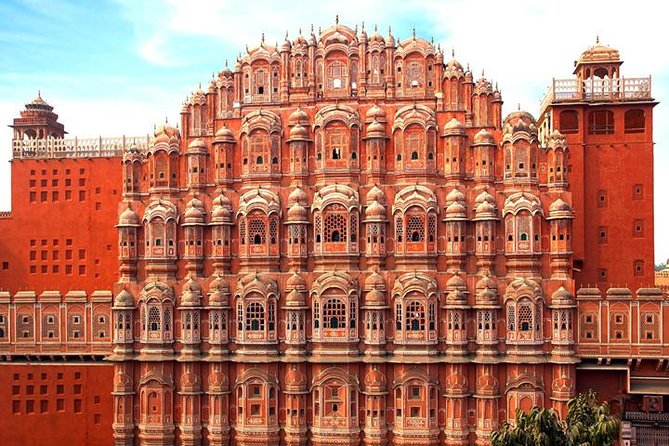
Then comes Hawa Mahal, the Palace of Winds. Built in 1799, it’s famous for its 953 ornate windows, which allowed royal women to observe street life from behind privacy. Even if you’re only seeing it from outside, it’s one of those buildings you feel in your camera frame—the honeycomb façade is instantly memorable.
Next you’ll head to Jaigarh Fort, built by Maharaja Jai Singh II in the 18th century. It’s known for views over Jaipur and for housing the world’s largest cannon, Jaivana. If you’re into military history or you just like looking at fort walls and defensive layouts, you’ll appreciate this change of pace from palace interiors.
Jantar Mantar follows, a UNESCO site with huge stone astronomical instruments. It’s a rare stop because it’s not just visual; it’s about measuring time and the sky using massive instruments still standing today. Your guide’s explanations help a lot here, since the scale can be confusing without context.
You also get a quick stop at Jal Mahal, the Water Palace, which appears to float on Man Sagar Lake. Even with limited time, it’s a good photo pause because the surrounding hills and water make it feel different from the stone-and-stone stops earlier.
After a full day, you return to your Jaipur hotel overnight.


Day 5 Jodhpur arrival: a slower start so you can enjoy the city instead of sprinting
Day 5 is a straightforward shift west. After breakfast, you depart for Jodhpur by car, arriving in time to check in and relax. This is not a nonstop drive day; you actually get some recovery time once you arrive.
Overnight in Jodhpur matters because it helps you build a connection to the place. You don’t just show up, rush through forts, and leave. Instead, you’re in the city long enough to notice the hilltop feel and the way fort structures dominate the skyline.
The tour gives you breathing room here, and I’d treat that time as yours: plan dinner near your hotel, take a relaxed walk if you feel up to it, and let your feet rest.
Day 6 Jodhpur’s big hits: Mehrangarh, Jaswant Thada, and the Umaid Bhawan Museum stop
Today is your main Jodhpur sightseeing block, and it’s built around hilltop power and marble memorials.
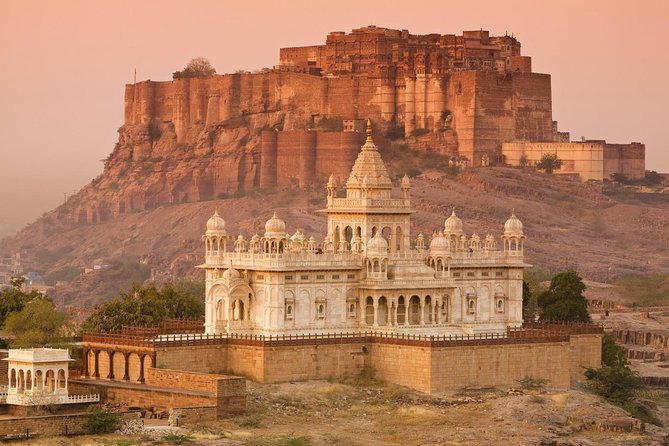
Mehrangarh Fort is the headline. It sits on a low sandstone hill and includes areas such as Moti Mahal and Phool Mahal. The fort experience is different from palace visits: you get strong views, defensive architecture, and a feeling of height over the city. The guide helps you see what matters, so it doesn’t become a simple wall-watching exercise.
Then you head to Jaswant Thada, an imposing 18th-century marble building. It’s known for its memorial character, and the marble work gives it a softer, more reflective tone than the fort.
After that, the schedule includes a stop toward Umaid Public Gardens and a visit connected to the Umaid Bhawan Museum area. The tour pacing keeps this day intense but not jam-packed every minute, which is important when you’re combining forts and museums in one session.
You spend the night again in Jodhpur, which keeps logistics simple.
Day 7: fly back to Delhi or drive, and walk away with the full picture
The final day focuses on your departure. After breakfast, you go to Jodhpur Airport for your flight to Delhi, or you can drive back to Delhi in an air-conditioned car. That flexibility is useful because flight times vary, and not everyone wants to gamble on a tight connection.
This is also the day when the trip’s theme lands. You leave with Delhi’s old-and-new mix, Agra’s marble monument scale, Jaipur’s royal-era visual culture, and Jodhpur’s fort-and-hill views. For many people, Jodhpur is the part that feels the most different from the standard Golden Triangle route.
Price and value: what $443 includes, and what you should budget for
At $443 per person, this tour sits in the mid-range for a private, multi-city India plan. You’re paying for the big ticket items: private air-conditioned transportation, private live guides, 6 nights of hotel stay with breakfast (if you select the 4-star or 5-star option), and hotel pickup and drop-off. You also get a Tuk-Tuk ride in Old Delhi and a mobile ticket.
The biggest extra cost is entrances. Entrance fees are listed at about $82 per person, and that’s a normal reality for a route stacked with UNESCO sites and major palaces. Tips and gratuities are also not included, so plan a budget for that too.
Domestic flights are not included, but your final day gives you a choice: you can catch your own flight from Jodhpur to Delhi, or you can drive back by car. That’s why this tour can work for different travel styles without forcing one rigid option.
If you’re a couple, a family, or a group that wants privacy, the private car and guide can be a strong value. If you’re traveling solo and you’re trying to keep costs ultra-low, this might feel pricier once you add entrance fees and your own flights.
Timing tips and closure planning (Taj on Fridays, Lotus on Mondays)
Two closures matter enough that you should plan around them now:
- Taj Mahal closes every Friday.
- Lotus Temple closes every Monday.
If your day-by-day schedule hits those weekdays, the tour may adjust what you see, but the only honest advice is to confirm your dates early. Don’t wait until the last week to discover a closure.
Also think about check-in timing. Hotel early check-in (before 14:00) isn’t always guaranteed, though you can store luggage and start exploring. If you’re arriving at midnight, the data suggests booking an additional night in advance. That’s a practical suggestion because you’ll lose less time to fatigue and hotel delays.
How to get more out of each guided stop
A private guide can either be great or just fast. If your guide starts moving too quickly for photos or questions, ask for a slower pace. You’ll enjoy stops like the fort interiors and Jantar Mantar more if you take time to understand what you’re looking at.
For practical comfort, I’d also keep your evenings flexible. The route is structured, but you often have time on your own in the evening. Use that time for a relaxed meal, not another sightseeing sprint—because tomorrow’s drive and early starts will be there whether your feet are ready or not.
Who should book this private Golden Triangle with Jodhpur
This tour is a strong match if you want:
- A guided, private experience rather than squeezing into bigger bus tours
- The core Golden Triangle highlights plus a fort-focused Jodhpur add-on
- Convenience: airport/hotel pickup, private AC car between cities, and hotel stays with breakfast (when you choose the star-category option)
It may be less ideal if you hate long days or you’re on a very tight budget where entrance fees and private transport feel hard to justify.
Should you book this tour?
If you want a smooth first India trip that hits Delhi, Agra, Jaipur, and then adds Jodhpur for contrast, this is a smart booking. The combination of private logistics, live guides, and a schedule built around major monuments reduces the usual stress that comes with traveling independently across North India.
I’d book it when:
- you care about understanding what you see (a guide is part of the value)
- you prefer private comfort over public transport juggling
- you’re okay paying extra for entrances (about $82 per person)
I’d hesitate when:
- your dates land on Friday for Taj Mahal or Monday for Lotus Temple, and you don’t want any schedule surprises
- you’re determined to keep everything as low-cost as possible, since private transport and guide time add up quickly
FAQ
What cities are included in this tour?
It covers Delhi, Agra, Jaipur, and Jodhpur over approximately 7 days.
How much does the tour cost?
The price is $443.00 per person.
What is included in the price?
It includes private air-conditioned transportation, 6 nights of hotel stay with breakfast (if selected for 4-star or 5-star), a private live tour guide in all the cities, hotel pickup and drop-off, and a Tuk-Tuk ride in Old Delhi. It also includes breakfast (6) and a mobile ticket.
Are entrance fees included?
No. Entrance fees are not included and are listed at about $82.00 per person.
Do I need a domestic flight as part of the tour?
A domestic flight is not included. On the last day, you can either go to Jodhpur Airport to catch your flight to Delhi or drive to Delhi in an air-conditioned car.
Are there closures that affect the itinerary?
Yes. Lotus Temple is closed every Monday, and the Taj Mahal is closed every Friday.