REVIEW · NEW DELHI
Private Guided Tour of Old & New Delhi
Book on Viator →Operated by Private Driver In India · Bookable on Viator
Two Delhis, one well-planned day. This private tour is built for people who want history, photos, and quick orientation without wrestling traffic or negotiating taxis.
I like two things right away: the fun tuk-tuk ride in Old Delhi, and the ease of an AC car with chauffeur that keeps the long drives comfortable.
One caution: it packs a lot into an 8 to 9 hour day, so you may want to manage expectations on timing and entrance tickets, especially since Lotus Temple is closed on Mondays.
In This Review
- Key highlights you’ll actually feel
- How this Old and New Delhi loop fits into a single day
- Pickup windows and the comfort factor that changes everything
- From Gurudwara Sis Ganj Sahib to Jama Masjid by tuk-tuk
- Chandni Chowk: spices, senses, and an easy stop that’s worth it
- Gurudwara Bangla Sahib and Red Fort: two Mughal-era realities
- India Gate and New Delhi’s memorial axis (plus a few photo drives)
- Humayun’s Tomb: a garden-tomb and a great place to slow down
- Qutub Minar: why this minaret still dominates the skyline
- Akshardham and Lotus Temple: modern faith architecture with two different vibes
- Raj Ghat and the Gandhi memorial moment
- Price and value: what you’re really paying for at about $38
- Who should book this tour, and who might feel crowded by it
- Should you book this Private Guided Tour of Old and New Delhi?
- FAQ
- What time does the tour pickup happen?
- Where can the driver pick you up and drop you off?
- Is the tuk-tuk ride included?
- Which attractions on this route are free to enter?
- Are entrance tickets included for all monuments?
- Is Lotus Temple open every day?
- What if the weather is poor or I need to cancel?
Key highlights you’ll actually feel
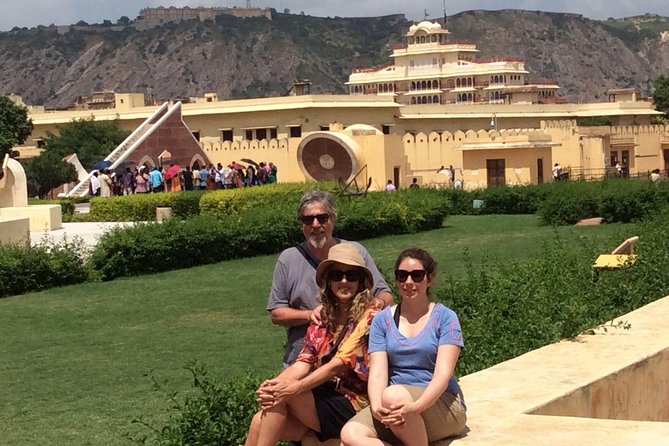
- Tuk-tuk time in Old Delhi: a short ride that gets you into the lanes fast, with your guide doing the explaining.
- Private AC transportation: you avoid squeeze-your-way-on public transit and keep moving even between far-apart sights.
- A mix of spiritual and imperial Delhi: mosques, Sikh sites, Mughal power, and modern faith architecture in one route.
- Good value for a one-day sampler: multiple free-entry stops plus optional paid entrances for the big-ticket monuments.
- Short, guided stops that still teach: enough time to see key details without spending half the day in transit.
- Drop-off where you’re staying: you end with a complimentary return to Delhi, Noida, Gurugram, Ghaziabad, or Faridabad.
How this Old and New Delhi loop fits into a single day
If Delhi is new to you, this kind of tour helps you get your bearings fast. You start in Old Delhi with signature religious sites and street-level energy, then shift to New Delhi’s grand memorials and monumental squares. It’s a practical way to see the whole city’s “two personalities” without doing a bunch of separate planning.
The best part is that you’re not just hopping from landmark to landmark. A private guide helps you connect the dots—why these places matter, how they relate to each other, and what to notice while you’re standing there.
The tradeoff with a full-day route like this: you’ll be moving often. That’s fine if you want an efficient overview. If you prefer slow museum time and long sits in cafés, you may feel a bit rushed.
You can also read our reviews of more guided tours in New Delhi



Pickup windows and the comfort factor that changes everything

The tour starts with a pickup you can schedule between 8 AM and 10 AM. Your driver meets you at any location in Delhi, Noida, Gurugram, Ghaziabad, or Faridabad, which is a big deal if you’re staying outside the city center. At the end, you get complimentary drop-off to the same areas.
You travel in a private AC car with a chauffeur, and bottled water is included. Parking, tolls, fuel, and taxes are covered too. For me, that matters because Delhi can be unpredictable. The easier the travel logistics, the more energy you have for the sights.
Also, this is a true private setup, so only your group participates. That means you’re not stuck with someone else’s pace or interests—useful when you want extra time at one stop or want to skip something that feels less relevant.
From Gurudwara Sis Ganj Sahib to Jama Masjid by tuk-tuk
Old Delhi starts with Gurudwara Sis Ganj Sahib, where you meet your guide. Then you hop into a tuk-tuk for a ride through the busy lanes. It’s short, but it changes the whole tone of the morning—you feel like you’ve entered the neighborhood, not just passed through it in a car.
Your first major stop is Jama Masjid, India’s largest mosque. Plan on about an hour here. The courtyard is the star: red sandstone, built in 1656 with the labor of over 5,000 workers. Even if you’re not a big architecture person, it’s the kind of place where you automatically look up and take in the scale.
Jama Masjid admission is free on this route. That’s a smart inclusion for value, because it lets you spend your money on the paid monuments where the ticket actually changes what you can access.
If you’re sensitive to crowds, go with a calm attitude. Old Delhi gets busy, and the streets are narrow. The guide’s job here is to get you where you need to be without wasting time.
Chandni Chowk: spices, senses, and an easy stop that’s worth it

After Jama Masjid, you move into the Chandni Chowk area for a spice market visit. This isn’t about shopping at all costs. It’s about experiencing how the district smells, sounds, and looks—an easy way to understand daily life in Old Delhi.
Your time here is flexible within the flow of the day, but the goal is clear: a sensory walk with facts and context from your guide. It’s also one of the better stops for photo variety. You’ll see shopfronts and spice stalls that feel totally different from the monument courtyards you just visited.
Practical tip: wear shoes you’re comfortable walking in. This part of the day is about short steps, turning corners, and moving with the group.
Gurudwara Bangla Sahib and Red Fort: two Mughal-era realities
Next up is Gurudwara Bangla Sahib. You get about 30 minutes, and admission is free. The site has a well-known story behind it: in 1664, the eighth Sikh Guru is recorded as visiting a king and miraculously curing people suffering from smallpox and cholera by distributing water from a tank. That sacred tank is still part of the complex.
This stop works because it adds a different lens to Old Delhi. You’re not only seeing the Mughal legacy; you’re seeing how faith and community life continue in the same city spaces.
Then comes the big “imperial” statement: Red Fort. You’ll have about an hour here, and admission is not included unless you choose the entrance-fees option. The fort was constructed by Shah Jahan between 1639 and 1648 and served as Mughal emperors’ primary residence. Expect Indo-Islamic and Mughal architectural features.
A balanced expectation helps here: Red Fort is famous, and it’s worth the time, but it’s also one of the stops where tickets can affect your day’s cost. If you’re paying out of pocket, it’s worth deciding early whether you want that stress handled by the tour.
You can also read our reviews of more private tours in New Delhi





India Gate and New Delhi’s memorial axis (plus a few photo drives)
After Old Delhi, you pivot to New Delhi. The first big symbol is India Gate, with about 15 minutes on-site. Admission is free. It was constructed in 1931 to commemorate Indian battle casualties during World War I as well as the Third Anglo-Afghan War.
Even with limited time, this stop gives you a sense of Delhi’s newer planning era. It’s a wide, open space where the city feels calmer than the lanes of Old Delhi. If you’ve ever only seen India Gate in photos, it’s one of those places where the scale hits you in person.
From there, you’ll get drive-by glimpses of Parliament House and a chance to capture pictures. You also have the opportunity to visit the President’s House area as part of the route.
These New Delhi moments are short by design. The point is orientation, not deep study. The time you save here gives you room for the major monuments later.
Humayun’s Tomb: a garden-tomb and a great place to slow down
Humayun’s Tomb is next, and it’s one of the highlights most people remember. It’s a UNESCO World Heritage Site, and it’s described as India’s first garden tomb. You’ll have about 30 minutes. Admission isn’t included on the standard option, so check whether your booking includes entrance fees.
This is the kind of stop where your guide’s explanations can really help. The tomb was built by Humayun’s wife, designed as his final resting place, and it’s a strong example of how Mughal rulers used landscape and symmetry to shape meaning.
The practical reality: 30 minutes goes quickly. You’ll likely want to pick a few “must-see” viewpoints and trust your guide to position you at useful angles.
Qutub Minar: why this minaret still dominates the skyline
After Humayun’s Tomb, you head to Qutub Minar. This is a longer stop at about 45 minutes. Admission is not included unless you chose the entrances option. The minaret dates to 1192, originally built with bricks, and it’s the tallest minaret of its kind in the world.
Qutub Minar is also part of a UNESCO World Heritage Site in Mehrauli. Even without deep background knowledge, you can appreciate the height and the way the site feels like it belongs to a different century.
If you care about details, this is a good moment to ask questions. Timing is tight, but asking one or two pointed questions can make you notice patterns you would otherwise miss.
Akshardham and Lotus Temple: modern faith architecture with two different vibes
Swaminarayan Akshardham is next, with about 30 minutes and free admission. It’s a huge Hindu temple complex and, on this route, it’s a quick taste rather than an all-day exploration. The temple was constructed relatively recently in 2005, but its intricate design gives it an ageless feel.
Then you move to Lotus Temple, dedicated in December 1986 as a Bahá’í House of Worship. Expect about an hour here. Admission is not included unless your entrance-fees option covers it. The Lotus Temple is known for its flower-like architecture, and it’s a nice contrast to the older Mughal and medieval sites you’ve seen earlier.
One important detail: Lotus Temple is closed on Mondays. If your trip includes a Monday, plan around that. Your guide may shift the route to keep the day worthwhile.
Raj Ghat and the Gandhi memorial moment
To close the day, you visit Raj Ghat for about 30 minutes. Admission is free. This is a memorial dedicated to Mahatma Gandhi, and it’s tied to the idea of the city’s older riverfront and ghat history—originally, it was a historic ghat in Old Delhi near Daryaganj and east of the walled city’s Raj Ghat Gate.
Raj Ghat is a calmer final stop. It also works well for reflection if your earlier sights felt overwhelming. By the time you reach this point, you’ve seen major monuments across centuries, and the memorial gives you a human-scale ending.
After that, you get complimentary drop-off back to your location in Delhi, Noida, Gurugram, Ghaziabad, or Faridabad. That last step is more valuable than it sounds—you avoid the hassle of arranging transport right when you’re tired.
Price and value: what you’re really paying for at about $38
At around $38.02 per person, this tour can be good value because so many essentials are bundled. You’re getting a private AC car with chauffeur, a private guide, bottled water, and coverage for parking, tolls, fuel, and taxes. You also get a tuk-tuk ride in Old Delhi, plus free-entry sites like Jama Masjid, Gurudwara Bangla Sahib, India Gate, Akshardham, and Raj Ghat.
Where costs can change is entrances. Several major monuments list admission as not included: Red Fort, Humayun’s Tomb, Qutub Minar, and Lotus Temple. The tour notes an option for entrances, so you can decide whether you’d rather handle paid sites through the tour or pay them separately.
If you want the simplest, least stressful day, choose the entrance-fees option when booking and treat this as a one-stop plan. If you prefer keeping control and paying as you go, you can still do it, but you’ll want to budget for those specific sites.
Also, this is often booked about 54 days in advance on average. That doesn’t guarantee anything, but it’s a hint that this is a popular “first Delhi” tour. If you have fixed travel dates, booking earlier is smart.
Who should book this tour, and who might feel crowded by it
This tour fits best if you want a fast, guided overview and you’d rather avoid transit stress. It’s ideal for first-timers, people with limited time, and anyone who doesn’t want to haggle for taxis or fight crowded public transport.
It also makes sense if you like variety. You’ll see Old Delhi’s religious anchors and spice-market life, then shift to New Delhi’s memorial axis, then hit key monuments linked to different periods of Delhi’s growth.
The main mismatch is pace. With an 8 to 9 hour schedule and several major sights, it’s not designed for slow strolling or long breaks at every stop. If you really care about fully exploring one monument, you might feel time pressure.
And if you travel on a Monday, remember Lotus Temple is closed. That doesn’t ruin the day, but it does change what you’ll be able to see.
Should you book this Private Guided Tour of Old and New Delhi?
Yes—if your goal is to get your bearings and see the headline monuments without planning fatigue. The combination of private guide, AC car, and a tuk-tuk ride makes it feel like more than a checklist. You also get multiple free-entry stops, which helps keep the day’s overall cost reasonable.
I’d book it when:
- You want Old Delhi and New Delhi in one day.
- You’d rather pay for convenience than manage transport and entrance logistics.
- You like your sightseeing guided, with explanations that help you notice details.
I’d skip or modify it if:
- You want a relaxed pace with lots of unplanned time.
- You’re traveling on a Monday and Lotus Temple is a must-see for you.
- You’re expecting every single stop to get full attention in one day.
FAQ
What time does the tour pickup happen?
Pickup is available between 8 AM and 10 AM, so you can choose the start time that works best for your schedule.
Where can the driver pick you up and drop you off?
The driver can pick up and drop you off at locations in Delhi, Noida, Gurugram, Ghaziabad, or Faridabad.
Is the tuk-tuk ride included?
Yes. The tour includes a tuk-tuk ride in Old Delhi.
Which attractions on this route are free to enter?
Jama Masjid, Gurudwara Bangla Sahib, India Gate, Swaminarayan Akshardham, and Raj Ghat have admission listed as free on this tour.
Are entrance tickets included for all monuments?
Not automatically. Admission for Red Fort, Humayun’s Tomb, Qutub Minar, and Lotus Temple is listed as not included unless you select an option that includes entrance fees.
Is Lotus Temple open every day?
No. Lotus Temple is closed on Mondays.
What if the weather is poor or I need to cancel?
This experience requires good weather. If it’s canceled due to poor weather, you’ll be offered a different date or a full refund. You can cancel up to 24 hours in advance for a full refund.