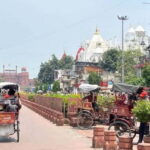
Delhi in one private run, neatly paced. In this Old and New Delhi city tour, you jump between Sikh, Mughal, and modern landmarks with a live guide and a private car that keeps the day comfortable. I like that it includes a tuk tuk ride in Old Delhi, which helps you experience the old lanes without turning the whole day into a slow slog.
Two big wins for me are the guide-led storytelling at Gurudwara Bangla Sahib and Jama Masjid, plus the mix of major monuments and quieter stop-time at places like Agrasen ki Baoli. One drawback to plan for: parts of the New Delhi section are mainly drive-bys, so if you’re hoping to spend lots of time parked in front of landmarks, you may want to choose extra stops on your own.
In This Review
- Key Highlights You’ll Feel on This Delhi Day
- Why This Old and New Delhi Tour Works in a Single Day
- Price and Value: What $8.58 Actually Buys You
- Getting Picked Up and Staying Comfortable Through Delhi Traffic
- Gurudwara Bangla Sahib: Sikh Heritage With a Human Story
- Jama Masjid: Mughal Scale, Shah Jahan’s Big Influence
- Chandni Chowk and Khari Baoli: Old Markets in Walking-Range Portions
- Red Fort, India Gate, and Parliament House: Iconic Drive-Bys With Context
- Agrasen Ki Baoli: The Stepwell Stop That Feels Like a Pause Button
- Humayun’s Tomb: UNESCO Worth the Time
- Lotus Temple: A Calm Finish With Open-Door Meaning
- Your Guide and the Private Comfort Factor
- Half-Day vs Full-Day: How to Choose the Right Slice
- Should You Book This Old and New Delhi Private Tour?
- FAQ
- What’s the duration of the private Old and New Delhi city tour?
- Do you get hotel or airport pickup and drop-off?
- Is the tour private or shared?
- Does the tour include a tuk tuk ride?
- Which monuments require tickets?
- Are Red Fort, India Gate, and Parliament House visited inside the tour?
- Are meals included?
Key Highlights You’ll Feel on This Delhi Day
- Private, air-conditioned car with pickup/drop-off across Delhi and NCR, so you’re not wrestling transit on a tight schedule
- Tuk tuk ride in Old Delhi, which is practical for narrow streets and fun in the right way
- Free-entry stops like Gurudwara Bangla Sahib, Jama Masjid, Agrasen ki Baoli, and the Lotus Temple
- UNESCO time at Humayun’s Tomb with admission included in the tour package
- Old Delhi markets + quiet monuments in the same day: Chandni Chowk and Khari Baoli pair well with the stepwell
- Good local guidance: reviews specifically praised guides such as Lucky, Banti, Gullu, and Tarun for enthusiasm and clear explanations
Why This Old and New Delhi Tour Works in a Single Day
Delhi can feel like two different cities: the old power centers and lanes of the Mughal era, and the later government-and-ceremony New Delhi planning. This tour makes that switch smoothly, without you needing to map everything out yourself.
You get a full arc—religious heritage in Old Delhi, iconic monuments across the city, and then a UNESCO site to anchor the day. The pacing is built around “see it, understand it, move on,” which is exactly what you want when you only have one good day and you’re trying to avoid decision fatigue.
And because it’s private, your guide can adjust what you linger on and what you skim. That matters in Delhi, where crowds can change from one street to the next.
You can also read our reviews of more guided tours in New Delhi



Price and Value: What $8.58 Actually Buys You
At about $8.58 per person, this is priced like a budget-friendly city orientation, not a splurge sightseeing day. The value comes from what’s bundled: private transport, a live guide, transfers from within Delhi and NCR, and bottled mineral water during the drive.
Also, the tour mixes free-entry highlights with at least one paid admission stop (Humayun’s Tomb). If you’re trying to stretch your travel budget in Delhi, that’s the kind of structure that makes sense.
One small “check before you commit” note: entrance fees are listed as included if your option is chosen. In practice, the itinerary shows many stops as free entry and Humayun’s Tomb as admission included. Still, it’s worth confirming so you don’t get surprised by anything at the ticket window.
Who is this best for? If you want a guided sampler—Old Delhi sights, New Delhi landmarks, and one UNESCO monument—this fits nicely. If you want a slow museum day or a deep dive into only one neighborhood, you may feel rushed.
Getting Picked Up and Staying Comfortable Through Delhi Traffic
Your day starts with pickup from where you’re staying—hotel, airport, or home—anywhere in Delhi or NCR. You ride in a private, fully air-conditioned car, and bottled mineral water is provided. That sounds basic, but in Delhi’s traffic heat it’s the difference between “we’re sightseeing” and “we’re surviving.”
A real practical plus here: tuk tuk time in Old Delhi. Old neighborhoods can be hard to access efficiently by car, and a tuk tuk helps you transition into tighter streets. It also adds a change of pace without adding the stress of figuring out transport yourself.
The tour duration runs about 5 to 8 hours, depending on which option you choose and how your guide manages the timing. Expect a schedule built around short, focused stops—long enough to see and understand, not long enough to feel stuck.
Gurudwara Bangla Sahib: Sikh Heritage With a Human Story
The day kicks off at Gurudwara Bangla Sahib, one of the most important Sikh temples in India. Plan for about 30 minutes here, with admission ticket listed as free.
What makes this stop meaningful isn’t only the architecture. It’s the connection to Guru Har Krishan, the eighth Sikh Guru, and the idea that he helped sick people during an epidemic. Your guide’s job is to connect that story to what you’re seeing now—how religious spaces aren’t just monuments; they’re places of service and memory.
If you like sites where context matters, this is a strong first stop. Many first-time Delhi days start with stones and dates. This one starts with people and purpose.
Jama Masjid: Mughal Scale, Shah Jahan’s Big Influence
Next up is Jama Masjid. You’ll typically spend around 1 hour here, and it’s also listed as free entry.
Jama Masjid is one of India’s largest mosques and was established by Emperor Shah Jahan—the same emperor connected to the story of the Taj Mahal. That link gives you an easy mental map: this was an era of massive building projects, and this mosque reflects the same scale-minded ambition.
In a guided format, Jama Masjid works especially well because you’re not just looking up at walls. You’re learning how rulers, religion, and city planning shaped the way Delhi functioned in earlier centuries.
A practical consideration: this is a major public site, so you’ll want to keep your expectations flexible on timing and movement. A private guide helps you keep the flow under control.
You can also read our reviews of more city tours in New Delhi





Chandni Chowk and Khari Baoli: Old Markets in Walking-Range Portions
After Jama Masjid, you head toward Chandni Chowk, commonly described as one of the oldest markets in India, dating back over 350 years and constructed during the Mughal era. Your itinerary then continues to Khari Baoli, near the historic Fatehpuri Mosque, established in the 17th century.
These are not quick photo stops. They’re the kind of places where the guide’s explanations make the walk more interesting. Even without shopping time built in, you’ll learn why these markets mattered—trade, daily life, and the city’s economy shaped right into the streets.
What I like about this structure is the balance. You see “old Delhi” in a way that doesn’t require you to buy anything or chase a thousand side streets. You get market atmosphere, then you move on.
One possible drawback: Old Delhi streets can feel intense if you prefer slow, open spaces. You might find it busy, so if you’re sensitive to crowds, go in with patience and let your guide set the pace.
Red Fort, India Gate, and Parliament House: Iconic Drive-Bys With Context
You’ll get drive-by passes of several New Delhi icons:
- Red Fort (UNESCO World Heritage Site), built in the 17th century by Mughal Emperor Shah Jahan
- India Gate, a 42-meter ceremonial arch built in 1931 commemorating Indian soldiers
- Parliament House, designed by British architects Sir Edwin Lutyens and Herbert Baker
Drive-bys get a bad reputation sometimes. But here’s the honest take: they work when you’re trying to cover big landmarks without turning your day into a parking-lot problem. Delhi distance and traffic can make long exterior viewing frustrating. A drive-by lets you get the orientation fast, then you invest your on-foot time in places where entry and lingering make sense.
If you’re hoping to do longer time at Red Fort or stop for extended photos at India Gate, you’ll likely want to add a separate self-guided block afterward. Within this tour’s structure, these are mainly “see it, recognize it, move on.”
Agrasen Ki Baoli: The Stepwell Stop That Feels Like a Pause Button
Then the itinerary turns to something many people miss: Agrasen ki Baoli (about 30 minutes, admission ticket free).
This stepwell is tucked away in central New Delhi and is believed to have been originally built during the Mahabharata era, later rebuilt in the 14th century. Even if you don’t know stepwells well, this kind of stop changes your day. You go from big ceremonial monuments to a quieter built structure shaped by water management and city survival.
A guide helps here because stepwells can look like “just an old structure” if you don’t know what you’re looking at. In a short visit, the story is what makes it click.
If you like “one surprising stop” in your itinerary, this is that stop.
Humayun’s Tomb: UNESCO Worth the Time
After Agrasen ki Baoli, you visit Humayun’s Tomb, a UNESCO World Heritage Site. You’ll typically spend around 1 hour, and admission is listed as included.
This is the monument where your Old-to-New Delhi journey feels like it locks into place. Humayun’s Tomb connects you directly to Mughal-era architecture and planning, and it’s the kind of site that rewards even a single focused hour.
Why I consider this a key part of the value: free-entry sites are great, but UNESCO admission is often where time and ticket structure matter most. Here, the itinerary gives you a full hour and includes the ticket, so you’re not scrambling for what to prioritize.
If your schedule is tight, this stop is one of the best “use your time wisely” choices in the entire route.
Lotus Temple: A Calm Finish With Open-Door Meaning
Next is the Lotus Temple, with about 45 minutes planned and admission ticket free.
It’s shaped like a blooming lotus flower and is a Bahá’í House of Worship open to people of all faiths and beliefs. That open-door concept makes this a good late-day stop because it tends to feel less like a fortress and more like a shared space.
The design is simple to recognize from outside, but what makes it work in a guided tour is the explanation. Your guide ties the architecture to the idea of universal worship—then you get time to experience the stillness without rushing.
Your Guide and the Private Comfort Factor
The private part isn’t just about having a car. It’s about having a human translator for what you’re seeing.
In reviews, guide names come up again and again. People praised Lucky and Rej for friendliness and skill across multi-day sightseeing. Others highlighted Banti for enthusiasm and strong local knowledge, and Mannu as a driver who handled Delhi traffic safely. Gullu and Tarun were also credited for taking care of small details and helping make the day feel organized.
That matters because a great Delhi tour isn’t only about hitting famous sites. It’s about how you move between them, how you avoid wasted time, and how you make sense of the stories behind the stones.
And because your ride includes bottled water, you’re not forced to hunt for basics mid-day. That small comfort adds up.
Half-Day vs Full-Day: How to Choose the Right Slice
The tour is offered as a half or full day (about 5 to 8 hours total). The itinerary you have here includes both Old and New Delhi landmarks, plus multiple walking and entry stops.
If you go half-day, you’ll likely need to prioritize the “musts” that match your interests:
- Old Delhi religious sites and market atmosphere
- UNESCO time at Humayun’s Tomb
- A calmer architectural stop like Agrasen ki Baoli or Lotus Temple
If you go full-day, you get a stronger “story arc” from Sikh and Mughal Delhi to New Delhi ceremonial landmarks and then back to calmer architecture.
If you hate feeling rushed, I’d lean full-day. If you only have one compact window and you want a taste, half-day can work—just make sure you understand which stops are included in your selected duration.
Should You Book This Old and New Delhi Private Tour?
I’d book it if you want:
- A guided one-day Old + New Delhi mix without planning stress
- Private comfort: air-conditioned car, pickup/drop-off in Delhi and NCR, bottled water
- A tour format that includes both entry stops and smart drive-bys so you see more in less time
- Humayun’s Tomb plus a set of other notable stops without paying for every ticket yourself
I wouldn’t book it if:
- You want to spend lots of time inside every major landmark, especially ones that are only drive-by here
- You want a slow, neighborhood-by-neighborhood exploration without structured timing
One last tip: if you’re the type who loves explanations, this tour style will reward you. The guide storytelling is clearly the part people remember most—names like Lucky, Banti, Gullu, and Tarun keep showing up for a reason.
FAQ
What’s the duration of the private Old and New Delhi city tour?
The tour runs about 5 to 8 hours, depending on whether you choose half-day or full-day.
Do you get hotel or airport pickup and drop-off?
Yes. Pickup and drop-off are included from and to places within Delhi and NCR, such as hotels and the airport (also Noida, Gurugram, Ghaziabad, and Faridabad).
Is the tour private or shared?
It’s private. Only your group participates.
Does the tour include a tuk tuk ride?
Yes. There’s a tuk tuk ride in Old Delhi included.
Which monuments require tickets?
Many stops are listed as free entry (such as Gurudwara Bangla Sahib, Jama Masjid, Agrasen ki Baoli, and Lotus Temple). Humayun’s Tomb has admission included. Entrance fees are listed as included if your option is chosen.
Are Red Fort, India Gate, and Parliament House visited inside the tour?
They’re included as drive-by passes (you see them from the car), not as extended entry visits.
Are meals included?
No. Meals are not included, and you’ll need to cover food and personal expenses on your own. Tips and gratuities are also not included.
If you tell me your travel dates and whether you want half-day or full-day, I can help you pick which stops to treat as your top priorities for your schedule.