REVIEW · NEW DELHI
07 Days Golden Triangle Tour with Mathura & Vrindavan
Book on Viator →Operated by Abyss Tours · Bookable on Viator
Golden Triangle is crowded; this one feels calmer. You get the big sights of Delhi–Agra–Jaipur plus the temple focus of Mathura and Vrindavan, all in a private, schedule-friendly format. I especially like that accommodation and transport are handled for you, so you can spend your energy on places—not logistics.
My second big win is the way it mixes monument time with human-scale cultural stops, like an inlay marble workshop in Agra and a block printing workshop in Jaipur. One consideration: entrance and camera fees aren’t included, and a few key sites close on specific weekdays (Taj Mahal Fridays; Red Fort and Lotus temple Mondays), so you’ll want your dates to line up.
In This Review
- Key points at a glance
- Why the Golden Triangle plus Mathura and Vrindavan works in one week
- Private, air-conditioned car: what comfort buys you
- Day-by-day temple mornings in Mathura and Vrindavan
- Agra’s marble city: Taj Mahal time and the inlay workshop
- Abhaneri stepwell and Jaipur’s monuments that actually tell a story
- Jantar Mantar: the sky science stop
- City Palace: where Rajput and Mughal styles meet
- Amber Palace: fort views, big walk-and-climb energy
- Jal Mahal photo pause and Albert Hall pass
- Delhi’s layered monuments: Jama Masjid, Red Fort, Humayun’s Tomb, Qutub Minar
- Craft stops in Agra and Jaipur: how to shop with a purpose
- Price and logistics: where the $400 really goes
- Who this tour suits best (and where you might tweak it)
- Should you book this 7-day Golden Triangle with Mathura and Vrindavan?
- FAQ
- What’s the tour duration and starting time?
- What cities does the tour include?
- Is accommodation included?
- Are meals included?
- Are tickets and camera fees included for monuments?
- Is the Taj Mahal included, and is it ever closed?
- Are guides included in the price?
- What about closures in Delhi?
- How much is the tour, and what’s included?
Key points at a glance
- Private air-conditioned vehicle keeps long drives from feeling like punishment
- Hotels in three cities are included, so you don’t have to build your own plan
- Mathura and Vrindavan temples add meaning beyond the Golden Triangle landmarks
- Taj Mahal timing matters, and the tour notes its Friday closure
- Craft workshop visits give you a practical look at how products get made
- Breakfast is included for 6 days, helping you start early without hunting
Why the Golden Triangle plus Mathura and Vrindavan works in one week
This trip is for people who want India’s “greatest hits,” but don’t want to do it the hard way. In seven days you cover the core loop—Delhi, Agra, Jaipur—then add Mathura and Vrindavan, which shift the mood toward devotion, stories, and pilgrimage. The result is a balance: monumental wow in Agra and Jaipur, then spiritual intensity in the Krishna region.
I also like the pacing because it’s built around private transport. You’re not squeezed into crowded bus schedules, and you can get up early for the most time-sensitive sight (hello, Taj Mahal). If you’re a first-timer, this kind of route gives you a fast education in architecture, faith, and daily life—without forcing you to guess your way through distances.
You can also read our reviews of more tours and experiences in New Delhi.



Private, air-conditioned car: what comfort buys you
A big part of the value here is private air-conditioned transport with a driver. On this route, travel time adds up fast. When you’re in a comfortable car, you arrive with enough energy to actually enjoy the sites instead of just surviving them.
The vehicle size is matched to group size: small groups use a Swift Dzire or Etios, bigger groups use a Toyota Innova, and 7–10 people travel in a Tempo Traveler. That matters because it keeps the ride comfortable and organized rather than cramming people into a vehicle that feels too small.
One practical note: long drives between cities often mean you’ll want to dress in layers. In India, morning starts can feel cool, then afternoon turns warm. Having a light layer helps you stay comfortable from hotel pickup to temple steps.
Day-by-day temple mornings in Mathura and Vrindavan
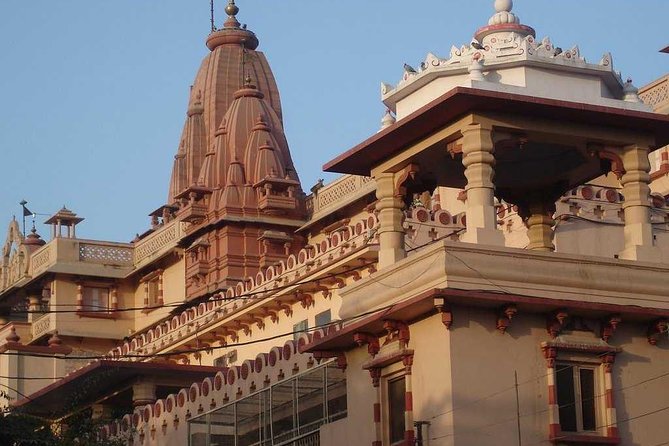
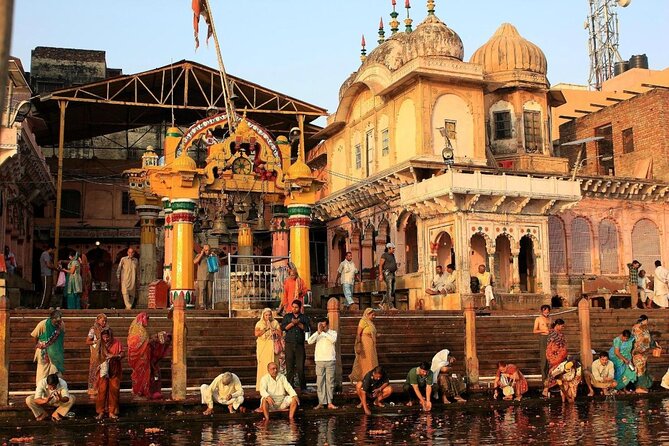
You start with Delhi airport meet-and-greet and transfer to your hotel, then move early toward Mathura. The first temple stop is Shri Krishna Janmasthan, focused on the birthplace area of Krishna. It’s a temple complex, so you’ll likely spend time moving through different spaces rather than seeing just one single hall. The listed visit time is about 30 minutes, and admission isn’t included, so plan on buying what you need on-site.
From there, you head to Shri Banke Bihari Temple, dedicated to Krishna in Vrindavan. This one is listed as free and about 30 minutes. It’s a great follow-up because it feels like the devotional heart rather than a sightseeing stop. If you’re the type who likes to understand how faith shapes daily rhythm, this is where the trip starts to feel different from a standard “see three cities” tour.
Then you’ll visit Prem Mandir – Shyama Shyam Dham, which is free and listed for about an hour. Prem Mandir is known as a large spiritual complex, and the extra time gives you breathing room to take it in calmly rather than rushing through.
Practical tip: dress modestly and keep an extra layer or scarf handy for temple spaces. The schedule starts early, so you’ll want comfortable shoes you can walk in without thinking about it.
Agra’s marble city: Taj Mahal time and the inlay workshop
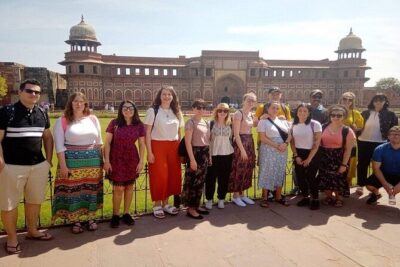
Agra is where the Golden Triangle hits its emotional peak. You’ll check in, see Agra Fort later that day (listed at about 1 hour, admission not included), and then wake up early for the big one: the Taj Mahal.
The Taj Mahal visit is listed at about 2 hours, and the tour specifically flags a key detail: Taj Mahal is closed every Friday. If your dates fall on a Friday, the tour notes the option to shift the visit to the day before or after. This is one of those moments where date planning is worth it—because you don’t want your “main event” to be a no-show.
The other thoughtful inclusion is a free craft visit: an inlay marble workshop in Agra. This kind of stop can either feel like a sales pitch or a real cultural detour. Here, it’s listed as free and framed as a demonstration/workshop visit, so you get to see the work behind the look of marble inlay rather than just admiring finished products. If you’re interested in how things are made (or you want a souvenir that isn’t random), this is a smarter use of time than another photo stop.
Practical tip: with the Taj, heat and crowds matter. The early start helps with both, so don’t treat wake-up time like a suggestion.
Abhaneri stepwell and Jaipur’s monuments that actually tell a story
After Agra, you’ll go to Abhaneri for Chand Baori, a famous stepwell. It’s listed at about 30 minutes and admission isn’t included. Stepwells can look like geometry homework from a distance, but up close they often feel more human—like a built environment that’s both practical and dramatic. It’s a nice break from the “one giant landmark” pattern, and it helps you understand how Indian architecture solves real problems with style.
Then it’s Jaipur time, and you’ll do it in the classic mix: astronomy, palaces, and forts. You’ll get a drive pass of Hawa Mahal, the iconic five-story façade that’s instantly recognizable. Since it’s a drive-by, it’s best for photos and a quick visual hit rather than a deep interior visit.





Jantar Mantar: the sky science stop
You’ll visit Jantar Mantar, listed at about 30 minutes. It was built in the 18th century by Maharaja Sawai Jai Singh II, and the huge masonry instruments were used to study the movement of constellations and stars. Even if you don’t go in with a science background, the instruments are visible and striking—you can get the idea quickly and still leave feeling like you learned something.
City Palace: where Rajput and Mughal styles meet
Next is the City Palace of Jaipur (about 1 hour). It’s described as a blend of Rajput and Mughal architecture and includes structures like the Seven storeyed Chandra Mahal in the center. City Palace is a good stop when you want to connect architecture with power: it’s not just pretty; it’s built around status and governance.
Amber Palace: fort views, big walk-and-climb energy
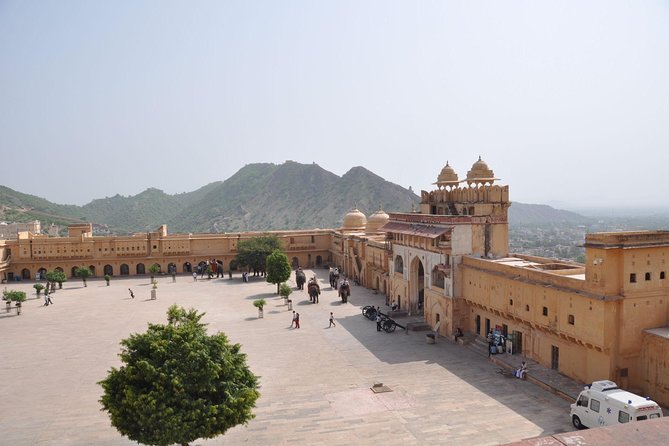
You’ll then visit Amber Palace / Amer Fort (listed around 2 hours). This is where Jaipur gets dramatic. It sits on craggy hills and combines battlements with beautiful palaces, and the surrounding views tend to be a big part of the experience. The time allocation is realistic if you’re ready for some walking on uneven surfaces.
Jal Mahal photo pause and Albert Hall pass
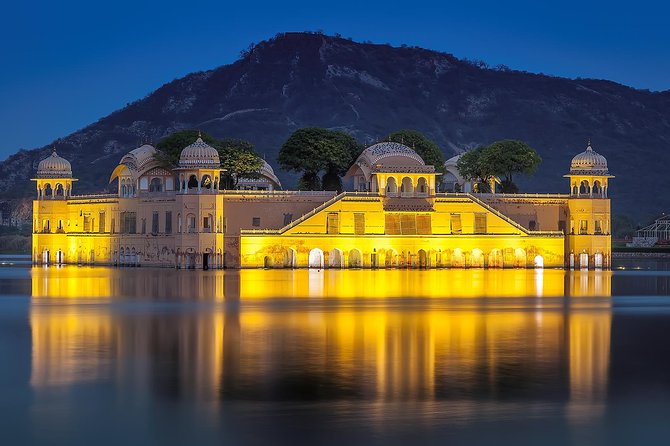
There’s also a brief photo stop at Jal Mahal (about 15 minutes). The palace sits in the middle of Man Sagar Lake, but the short timing is mainly for pictures rather than exploration. After that, you’ll get a drive pass of Albert Hall Museum in Ram Niwas Garden (again, short—about 15 minutes).
One thing to keep in mind: this Jaipur day is packed. If you’re the type who wants to linger in every room, you may feel the pace. But if you want a strong cross-section of Jaipur without spending days there, it’s a solid way to “get oriented fast.”
Delhi’s layered monuments: Jama Masjid, Red Fort, Humayun’s Tomb, Qutub Minar
On day six you leave Jaipur and head back to Delhi, check in, and sleep there. Then you start exploring Old and New Delhi.
You’ll begin at Jama Masjid, listed at about 30 minutes and free. It’s the kind of site where scale hits you quickly, and it’s also a great entry point for understanding Old Delhi’s religious architecture.
Then you’ll visit Red Fort (about 1 hour; admission not included). One weekday detail matters: Red Fort is closed every Monday. If your trip lands on a Monday, you’ll want your tour plan to adjust, because this fort is too important to miss.
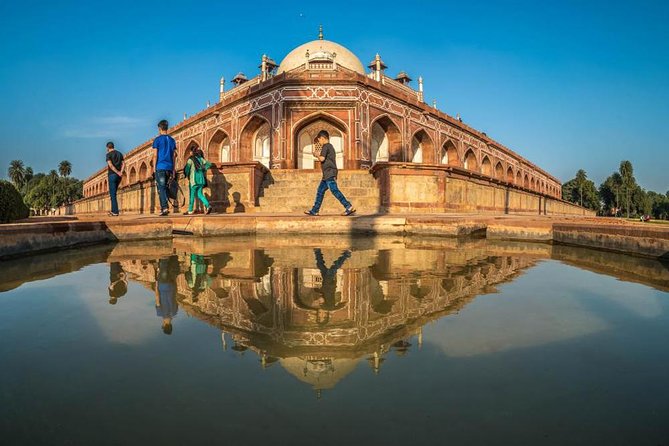
Next is a drive pass through India Gate and then Humayun’s Tomb (about 1 hour). Humayun’s Tomb is described as looking a bit like the Taj Mahal, and that connection is part of why it matters. It gives you a step in the story leading to Agra’s masterpiece.
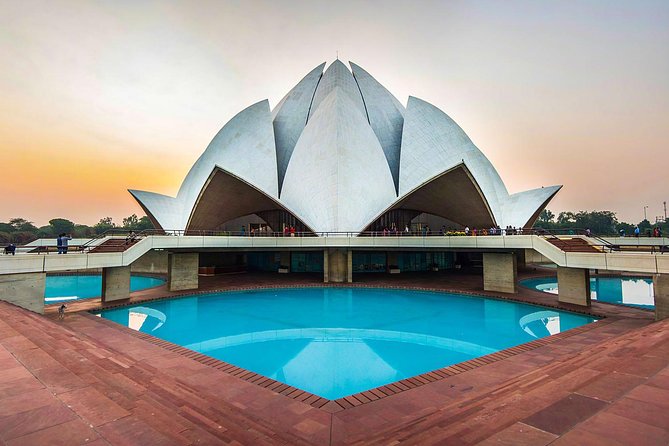
You’ll also pass Lotus Temple by car, and then visit Qutub Minar (about 1 hour). Another weekday note: Lotus Temple is closed every Monday, so again, date alignment matters. Qutub Minar is listed as the tallest brick minaret in the world, built in 1206, with the reason for its construction noted as a mystery in the tour description. Even if you don’t get that last detail from the guide, the tower’s presence alone makes the stop worthwhile.
Practical tip: Delhi can feel busy even when you’re not walking through markets. Build in hydration and use the car time to rest your feet for the next leg.
Craft stops in Agra and Jaipur: how to shop with a purpose
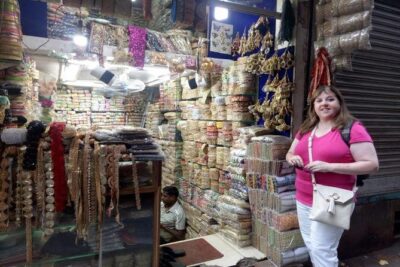
If you’ve ever walked into a craft shop in India and felt the pressure to buy, you’ll appreciate how this tour frames the stops. In Agra, there’s a free visit to an inlay marble workshop. In Jaipur, there’s a free block printing workshop.
The value isn’t only souvenirs. The value is context. When you see processes—cutting, fitting, dyeing, stamping—you understand what you’re looking at. It also helps you spot quality cues rather than buying purely by appearance.
My suggestion: treat these workshops like a mini lesson. If you buy something, buy it because you learned what makes it work, not because the shop is loud. And if you don’t buy, you still come away with a better eye.
Price and logistics: where the $400 really goes
At $400 per person for a seven-day private route, the value is strongest in what’s included:
- Private A/C car with driver
- 3-star budget accommodation in all cities
- Fuel, road/state taxes, tolls, and parking
- Driver lodging and food
- Free workshop visits (Agra inlay marble, Jaipur block printing)
- Breakfast included for 6 days
What’s not included is equally important for budgeting: monument and camera fees, plus lunch/dinner unless specified (and they’re not included in the general list). Tips and personal expenses are also on you, and an English-speaking guide isn’t included by default (it can be arranged for an extra $10 per person per city).
So if you compare this against booking only tickets and hotels on your own, you’re paying for a smooth private “through-line” between major cities. That’s the part you feel most: no constant searching for transport, no re-planning day-to-day, and less time lost between sights.
Also note: the tour is private, meaning only your group participates. That tends to make a big difference in how smoothly things run and how you can ask questions without feeling rushed.
Who this tour suits best (and where you might tweak it)
This tour fits you if you want:
- A first-timer’s Golden Triangle with less hassle
- A temple-focused add-on in Mathura and Vrindavan (not just quick sightseeing)
- Comfortable travel with air-conditioned private transport
- Included hotels and breakfast so you can travel lighter
It may not fit you perfectly if:
- You dislike early mornings or fast-paced days
- You want lots of free time in each city to wander without the schedule
- You’re sensitive to weekday closures and your travel dates fall on those shutdown days (Friday for Taj; Monday for Red Fort and Lotus Temple)
If you’re traveling with family, note that the tour has options for room sharing/extra beds depending on group size (including scenarios like extra beds for small groups and multiple double rooms for larger groups). That can help you plan rooms correctly.
Should you book this 7-day Golden Triangle with Mathura and Vrindavan?
I’d book it if you want a clear, comfortable route that hits the headline monuments and still gives you a meaningful Krishna-region experience. The biggest reason to choose it is the balance of included basics—hotels, A/C private transport, and breakfast—plus craft workshops that add texture beyond the obvious photos.
Before you lock dates, double-check the weekday closures for the Taj Mahal and Delhi sites. If your travel days fall on those closed Mondays/Fridays, ask your operator to confirm the shifted visit plan. And budget extra for entrance/camera fees and meals, because that’s where many people’s spending surprises happen.
If that all looks good to you, this is the kind of trip that can leave you with exactly what you hoped for: iconic monuments, strong devotional moments, and a week that feels manageable rather than frantic.
FAQ
What’s the tour duration and starting time?
The tour runs for about 7 days. It starts at 8:00 am from the meeting point in New Delhi, India.
What cities does the tour include?
It covers New Delhi, Mathura, Vrindavan, Agra, and Jaipur.
Is accommodation included?
Yes. The tour includes 3-star budget accommodation in all cities as per the tour plan.
Are meals included?
Breakfast is included for 6 days. Lunch and dinner are not included unless specified.
Are tickets and camera fees included for monuments?
No. Monument and camera fees are not included, as applicable.
Is the Taj Mahal included, and is it ever closed?
Yes, the Taj Mahal is part of the visit. It is closed every Friday, and the tour notes an option to visit on the day before or after if your date falls on Friday.
Are guides included in the price?
An English-speaking guide is not included by default. You can arrange one for an extra $10 per person per city.
What about closures in Delhi?
Red Fort and Lotus Temple are closed every Monday, as noted in the tour information.
How much is the tour, and what’s included?
The price is $400 per person. Included items include private A/C car with driver, hotel stays, workshops (inlay marble in Agra and block printing in Jaipur), and breakfast for 6 days.