REVIEW · NEW DELHI
3-Days Private Golden Triangle Tour: Delhi, Agra & Jaipur by Car
Book on Viator →Operated by Keeper Landwey · Bookable on Viator
Three cities, one car, zero stress. This private Golden Triangle trip is a practical way to hit Delhi, Agra, and Jaipur with a driver and local guides handling the hard parts. I like that you can choose pickup between 7 AM and 11 AM, then get a guided day-by-day plan without stitching logistics together yourself.
What I really like is the mix of big-ticket monuments and “local life” stops, like Chandni Chowk, plus the added comfort details such as bottled water during the drives. The other win is that your guides are there for context, not just checklists, and you may even get a guide like Maahi (often praised for making people feel comfortable) or Azzu (praised for weather and crowd timing at the Taj). A key consideration: monument entrance fees are not included, so the final cost rises.
You’re also doing a lot in a short time, which is great if you’re on a tight schedule. Taj Mahal is closed every Friday, so plan your dates with that in mind. It’s a straightforward tour, but the days start early and move fast.
In This Review
- Key things to know before you go
- A fast, guided Golden Triangle without the headache
- Delhi in one day: Qutub Minar, Lotus Temple, Humayun’s Tomb, and Old Delhi
- Qutub Minar: UNESCO towers and stone carvings
- Lotus Temple: peace and symmetry in the middle of the city
- Agrasen ki Baoli: stepwell atmosphere and the story behind it
- Humayun’s Tomb: the Mughal garden layout
- Chandni Chowk + Jama Masjid: the Old Delhi loop
- Khari Baoli: spice market, wholesale scale
- Red Fort, Parliament House, and other big structures from the road
- Old Delhi tuk-tuk rides and the walk-to-see balance
- Agra sunrise: Taj Mahal, Agra Fort, and the Baby Taj
- Taj Mahal at sunrise: timing and photo angles
- Agra Fort: forts aren’t just walls
- Itmad-ud-Daula: the Baby Taj effect
- Food break in Agra
- Transfer to Jaipur with a hotel drop
- Jaipur’s pink classics: Jaigarh Fort, Hawa Mahal, City Palace, Jal Mahal, and Jantar Mantar
- Jaigarh Fort: the hilltop perspective
- Hawa Mahal: 953 windows and quick photo time
- City Palace: the center of power
- Jal Mahal: a calm stop on the lake
- Jantar Mantar: UNESCO math in stone
- Back to Delhi or drop at Jaipur Airport
- Driving between cities: what the chauffeur setup buys you
- Guides in practice: what stands out with names like Maahi, Sadiq, and Arham
- Money math: what $127 covers, plus the $70 you should budget
- Should you book this Golden Triangle by car?
- FAQ
- What’s included in the $127 price?
- What extra entrance fees should I budget for?
- Are hotel stays included?
- What time will you pick me up in Delhi?
- Is this tour private?
- What rides are included at major sites?
- Do I need to bring photo ID for monument entry?
- Is Taj Mahal open every day?
- Are there special costs during December 24 and 31?
- Can I cancel for free?
Key things to know before you go
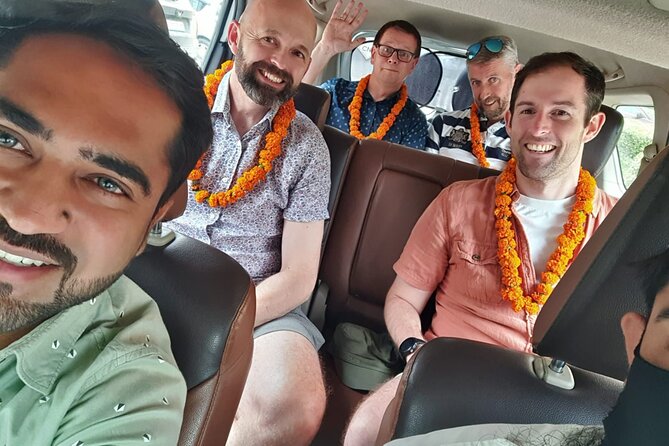
- Sunrise Taj Mahal visit with practical timing so you spend more time seeing and less time waiting
- Tuk-tuk ride in Old Delhi that helps you cover more ground in less time
- Battery van ride at Taj Mahal from the parking area to the gate
- Private, chauffeured car in your group size (sedan to 12-seater, depending on how many you travel with)
- Guides for real explanations, with multiple named guides praised for storytelling and photo help
A fast, guided Golden Triangle without the headache
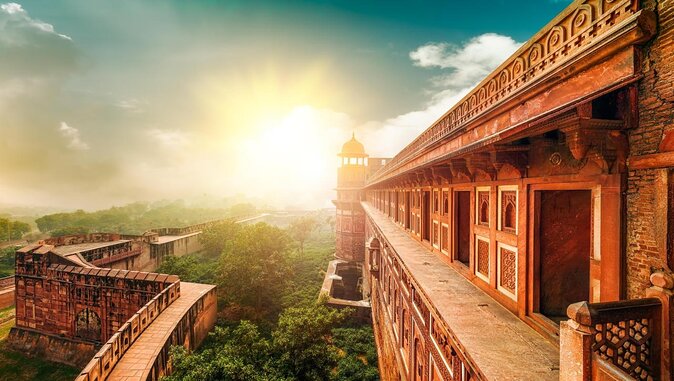
The best part of this kind of Golden Triangle tour is what it removes from your day: navigation, ticket lines you didn’t plan for, and the constant question of what’s worth your time. You’re paying for a private setup—an air-conditioned car with a professional chauffeur and local guides—so you can focus on seeing.
You can also customize the experience to fit your needs. That matters because Delhi and Agra move at a different pace than Jaipur, and people have different comfort levels with crowds and walking. If you upgrade to hotel stays in 3-, 4-, or 5-star categories, you’re also turning this into a smoother “two nights at the right base” trip instead of searching for rooms while you’re already traveling.
One more plus: the tour includes the operational costs that usually add up—parking, tolls, fuel, and taxes—so you’re not constantly paying small extras during transfers. It won’t make the monuments themselves cheaper, but it does keep the travel days simpler.
You can also read our reviews of more private tours in New Delhi



Delhi in one day: Qutub Minar, Lotus Temple, Humayun’s Tomb, and Old Delhi

Day 1 is a packed intro to Delhi’s layers: early Islamic-era architecture, a modern faith landmark, and then a full dose of Old Delhi hustle. Pick-up is flexible, and you can choose any start time between 7 AM and 11 AM, which is helpful if you’re arriving from another part of India or want to avoid the worst morning traffic.
Qutub Minar: UNESCO towers and stone carvings
You’ll start at Qutub Minar, a UNESCO World Heritage site linked to Qutub-ud-din Aibak and built in 1193. This is one of those places where seeing it in person feels different from photos. The minaret’s height and the stonework make it a great “first wow” moment of the day.
Lotus Temple: peace and symmetry in the middle of the city
Next up is the Lotus Temple, a Bahá’í House of Worship finished in 1986. Even if you’re not religious, the architecture is the headline: petal-like forms and a calm layout that acts like a mental reset after the morning bustle. It’s also a stop where you can take it slower, because the visit window doesn’t eat your whole hour.
Agrasen ki Baoli: stepwell atmosphere and the story behind it
Then comes Agra sen ki Baoli, an ancient stepwell that tends to feel eerie in the best way—cooler air, stone steps, and a setting that makes legends easy to imagine. This is a quick stop, but it’s memorable because it’s not just “another monument photo.” It’s one of those Delhi experiences that feels slightly offbeat.



Humayun’s Tomb: the Mughal garden layout
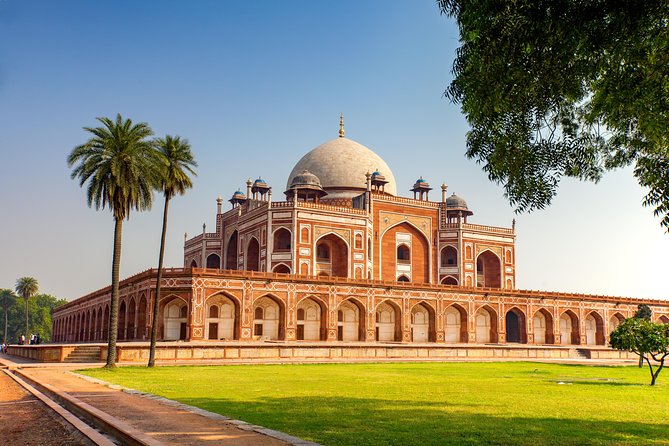
Humayun’s Tomb is your next big historical anchor, and it’s a UNESCO site known for being India’s first garden tomb. The garden design helps you understand how Mughal rulers used space—symmetry, pathways, and the idea that the setting is part of the monument. Plan for a comfortable pace here, because the gardens change the feel of the visit.
Chandni Chowk + Jama Masjid: the Old Delhi loop
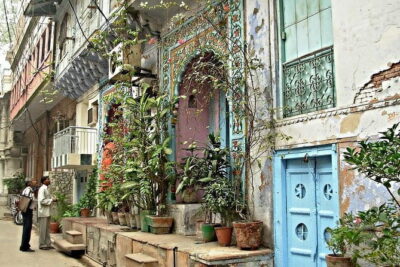
Old Delhi is where the tour turns from grand monuments to everyday sensory overload. You’ll pass through Chandni Chowk, where the lanes are dense with spices, dry fruits, silver jewelry, and colorful textiles. It’s lively, tight, and full of smells. If you’re shopping, this is the part where a guide can help you avoid wasting time in the wrong stalls.
You’ll also head to Jama Masjid, India’s largest mosque built in 1656. It sits opposite the Red Fort area and is a strong stop for understanding why this neighborhood matters. Shoes, dress expectations, and crowd flow can affect your pace, so having a guide helps you keep the day moving.
Khari Baoli: spice market, wholesale scale
Finally, there’s Khari Baoli, described as Asia’s largest wholesale spice market. This is not a sit-and-stare museum stop. It’s a “watch what people do” stop—buyers, stacks of spice goods, and a lot of motion. If you want to buy spices for home, this is where you’ll see the scale.
Red Fort, Parliament House, and other big structures from the road
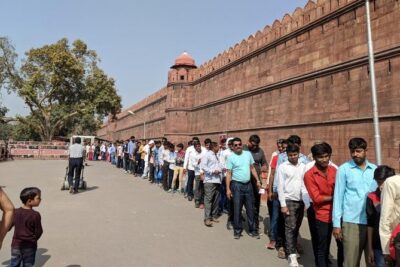
You’ll also pass major landmarks like the Red Fort, the Parliament House complex, and other central New Delhi architecture. You don’t get to linger for long here, so treat these as orientation points. The value is that you learn where everything sits before the tour takes you out to Agra.
Old Delhi tuk-tuk rides and the walk-to-see balance
A small detail that matters: you get a tuk-tuk ride in Old Delhi. In a place like Chandni Chowk, walking can be a trap if you’re stuck in crowds or going in circles. The tuk-tuk helps you cover more ground while still letting you experience the neighborhood vibe.
You also have a rhythm built into the day: longer visits at the big monuments, then quicker stops for markets and atmospheric sites. That balance makes the day feel manageable even though it’s long. And if you’re traveling with people who want frequent photo moments, the guide’s pacing helps you stop when it counts.
One note that’s practical: Delhi street conditions aren’t always “tour-comfy.” It can get dusty and busy, and you’ll want comfortable shoes. If you hate being jostled, plan to take breaks when your guide offers them and focus on the stops with enough space to breathe.
Agra sunrise: Taj Mahal, Agra Fort, and the Baby Taj
Day 2 is built around one headline: sunrise at the Taj Mahal. The tour emphasizes an early morning visit, and that’s exactly what you want. You get better light for photos, cooler temperatures, and often fewer people than later in the day.
Taj Mahal at sunrise: timing and photo angles
You’ll see the Taj Mahal, the white marble mausoleum Shah Jahan built for Mumtaz Mahal. The admission ticket isn’t included, but the key logistics are handled—plus you get a battery van ride from the parking area to the gate. That shortens the stress factor, especially when you’re arriving early.
Guides like Azzu and Faisal are praised for timing the experience around conditions such as fog and crowd flow. You’ll also benefit if your guide actively helps with photo spots and keeps your group moving before lines form.
Agra Fort: forts aren’t just walls
Next is Agra Fort, a UNESCO site with a blend of Indian and Islamic architectural styles. It’s less famous than the Taj, which is why it feels special on a short trip. Forts reward you for looking slowly, so don’t treat it like a quick photo stop.
Itmad-ud-Daula: the Baby Taj effect
Then comes Itmad-ud-Daulah, often called the Baby Taj. This is one of the better “satisfy your curiosity” stops, because it’s an artful transition from “big romantic icon” to “precision marble work.” You’ll see the white marble and intricate inlay work that makes the monument feel delicate.
Food break in Agra
There’s a planned break for Agra local cuisine with restaurant suggestions from your guide. The tour doesn’t include the meal cost, but it does reduce decision fatigue. When you only have a few hours, that steering is worth something.
Transfer to Jaipur with a hotel drop
After Agra, you drive to Jaipur and get dropped at your pre-booked hotel for the overnight. This matters because you avoid spending your evening trying to figure out where to sleep. You’re also in the city you’ll explore next day.
Jaipur’s pink classics: Jaigarh Fort, Hawa Mahal, City Palace, Jal Mahal, and Jantar Mantar
Day 3 is your full Jaipur “greatest hits” arc, starting with a fort viewpoint and ending with an ancient observatory. Jaipur works best when you keep moving, so the schedule makes sense if you’re short on time.
Jaigarh Fort: the hilltop perspective
You start at Jaigarh Fort, built in 1726 by Maharaja Sawai Jai Singh II and perched on the Aravalli hills. Forts with a view are more than defensive structures here—you get a sense of the geography. Your time window is about two hours, so you can explore without feeling rushed through every corner.
Hawa Mahal: 953 windows and quick photo time
Next is Hawa Mahal (Palace of the Winds), the five-story façade famous for its 953 jharokhas (small windows). Even if you’ve seen it in pictures, it’s still startling up close. The architecture is the draw, so come ready to enjoy the detail, not just the skyline shot.
City Palace: the center of power
Then City Palace, located in the heart of Jaipur. This is where you see courtyards and royal buildings connected to the Maharaja’s seat. Some areas are best viewed with your guide because the layout tells a story about how the palace functioned.
Jal Mahal: a calm stop on the lake
You’ll also stop at Jal Mahal, a palace on Man Sagar Lake built in traditional Rajput style. This is a “pause” moment in the day. It’s often photogenic, but it also gives you a change of pace after forts and palaces.
Jantar Mantar: UNESCO math in stone
Finally, Jantar Mantar, a UNESCO site and one of the best-preserved ancient observatories in India. It’s a fun contrast: while your first two days are about power and empire, this one shows how serious the science of sky observation was. Your guide can help you understand what you’re looking at.
Back to Delhi or drop at Jaipur Airport
After Jaipur sightseeing, you’ll drive back to Delhi. The tour also mentions an alternative: you can choose a drop-off at Jaipur Airport if your flight plans make more sense that way.
Driving between cities: what the chauffeur setup buys you
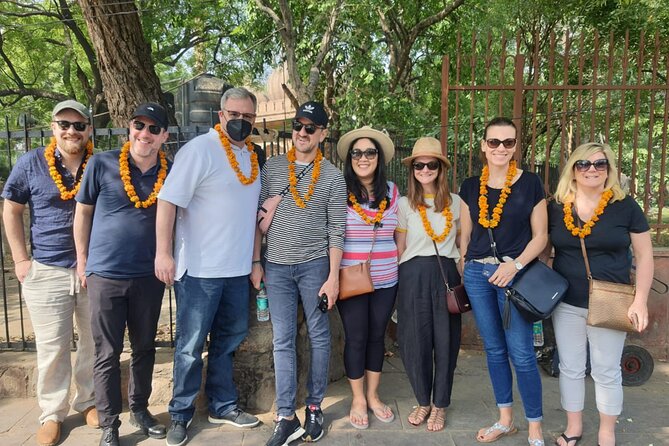
This tour is private, and the car choice depends on group size: a four-seater sedan for 1 to 2 people, a six-seater wagon for 3 to 5, a nine-seater van for 6 to 9, and a twelve-seater van for 10 to 12. That matters because it keeps everyone together and avoids splitting up.
The driver does the heavy lifting: city-to-city travel, parking, and timing. Bottled mineral water is included during the journeys, and that sounds small until you’re on the road early and often. The tour also includes hotel/airport pickup and drop-off in Delhi, Agra, and Jaipur.
One practical tip: you’ll spend a lot of time sitting. Break it up with water, simple stretches, and clear expectations with your group. The upside is you don’t lose half your day figuring out where to go next.
Guides in practice: what stands out with names like Maahi, Sadiq, and Arham
A private guide can either feel like a human audiobook or like a real help. The best version here is the second kind: a guide who explains what you’re seeing in plain language and keeps you comfortable with crowd flow.
Some names that pop up in guest experiences include Maahi (praised for clear explanations and making visitors feel reassured), Sadiq (often described as funny while adding strong context), Arham (praised for guiding, photo timing, and making the day feel smooth), and Nasir (praised for overall guidance and explanations). In Jaipur, Kissor is mentioned for strong local direction and being a good photographer.
You should expect guides to recommend places to eat during built-in breaks in Connaught Place/Block-B, Agra, and Jaipur, plus they’ll guide you through how to move at crowded sites. That’s where the tour earns its money: you’re not just seeing monuments, you’re learning how to read them fast enough to enjoy the time you have.
Money math: what $127 covers, plus the $70 you should budget
The listed price is $127 per person, and that sounds like a deal for a 3-day private experience. Here’s the catch: entrance fees to monuments are not included and are listed as $70 per person. That means you should budget roughly $197 per person before tips, depending on exact ticket totals and any small variations.
What you do get inside the tour price is meaningful value:
- Private air-conditioned car and chauffeur
- Hotel/airport pickup and drop-off
- Sightseeing with private, government-approved local guides
- Tuk-tuk ride in Old Delhi
- Battery van ride at Taj Mahal
- Bottled water during journeys
- Parking fees, tolls, fuel, taxes, and service charges
- Breakfast (2) if you book the hotel option
So yes, you’ll pay extra for monuments. But you’re not paying extra for the travel backbone and guide time. If you try to copy this trip on your own, you’ll usually end up spending time and money to solve each piece separately.
Also keep in mind that Taj Mahal is closed every Friday. If your dates land on Friday, you’ll want to verify how the operator handles that situation before you lock it in.
Should you book this Golden Triangle by car?
I’d book this if you fit one of these boxes:
- You have limited time and want the major highlights handled for you.
- You care more about comfortable logistics and clear explanations than building a DIY plan.
- You want a trip that includes both “big monuments” and “real streets,” like Old Delhi markets.
I’d pause and rethink if:
- You only want to spend money on what you control yourself, since monument tickets are extra.
- You’re very sensitive to crowds and early starts, even with a sunrise Taj plan.
- Your travel dates include a Friday, because Taj Mahal closure is a built-in constraint.
If you do book, pack comfortable walking shoes, keep a photo ID on your phone for monument entry, and plan your budget with the entrance fees in mind. Do that, and this is a strong way to experience India’s icons in just three days without turning your vacation into a scheduling project.
FAQ
What’s included in the $127 price?
The tour price includes a private air-conditioned car with chauffeur, hotel/airport pickup and drop-off in Delhi, Agra, and Jaipur, sightseeing with private government-approved local guides, tuk-tuk ride in Old Delhi, battery van ride at Taj Mahal, bottled mineral water during journeys, and parking/tolls/fuel/taxes/service charges. Breakfast is included if you choose the hotel option.
What extra entrance fees should I budget for?
Entrance fees to monuments are listed as $70.00 per person, and they are not included in the tour price.
Are hotel stays included?
Two nights of accommodation in Delhi/Agra/Jaipur are included only if you select the hotel option. The tour also includes breakfast for 2 days when the hotel option is booked.
What time will you pick me up in Delhi?
Your Delhi pick-up can be scheduled between 7 AM and 11 AM. You can choose any pick-up time in that window.
Is this tour private?
Yes. It’s a private tour/activity, and only your group participates.
What rides are included at major sites?
You get a tuk-tuk ride in Old Delhi and a battery van ride at Taj Mahal from the parking area to the gate.
Do I need to bring photo ID for monument entry?
Yes. You need to carry all travelers valid photo ID (in your mobile) for monument entry.
Is Taj Mahal open every day?
No. Taj Mahal is closed every Friday.
Are there special costs during December 24 and 31?
Yes. Those dates are hotel blackout dates and require a mandatory gala dinner. If you book accommodations then, the cost is USD 99 per person additional.
Can I cancel for free?
You can cancel for a full refund if you cancel at least 24 hours before the experience’s start time. If you cancel less than 24 hours before, the amount paid is not refunded.