REVIEW · NEW DELHI
4 Days Golden Triangle Tour India From Delhi
Book on Viator →Operated by India Voyages · Bookable on Viator
Four days, three Mughal icons, one smooth plan. Starting in Delhi at 9:00 am, you’ll ride with a driver, get breakfast included, and cover Agra plus Jaipur highlights without getting stuck in transport chaos.
I especially like the way the day-by-day flow mixes big-name sites with satisfying Mughal details, starting with Itmad-ud-Daula and saving the Taj Mahal for later momentum. I also liked the human touch behind the wheels—drivers such as Tabul and Sumit show up in the experience as safety-first, helpful, and ready to adjust timing based on what you want to see.
One consideration: monument admission tickets are not included for most stops, so you’ll need to budget extra and keep your ticket plan ready before you arrive at each site.
In This Review
- Key points I’d circle before you book
- Golden Triangle in 4 Days: what makes this Delhi plan work
- The driver is the real value: Tabul, Sumit, and why it matters
- Day 1 in Agra: Itmad-ud-Daula plus Mehtab Bagh (the quiet warm-up)
- Day 2: Taj Mahal, Agra Fort, and Fatehpur Sikri without losing your head
- Day 3 in Jaipur: Hawa Mahal, Jantar Mantar, and City Palace
- Price and logistics: what $190 covers, and what costs extra
- How to make the most of the schedule without feeling rushed
- Should you book this 4-day Golden Triangle tour from Delhi?
- FAQ
- What time does the tour start?
- Is pickup included in the tour?
- What’s included in the price besides transportation?
- Are monument entrance tickets included?
- Is this tour private?
- What happens on the last day in Delhi?
- Can I cancel for a full refund?
Key points I’d circle before you book
- Private group feel, without going solo on logistics: only your group participates, but you still get pickup-style support.
- Agra’s “smaller” Mughal stops first: Itmad-ud-Daula and Mehtab Bagh give context before the Taj Mahal spotlight.
- Jaipur classic icons in one day: Hawa Mahal, Jantar Mantar, and City Palace are packed into a readable route.
- A driver who helps with more than driving: people highlighted punctuality, safety, and practical advice on pacing.
- Price includes the machine, not the entrance tickets: tolls, fuel, parking, and three breakfasts are covered, but most sights require separate entry.
Golden Triangle in 4 Days: what makes this Delhi plan work
If you want the Golden Triangle idea but not the full-day stress that comes with arranging everything yourself, this format makes sense. You start in Delhi at 9:00 am, then work your way through Agra and into Jaipur, with a driver handling the road parts and you focusing on the sites.
For me, the best part is that the plan hits two different types of “wow.” In Agra, you get Mughal architecture that rewards careful looking (not just Instagram angles). In Jaipur, you shift into royal-era urban design—layered streets, palace-scale courtyards, and landmark geometry.
You can also read our reviews of more tours and experiences in New Delhi


The driver is the real value: Tabul, Sumit, and why it matters

On paper, a tour like this is about monuments. In real life, it’s about the hours between monuments. That’s where the driver support shows up, and it’s why people keep praising specific names—Tabul and Sumit are mentioned with the same recurring themes: punctual, careful driving, and helpful guidance.
Why you should care: India traffic can be fast, unpredictable, and mentally tiring. A confident driver helps you stay calm and keeps you from wasting time figuring out routes. And when someone’s willing to suggest what fits your schedule, the trip stops feeling like a checklist and starts feeling like a day plan you can actually use.
Day 1 in Agra: Itmad-ud-Daula plus Mehtab Bagh (the quiet warm-up)
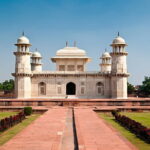
Day one sets a smart tone by beginning with Itmad-ud-Daula. This Mughal mausoleum was built between 1622 and 1628 by Nur Jahan for her father, Mirza Ghiyas Beg. It’s often described as a jewel box, and you’ll hear the nickname Baby Taj for a reason: the craftsmanship is detailed and scaled for close viewing rather than only sweeping monuments.
Practical tip: Itmad-ud-Daula works best when you slow down. Spend time around the exterior and carvings, because this is the kind of site where the “wow” comes from texture, proportions, and symmetry—not just size.
Then you head to Mehtab Bagh, the charbagh garden complex on the opposite side of the Yamuna River. The big reason to go is the viewing angle for Taj Mahal sunsets. Even if your sunset isn’t perfect, you still get a calmer perspective and a useful comparison point for what you’ll see later.
Day 2: Taj Mahal, Agra Fort, and Fatehpur Sikri without losing your head
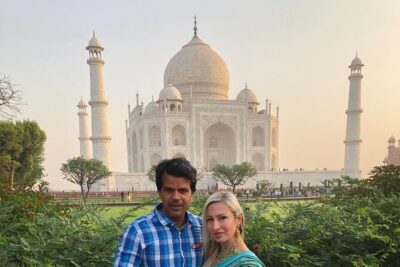
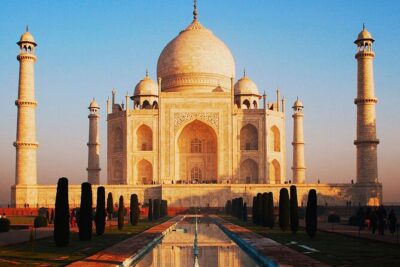
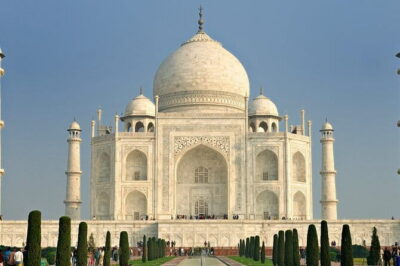
This is the big day, so it helps that the sequence gives you variety. You start with the Taj Mahal, commissioned by Mughal Emperor Shah Jahan in 1653 in memory of his wife. It’s in a massive complex with well-kept grounds, and the sheer presence of the white marble makes it hard to treat like just another stop.
Practical tip: Taj Mahal entry and timing matter because it’s one of the most visited sites in India. Since admission tickets aren’t included, build in time to handle your ticket entry smoothly. Also, take a moment to reset your brain before you go in—once you’re inside, your focus should be on the details at eye level as much as the main façade.
Next up is Agra Fort, a UNESCO World Heritage site and a 16th-century Mughal residence complex. The note that it’s tied to Shah Jahan’s final story—he was deposed and later restrained by his son—adds a darker layer to the sightseeing. Fort architecture can feel dry if you only look at walls; here, the political context helps the stones feel alive.
Then you reach Fatehpur Sikri, described as the short-lived Mughal capital between 1572 and 1585 during Akbar’s reign. The red sandstone buildings cluster in the center of the city, and the tour is listed as non guided with an admission ticket free note for this stop.
Why this one is worth your time: Fatehpur Sikri is more about imagining how a capital city functioned than about one main monument. If you like architecture, urban layouts, and layered eras, this stop pays off.
Day 3 in Jaipur: Hawa Mahal, Jantar Mantar, and City Palace
Jaipur is where the trip shifts from monumental Mughal tombs to royal-era city design. One of the prettiest quick pauses is Jal Mahal, the palace in the middle of Man Sagar Lake, built by Sawai Pratap Singh in 1799. The stop is short, but it’s a useful contrast: palace-on-water views feel cinematic even when you’re not staying long.
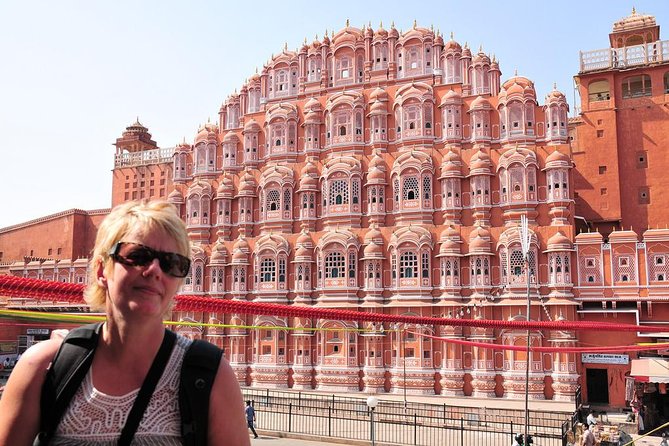
Then comes Hawa Mahal—the Palace of Breeze. It’s a five-storey honeycombed beehive building of pink sandstone with 953 small windows called jharokhas, decorated with intricate latticework. The concept is tied to royal women’s quarters, so the building isn’t just pretty; it’s functional in a social-history way.
Practical tip: Hawa Mahal is all about lines and windows. If your schedule is tight, don’t try to absorb everything at once. Pick a few viewpoints and focus on the window patterns and façade rhythm.
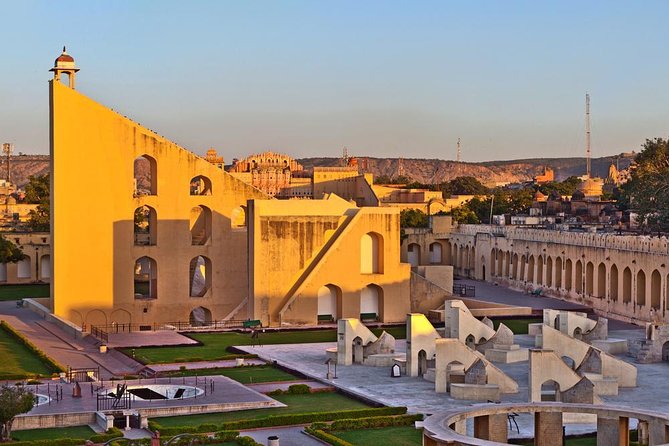
After that, you go to Jantar Mantar, an astronomical instrument site built in 1734 by Sawai Jai Singh II. It’s known for the world’s largest stone sundial. If you enjoy science history or you like seeing how people used observation in daily life, this is a refreshing break from purely palace sightseeing.
You finish the day with the City Palace, a vast palace complex with courtyards, gardens, and gallery spaces for art and crafts. This is the kind of stop that helps you connect the dots: Jaipur isn’t one monument; it’s a working city shaped by royal power and craft.






Price and logistics: what $190 covers, and what costs extra
At $190 per person for a four-day Golden Triangle run, the value comes from what’s included. The tour covers toll taxes, parking fees, driver expenses, fuel cost, and local and interstate taxes, plus breakfast (3). That means you’re not paying for the “getting there” part over and over.
What you should budget for: most admission tickets are not included in the notes for key stops like Itmad-ud-Daula, Taj Mahal, Agra Fort, Hawa Mahal, Jantar Mantar, and City Palace. Fatehpur Sikri is marked as free for admission, but the overall message is clear: entrance fees are an extra line item.
One more cost consideration: if you’re tempted by add-ons, plan for them to change the vibe and the mileage. In one account, a tiger safari was described as an expensive extra for a single person with a lot of driving time. If you add something like that, you may trade comfort and slower pacing for a long day on the road.
How to make the most of the schedule without feeling rushed
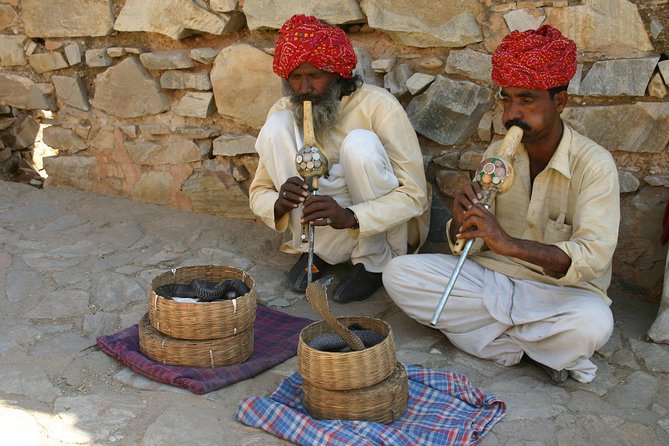
This trip works best when you approach it like a guided route with flexibility, not a rigid marching band. The driver support is a key part here—people specifically liked that schedules could be adjusted and that the car navigation handled the traffic pressure.
A few practical ways to keep the trip enjoyable:
- Bring some patience for lines and ticket entry at the big sights, especially Taj Mahal.
- Aim to keep your priorities in a short list. If you try to “finish everything,” you’ll feel time pressure.
- Keep your day pack light. You’ll move in and out of sites, and you don’t want a heavy bag slowing you down.
If you’re traveling solo, this setup can feel ideal because you still get help and a safe, organized rhythm. If you’re traveling with friends, the group discount angle can help, and the private group format means you won’t get mixed into a totally different pace.
Should you book this 4-day Golden Triangle tour from Delhi?
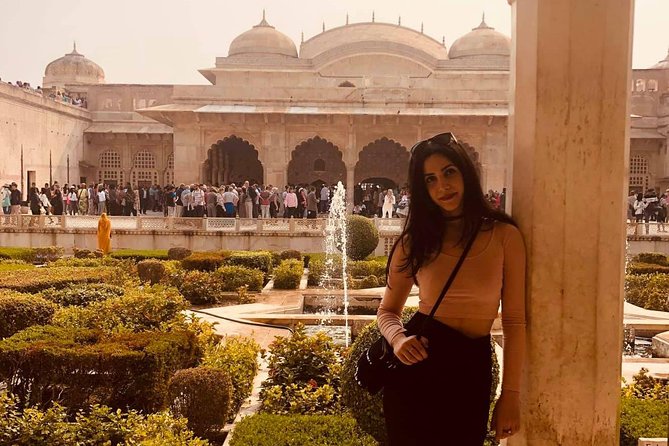
I think you should book it if you want a solid Golden Triangle outline with real driving support, and you’re okay paying monument entry fees separately. The route makes good sense: start with Agra’s Mughal artistry, hit the Taj Mahal day when you’re fresh, then shift into Jaipur’s signature royal landmarks.
You might skip it if you dislike paying separate entrance fees or you prefer fully guided museum-style experiences at every stop. Fatehpur Sikri is listed as non guided, and many major sites require separate ticket handling—so you’ll do a bit of your own reading or on-the-spot figuring out.
If your goal is: see the essentials, stay on a schedule that doesn’t drain you, and get a driver who’s ready to help, this is a strong match.
FAQ
What time does the tour start?
The start time is 9:00 am.
Is pickup included in the tour?
Yes. Pickup is offered as part of the experience.
What’s included in the price besides transportation?
The package includes breakfast (3) and also covers toll taxes, parking fees, driver expenses, fuel cost, and local and interstate taxes.
Are monument entrance tickets included?
No. The notes show admission tickets are not included for most stops (including Itmad-ud-Daula, Taj Mahal, Agra Fort, Hawa Mahal, Jantar Mantar, and City Palace). Fatehpur Sikri is listed as admission ticket free.
Is this tour private?
Yes. It’s a private tour/activity, and only your group will participate.
What happens on the last day in Delhi?
After arrival in Delhi, you get a departure transfer to Delhi airport/railway station or another location within Delhi based on your requirement.
Can I cancel for a full refund?
Yes, you can cancel for a full refund if you cancel up to 24 hours in advance of the experience’s start time. If you cancel less than 24 hours before, the amount paid is not refunded.