REVIEW · NEW DELHI
4 Days Golden Triangle Tour
Book on Viator →Operated by Creative India Holidays · Bookable on Viator
Delhi to Jaipur to Agra, fast and focused.
In this 4-day Golden Triangle, I like how the air-conditioned vehicle transfers keep you moving without the public-transport stress, and the guide help with entrance fees saves time at the monuments. You also get a clear, pre-set flow through Delhi, Agra, and Jaipur, so your days don’t turn into guesswork and wasted hours.
One thing to consider is the pace: you’ll pack a lot into each day, so expect an active schedule and a couple long drives between cities.
In This Review
- Key Points I’d Plan Around
- Golden Triangle in Four Days: Why This Order Works
- Day 1 Delhi Walkthrough: Jama Masjid, Raj Ghat, Qutub Minar, Humayun’s Tomb
- Jama Masjid (Old Delhi)
- Raj Ghat (Gandhi memorial)
- India Gate
- Parliament of Australia and Rashtrapati Bhavan area
- Qutub Minar
- Humayun’s Tomb (UNESCO)
- Overnight in Agra
- Day 2 Agra and Fatehpur Sikri: Taj Mahal + Agra Fort + the Road Toward Jaipur
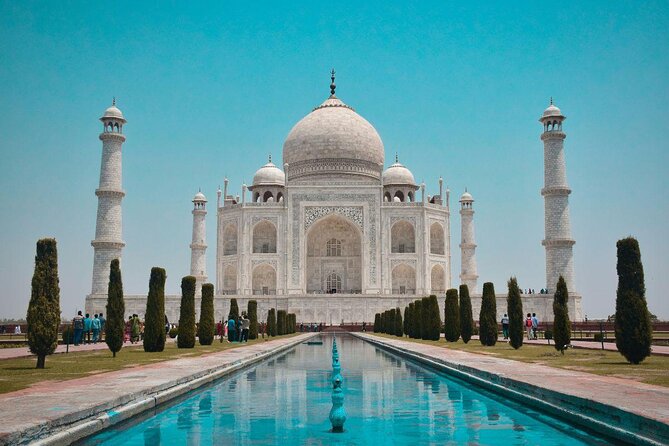
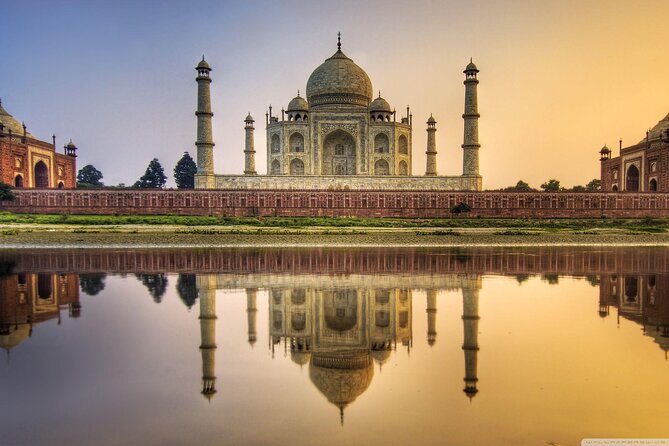
- Taj Mahal (the big one)
- Agra Fort
- Fatehpur Sikri (Panch Mahal)
- Overnight in Jaipur
- Day 3 Jaipur’s Icons: Hawa Mahal, Amber Fort, City Palace, Jantar Mantar
- Hawa Mahal (Palace of Wind)
- Amber Fort
- City Palace of Jaipur
- Jantar Mantar
- Evening free for shopping
- Day 4 Back to Delhi: Departure Timing You Can Plan For
- Price and Logistics: What $146 Gets You, and What You Still Pay For
- Practical Tips: Taj Mahal Friday Closures and How to Avoid Time Loss
- Taj Mahal is closed on Friday
- Transfers are approximate
- Your guide handles entrance fees to reduce queue time
- Hotels and Comfort: What You Can Expect From a Twin-Sharing Setup
- Who This Tour Fits Best (and Who Might Reconsider)
- Should You Book This 4 Days Golden Triangle Tour?
- FAQ
- What cities are covered in this 4-day Golden Triangle tour?
- What time does the tour start each day?
- Is transportation included between Delhi, Agra, and Jaipur?
- Are breakfasts included, and are other meals covered?
- Are monument entrance tickets included?
- What happens if I’m traveling on a Friday?
- Can I cancel and get a full refund?
Key Points I’d Plan Around
- Air-conditioned transfers between Delhi, Agra, and Jaipur reduce fatigue and decision-making
- Guide services are included, and your guide helps with monument entrance fees so you avoid ticket-line hassle
- Four breakfasts are included, but most other meals are on your own
- Taj Mahal Friday closure matters, and the itinerary can shift if you start Thursday
- Twin-sharing rooms are typical, with triple-sharing by default for 3 travelers
- You travel as a private group (only your group participates)
Golden Triangle in Four Days: Why This Order Works
The Golden Triangle idea is simple: Delhi, Agra, Jaipur. The execution is what makes or breaks it. This tour is built to get you from one “must-see” zone to the next with a driver, so you spend your energy on the sights—not on navigating, haggling, or losing time to connections.
It also helps that the route is structured around big, iconic stops that are dispersed across each city. Day 1 concentrates on Delhi’s mix of Mughal-era monuments plus a few colonial-era landmarks. Day 2 is anchored by the Taj Mahal, then ties in Agra’s forts and the stop at Fatehpur Sikri on the way toward Jaipur. Day 3 flips you into Jaipur’s royal and astronomical landmarks, with a classic photo-and-craft shopping window at night. Day 4 is a straight back to Delhi for airport or hotel.
This is the kind of tour you book when you want the headline experiences without treating every day like a logistics puzzle.
You can also read our reviews of more tours and experiences in New Delhi



Day 1 Delhi Walkthrough: Jama Masjid, Raj Ghat, Qutub Minar, Humayun’s Tomb
Your day starts with pickup from the airport or any location in Delhi / Gurugram, with a start time of 8:00 am. From there, you’re in Delhi sightseeing mode immediately. That first stretch matters, because Delhi traffic and distances can chew up your plans later in the week.
Jama Masjid (Old Delhi)
Jama Masjid is a major Delhi mosque built in the mid-1600s under Mughal emperor Shah Jahan. Even if you’re not a “mosque person,” it’s worth it for scale and atmosphere. This stop is scheduled for about 1 hour, and since the entrance ticket isn’t included, you’ll rely on your guide to help you handle entry smoothly.
What to expect: a strong sense of historic Delhi, lots of activity around you, and an exterior-first experience that also gives context for how Old Delhi developed.
Raj Ghat (Gandhi memorial)
Raj Ghat is a black-marble memorial on the Yamuna riverfront, dedicated to Mahatma Gandhi. It’s scheduled for 1 hour and doesn’t include admission. This is a good emotional pause after the mosque, because it shifts you from architecture and empire to modern history and a person whose legacy still shapes India’s national identity.
India Gate
India Gate is a central Delhi landmark commemorating members of the British Indian Army. The tour gives you about 30 minutes. This is mostly for photos and orientation—use the time to spot the monument, then move on rather than trying to “museum it” in that window.






Parliament of Australia and Rashtrapati Bhavan area
The itinerary includes stops for Parliament House (Sansad Bhavan) and also mentions the Rashtrapati Bhavan. These are not your “Golden Triangle poster” icons, but they add variety and help you understand Delhi’s official core and the architecture that frames it.
A practical note: because the time estimate looks long in the information you provided, treat this as a flexible photo-and-facts segment rather than a deep interior tour. If you care about interiors, you’ll want to confirm on the day what’s actually included.
Qutub Minar
Qutub Minar is a famous tall tower (a minaret) described here as about 73 meters high, built from red sandstone and marble, and noted as a major landmark. You get about 2 hours—enough time to appreciate the tower and the surrounding complex.
Because admission isn’t included, you’ll again depend on your guide for ticket handling and timing.
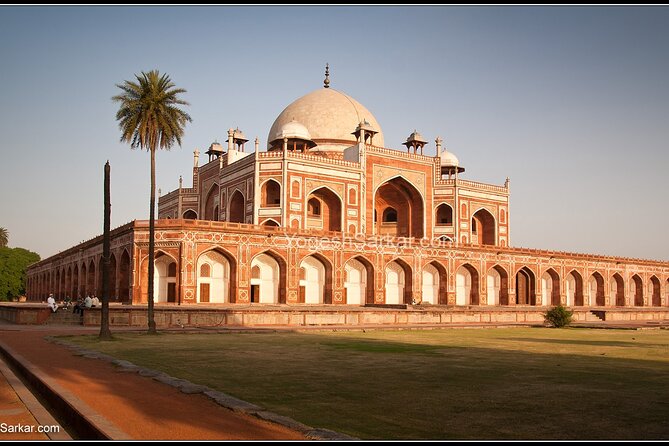
Humayun’s Tomb (UNESCO)
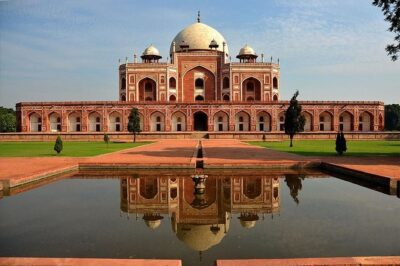
Humayun’s Tomb is explicitly labeled as a UNESCO Heritage site in the tour info, and it’s scheduled for 1 hour. It’s a strong pick because it’s both visually striking and historically important as a major Mughal-era mausoleum.
This stop balances the day: after Old Delhi’s mosque energy, you get an orderly, garden-and-tomb style monument that rewards slower looking.
Overnight in Agra
At the end of Day 1, you drive to Agra and sleep in an Agra hotel. The transfer is estimated at 4 hours. That’s long, but it’s also why having the driver and the air-conditioned vehicle matters—you don’t arrive exhausted on top of a full sightseeing day.
Day 2 Agra and Fatehpur Sikri: Taj Mahal + Agra Fort + the Road Toward Jaipur
Day 2 begins with breakfast at your hotel, then you move into Agra sightseeing, followed by the drive to Jaipur via Fatehpur Sikri.
Taj Mahal (the big one)
The Taj Mahal is scheduled for 2 hours. Entry isn’t included, so the value here is how the guide helps you buy entrance fees without long waiting. Also, the tour info warns that Taj Mahal remains closed for all visitors on Friday—so pay close attention to your travel dates.
What I like about the way it’s positioned: you’re not rushing in and out in a “drive-by” window. Two hours gives you time to see it in changing light and to take photos without feeling like you’re constantly being herded forward.
Agra Fort
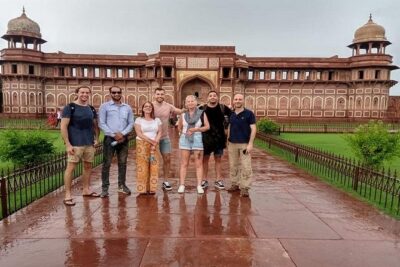
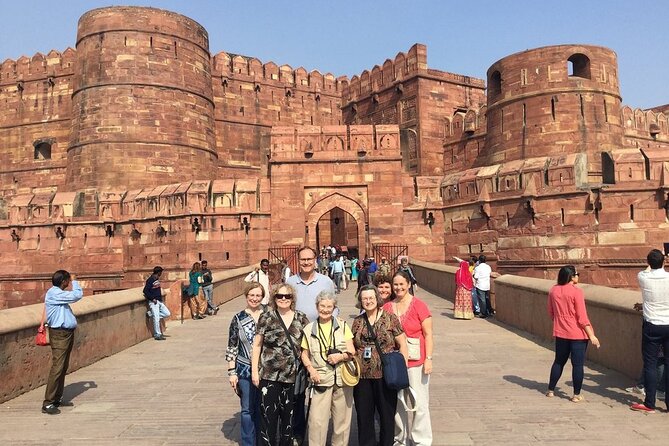
Agra Fort is on the agenda next, with about 1 hour. It’s described as a massive fort built with red sandstone in the 16th century by Akbar, later decorated by Shah Jahan. This stop adds texture: the Taj Mahal is all about beauty and romance; Agra Fort is about power, defense, and palace-fort life.
If you only do one Agra site besides the Taj Mahal, I’d still put Agra Fort near the top because it’s where you see a different side of the Mughal world.
Fatehpur Sikri (Panch Mahal)
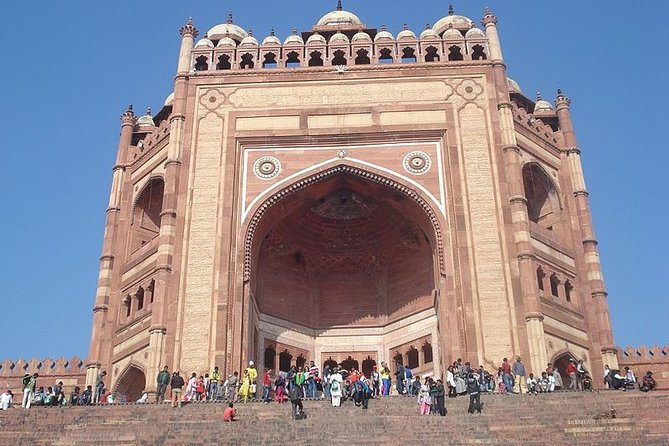
Then comes the drive toward Jaipur via Fatehpur Sikri, with the itinerary listing Panch Mahal – Fatehpur Sikri for about 2 hours. Fatehpur Sikri is described as a fortified ancient city and the short-lived Mughal capital between 1572 and 1585 under Emperor Akbar.
This stop is the “bonus brain” of the trip. It helps you understand the Mughal empire as more than monuments—you see the idea of a planned capital, the ambition, and the scale of the project.
Overnight in Jaipur
You continue to Jaipur and sleep there. The provided time estimate for the Jaipur segment looks like 4 hours, but exact timing will depend on traffic. That’s still reasonable: you’ll have a full day in the car and on site, then get to reset in a Jaipur hotel.
Day 3 Jaipur’s Icons: Hawa Mahal, Amber Fort, City Palace, Jantar Mantar
Day 3 is the Jaipur day, and it reads like a greatest-hits album. You start with breakfast at your hotel, then head into sightseeing with another overnight stay in Jaipur.
Hawa Mahal (Palace of Wind)
Hawa Mahal is scheduled for about 1 hour. It’s a five-storey palace built in 1799. The nickname Palace of Wind hints at the design concept—lots of windows and breezy views—so it works well as a quick visual hit early in the day.
Because entrance fees aren’t included, your guide’s support remains important. Use your time here to grab perspective shots before you move on to the heavier “climb-and-explore” forts and palaces.
Amber Fort
Amber Fort (Amer Fort) is next for about 2 hours. It’s described as 11 kilometers from Jaipur and built in 1592 by Raja Man Singh. This is one of the best “feel the place” stops, because it’s a fort with palace elements—less “stand and look,” more “walk and imagine.”
A practical tip: plan your energy. Two hours is a good amount, but you’ll want comfortable shoes and you’ll benefit from taking breaks for shade when possible.
City Palace of Jaipur
City Palace is listed at about 2 hours. It’s located in the heart of Jaipur’s Pink City and covers the complex where the Maharajas reigned, including Chandra Mahal and Mubarak Mahal.
This is a good shift after Amber Fort. Amber Fort is more about defensive grandeur; City Palace gives you a sense of court life and how rulers occupied space in the city itself.
Jantar Mantar
Jantar Mantar is scheduled for about 1 hour. It’s described as an early 18th-century astronomical observation site with about 20 fixed instruments, built in masonry.
This is one of those stops that people sometimes skip mentally, but don’t. The instruments connect the city’s royal story to science and observation, which helps you see Jaipur as more than forts and selfies.
Evening free for shopping
The evening is free for shopping for about 30 minutes. Since food and drinks aren’t included, this is also where you can plan your own dinner timing around whatever you want to pick up.
The way this is set up is practical: you get a “lighter” finish instead of a hard stop schedule.
Day 4 Back to Delhi: Departure Timing You Can Plan For
Day 4 begins with breakfast at your hotel, then you drive back to Delhi. The info says you’ll return to Delhi by around 2:00 pm, and you can request transfer to the airport or to a Delhi hotel.
This timing is actually helpful if you’re trying to book a flight later in the day. If your plans are tight, it’s worth noting that traffic can affect exact transfer times, since the itinerary calls transfer durations approximate.
A nice detail: you already have your “big sites” done, so Day 4 feels like transportation and closure rather than another packed sightseeing sprint.
Price and Logistics: What $146 Gets You, and What You Still Pay For
At $146 per person, this tour is trying to solve three big cost-and-time problems for you: getting between Delhi–Agra–Jaipur, managing entrances, and handling day-to-day coordination.
Here’s what’s clearly included:
- Guide services
- Pickup and drop-off
- Air-conditioned vehicle
- Breakfast (4 total)
What’s not included:
- Food and drinks
- Monument entrance tickets are listed as not included for many sites (including Taj Mahal), though your guide helps you buy them so you avoid queue time.
That mix is common for tours like this, and it’s usually good value: paying separately for entrances can still be worth it if it keeps you from dealing with ticket logistics yourself.
Two room-related points also affect value:
- Rooms are generally twin-sharing.
- If you book 3 people, rooms are triple-sharing by default, unless you pay an additional charge to get 2 rooms instead.
So the best value is when your group matches typical occupancy. If you’re traveling as a couple or small group that wants specific room setups, consider that in your budget.
Practical Tips: Taj Mahal Friday Closures and How to Avoid Time Loss
Two practical realities you should plan around.
Taj Mahal is closed on Friday
The tour info is explicit: Taj Mahal remains closed for all visitors on Friday. It also gives a workaround: if you start on Thursday, the itinerary order changes to Delhi – Jaipur – Agra – Delhi so you can still handle the Taj when it’s open.
When you’re choosing dates, check the day of week first. It’s the single schedule rule that can change your day flow.
Transfers are approximate
Transfer durations are listed as approximate, depending on time of day and traffic. That means your day could start with less slack than you expect, especially in cities where congestion can spike.
Your best move: keep your pace flexible and don’t plan tight extra activities outside the tour structure.
Your guide handles entrance fees to reduce queue time
This is one of the most “real-world valuable” inclusions. If you’ve ever tried to enter big monuments on your own, you know how quickly lines can eat your day. Having your guide help buy entrance tickets keeps you from losing time at the gate.
Hotels and Comfort: What You Can Expect From a Twin-Sharing Setup
The tour includes overnight stays in hotels in Agra and Jaipur. While the exact hotel list isn’t provided in the info you gave, the tour is set up as a normal sightseeing package with twin-sharing rooms.
Given the way people describe the trip experience, the main comfort theme to watch is consistency: hotels that are described as good and fair across the route, with one night (often Agra) getting extra praise.
Also, because transportation is organized with an air-conditioned vehicle and you’re doing long stretches between cities, the hotel becomes part of the comfort equation. You’ll want to arrive, shower, and sleep, not “work around” bad conditions.
Who This Tour Fits Best (and Who Might Reconsider)
This 4-day Golden Triangle tour is a strong fit if:
- You want the core hits: Taj Mahal, Amber Fort, City Palace, and the Delhi icons
- You prefer a set itinerary rather than building your own routes
- You’d rather pay for coordination than spend your days figuring out transport and ticket timing
It may not be the best fit if:
- You want unhurried pacing or lots of free time each day
- You only care about one city and would rather slow down with fewer transfers
- Your dates land on a tricky schedule day and you’re counting on a Friday Taj Mahal visit
For most people, though, it’s a practical way to get the Golden Triangle done without turning your trip into a spreadsheet.
Should You Book This 4 Days Golden Triangle Tour?
Yes, if you’re traveling for first-time Golden Triangle highlights and you want structure, guide support, and air-conditioned transfers. The itinerary hits Delhi’s major monuments, anchors Agra with the Taj Mahal, and gives you a solid Jaipur mix of palace, fort, and astronomy stops. That’s the kind of plan that helps you get a lot right on the first visit.
Book it also if you dislike ticket lines and don’t want to manage entrance logistics alone. The guide’s role in helping you handle entrance fees is one of the most practical parts of the package.
If you’re very sensitive to schedule pressure or you hate long drives, consider whether you want a slower trip format. But if your goal is to see Delhi–Agra–Jaipur in four days with minimal stress, this is built for that job.
FAQ
What cities are covered in this 4-day Golden Triangle tour?
You visit three cities: New Delhi, Agra, and Jaipur.
What time does the tour start each day?
The tour starts at 8:00 am with pickup from your location in Delhi / Gurugram or from the airport.
Is transportation included between Delhi, Agra, and Jaipur?
Yes. Pickup and drop-off and transfers between sites in an air-conditioned vehicle are included.
Are breakfasts included, and are other meals covered?
Breakfast is included for 4 days. Food and drinks are not included, so you’ll plan lunches and dinners on your own.
Are monument entrance tickets included?
For many key sites, admission tickets are not included (including the Taj Mahal). Your guide helps you buy entrance fees, so you avoid waiting in queues.
What happens if I’m traveling on a Friday?
The tour notes that the Taj Mahal is closed for all visitors on Friday. If you start on Thursday, the itinerary order changes to help work around the closure.
Can I cancel and get a full refund?
You can cancel up to 3 days in advance for a full refund. If you cancel less than 3 full days before the start time, the amount paid is not refunded.