REVIEW · NEW DELHI
4 Days Private Golden Triangle Tour to Agra and Jaipur from Delhi
Book on Viator →Operated by TRAVEL INDIA ONE DAY · Bookable on Viator
Golden Triangle in four days is a sprint. This private 4-day tour strings together Delhi, Agra, and Jaipur with a private air-conditioned car and guided visits to major UNESCO-linked sights, so you can focus on seeing instead of scheduling.
What I like most is the way it’s built around your energy. You get sunrise-time Taj Mahal in Agra, plus a battery bus ride between the Taj parking area and the monument area. That combo saves time and stress while still giving you the best light for photos.
One thing to weigh: it’s a lot of stops with road time between cities, and most major entrances aren’t included (the tour estimates entry tickets around $55 per person). Also, Taj Mahal closure on Fridays can change your day.
In This Review
- Key highlights worth knowing
- Four days through Delhi, Agra, and Jaipur, with less wasted time
- Day 1 in Delhi: Old Delhi markets, major mosques, and UNESCO at Qutub Minar
- Day 2 in Agra: sunrise Taj Mahal, Agra Fort, and the quiet drama of Baby Taj
- How the Fatehpur Sikri stop keeps the route efficient (and what to watch)
- Day 3 in Jaipur: palaces, an observatory, and a fort that rewards early arrival
- Day 4: back to Delhi for your international connection
- Price and entrance fees: why the math matters on this tour
- What’s included that actually makes a difference
- When the schedule changes: closures and small swaps
- Who this tour suits best (and who should reconsider)
- Should you book this 4-day private Golden Triangle tour?
- FAQ
- What time is pickup on Day 1?
- Is the Taj Mahal ticket included?
- Does the tour include hotels?
- How do you travel between Delhi, Agra, and Jaipur?
- Is Taj Mahal open every day?
- Do you get help getting to the Taj Mahal area from parking?
Key highlights worth knowing
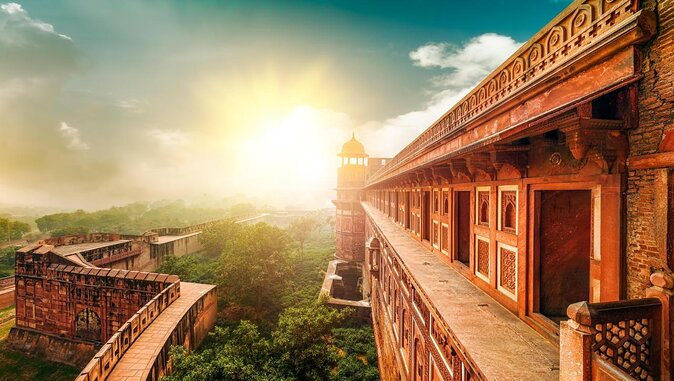
- Sunrise Taj Mahal timing: you start early in Agra for the classic first-light views.
- Battery bus to Taj Mahal: included for the stretch from parking to the monument area.
- Private guides for every major stop: you’re not just walking through, you get context.
- Old Delhi + Mughal landmarks + forts: the route mixes markets, memorials, tombs, and palaces.
- Route built for efficiency: long drives are paired with multiple same-day sights so you don’t waste time.
Four days through Delhi, Agra, and Jaipur, with less wasted time
The Golden Triangle idea is simple: hit three headline cities—Delhi, Agra, Jaipur—within one trip. The best version is the one that handles the boring parts for you: getting from place to place, timing entry lines, and keeping the day organized. This tour leans hard into that. You’re assigned a private vehicle and you move between cities mainly by road, with fuel and local-toll style extras handled as part of the package.
You’ll also travel with private guides, not a big open-jaw bus herd. That matters on day trips like this, because questions come up constantly: Why was a building made? Why does it look different in different areas? How did power shift between dynasties? A good guide turns a quick stop into something you actually remember.
You can also read our reviews of more private tours in New Delhi



Day 1 in Delhi: Old Delhi markets, major mosques, and UNESCO at Qutub Minar
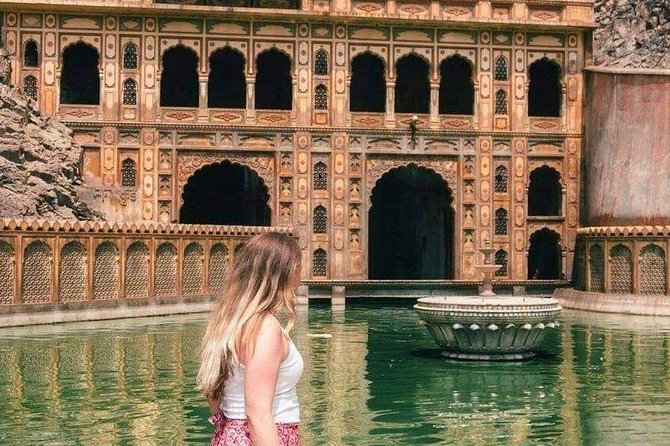
Day 1 is a mix of two very different Delhi moods: old-world street life and grand monument Delhi.
You’re picked up somewhere in the Delhi region (Delhi, Noida, Gurugram, Ghaziabad, Faridabad) within a 9:00 to 11:00 AM pickup window, and then you start in Chandni Chowk, one of Old Delhi’s oldest, busiest market lanes. This is the kind of place where you shouldn’t rush. Even if you only have an hour, you’ll get the feel of the city: narrow streets, lots happening at once, and street food energy around every corner.
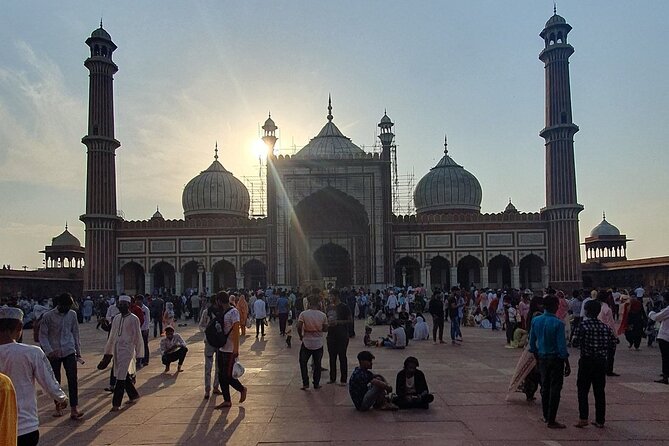
From there you’ll move to Jama Masjid, one of India’s biggest mosques and a Mughal-era landmark commissioned by Shah Jahan. This is one of those stops where shoes-in, shoes-out rules and visitor flow matter. Since admission isn’t included, expect to handle ticketing on-site. A guide helps you get oriented quickly.
Next comes a Sikh worship stop: Gurudwara Moti Bagh Sahib. The tone here is calmer than Old Delhi streets. Even if you’re not religious, it’s worth paying attention to how the space works and how visitors behave—because that’s a big part of understanding modern India.
Then you’ll hit New Delhi’s wide-open memorial geometry with India Gate, followed by the monumental presidential-court style area around Rashtrapati Bhavan. This is a good reset after the dense lanes of Old Delhi.
The day also includes a modern monumental stop: Swaminarayan Akshardham (ticket not included). If you like large-scale architecture and orderly design, it’s an easy hit. If you’d rather prioritize Mughal-era sites, treat it as a flexible time slot and don’t feel guilty about not spending extra time unless you’re truly into it.
Two more major historical anchor points follow: Humayun’s Tomb (UNESCO) and Qutub Minar (UNESCO). Humayun’s Tomb is important for Mughal architectural development, and Qutub Minar is one of those skyline moments you recognize even before you’re close. Between these, you start seeing the through-line of Delhi’s power shifts—Sultanate to Mughal—without needing a textbook.
Finally, the day closes with a drive to Agra (around 3 hours). It’s a long day, so I’d treat this as a warm-up that sets up the real payoff: the Taj Mahal on day two.
Day 2 in Agra: sunrise Taj Mahal, Agra Fort, and the quiet drama of Baby Taj
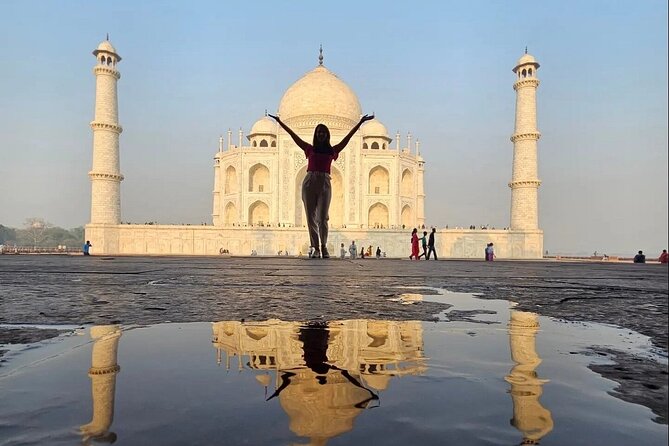
Day 2 is built around the big one: the Taj Mahal. You start early for sunrise views, and the time investment is worth it. The Taj is already impressive in daylight, but early morning changes the feel: the crowd energy is lower, the light is softer, and the white marble looks less harsh.
One practical win here: admission tickets aren’t included, but your guide helps you buy entrance tickets so you don’t lose time waiting in line. That’s a huge difference on a tight schedule.
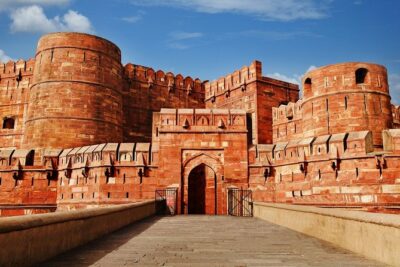
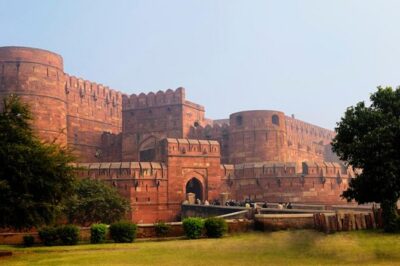
After Taj Mahal, you move to Agra Fort, a UNESCO-linked complex with Mughal-era significance and a palace-fort hybrid feel. This isn’t just one landmark; it’s layers of history within fort walls. You’ll get the best results if you don’t try to sprint through the highlights. Even with a limited time window, stop for a few key viewpoints and let the structure speak.
Next is Itmad-ud-Daula, often called the Baby Taj. If you like how the Taj’s style appears in earlier, smaller scale, this is a satisfying contrast. It’s also a good breather after the main monument, because it feels more intimate while still being visually rich.
The day then includes a move outward to Fatehpur Sikri, specifically the Panch Mahal area. Fatehpur Sikri is a UNESCO-linked setting, and the palace structures give you a sense of imperial ambition. You’ll only have about an hour at this stop, so aim for the best overview spots your guide identifies rather than trying to cover everything.
Then it’s a road transfer to Jaipur (about 3 hours), with drop-off at your hotel.
How the Fatehpur Sikri stop keeps the route efficient (and what to watch)
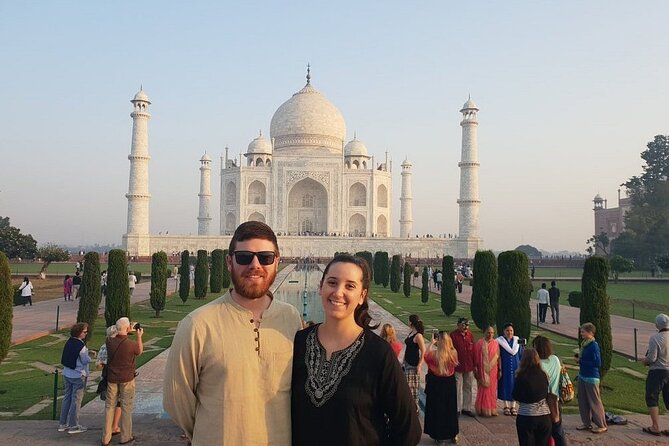
When you do a Golden Triangle tour fast, the question becomes: is it efficient or exhausting? This route leans efficient.
Fatehpur Sikri is the kind of place that can swallow a half day if you let it. By pairing it with the Agra-to-Jaipur leg, you get a taste without blowing your schedule. That’s the value: you collect multiple “big names” in fewer separate days.
The trade-off is pace. If you’re the type who likes to linger—photographing details, reading inscriptions slowly, or just sitting quietly—this itinerary may feel brisk. My advice is to pick one or two stops per day where you slow down mentally, and treat the rest as focused sightseeing.
Also, plan for day-to-day substitutions. One example: some major sites can be closed on certain weekdays, and the plan may swap in another religious landmark instead.
Day 3 in Jaipur: palaces, an observatory, and a fort that rewards early arrival
Jaipur on day three is where the scenery shifts. Delhi and Agra feel more stone-and-empire; Jaipur feels more royal-patterned, with forts and palace facades that seem built for both sunlight and shadow.
You start with Hawa Mahal (Palace of Breeze), known for its repeating small windows. Even if you don’t spend long inside, the exterior tells the story: it was designed so royal women could observe street life without being fully exposed.
Next is City Palace, a royal palace complex that also includes museum areas. This stop is one of your best chances to connect the dots between Jaipur’s ruling family, art, and how daily life mixed with ceremony.
Then there’s Jal Mahal, the Water Palace sitting in the Man Sagar Lake. You often get better results here if you accept it as a view stop rather than a deep-museum stop. Think of it like the Jaipur version of a quick postcard moment, useful for resetting your eyes before forts.
After that comes the big fort moment: Amber Fort (Amer Fort), a UNESCO site. This is where the day earns its keep. Fort architecture here isn’t just a background; it’s the main event—views, walls, and the sense of how power was staged. Your visit length is about an hour, so prioritize the most iconic interior viewpoints and the best exterior sightlines your guide recommends.
Finally, you finish with Jantar Mantar, Jaipur’s astronomical observatory. It’s one of the most interesting “how did they think this way?” stops on the whole Golden Triangle. Instead of only seeing art and power, you get a glimpse of science built into architecture.
By the end of the day, Jaipur will feel like you actually understand why people return. It’s less about one photo and more about how the city communicates status through buildings.
You can also read our reviews of more tours and experiences in New Delhi






Day 4: back to Delhi for your international connection
Day four is the practical wrap-up. After breakfast at your hotel, you drive back to Delhi and are dropped at the international airport for your onward flight.
This is a good plan if your itinerary supports a flight on the final morning. It keeps you from doing a late-night drive or scrambling for transport. Just be sure your flight timing gives you a buffer for road traffic, because transfer times are always approximate.
Price and entrance fees: why the math matters on this tour
The advertised price is listed as about $6.96 per person, but the important reality is what comes next: entry tickets are not included. The package estimates entrance fees around $55 per person for monuments.
So the value equation looks like this:
- You’re paying for private transport, private guides, and included on-the-ground conveniences like water and the battery bus to and from Taj parking.
- You’re also paying for organization, which is what saves you the most time on a tight four-day schedule.
- Your biggest variable cost is entrance tickets plus lunch, since those are not included.
If you’re traveling with just two people and you want private guiding for every major stop, this can still be good value compared to piecing everything together on your own. If you’re hoping to skip paid entrances by doing only exterior views, you might feel the cost squeeze because the itinerary is built around major monuments that usually require tickets.
What’s included that actually makes a difference
It’s easy for tours to list “included” items. What matters is whether they remove friction.
Here are the included pieces that tend to help most:
- Private air-conditioned car for the route, with fuel and service charges covered.
- Private local guides for sightseeing across Delhi, Agra, and Jaipur.
- Battery bus ride to and from Taj Mahal parking and the monument area.
- Bottled mineral water and soft drinks during the journey.
- Hotel taxes included if you book the hotel option, plus daily breakfast when hotels are part of your package.
- Pickup and drop-off around Delhi-area locations, and airport/railway station transfers.
Also, this is explicitly a private tour/activity, meaning your group participates together instead of mixing with strangers.
That private feel is the biggest quality-of-life improvement here. When timing matters—like sunrise at the Taj—having your guide manage logistics is the difference between enjoying the moment and constantly checking the plan.
When the schedule changes: closures and small swaps
A couple of dates can affect your sightseeing:
- Taj Mahal is closed every Friday, so your plan will need to adjust if your trip lands on that day.
- Swaminarayan Akshardham and Gandhi Smriti are closed on Monday, and you’ll be taken to Gurudwara Bangla Sahib and Birla Temple instead.
If you’re booking, check your exact travel dates and make sure you can live with potential site swaps. The upside is that the tour isn’t pretending everything is open every day—it plans alternatives.
Who this tour suits best (and who should reconsider)
This tour makes the most sense if you:
- Want a first-time-friendly Golden Triangle with minimal logistics work.
- Prefer private guiding so monuments are explained and not just photographed.
- Have a tight timeline and still want the big-name classics: Qutub Minar, Humayun’s Tomb, Taj Mahal, Agra Fort, Amber Fort, and more.
You might reconsider if you:
- Hate fast pacing and would rather spend half a day wandering without pressure.
- Assume entrance fees are fully included; they’re not.
- Are traveling on a Friday and can’t adjust your expectations if Taj Mahal is unavailable.
Should you book this 4-day private Golden Triangle tour?
If you want a well-paced sprint through the headlines—without the stress of hiring guides separately and figuring out transport—this is a strong option. The biggest reasons are the practical ones: sunrise Taj timing, battery bus, and private guides who help with ticket handling so your day stays on track.
I’d book it if you value convenience and want your sightseeing to feel guided rather than chaotic. I’d hesitate if you’re the type who needs lots of unstructured time per site or you want zero extra costs beyond the headline price.
If you do book, do one simple thing: confirm your dates and mentally budget for entrance tickets plus lunch, then you’ll walk into this route ready to enjoy it.
FAQ
What time is pickup on Day 1?
Pickup is offered from anywhere in Delhi/Noida/Gurugram/Ghaziabad/Faridabad, and you can choose any pickup time between 9 AM and 11 AM.
Is the Taj Mahal ticket included?
No. Entry tickets are not included, and the tour estimates entry tickets at about $55 per person. Your guide helps you buy tickets so you do not have to wait in the queue.
Does the tour include hotels?
Hotels are included only if you book the option that includes them. If you choose hotels, you get 3 nights and daily hotel breakfast.
How do you travel between Delhi, Agra, and Jaipur?
You travel mainly by road in a private air-conditioned vehicle, with the appropriate car type based on group size (sedan, van, or wagon).
Is Taj Mahal open every day?
No. Taj Mahal is closed every Friday, so the sightseeing plan may need adjustment on that day.
Do you get help getting to the Taj Mahal area from parking?
Yes. The tour includes a battery bus ride to and from the Taj Mahal parking lot to the monument area.