REVIEW · NEW DELHI
5 Days Private Tour to New Delhi, Agra, and Jaipur
Book on Viator →Operated by Rajasthan Cab · Bookable on Viator
Plan a shortcut through India’s biggest icons, with actual help. This 5-day private luxury Golden Triangle mixes included entrance fees with a sunrise Taj Mahal start, so you’re not wasting time hunting tickets or figuring out routes. I really liked the hands-on guidance (drivers and guides like Manoj-ji, Bhoopendra Jaat, and Nandkishor show up in the feedback) and the way the schedule keeps you moving city-to-city. One thing to consider: lunch and dinner aren’t included, and Day 3–4 plus the long final transfer to Delhi can feel like back-to-back sightseeing days.
You’ll be traveling in an air-conditioned vehicle with private transportation and a professional guide/driver for the excursions. It’s comfortable, but also busy: you’re stacking major sites—Delhi’s Mughal and colonial landmarks, Agra’s Taj and forts, then Jaipur’s palaces, observatory, and stepwell—over just five days.
In This Review
- Key Highlights You’ll Care About
- A Private Golden Triangle That Doesn’t Make You Guess
- Day 1 in Delhi: Raj Ghat, Jama Masjid, Red Fort, Humayun’s Tomb, Qutub Minar
- Day 1 drawback to watch
- Day 2 in Agra: Sunrise Taj Mahal, Agra Fort, and Itmad-ud-Daula
- Quick practical tip for Agra
- Day 3: Fatehpur Sikri, Chand Baori Stepwell, then into Jaipur
- Day 3 consideration
- Day 4 in Jaipur: Hawa Mahal, City Palace, Jantar Mantar, Albert Hall, Panna Meena ka Kund
- Jaipur day takeaway
- Optional Chokhi Dhani Evening: A Rajasthan-Style Night Add-On
- Day 5: Straight to Delhi International Airport (Terminal 3)
- My travel logic here
- Price and Logistics: Does $409.44 Feel Worth It?
- Service That Makes the Difference: The Names You’ll See in Feedback
- Who Should Book This 5-Day Private Tour?
- Should You Book This 5-Day Private Tour to Delhi, Agra, and Jaipur?
- FAQ
- What cities does this 5-day private tour include?
- Where does the tour start and what time?
- Is pickup included?
- Are monument entrance fees included?
- Is lunch or dinner included?
- What about accommodation and breakfast?
- Is the Taj Mahal visit included, and when is it scheduled?
- Is there a cultural evening in Jaipur?
- What extra fees should I expect for photos?
- What is the cancellation policy?
Key Highlights You’ll Care About
- Sunrise Taj Mahal time that gets you to Agra’s top sight early
- Entrance fees included for the monuments on the route (camera fees extra)
- Private, named-guide support in feedback, including Manoj-ji, Bhoopendra Jaat, and Nandkishor
- Air-conditioned vehicle and mineral water bottle for long driving days
- Jaipur classics in one run: Hawa Mahal, City Palace, Jantar Mantar, Albert Hall
- Optional Chokhi Dhani evening if you book the suitable add-on
A Private Golden Triangle That Doesn’t Make You Guess
This is a true private format. That means fewer “tour scramble” moments and more of that calm, practical travel rhythm. From the start, your pickup is arranged at Indira Gandhi Intl Airport with a 9:00 am start time, and you’re escorted to your pre-booked hotel in Delhi.
In my view, the best part of this setup is that you’re not doing the Golden Triangle as a DIY puzzle. You get a guide cum driver for the excursions, and that matters once you’re juggling entrance lines, changing neighborhoods, and the sheer number of iconic stops.
There’s also a bit of nice value baked in: monument entrance fees are included. Camera fees at monuments are not included (listed as about $6 to $10), so if you travel with a serious camera plan, you’ll want to budget for that separately.
You can also read our reviews of more private tours in New Delhi

Day 1 in Delhi: Raj Ghat, Jama Masjid, Red Fort, Humayun’s Tomb, Qutub Minar
Day 1 is built for first impressions. You start with sites tied to India’s modern identity, then swing into Mughal grandeur and Indo-Islamic architecture.
Raj Ghat (30 minutes) is where the Eternal Flame burns at Mahatma Gandhi’s cremation site. It’s short, respectful, and a good way to reset your brain before the bigger monuments start.
Next comes Jama Masjid (30 minutes) in Old Delhi, described as India’s largest mosque. Shah Jahan’s Mughal design shows up clearly in the courtyard and the soaring minarets. This is one of those places where you’ll feel the scale immediately—so don’t rush it.
Then you hit Red Fort (about 1 hour). It’s a UNESCO site, and the point isn’t just the red sandstone walls. Inside, you’ll find key halls like Diwan-i-Aam and Diwan-i-Khas, which helps connect the architecture to the way the Mughal court operated.
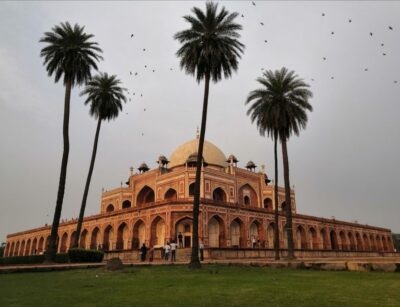
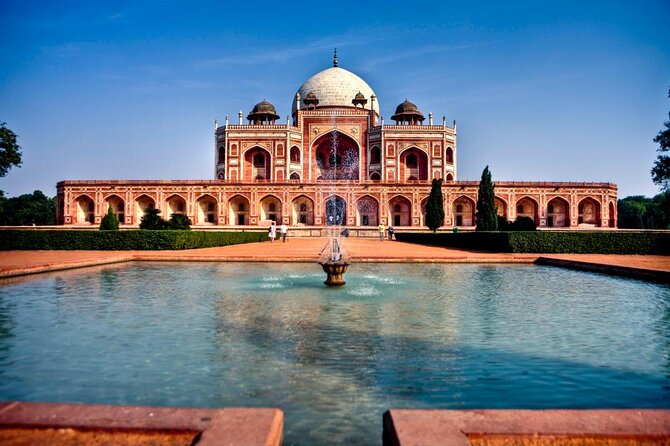
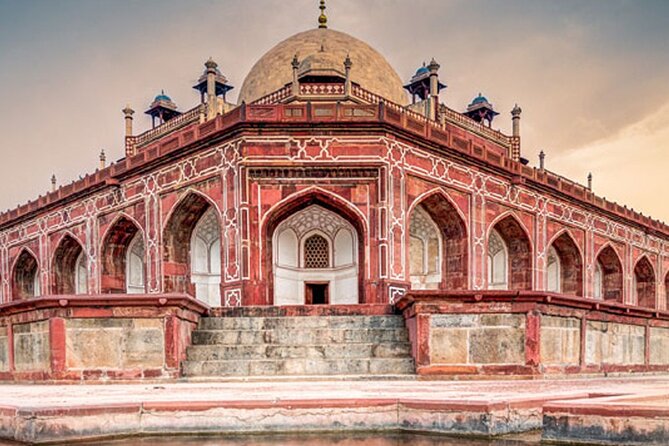
After that, Humayun’s Tomb (about 1 hour) gives you a different kind of Mughal story. It’s often seen as a precursor to the Taj Mahal style, and the garden setting helps you slow down a little.
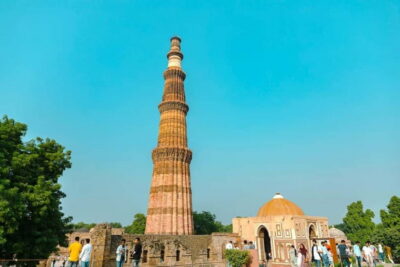
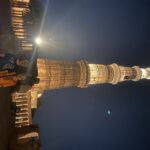
The day closes with Qutub Minar (about 1 hour), including the Iron Pillar. Qutub Minar is famous for being the world’s tallest brick minaret, and even if you’ve seen photos before, it hits differently in person.
Day 1 drawback to watch
Delhi can stack up quickly. If you’re sensitive to early mornings or lots of walking in short bursts, plan for some fatigue even though each stop is timed to keep things moving.
Day 2 in Agra: Sunrise Taj Mahal, Agra Fort, and Itmad-ud-Daula
Day 2 is where the tour earns its nickname. After breakfast, you travel by road to Agra and then check into your hotel. The key moment is that Taj Mahal visit is scheduled at sunrise.
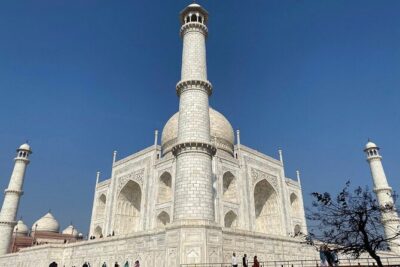
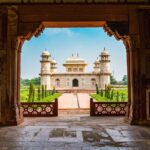
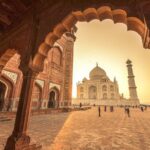
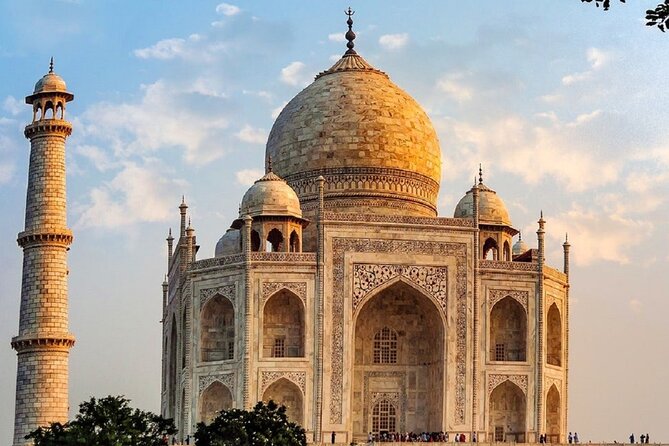
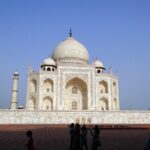
Taj Mahal (about 1 hour, admission included) is the obvious star. It was built by Mughal Emperor Shah Jahan in memory of Mumtaz Mahal, and the ivory-white marble look is exactly what you’re imagining—plus sunrise often means you see it under softer light than midday crowds.
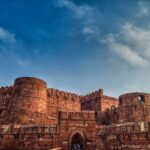
Then you move to Agra Fort (about 1 hour), also UNESCO-listed. This fort complex is red sandstone and includes palaces, audience halls, and two mosques. I like this stop because it gives context. The Taj is a monument of love and legacy, but the fort is about power and rule.
Finally, Itmad-ud-Daula (about 1 hour)—often called the Baby Taj—focuses on fine craftsmanship. It was built by Noor Jahan for her father, and the detail work is the point: carvings and inlay that function like a teaser for what you’ll later see at the Taj itself.
Quick practical tip for Agra
Since lunch and dinner aren’t included, I recommend treating meals as part of your planning. If you arrive at each site feeling hungry, you’ll feel rushed. Better to eat on schedule and spend your attention on the monuments.
You can also read our reviews of more tours and experiences in New Delhi




Day 3: Fatehpur Sikri, Chand Baori Stepwell, then into Jaipur
Day 3 starts with a change of scenery. You go west to Fatehpur Sikri, a sandstone city associated with Mughal Emperor Akbar.
Fatehpur Sikri (about 2 hours, admission free) is a UNESCO site and a major architectural moment from the 16th century. You’ll see how Mughal design fits a whole city plan, not just a single mausoleum.
Then you shift to a very different kind of fascination: water architecture.
Chand Baori, Abhaneri (about 3 hours, admission included) is one of the world’s largest stepwells, with around 3,500 symmetrical steps. It’s hard to explain until you’re there. The geometry makes it feel almost mathematical, and the scale pulls you downward visually.
After that, you head to Jaipur for the evening. The drive is described as including picturesque landscapes and smaller towns, and you’ll arrive with enough time to set up for Day 4’s Jaipur highlights.
Day 3 consideration
This day has the most variety, and that’s good. But it also means longer total travel time. If you get travel-sore easily, pace your energy for morning-to-evening.
Day 4 in Jaipur: Hawa Mahal, City Palace, Jantar Mantar, Albert Hall, Panna Meena ka Kund
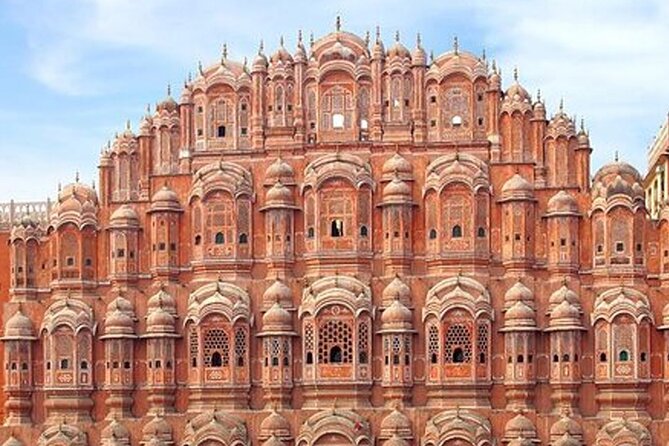
Jaipur is the tour’s “showpiece day.” You get a cluster of iconic spots with different angles on Rajput and Mughal influence.
Hawa Mahal (about 1 hour, admission included) is the Palace of Wind. The five-story pink sandstone building has 953 small jharokhas (windows). Whether you care about architecture or not, the look is instantly recognizable.
Next, City Palace (about 2 hours, admission included) gives you the royal setting. You’ll be walking through courtyards, gardens, and buildings tied to Rajputana royalty. The museum component helps connect the palace to objects and stories, not just walls and views.
Then comes Jantar Mantar (about 1 hour, admission included), a UNESCO World Heritage site built by Maharaja Sawai Jai Singh II. This is an astronomical observatory. The colossal sundial is the headline, and it’s a reminder that math and measurement have a long local story here.
After lunch (which you’ll arrange yourself), you visit Albert Hall Museum (about 1 hour, admission included). It’s described as Rajasthan’s oldest museum and an example of Indo-Saracenic architecture. One thing that stands out from the tour details: it even has an Egyptian mummy. You might not expect that, but that kind of odd pairing is often what makes museums memorable.
You finish with Panna Meena ka Kund (about 2 hours, admission included), an ancient stepwell with symmetrical staircases. It’s also described as a socializing spot, so it can feel less like a monument stop and more like a lived-in corner of the city.
Jaipur day takeaway
This day works best if you’re willing to switch your brain modes. Palace daydreaming. Then astronomy. Then museum surprises. Then stepwell calm. It’s not one-note tourism.
Optional Chokhi Dhani Evening: A Rajasthan-Style Night Add-On
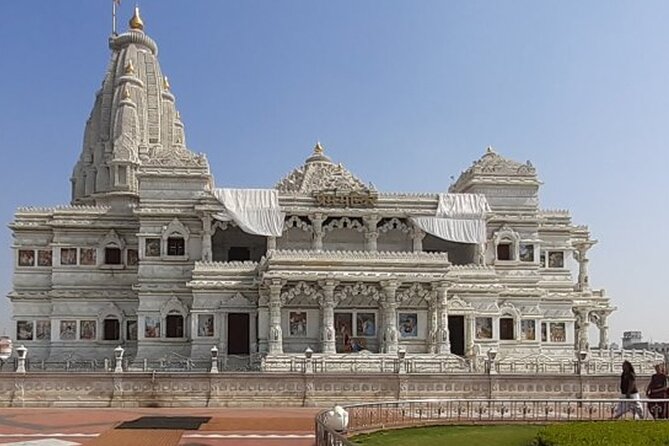
If you choose the suitable option, your tour includes a cultural evening at Chokhi Dhani Jaipur. That’s a nice fit for your last full day in the region because it adds performance and atmosphere rather than another set of stone sites.
One practical note: even though the evening is included if booked, you still need to handle lunch and dinner on your own. Plan your day so you’re not stuck deciding late in the afternoon.
Day 5: Straight to Delhi International Airport (Terminal 3)
On the last day, you’ll be driven back to Delhi International Airport, specifically Terminal 3. The transfer is listed as about 286 kilometers and 4 to 5 hours.
This is the “leave with good memories” day. It’s not sightseeing-heavy. So if you want extra time for shopping or a final quick photo stop, you’d need to build that before the tour’s final transfer window.
My travel logic here
A direct airport run is usually worth it. Delhi traffic can be chaotic, and your schedule is already tight from five days of landmarks.
Price and Logistics: Does $409.44 Feel Worth It?
At $409.44 per person, you’re paying for the structure: private transportation, an air-conditioned vehicle, guides, and monument entrance fees across the route.
Here’s how I’d judge value:
- If you were to arrange a private driver and pay entry fees yourself, the costs can rise fast—especially with multiple UNESCO sites across three cities.
- This tour includes a lot of paid sites (Jama Masjid, Red Fort, Humayun’s Tomb, Qutub Minar, Taj Mahal, Agra Fort, Itmad-ud-Daula, Hawa Mahal, City Palace, Jantar Mantar, Albert Hall Museum, Panna Meena ka Kund, plus admission noted for some stops).
- You’re also getting professional guide support for the excursions, which helps when you want more than just a photo.
The main cost pressure points are:
- Lunch and dinner aren’t included, so your daily food budget matters.
- Camera fees at monuments are extra (listed around $6 to $10).
- If you want the Chokhi Dhani evening, it depends on booking the suitable option.
Still, for many people the “included” part is the real savings. It reduces decision fatigue. When you’re on a tight schedule, that’s part of what you’re really buying.
Service That Makes the Difference: The Names You’ll See in Feedback
One of the most praised parts of this kind of tour isn’t the monuments. It’s how the day runs.
In the feedback, I saw repeated mentions of tour operator and driver personalities that make the whole route easier: Manoj-ji (tour operator), Bhoopendra Jaat (driver), and Nandkishor (driver). The themes are consistent: polite service, calm driving, and helpful guidance.
That last point is practical. A good driver isn’t just behind the wheel. They help you get where you’re going on time, and they can suggest how to handle meals or local market stops without turning it into a guessing game. One review specifically praised restaurant choice help and support getting the best items from local markets.
Who Should Book This 5-Day Private Tour?
This tour is a good match if you want:
- A private route across Delhi, Agra, and Jaipur without public-transport juggling.
- Guided monument time at major UNESCO and iconic sites.
- Comfort during drives thanks to air-conditioning and a planned schedule.
It may be less ideal if:
- You prefer slow travel with long unplanned breaks.
- You want all meals included (because lunch and dinner are not covered).
- You’re trying to pack in extra stops beyond what’s scheduled, since the days are already full.
Should You Book This 5-Day Private Tour to Delhi, Agra, and Jaipur?
My take: book it if you like structure, want entrance fees handled, and value having a real guide/driver partner. The schedule hits the Golden Triangle’s headline monuments with smart sequencing: Delhi’s Mughal/Indo-Islamic landmarks first, Agra with the sunrise Taj moment second, and Jaipur’s iconic architecture and observatory next.
Before you book, do two quick checks:
- Confirm what’s included for your accommodation option (breakfast is included only if booked with a suitable option).
- Decide whether you want the Chokhi Dhani cultural evening add-on, because that can make the final night feel more complete.
If you’re the type who’d rather spend time looking at the sites than solving logistics, this is a strong way to do it.
FAQ
What cities does this 5-day private tour include?
It covers New Delhi, Agra, and Jaipur over approximately five days.
Where does the tour start and what time?
The start point is Indira Gandhi Intl Airport, New Delhi 110037 India, with a 9:00 am start time.
Is pickup included?
Yes. The tour includes greeting on arrival and escorting you to your pre-booked hotel in Delhi.
Are monument entrance fees included?
Yes. Monument entrance fees for the sights are included. Camera fees at monuments are not included.
Is lunch or dinner included?
No. Lunch and dinner are not included.
What about accommodation and breakfast?
Accommodation with breakfast is included if you book with a suitable option.
Is the Taj Mahal visit included, and when is it scheduled?
The Taj Mahal visit is included, and it is scheduled as a sunrise visit.
Is there a cultural evening in Jaipur?
A cultural evening at Chokhi Dhani Jaipur is included if booked with the suitable option.
What extra fees should I expect for photos?
Camera fees at monuments are listed as about $6 to $10.
What is the cancellation policy?
You can cancel for free up to 24 hours in advance for a full refund.