REVIEW · NEW DELHI
3-Days Luxury Golden Triangle Tour to Agra and Jaipur from Delhi
Book on Viator →Operated by Private Car and Driver in India · Bookable on Viator
Three days, three capitals, zero spare time.
This tour is a fast, organized way to hit Delhi, Agra, and Jaipur without doing route math, and it does it with private A/C transport plus local guides for the big sights.
I especially like the mix of neighborhoods and monuments: Old Delhi bazaars by tuk-tuk, then major UNESCO sites with real context from an English-speaking guide. I also like that Taj Mahal sunrise is built in, with the battery bus included to make that early arrival less of a slog.
The main drawback is pace. You’ll be on the move most days, with a packed lineup and a long drive between cities, so it’s not the tour for slow mornings and long lunch breaks.
In This Review
- Key Highlights You’ll Feel in Real Time
- The Golden Triangle Route: Why 3 Days Works (Even When It Feels Tight)
- Day 1 in Delhi: Old Delhi by Tuk-Tuk, Then the Mughal and Imperial Mix
- Pasar Chandni Chowk to Jama Masjid: a ground-level Delhi lesson
- Gurudwara Bangla Sahib: the story behind the tank
- India Gate and New Delhi’s planned architecture
- Akshardham and Humayun’s Tomb: two ways Delhi shows devotion
- Qutub Minar: the UNESCO anchor of the day
- Evening transfer: Delhi to Agra
- Day 2 in Agra: Taj Mahal at Sunrise, Then Fort, Marble, and Fatehpur Sikri
- Taj Mahal sunrise: early start, big payoff
- Agra Fort: architecture that explains how empires defended themselves
- Itmad-ud-Daula: the marble “in-between” that people often miss
- Fatehpur Sikri: a pink city stop with serious historical weight
- Transfer to Jaipur: you land ready for a fort day
- Day 3 in Jaipur: Amer Fort, Hawa Mahal Windows, City Palace, and Jantar Mantar
- Amer Fort: the 600-year-old start that sets the tone
- Hawa Mahal: 953 windows and royal “viewing” design
- City Palace: museum sections in the old seat of power
- Jantar Mantar: timekeeping made visible
- Jal Mahal: calm contrast by the lake
- Return to Delhi or drop at Jaipur airport
- Private Comfort, Hotel Options, and What the Package Actually Includes
- Air-conditioned transport plus specific small extras
- Hotel comfort: 3-star or 5-star options
- Private local guides (and multiple guides across cities)
- Room type is based on availability and group size
- Price and Tickets: The $206 Value Check (and the Common Confusions)
- Who This Tour Fits Best (and Who Should Think Twice)
- Quick Booking Decision: Should You Book This 3-Day Luxury Golden Triangle Tour?
- FAQ
- What time does pickup happen on Day 1?
- Which cities and major sights are included?
- Are monument tickets included, or do I pay entrance fees?
- Is Taj Mahal open every day?
- What meals are included in the package?
- How do you travel between sights?
- What languages are available for the guide?
Key Highlights You’ll Feel in Real Time
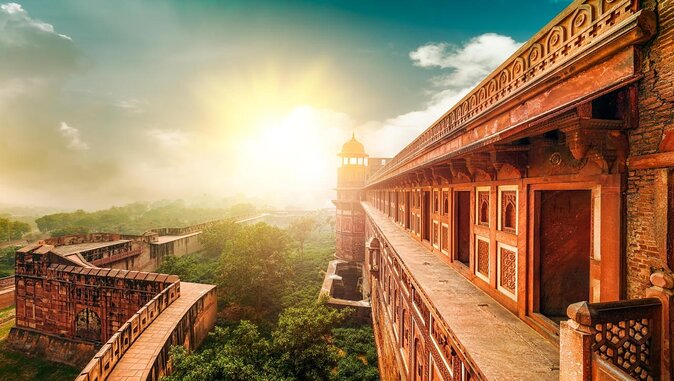
- Sunrise Taj Mahal plan: early timing plus battery bus help you get there and see it without unnecessary stress.
- Private A/C car, real guides: you’re not just dropped off; you get guidance city by city.
- Old Delhi tuk-tuk experience: Chandni Chowk area is toured on the ground level where the action is.
- UNESCO-heavy days: Humayun’s Tomb, Qutub Minar, Agra Fort, Taj Mahal, and Fatehpur Sikri keep the history density high.
- Driver continuity matters: one recent guest praised driver Sanjiv for keeping everything linked between guides.
- Hotel comfort included: breakfasts and dinners are part of the package in the stated inclusions, with 3-star or 5-star options depending on what you choose.
The Golden Triangle Route: Why 3 Days Works (Even When It Feels Tight)
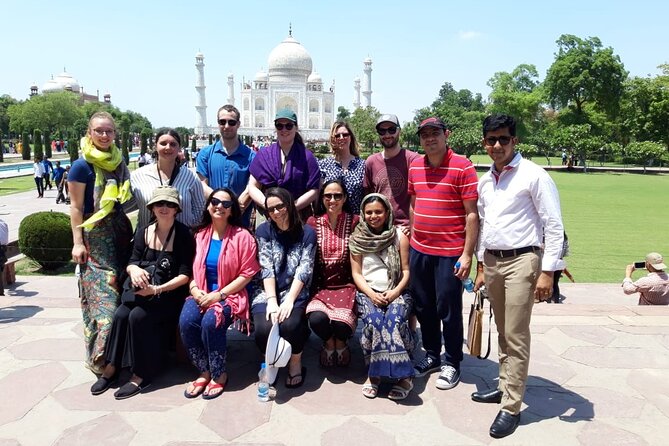
The Golden Triangle is basically the country’s greatest hits—Delhi’s imperial layers, Agra’s Mughal power, and Jaipur’s royal design. Doing it independently is doable, but you’ll spend time figuring out transport, ticket timing, and where to sleep that actually makes sense for your schedule. Here, the value is the structure: you’re assigned the route, you have a private driver, and you’re slotted for major sights that are easiest when you’re not improvising.
I also like how the pacing is intentional. Day 1 is about setting your mental map of Delhi, with everything from Old Delhi mosques to New Delhi’s planned architecture. Day 2 follows the Mughal thread: Taj Mahal first, then Agra Fort and marble tomb details, then the transfer toward Jaipur. Day 3 shifts into Jaipur’s forts and geometry: Amer Fort, Hawa Mahal, City Palace, and Jantar Mantar.
Yes, it’s packed. But if you show up ready to walk, accept early starts, and move on quickly when the day asks you to, you’ll get a lot of famous sights plus enough local context to make them more than postcard stops.
You can also read our reviews of more tours and experiences in New Delhi



Day 1 in Delhi: Old Delhi by Tuk-Tuk, Then the Mughal and Imperial Mix
Your pickup is flexible within a set window: you can choose pickup between 9:00 AM and 11:00 AM from Delhi NCR areas like Noida, Gurugram, Ghaziabad, Faridabad, and more. That’s helpful if you’re coming from a morning arrival or just need a late start.
Pasar Chandni Chowk to Jama Masjid: a ground-level Delhi lesson
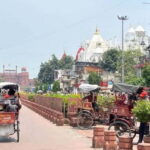
The tour starts Old Delhi in a practical way: you meet your guide around Sunheri Masjid and hop into a tuk-tuk for the Chandni Chowk area. This is one of those segments where you feel how the city works—narrow roads, dense foot traffic, and a street-market rhythm. You’re not asked to “just look at buildings.” You’re learning why the bazaars matter to locals as you pass key sights.
Then you move to Jama Masjid, India’s large, striking mosque built in 1656, with a huge courtyard that was constructed with thousands of workers. It’s not only beautiful; it’s also part of the larger Red Fort/Chandni Chowk zone, so the history clicks together when you’ve just toured the market area.
Gurudwara Bangla Sahib: the story behind the tank
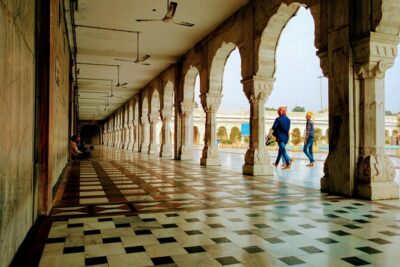
Next up is Gurudwara Bangla Sahib. The key detail here is the tank inside the complex, linked to an account of the eighth Sikh Guru visiting and curing people using water from the tank. Even if you don’t treat the story as literal, it’s a great example of how sacred spaces keep living meaning over centuries. Entry is free in the plan, which also keeps the day moving.
India Gate and New Delhi’s planned architecture
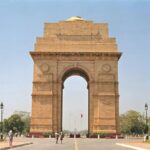
After the religious stops, the tour shifts to a calmer monument moment at India Gate, including the memorial aspect tied to World War I era sacrifice (names engraved on the walls). Then you get a quick look at the planned imperial heart of New Delhi—an area designed in 1929 with architects Sir Edwin Lutyens and Herbert Baker responsible for much of the layout.
This pairing works because it gives you contrast: old religious Delhi, then monumental national symbolism, then planned government architecture. It’s a mental reset before the next temple complex.





Akshardham and Humayun’s Tomb: two ways Delhi shows devotion
You’ll visit Swaminarayan Akshardham, which is a major Hindu temple complex built in 2005 but designed to feel older in its architectural style. It’s a “big production” stop, and if you like ceremonial spaces with lots of detail, you’ll likely enjoy it.
Then comes Humayun’s Tomb, a UNESCO World Heritage Site and often described as India’s first garden tomb. It was built by Humayun’s wife as a tribute after his death. After you’ve seen older Delhi lanes, this is a great pause. The gardens and symmetry help you slow down just enough to actually absorb what Mughal mausoleum design was trying to do.
Qutub Minar: the UNESCO anchor of the day
Finally, Qutub Minar—about 72.5 meters tall, built with bricks starting in 1192, part of the UNESCO Qutub Complex. This is a classic “one monument makes the whole era tangible” stop. Even if you’re tired, it’s the kind of sight that re-energizes you because it feels so old and so intentional.
Evening transfer: Delhi to Agra
At the end of the day, the driver takes you from Delhi to Agra (about 3 hours) and drops you at your hotel. This matters. You don’t want to schedule a late arrival and then wonder where you’ll eat or how you’ll get to tomorrow’s sunrise.
Day 2 in Agra: Taj Mahal at Sunrise, Then Fort, Marble, and Fatehpur Sikri
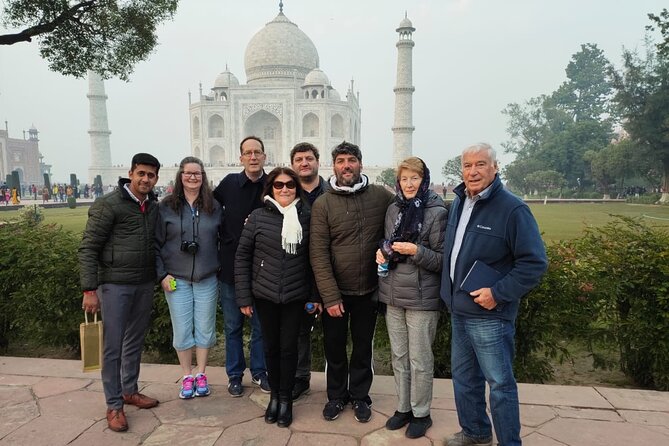
Day 2 is all about Mughal power, starting with the headliner.
Taj Mahal sunrise: early start, big payoff
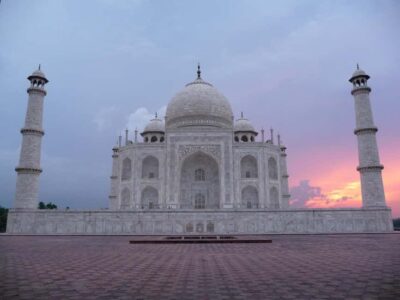
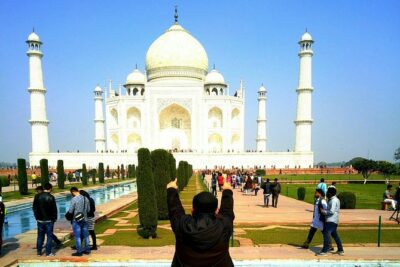
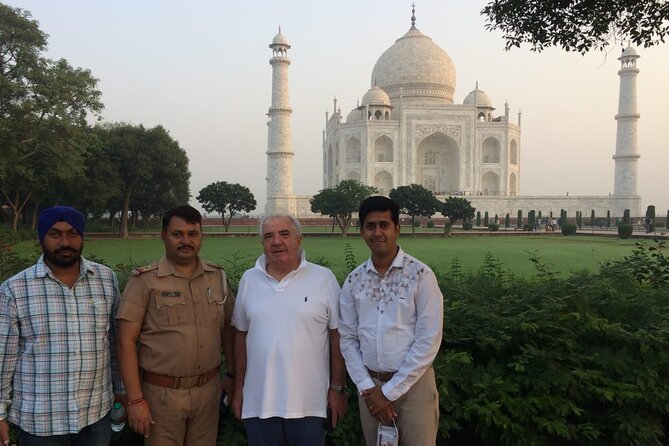
You get Taj Mahal with a sunrise plan. The mausoleum was built by Emperor Shah Jahan in 1630 as a tribute to his wife. Sunrise matters here because Taj Mahal’s light shifts quickly, and you also avoid some of the harsh middle-day brightness that can flatten details.
The package includes admission and the battery bus ride to and from the Taj Mahal parking area up to the monument. That’s a small detail that makes a real difference when you’re starting early and you want to save energy for viewing.
Then you return to your hotel for breakfast, which is smart. Long days in India tourism often fail because people skip breakfast or eat too late. This schedule at least tries to protect the energy you’ll need.
Agra Fort: architecture that explains how empires defended themselves
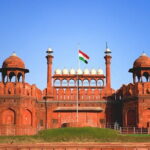
After Taj Mahal, you visit Agra Fort, another UNESCO site, built in the 17th century nearby. It’s known for the mix of Indian and Islamic art and architecture. The bonus for you is that Fort + Taj on the same day helps you understand the difference between symbolic love-as-empire and practical power-as-empire.
Itmad-ud-Daula: the marble “in-between” that people often miss
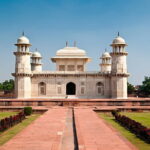
Then you go to Itmad-ud-Daula, described as a Mughal structure made entirely from marble and known as the first to use pietra dura extensively (marble inlay). It’s also linked to the Yamuna riverfront with earlier pleasure garden ideas. This is not the loudest stop, but it’s a smart one if you like fine detail and want to see how Mughal design progressed.
Fatehpur Sikri: a pink city stop with serious historical weight
Next is Fatehpur Sikri, a fortified ancient city about 40 km west of Agra, often called the pink city. The plan notes it served as a capital at a point in time. Even if you only have an hour, this is one of those places where a guided visit helps you connect dots—why it looks the way it does and what role it played.
Transfer to Jaipur: you land ready for a fort day
At the end of the day, the driver takes you from Fatehpur Sikri to Jaipur and drops you at your hotel. It’s about 3 hours for this transfer in the plan. You’re not just moving cities; you’re setting up for a morning where the first stop is a steep climb at Amer Fort.
Day 3 in Jaipur: Amer Fort, Hawa Mahal Windows, City Palace, and Jantar Mantar
Day 3 is a full Jaipur hits list.
Amer Fort: the 600-year-old start that sets the tone
After breakfast, you go to Amer and visit Amer Fort, described as 600 years old with Hindu-style architecture using marble and red sandstone. This is the kind of site that rewards a guide because you’ll get the story behind the design choices rather than just walking through pretty walls.
Also, plan for walking and sun exposure. Even if your day feels fast, Amer Fort is worth showing up with decent shoes.
Hawa Mahal: 953 windows and royal “viewing” design
Next is Hawa Mahal—the Palace of Breeze—built in 1799 for royal ladies. The big detail is 953 intricately designed windows made from red and pink sandstone. The design is clever: it lets people observe street life while staying behind lattice-like openings. It’s one of those monuments where you can immediately picture the purpose.
City Palace: museum sections in the old seat of power
Then comes the City Palace. You get gardens and palace architecture in the center of Jaipur, with some parts reserved for a museum. This stop tends to work well at this point in the day because you’ve already seen exterior spectacle (Hawa Mahal) and now you get the organized interior story of the royal world.
Jantar Mantar: timekeeping made visible
Jantar Mantar Jaipur is an astronomical observatory built in the 18th century, known for the collection of architectural instruments used to measure time and track celestial bodies. If you’re the kind of person who likes how humans used math and physics before modern tools, you’ll probably enjoy this even with a shorter visit. It’s also easier to understand with a guide than without one.
Jal Mahal: calm contrast by the lake
Then you get Jal Mahal, a 17th-century Rajput-style structure located in the middle of Man Sagar Lake. It’s a lighter, quieter stop compared to forts and palaces. You get about 30 minutes here, enough time to slow down and reset before the final travel leg.
Return to Delhi or drop at Jaipur airport
The last part is logistics-heavy: you head back to Delhi (about 4 hours) or, if you prefer, you can be dropped at Jaipur airport. This is one of the only real downsides of a 3-day run: you spend your final hours in transit if you’re returning to Delhi the same day.
Private Comfort, Hotel Options, and What the Package Actually Includes
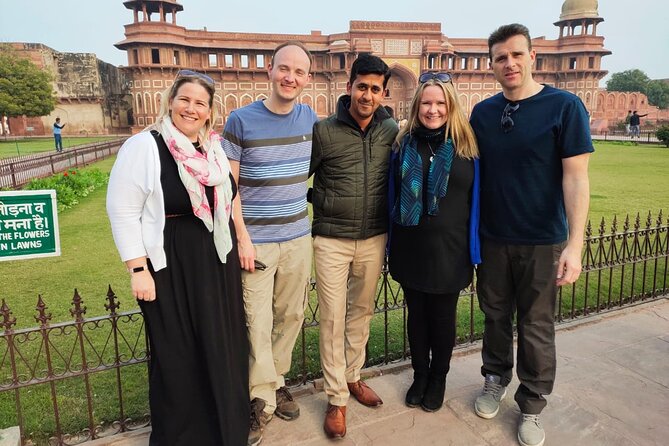
This is a private tour with your group only, handled by a private car and driver. That’s a big deal if you hate waiting around while strangers argue about meeting points.
Air-conditioned transport plus specific small extras
The package includes transfers and sightseeing by private A/C car and driver. It also includes complimentary water bottles, plus bottled mineral water and soft drinks during journeys. That doesn’t sound glamorous, but it prevents the common “we forgot to buy water” problem that turns a good day into a thirsty one.
In Delhi, you also get a tuk-tuk for the Old Delhi bazaar area. And at Taj Mahal, you get the battery bus ride up to the monument.
Hotel comfort: 3-star or 5-star options
The tour description talks about luxury 5-star accommodations, while the inclusions list mentions two nights in either 3-star or 5-star setups depending on what you choose. Either way, breakfasts and dinners are included in the stated inclusions. Just note the schedule: the itinerary is 3 days, so the exact number of nights can feel a bit flexible based on your pickup/drop-off timing.
Private local guides (and multiple guides across cities)
You’ll have an English-speaking guide included, and the tour notes you can request another language in special requirements when booking. One recent review highlighted that different city guides may handle Delhi, Agra, and Jaipur, with the driver providing continuity between them. The driver named in that praise was Sanjiv, and that continuity point matters: switching guides is normal, but having the same driver keeps timing under control.
Room type is based on availability and group size
Room setup is twin-sharing by default, with single/double/triple room types depending on availability and room configurations—especially for odd-numbered groups. In a booking of 3 people, triple-sharing is default unless you pay extra for 2 rooms.
If you’re traveling as a couple and want your own bed setup, double-check how the operator handles room allocations for your group size.
Price and Tickets: The $206 Value Check (and the Common Confusions)
At $206, the headline value is obvious: you’re paying for a bundled trip that includes private transport, guided sightseeing, and hotel comfort. That’s usually cheaper than buying everything separately, especially if you want a guide for complex sights and you don’t want to manage your own booking schedule.
But here’s the practical part: what’s included can vary by options. The inclusions say all monument tickets (choose option), while the “not included” list separately mentions monument entrance fees. Translation for you: confirm whether your chosen package includes the site entries outright, and what that “option” refers to in your booking details.
Meals also matter. The inclusions state breakfasts and dinners are included (in the hotel stay package). The not-included list says any meal (lunch and dinner), which conflicts with the earlier statement. The safest way to read this for planning is: plan on lunch being on your own, and check whether dinner is included for your exact accommodation option and dates.
Other practical items that are explicitly included:
- complimentary water bottles and refreshments during journeys
- fuel surcharge, taxes, and hotel taxes
- hotel or airport pickup/drop-off
- bottled mineral water/soft drinks during travel
- battery bus service to Taj Mahal
And explicitly called out:
- Taj Mahal is closed every Friday
- Akshardham and Gandhi Smriti are closed on Monday, with a swap to Gurudwara Bangla Sahib and Birla Temple in that case
- avoid clothing that is too revealing
Who This Tour Fits Best (and Who Should Think Twice)
This tour fits you best if:
- you want a structured first Golden Triangle trip without doing logistics yourself
- you like the big-name sights, but you also want context from a guide rather than random wandering
- you’re comfortable with early mornings (sunrise at Taj Mahal)
- you prefer private A/C transport and don’t want to share a ride
It may be less ideal if:
- you want lots of free time at each stop
- you’re sensitive to long driving days (Delhi to Agra, and Agra/Fatehpur Sikri to Jaipur, then Jaipur back to Delhi)
- you hate the idea of moving through multiple city guides within a short window
It’s also worth noting that the tour uses a private group model, so you’re not constantly waiting for strangers. That said, private trips still follow the same physics of sightseeing time—so bring stamina, not just expectations.
Quick Booking Decision: Should You Book This 3-Day Luxury Golden Triangle Tour?
If you want a first-time Golden Triangle experience with private A/C comfort, local guides, and a schedule that hits Delhi, Agra, and Jaipur without you doing the planning, this is a strong pick.
I’d book it if you’re okay with a packed itinerary and you’re willing to treat early Taj Mahal sunrise as part of the adventure. If you’re unsure about tickets and meals, you should confirm what your exact option includes before paying.
One more practical check: if your dates land on Friday, plan for Taj Mahal being closed and make sure your operator has a replacement plan. The good news is the tour data already notes closure handling for other days too.
FAQ
What time does pickup happen on Day 1?
Pickup is available between 9:00 AM and 11:00 AM, and you can choose your pickup time within that window from Delhi NCR areas listed in the tour details.
Which cities and major sights are included?
The tour covers New Delhi, Agra, and Jaipur. Major sights include Chandni Chowk, Jama Masjid, Gurudwara Bangla Sahib, India Gate, Akshardham, Humayun’s Tomb, Qutub Minar, Taj Mahal, Agra Fort, Itmad-ud-Daula, Fatehpur Sikri, Amer Fort, Hawa Mahal, City Palace, Jantar Mantar, and Jal Mahal.
Are monument tickets included, or do I pay entrance fees?
The tour says all monument tickets (choose option), but the listing also notes monument entrance fees may not be included. The key is to confirm what option you select in your booking.
Is Taj Mahal open every day?
No. Taj Mahal is closed every Friday.
What meals are included in the package?
The inclusions list mentions breakfasts and dinners as part of the hotel stay. The not-included section specifies that lunch and some meals are not included, so plan on paying for lunch during the day.
How do you travel between sights?
You travel in a private A/C car and driver. In Old Delhi, you also use a tuk-tuk for the Chandni Chowk area, and for Taj Mahal you get a battery bus ride to and from the parking area.
What languages are available for the guide?
The tour includes an English-speaking guide. If you need a different language, you’re asked to inform the operator in special requirements at booking.