REVIEW · NEW DELHI
Delhi: Gandhi Museum & Raj Ghat Private Guided Tour
Book on GetYourGuide →Operated by Ayesha Holidays · Bookable on GetYourGuide
A walk through Gandhi’s final resting place.
I love how this half-day tour strings together Raj Ghat and Delhi’s Gandhi Museums with a real, back-and-forth guide, not a rushed script. Two things stand out: you get a private expert guide and you move faster thanks to skip-the-line entry. One watch-out: you’ll cover a lot of ground in about 5 hours, so plan on firm pacing and minimal wandering.
You’ll start with an air-conditioned car pickup from the Delhi or Gurugram area (or the airport), meet your guide, then head to Gandhi’s major Delhi landmarks. Expect thoughtful narration, photo stops, and time for questions—exactly the kind of structure that helps you connect names, dates, and ideas without getting lost in museum labels.
Is it perfect for everyone? It’s meaningful and calm, but it’s not designed for lingering stops. Also, the information you’re given is a little mixed for wheelchair suitability, so if mobility is an issue, you’ll want to confirm before you book.
In This Review
- Key reasons this Gandhi tour is worth your time
- Arriving in Delhi without the usual hassle
- Raj Ghat: the memorial walk you don’t rush
- Gandhi Smriti Museum: the house that changes the tone
- National Gandhi Museum: artifacts, photos, manuscripts, and media
- What your private guide actually does (and why it matters)
- How the route fits together in 5 hours
- Practical details: what to bring and how to plan
- Price and value: how $13 stacks up for a private day
- Who should book this tour (and who might skip it)
- Quick heads-up on logistics and languages
- Should you book the Delhi Gandhi Museum & Raj Ghat private tour?
- FAQ
- How long is the Delhi Gandhi Museum & Raj Ghat private tour?
- What does it cost?
- Where can I be picked up and dropped off?
- Which places will I visit during the tour?
- What is included in the tour price?
- Do I get skip-the-line access?
- Is the tour wheelchair accessible?
Key reasons this Gandhi tour is worth your time

- Private pacing with a Q&A: you can ask about non-violence and the freedom struggle as you go.
- Raj Ghat’s gardens and Hey Ram: a guided walk at the cremation memorial, not just a photo.
- Gandhi Smriti’s final-days atmosphere: the house/memorial focus hits harder than a general museum visit.
- National Gandhi Museum depth: rare artifacts, photographs, manuscripts, and multimedia make Gandhi feel real.
- Pickup from Delhi, airport, or Gurugram: a smooth start if you’re short on time.
Arriving in Delhi without the usual hassle

Delhi’s traffic can turn a good plan into a stressful one. That’s why I like the fact that you’re collected by car from your hotel or a set location—Gurugram, Delhi airport, or New Delhi—and then dropped back off again afterward.
The tour runs about 5 hours, and the car is air-conditioned, which matters when you’re trying to keep the day comfortable. You’re also in a private group, so you’re not stuck waiting while strangers filter in and out. If you’re visiting with limited time in the city, this “one driver, one route, one guide” format is a smart use of your hours.
One practical tip: wear shoes you can walk in for stretches of museum corridors and outdoor paths around the memorial gardens. You’ll also want water, since food and drinks aren’t included.
You can also read our reviews of more guided tours in New Delhi



Raj Ghat: the memorial walk you don’t rush
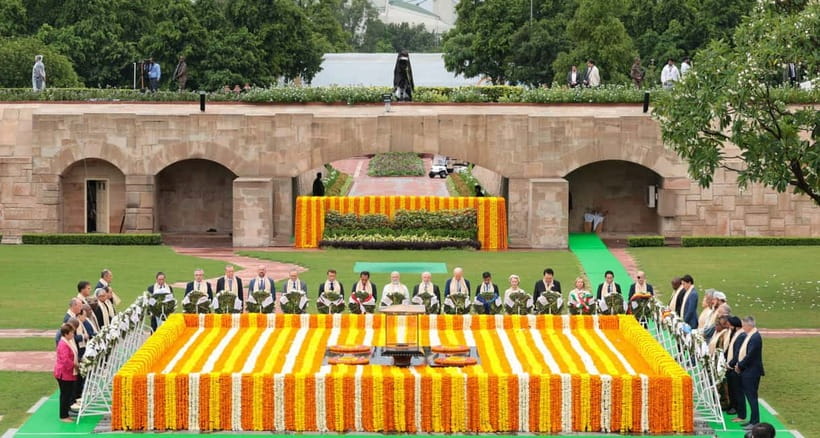
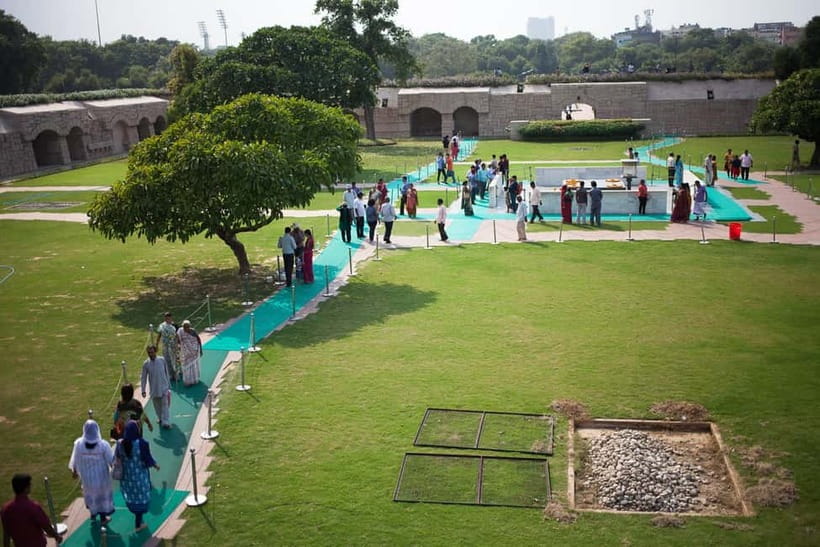
Raj Ghat is Gandhi’s most famous Delhi stopping point for a reason. Even if you’ve seen photos, the on-site experience is different: the memorial grounds feel quiet and grounded, and the black marble platform is unmistakable once you’re there.
On this tour, Raj Ghat includes a photo stop, a visit, and a guided walk (about 1 hour total at the memorial). You’re not just dropped at a landmark with a quick pointer. Your guide gives context as you stroll through the landscaped setting around the memorial platform—an area meant for reflection.
The inscription Hey Ram is part of what makes Raj Ghat resonate. It’s not a “tourist slogan.” It’s a final phrase tied to Gandhi’s last moments, and a good guide will help you understand why that matters in the story of India’s independence and Gandhi’s philosophy of non-violence.
Also, this is one of those places where asking questions feels natural. If you’re curious about how non-violence worked in practice—not just as an idea—this is a strong spot to ask.
Possible drawback: because Raj Ghat is a meaningful place, you may want extra time for lingering photos or quiet moments. The tour’s structure keeps you moving, so keep expectations realistic: it’s a focused visit, not an all-day retreat.
Gandhi Smriti Museum: the house that changes the tone
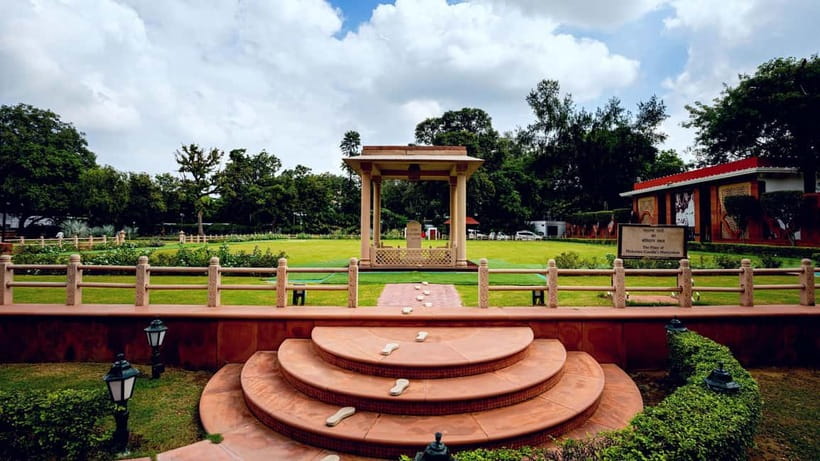
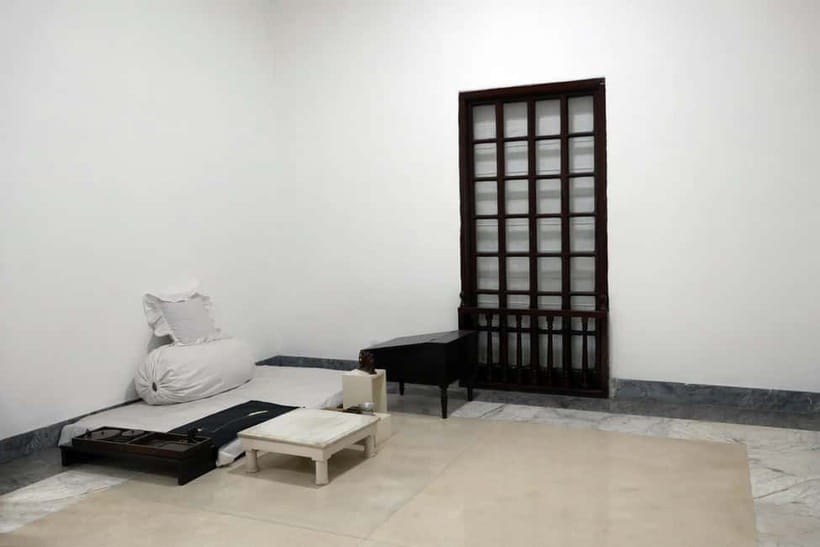
After Raj Ghat, the experience shifts from memorial space to historical “final-days” space at the Gandhi Smriti Museum. Your time there is about 1 hour, with a guided visit and walk plus a photo stop.
This stop is often the most emotional part of the day. In the feedback I reviewed for this tour, one guest specifically said the Gandhi Smriti house was the best because it helps you sense Gandhi’s final days rather than just reading about them. That matches what I think this kind of site does well: it compresses time. Instead of seeing Gandhi as a big historical figure, you see him as a person living through a final chapter.
The museum setting also supports questions. If you want to connect Gandhi’s moral framework to the last period of his life, this is the kind of place where your guide can tie events to the human reality of what happened.
What to keep in mind: museum pacing can feel more “contained” than the outdoor memorial grounds. So bring your attention—this is a thinking stop, not just sightseeing.
National Gandhi Museum: artifacts, photos, manuscripts, and media

Next comes the National Gandhi Museum, and this is where the day gets more “source-based.” You’re there for about 2 hours, which is a good amount of time if you want more than surface-level reading.
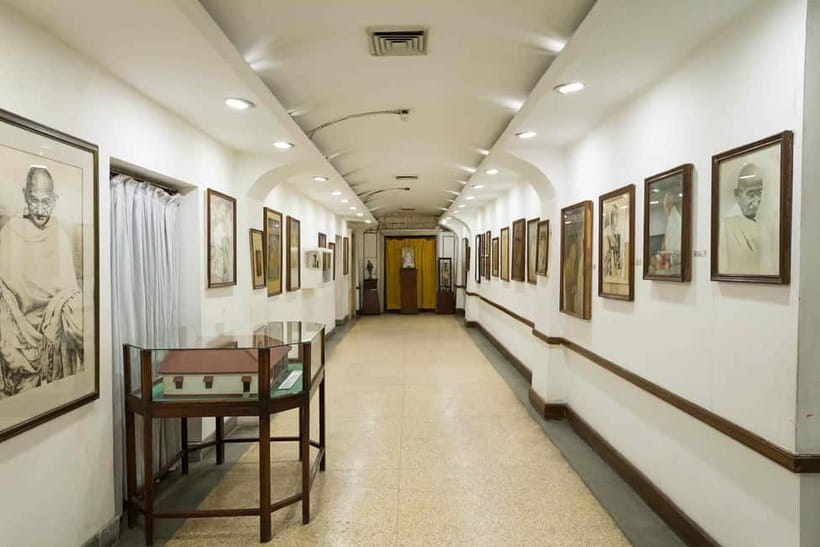
What I like about this museum stop is the range of formats described for the exhibits: rare personal artifacts, photographs, manuscripts, and multimedia. That mix matters because Gandhi’s story isn’t just one narrative. It’s letters, ideas, public actions, and consequences spread over years.
A strong guide can connect those pieces into a clear storyline: how Gandhi’s principles of non-violence shaped the freedom movement, what these documents and objects reveal, and how his influence traveled beyond India’s borders. If your memory of Gandhi is mostly slogans or widely-known moments, this stop helps you see the “how” behind the “what.”
This is also the time where I’d lean into conversation. You’ll get an interactive portion of narration with chances to ask questions, and the museum is an ideal place to do that because you can point at what you’re seeing and get direct context.
What your private guide actually does (and why it matters)
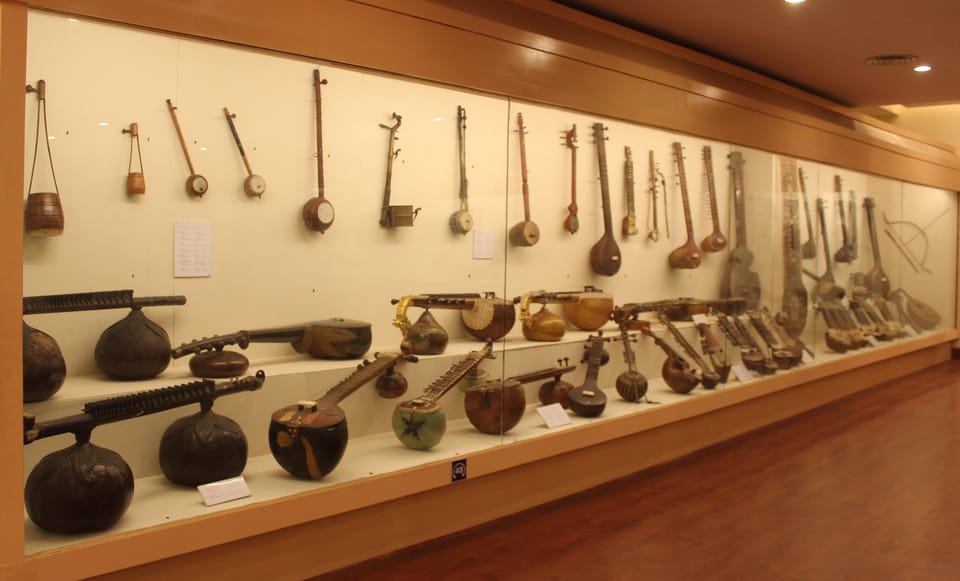
A private guided tour sounds good on paper. The real value is what happens when you can ask follow-up questions and get answers tied to the exact site in front of you.
In the tour experiences tied to this booking, guide names showed up repeatedly—Guivinder, Gurvinder, and Jimmy—and each description focused on the same thing: guides who link places to meaning, plus practical help for visiting Delhi properly.
I like that this tour explicitly sets you up for engagement. The structure encourages you to ask questions about Gandhi’s philosophy and his impact on India’s freedom struggle. Instead of memorizing facts, you’re building understanding while you stand in the relevant locations.
And yes, a driver who knows the rhythm of the day helps too. One note praised an excellent driver alongside an excellent guide, which tells me the operator pays attention to how smoothly the route runs.
You can also read our reviews of more private tours in New Delhi





How the route fits together in 5 hours
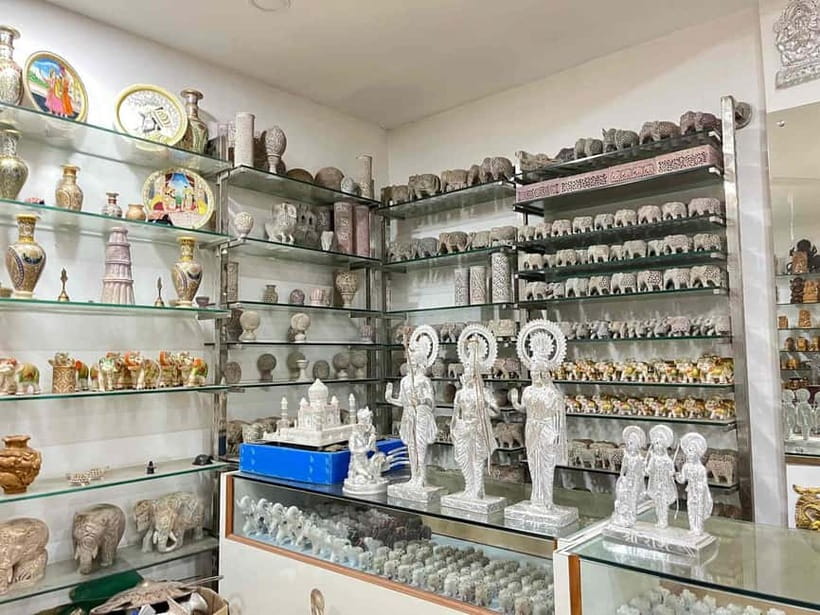
A tour like this can go one of two ways: either it feels coherent, or it feels like three separate stops stacked on top of each other. The route here generally works because each place contributes a different layer.
- Raj Ghat gives you the memorial lens—Gandhi’s final resting place and the reflective tone of the story.
- Gandhi Smriti adds the personal lens—final-days context in a house setting.
- National Gandhi Museum supplies the documentary lens—artifacts, manuscripts, photos, and multimedia evidence.
That progression is useful if you’re trying to understand the whole arc of Gandhi’s life rather than only one famous moment.
Time-wise, the split also makes sense: about 1 hour at Raj Ghat, about 1 hour at Gandhi Smriti, and about 2 hours at the National Gandhi Museum, plus time for moving and photo stops. If you’re someone who hates being rushed, you’ll still need to accept the compact schedule. But if you’re someone who likes a clear itinerary with smart pacing, this length is a good sweet spot.
Practical details: what to bring and how to plan
You don’t need much to enjoy the day, but you do need the right stuff.
Bring:
- Comfortable shoes (walking on outdoor paths and museum floors)
- Camera (there are photo stops, and you’ll want to capture the memorial and museum areas)
- Water (no food or drinks included)
If you’re sensitive to heat or crowds, it’s worth moving at a relaxed pace inside the sites and saving energy for the guided walk portions. You’ll also want a light schedule after this tour. Your brain will be busy, and a quiet dinner plan helps you process what you learned.
Price and value: how $13 stacks up for a private day
At about $13 per person for a 5-hour private guided tour with hotel pickup and drop-off and an air-conditioned car, the value proposition is strong—especially because you’re visiting major Gandhi landmarks in a single block of time.
Here’s the balanced way to think about it:
- You’re paying for private transport plus a live guide.
- Entry tickets may be included depending on the option chosen, so check what you’re selecting.
- Food and drinks are not included, which is normal for this type of cultural route.
Even with that, this pricing structure is appealing if you want a focused Gandhi-themed day without paying for a longer multi-day itinerary. The key is to treat the included elements as the main package: guide + car + pickup/drop-off + major stops.
Who should book this tour (and who might skip it)
This is a great fit if:
- you want a private experience rather than a large-group march
- you like asking questions and talking through ideas while you’re on-site
- you have limited time in Delhi and want Raj Ghat + Gandhi Smriti + the National Gandhi Museum covered in one go
You might want to skip (or at least confirm details) if:
- you need full wheelchair suitability support, because the provided information is mixed: it says the tour is wheelchair accessible, yet it also lists wheelchair users as not suitable. If you fall into that category, confirm directly with the operator before booking.
- you dislike structured schedules and prefer free time for drifting on your own. This tour is built for guided flow and photo stops, not solo wandering.
Quick heads-up on logistics and languages
The guide languages listed are English, French, Spanish, German, Russian, and Italian. So if you’re traveling with someone more comfortable in another language, this tour’s coverage is likely to help.
Pickup and drop-off are offered in New Delhi, Gurugram, and around the Delhi airport area, which is useful if your lodging is outside the traditional tourist core.
One more thought: the tour notes skip-the-line access through a separate entrance. That’s not just a convenience perk. In museums and memorial sites, it can be the difference between a relaxed start and a day that feels delayed.
Should you book the Delhi Gandhi Museum & Raj Ghat private tour?
I’d say yes—if you want a meaningful Gandhi day with structure. The combination of Raj Ghat (reflection), Gandhi Smriti (final-days feeling), and the National Gandhi Museum (artifacts and documents) gives you a full picture without needing to research for weeks.
This tour is especially good value if you’re the kind of traveler who learns faster when you can ask questions. With a private guide like Guivinder, Gurvinder, or Jimmy (names mentioned in the experiences linked to this tour), you’re not just seeing places—you’re making sense of them.
Book it if your schedule fits a half-day plan and you’re comfortable with walking. Hold off or confirm first if wheelchair needs are involved, given the mixed accessibility note.
FAQ
How long is the Delhi Gandhi Museum & Raj Ghat private tour?
The tour duration is about 5 hours.
What does it cost?
The price is $13 per person.
Where can I be picked up and dropped off?
Pickup and drop-off options include New Delhi, Delhi airport, and Gurugram.
Which places will I visit during the tour?
You’ll visit Raj Ghat, Gandhi Smriti Museum, and the National Gandhi Museum.
What is included in the tour price?
Included are hotel pickup and drop-off, a private air-conditioned car, a live tour guide, and entry tickets if you choose the option that includes them.
Do I get skip-the-line access?
Yes. The tour notes skip the line through a separate entrance.
Is the tour wheelchair accessible?
The information provided is mixed: it states wheelchair accessible, but it also lists not suitable for wheelchair users. If this affects you, confirm directly with the operator before booking.