REVIEW · NEW DELHI
Delhi: Half day Old and New Delhi Tour on Iconic Landmarks
Book on Viator →Operated by Namastes India · Bookable on Viator
Delhi can hit you fast. This private half-day loop pairs Old Delhi landmarks with New Delhi’s government-area monuments, so you see both market streets and big ceremonial sights without getting lost. I especially like the live guide who stitches Mughal and British stories into the stops, and the practical rides that keep the day moving. The downside is the schedule is tight—expect short looks at several major sites—and extras like meals and tips will add to the final cost.
You start at Sunehri Masjid, then work through Jama Masjid’s red-stone courtyard, Chandni Chowk, and Khari Baoli’s spice market before rolling into India Gate, the Parliament area, and Lotus Temple. I like the mix of big-ticket sights with sensory stops like the spice market, and I also appreciate that they plan pickup and include parking, tolls, and fuel so you don’t play taxi math all morning.
A tour like this lives or dies on comfort and timing. They provide water bottles, and umbrellas are available depending on the weather, which is a small thing that really helps when Delhi’s sun is in full boss mode. Also, because this is a private setup for your group, you can ask questions without feeling rushed.
In This Review
- Key highlights worth your attention
- What you’re really paying for: $5 plus the stuff that affects your total
- Starting at Sunehri Masjid: the anchor point for Old Delhi
- Jama Masjid: India’s largest mosque and why you start there
- Chandni Chowk the smart way: guide meet-up plus tuk-tuk transfer
- Khari Baoli spice market: where the smells do the explaining
- Red Fort stop: Mughal power in a short, iconic pause
- India Gate: the Unknown Soldier and the 13,300 names
- Parliament area and Rashtrapati Bhavan: the modern power zone
- Gurudwara Bangla Sahib: a medical-care story from 1664
- Lotus Temple: Baháʼí House of Worship and its floral form
- Getting around comfortably: water, umbrellas, and drivers who handle the chaos
- Price and logistics reality check: who this tour is for
- Should you book this half-day Old and New Delhi tour?
- FAQ
- How long is the Delhi half-day Old and New Delhi tour?
- Do they offer pickup and drop-off?
- Where does the tour start?
- Are entrance fees included?
- What’s included during the tour?
- What’s not included?
Key highlights worth your attention
- Old Delhi to New Delhi in one tight route: you get the “market Delhi” mood and the “government Delhi” mood in a single morning/afternoon.
- Jama Masjid first, then Chandni Chowk by tuk-tuk: the ride helps you move into the bazaars fast.
- Khari Baoli spice market stop: you’ll get practical context on spices and how they’re used, not just photos.
- Central Delhi monuments with clear wayfinding: India Gate and the Parliament area are easy to appreciate when someone explains what you’re looking at.
- Gurudwara Bangla Sahib + Lotus Temple: two major religious landmarks, each with a story you can tell afterward.
- Private guide and transport included: parking, tolls, fuel, and taxes are part of the package.
What you’re really paying for: $5 plus the stuff that affects your total
On paper, the price is low—$5.00 per person. In real life, the value comes from what’s bundled around it: a private live guide, transport for pickup and drop-off, and the operational costs that usually sneak into your day (parking, tolls, fuel, taxes). That’s the part that matters in Delhi, where roads, lanes, and traffic can turn a “simple plan” into a late-afternoon scramble.
Just don’t miss the add-ons. Meals and gratuities aren’t included, and tips aren’t included either. Entrance fees are also an area to double-check: many listed stops are shown as Admission Ticket Free, but there’s still an option that covers entrance fees for monuments if selected. Before you go, check your exact booking options so you know whether you’ll pay anything at the gates.
Duration is about 4 to 5 hours. That’s ideal for first-timers who want a sweep of highlights without burning a full day. If you’re the type who wants to linger for an hour inside one major site, this may feel fast—because it is.
You can also read our reviews of more tours and experiences in New Delhi.



Starting at Sunehri Masjid: the anchor point for Old Delhi
The tour meets at Sunehri Masjid, near Nishad Raj Marg in the Old Delhi area (Lal Qila vicinity). This matters because it puts you close to the “thread” that connects Old Delhi’s sights—especially Jama Masjid, Chandni Chowk, and the spice markets.
The tour is private, so your guide can set the pace for your group. You’ll also get a mobile ticket, which helps keep things smooth once you’re out in the real-world crowds.
If you’re coming from elsewhere, pickup is offered from Delhi, Noida, Gurugram, Ghaziabad, and Faridabad between 8 AM and 3 PM. That wide window is useful. Delhi mornings can get loud early, and a flexible start time helps you avoid the worst congestion.
Jama Masjid: India’s largest mosque and why you start there
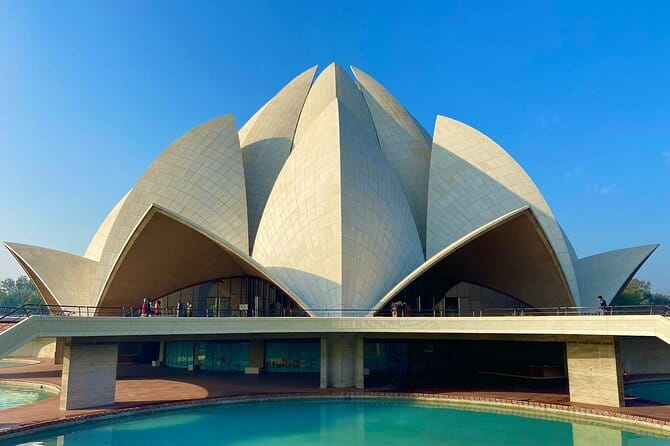
You kick off at Jama Masjid, the country’s largest mosque. The highlight here isn’t just the building—it’s the scale of the red sandstone courtyard. With about 1 hour, you get enough time to look around, catch the grand proportions, and understand the setting before you head into the chaos of the bazaars.
This is also a smart “starter” stop. You come here before the spice-and-street overload. By the time you reach Chandni Chowk, you already have a landmark reference point in your head, so navigation feels easier.
Practical consideration: Jama Masjid is huge, and that can mean you’ll do a bit of walking just to see the courtyard properly. Wear comfy shoes.
Chandni Chowk the smart way: guide meet-up plus tuk-tuk transfer
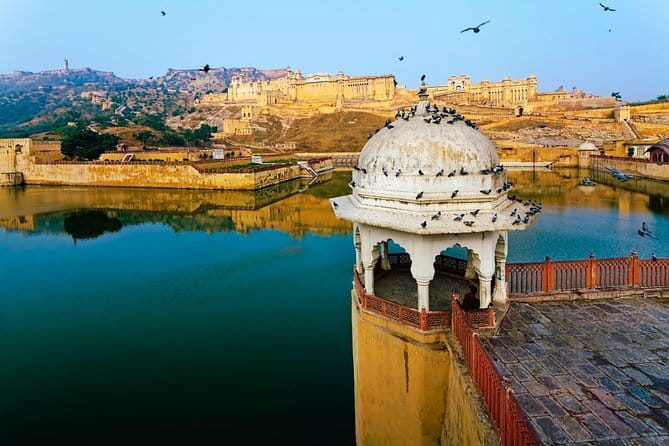
From the Sunehri Masjid meeting area, your guide meets you and you’re transported by tuk-tuk to the bazaars of Old Delhi. That transfer is more than a fun detail. It saves time and reduces the chance you’ll get stuck in short bottlenecks where cars and pedestrians mix.
You’ll spend about 30 minutes in Chandni Chowk. That’s enough time to experience the market energy and pick up what you need for the next stop—spices, snacks, small souvenirs, and the feeling that Delhi is running on a different clock.
Because the schedule is short, come with a goal. I’d focus on watching how people shop and moving with your guide rather than trying to shop like it’s a full afternoon at home.
Khari Baoli spice market: where the smells do the explaining
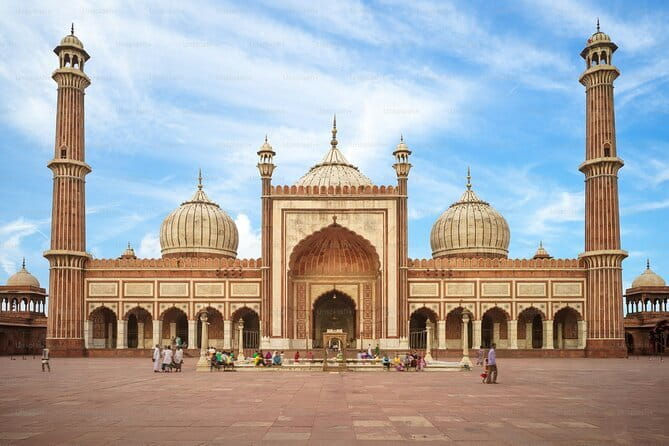
Next up is Khari Baoli, a famed spice market in the Chandni Chowk area. This is one of the most sensory parts of the day. You’ll get about 30 minutes to explore, and the point isn’t only to look—it’s to learn about the history of spices and how they’re used.
This is also where a guide helps most. If you’re just walking on your own, spice markets can turn into a blur of colors and containers. With an explanation, you start to notice patterns: which spices get used for which dishes, and why certain blends exist in the first place.
Practical note: expect strong smells. If you’re sensitive, hold your breath for a second when you step into the thickest areas, then take it slow. And if you want to buy spices, consider buying smaller amounts so you’re not stuck with a heavy bag after the tour.






Red Fort stop: Mughal power in a short, iconic pause
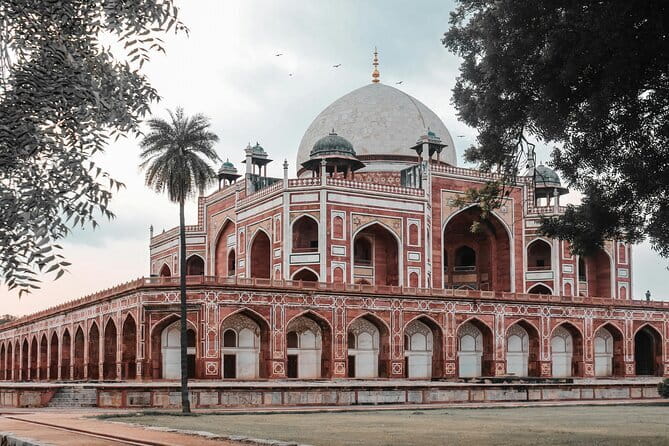
The tour includes a stop at Red Fort. It was built by Shah Jahan between 1639 and 1648 and served as the principal residence of the Mughal emperors. The architecture blends Indo-Islamic and Mughal styles, which is exactly the kind of detail that turns a photo into something you can actually explain to friends afterward.
The catch: this is a half-day route. So your time at Red Fort may feel like a highlight pause rather than a slow, deep visit. If you’re hoping for an all-day Red Fort session, you’ll likely want a separate outing.
Even so, the framing helps. When your guide ties the fort to the bigger Mughal story, it gives you context for what you’re seeing outside and why this site still matters.
India Gate: the Unknown Soldier and the 13,300 names
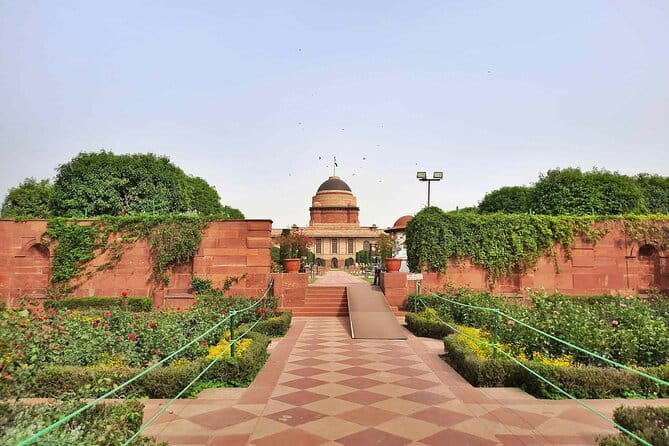
After Red Fort, you head to India Gate. This stop is only about 15 minutes, but it’s packed with meaning.
India Gate includes the Tomb of the Unknown Soldier, dedicated in 1921, and it bears the names of 13,300 Indian Army servicemen who died in the First World War. Even if you’re not a battlefield-history person, the names and the dedication make it hard to treat this as just another monument.
A guide’s role here is key. Without context, India Gate is easy to skim. With it, you’ll look differently—more like you’re reading a memorial than sightseeing a structure.
Parliament area and Rashtrapati Bhavan: the modern power zone

You then move to Rashtrapati Bhavan and the Parliament House area. The tour specifically references the Parliament House, home to India’s bicameral legislature: the Lok Sabha (lower house) and Rajya Sabha (upper house).
You’ll spend about 15 minutes here. That’s enough for exterior appreciation and orientation, especially for a first visit when you’re trying to connect what you’ve seen in books to real buildings in front of you.
From a value perspective, this stop completes the “Old versus New Delhi” balance. Old Delhi gives you street life and Mughal-era scale. This area shows a different kind of authority—modern institutions running the country today.
Gurudwara Bangla Sahib: a medical-care story from 1664
The tour includes Gurudwara Bangla Sahib, with about 1 hour at the site. This is one of the best-paced stops on the schedule.
Its historical significance ties to the eighth Sikh Guru, who resided here in 1664 and provided medical care to many people during a cholera outbreak. That detail changes how you read a religious complex. It becomes more than a place of worship—it’s also a story about community care.
Because you have a full hour, you’re not just passing through. You can take your time, listen, and connect the meaning behind the place.
This is also a good moment to slow down before the final major stop. Your legs will notice the difference.
Lotus Temple: Baháʼí House of Worship and its floral form
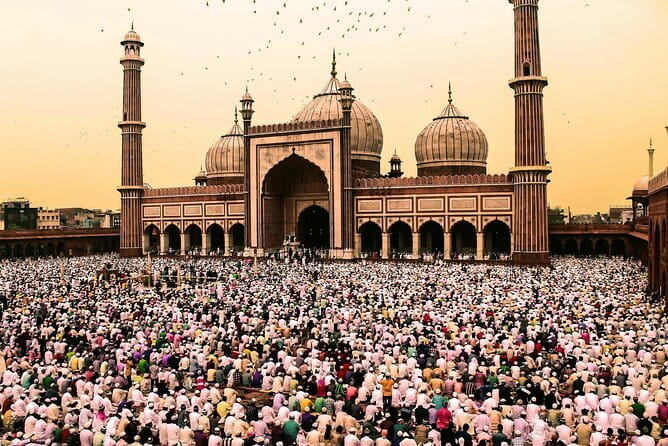
To finish the landmark sweep, you visit the Lotus Temple. It’s a Baháʼí House of Worship inaugurated in December 1986, and it’s known for its floral, lotus-like architecture.
You’ll have about 30 minutes here. Even in a short timeframe, it’s an enjoyable stop because the shape is so memorable that you don’t need long explanations to understand why people photograph it.
If you like symmetry and design, this will feel like a visual “exhale” after markets and memorials. If you prefer strictly historic sites, you’ll still get something valuable: the story of a modern religious landmark with a clear mission and an instantly recognizable look.
Getting around comfortably: water, umbrellas, and drivers who handle the chaos
Delhi traffic is real. The difference between a good day and a frustrating one often comes down to transport.
This tour provides transportation for pickup and dropoff, with parking charges, tolls, fuel, and taxes included. Reviews also highlight that the private car was air-conditioned and spotless, and that drivers were professional and careful through busy streets.
You’ll also get water bottles, and umbrellas are available depending on the weather. That’s not glamorous, but it’s practical. In cities where sun and heat can hit hard, “basic support” can make your sightseeing feel way less exhausting.
A small logistics note: the tour offers drop-off back to your preferred location within Delhi, Noida, Gurugram, Ghaziabad, or Faridabad. At the same time, the activity is described as ending back at the meeting point. If you want a specific end location, confirm which drop-off option is included in your booking.
Price and logistics reality check: who this tour is for
This tour works best for:
- First-time visitors who want a highlights sweep of Old Delhi and New Delhi in 4 to 5 hours
- People who prefer a private guide over navigating on their own
- Anyone who wants practical help moving through busy areas, with included transport and fewer friction points
It may not fit if:
- You want long time inside major monuments
- You’re expecting a fully all-in price with no additional costs
- You’re sensitive to crowding and quick transitions between stops (this route is efficient, not slow)
The value is strongest if you show up with reasonable expectations: this is a “see it and understand it” tour, not a single-site deep dive.
Should you book this half-day Old and New Delhi tour?
If your goal is to get your bearings fast and feel the contrast between Old Delhi and New Delhi, I’d book it. The route hits major landmarks with enough context to make them more than picture stops, and the private guide + included transport removes a lot of day-of stress.
I’d pass or plan differently if you’re trying to keep spending ultra-tight without accounting for meals and tips. Also, if you know you want to spend serious time inside a major site, this half-day format won’t satisfy that desire.
My best advice: treat this as your “Delhi orientation day.” Then, once you’re back, you can choose the one or two places you want to revisit at a slower pace.
FAQ
How long is the Delhi half-day Old and New Delhi tour?
It runs about 4 to 5 hours (approx.).
Do they offer pickup and drop-off?
Yes. Pickup is offered from Delhi, Noida, Gurugram, Ghaziabad, and Faridabad between 8 AM and 3 PM. Drop-off is also offered to preferred locations within Delhi, Noida, Gurugram, Ghaziabad, or Faridabad, depending on the option selected.
Where does the tour start?
The meeting point is Sunehri Masjid, Nishad Raj Marg, Lal Qila, Old Delhi, New Delhi, Delhi 110006, India.
Are entrance fees included?
Many scheduled stops are listed as Admission Ticket Free. Entrance fees for monuments are included if your selected option includes entrance fees (listed as €10.00 per person).
What’s included during the tour?
A personalized live tour guide, transportation for pickup and drop-off, parking charges, tolls, fuel, and taxes. Water bottles are provided, and umbrellas are available based on weather.
What’s not included?
Meals and gratuities are not included, and tips are not included. Entrance fees for monuments are only included if the option is selected.