REVIEW · NEW DELHI
From Delhi 2 Nights 3 Days Golden Triangle Tour Delhi Agra Jaipur
Book on Viator →Operated by ZAARA TRAVELS · Bookable on Viator
Delhi-to-Jaipur in three days is fast.
This Golden Triangle tour turns first-time sightseeing into a tight, logical loop: Mughal monuments in Delhi, the Taj Mahal in Agra, then royal Rajasthan in Jaipur. The best part is how many major landmarks you can cover without trying to coordinate transport and tickets on your own.
I especially like the way the day one mix works—Jama Masjid and Humayun’s Tomb give you real Mughal-scale architecture early, then you pivot into quieter spiritual stops. In Agra, you get dedicated time for the Taj Mahal and follow it up with Agra Fort plus the “Baby Taj” (Itmad-ud-Daula). The other big win is guide quality; names like Faizan, Akash, Arif Khan, and Hemant show up in standout feedback for being patient and helpful, and for explaining things clearly.
One consideration: the schedule is packed and some stops are brief (like 30 to 60 minutes, and even 15 minutes for Jal Mahal). If you hate crowds or you need extra time at each monument to linger, you’ll have to manage expectations—or choose what matters most to you.
In This Review
- Key highlights you’ll actually feel on the ground
- Golden Triangle in 3 Days: how much is too much
- Day 1 in Delhi: Jama Masjid, Humayun’s Tomb, Qutub Minar
- Chandni Chowk and the market energy you should plan for
- Gurudwara Bangla Sahib: free langar, big human scale
- Lotus Temple and India Gate: modern religion meets a war memorial
- Overnight in Agra: the drive and why it matters
- Taj Mahal time: plan your viewing strategy
- Agra Fort and Itmad-ud-Daula: more than just a photo stop
- Day 2 to Day 3 transfer: Agra to Jaipur (about 4 hours)
- Jaipur in one day: Jal Mahal, City Palace, Jantar Mantar
- Hawa Mahal: a short, iconic stop with real meaning
- Price, inclusions, and what you should double-check
- Who this tour suits best (and who should consider a slower plan)
- Should you book this Golden Triangle tour?
- FAQ
- How long is the Golden Triangle tour?
- Which cities are included?
- Is pickup included?
- Are monument entry tickets included?
- Is hotel accommodation included?
- What meals are included?
- What does the price include?
- Is free cancellation available?
- What kind of group setup is it?
Key highlights you’ll actually feel on the ground
- Mughal Delhi on Day 1: Jama Masjid, Humayun’s Tomb, and Qutub Minar in one run
- Taj Mahal time that can handle reality: a guide story about waiting for fog to lift
- AC comfort between cities: Delhi ↔ Agra by car (about 4 hours), Agra ↔ Jaipur (about 4 hours), Jaipur ↔ Delhi (about 5 hours)
- A free langar stop at Gurudwara Bangla Sahib: meals for about 50,000 people daily
- Jaipur in a compact hit: City Palace, Jantar Mantar, and Hawa Mahal
- Strong guiding: multiple guides praised for English/German help, patience, and accommodating requests
Golden Triangle in 3 Days: how much is too much
This is a 3-day, 2-night circuit that covers three cities—Delhi, Agra, and Jaipur—with a guide and air-conditioned vehicle for the heavy driving parts. You’re not trying to “collect stamps” without thought; the order makes sense. Delhi gives you the imperial backdrop, Agra gives you the iconic centerpiece, and Jaipur shifts you into Rajput-era visuals.
The value sits in what’s included versus what you pay separately. The price is listed at $186.14 per person, and the package can include hotel accommodation (if option selected), breakfast at hotels, tour guide, air-conditioned vehicle, fuel surcharges, and all monument entry tickets (if option selected). Lunch and dinner are not included, and that’s important. A tight sightseeing day means you’ll likely be grabbing meals on your own, so plan for that.
Also, the tour is described as private for your group. That matters because you can usually move at a pace that works for your group instead of being stuck with a massive bus format.
The one “watch your step” issue is time at each stop. This trip hits big names, but it can’t turn each into a long, slow museum visit. If you want deep, unhurried looking, consider using your limited window strategically: arrive with what you want to see most (arches, courtyards, views, carvings), and spend your time there.
You can also read our reviews of more tours and experiences in New Delhi



Day 1 in Delhi: Jama Masjid, Humayun’s Tomb, Qutub Minar
Day one is Mughal-heavy, and that’s a great way to start. You begin with Jama Masjid, built by Mughal Emperor Shah Jahan between 1650 and 1656. It’s one of India’s largest mosques, and the scale hits fast. Even if you’re not focused on religious sites, it’s a masterclass in how empires expressed power through stone, symmetry, and space.
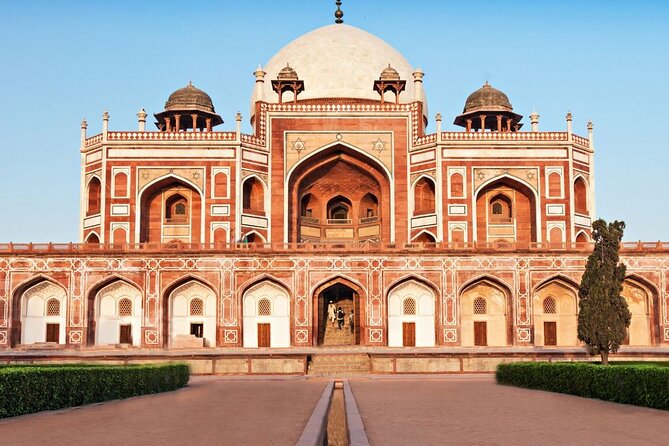
Next comes Humayun’s Tomb, the Mughal emperor Humayun’s resting place. It was commissioned by his first wife and chief consort, Empress Bega Begum. If you like architecture, you’ll notice how it feels like a prototype for later Mughal grandeur—strong geometry, gardens-in-the-mind, and a sense of intentional calm.
Then you roll into Qutub Minar, described as Delhi’s tallest monument for centuries and the most visited. This one is all vertical energy. When you’re surrounded by crowds, it can be easy to rush. Don’t. Take a moment, look up, and then come back down to the base where details start to make sense.
My practical take: day one works because it sets the theme early. You’re not bouncing randomly. You’re walking through layers of how Delhi became an imperial capital.
Chandni Chowk and the market energy you should plan for
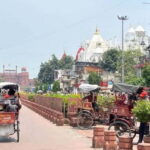
After the grand monuments, you shift to Pasar Chandni Chowk, known as Moonlight Square. It’s close to Old Delhi Railway Station and is described as one of the oldest and busiest markets in Old Delhi.
This stop is short—about an hour—but it can be a highlight if you treat it like orientation. The market lanes quickly show you what Old Delhi feels like day-to-day: compact, loud, and full of small businesses. If you’re shopping, keep your expectations realistic. If you’re just browsing, focus on sensory details: signage, spices, textiles, and the way people move through narrow streets.
A consideration: markets mean crowds and uneven footing. Comfortable shoes matter more than trying to look stylish.
Gurudwara Bangla Sahib: free langar, big human scale
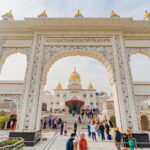
Not every tour adds a meaningful spiritual stop, and this one does. Gurudwara Bangla Sahib is a Sikh temple, and its main draw is the free kitchen (langar). The info here is specific: every day about 50,000 people have their meals without paying anything.
Even if you don’t practice Sikhism, the langar experience is about equality in action—people of all backgrounds eating together under one system. You’ll likely see volunteers working and visitors lining up. Keep it respectful: dress modestly, follow staff directions, and remember that you’re stepping into something living, not just something photographed.
You can get a full sense of this stop in about an hour, which makes it workable even in a packed day.
Lotus Temple and India Gate: modern religion meets a war memorial
After the Gurudwara, the route moves to Lotus Temple, a Bahá’í House of Worship. It’s known for its flowerlike shape made of 27 marble-clad “pedals” arranged in clusters to form nine sides. This is one of those places where the architecture does the talking. You’ll see why people describe it as calm—even while the area around it can be busy.
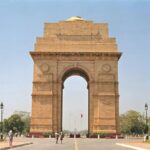
Then you stop at India Gate, a memorial to 84,000 soldiers of the British Indian Army who lost their lives between 1914 and 1921 in World War I. It’s a short stop—around 30 minutes—but it gives your trip an emotional counterweight. It’s not only monuments and rulers; it’s also the cost of conflict.



Overnight in Agra: the drive and why it matters
Once Delhi sightseeing wraps, you transfer to Agra by car. The timing listed is about 4 hours, and you’ll have your first night halt in Agra.
I like this structure because you don’t try to see Agra after a long day of Delhi. You get a clean reset: sightseeing ends, car ride happens, sleep happens, and then you do the iconic sights fresh the next day.
One practical note: the road time is fixed, so plan to be comfortable for the journey. If you’re sensitive to motion sickness, be ready.
Taj Mahal time: plan your viewing strategy
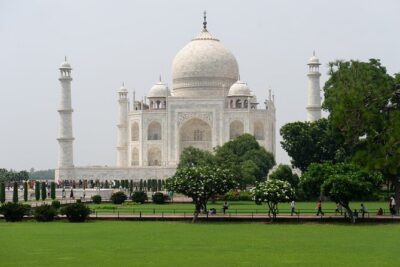
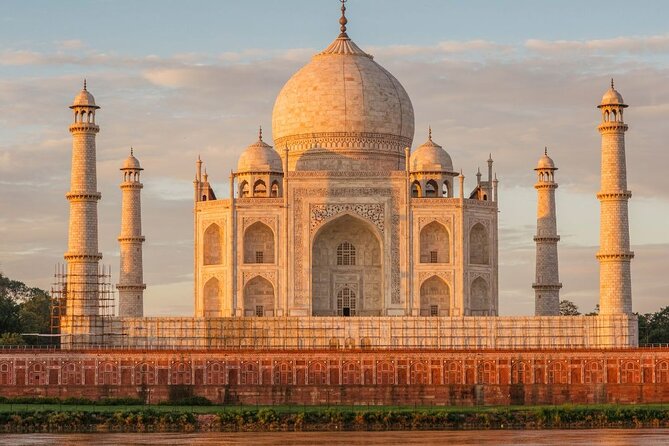
Day two is built around the Taj Mahal, described as an ivory-white marble tomb on the south bank of the Yamuna. It was established from 1631 to 1653 by Shah Jahan, with the help of 20,000 people (as stated). You’ll have about two hours for it.
Two hours sounds generous until you realize there’s always a rhythm: entry area, security checks, walking to the main view, photos, then returning for angles. With a guide, you’ll also get context that makes the details feel less random—why the symmetry matters, why the setting matters, and what to look for beyond the “postcard view.”
A standout guide story from feedback: Faizan was praised for patience while waiting for fog to lift at the Taj Mahal so photos and views improved. Even if you don’t experience fog, it’s a good reminder to stay flexible. Weather in this region can change your experience fast.
Agra Fort and Itmad-ud-Daula: more than just a photo stop
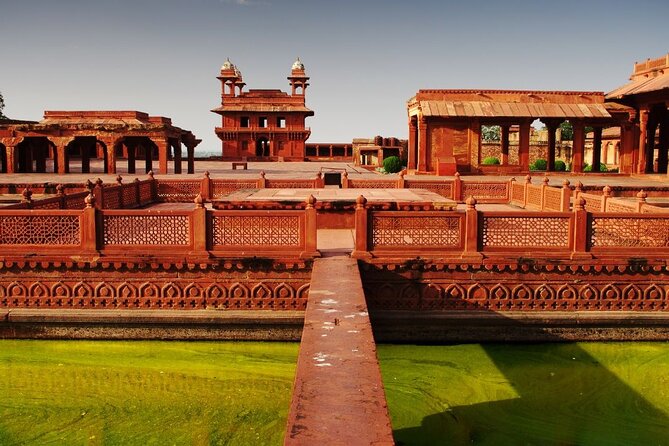
After the Taj, you visit Agra Fort, with about one hour. It was the main residence of Mughal emperors until 1638, when the capital shifted from Agra to Delhi, before it was captured by the British. That timeline gives the fort meaning. You’re not just looking at walls—you’re seeing a power center that changed hands.
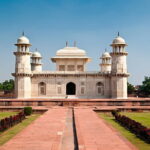
Then comes Itmad-ud-Daula (often called “Baby Taj”). The tour information describes it as a Mughal mausoleum, sometimes called a “jewel box,” and the nickname shows up for a reason: the scale is smaller than the Taj Mahal, but the detailing can feel sharp and intimate. You’ll have about one hour here.
How to make this pair work: after the Taj, your eyes may be overloaded. Use Agra Fort to zoom out (big walls, big layout), then use Itmad-ud-Daula to zoom in (ornament and proportions). That balance helps the day feel satisfying instead of repetitive.
Day 2 to Day 3 transfer: Agra to Jaipur (about 4 hours)
Once Agra sightseeing is done, you head to Jaipur by car—about 4 hours—and you’ll rest at the hotel overnight. This is another “smart logistics” move. Jaipur’s main sights are concentrated, but you still need a start that isn’t exhausted.
Since lunch and dinner are not included, think ahead for how you’ll handle food on travel days. You’ll have breakfast at the hotel (included), but you’ll want a plan for the rest.
Jaipur in one day: Jal Mahal, City Palace, Jantar Mantar
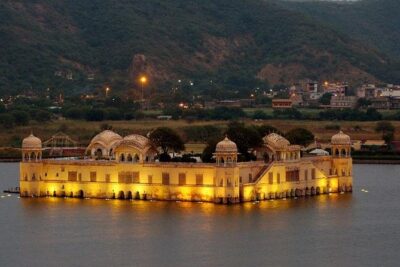
Day three starts with Jal Mahal, the palace in the middle of Man Sagar Lake. It was originally constructed in 1699, and the tour lists the time as about 15 minutes. You’ll likely appreciate it most as a visual break. Don’t expect this to be an in-depth site; it’s a quick look designed to get you oriented and excited.
Then you visit the City Palace of Jaipur for about two hours. It was established when Jaipur was founded, by Maharaja Sawai Jai Singh II, who moved his court there in 1727. This stop helps you understand that Jaipur wasn’t only buildings—it was an administrative and ceremonial center.
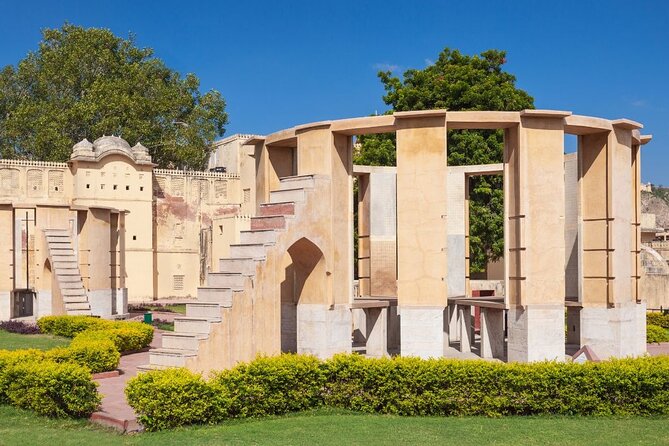
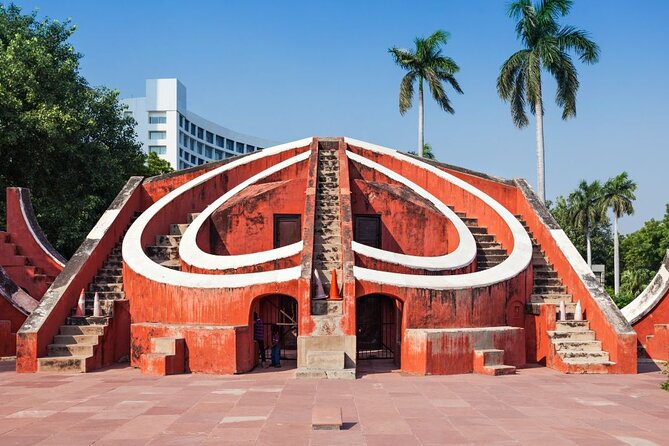
Next comes Jantar Mantar, a collection of nineteen architectural and astronomical instruments built by Sawai Jai Singh II and completed in 1734. You’ll spend about 45 minutes. If you like science-meets-empire, this is a great payoff. Even without deep technical knowledge, you’ll see how the instruments use scale and design to measure the sky.
Hawa Mahal: a short, iconic stop with real meaning
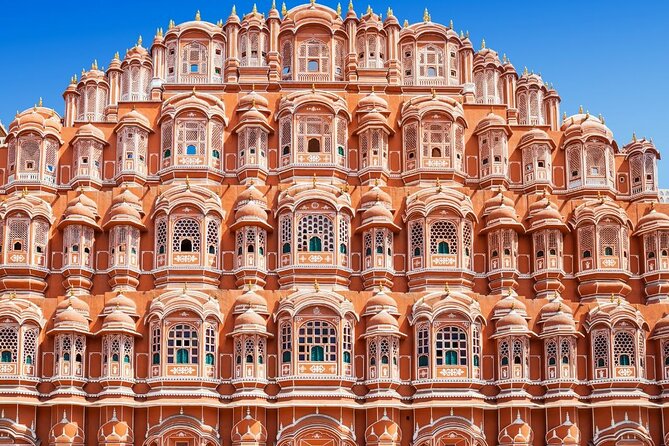
You finish Jaipur with Hawa Mahal (Palace of Wind), with about 30 minutes. The tour notes its unique beehive design and explains why it exists: it was made to help royal ladies observe daily life from behind the structure’s distinctive openings.
This is one of those sights where the photos are everywhere, but the explanation makes it land. Try to view it with the purpose in mind: not just a façade, but a design tool shaped by social needs.
After Jaipur sightseeing, you return to New Delhi for drop-off. The listed travel time is about 5 hours.
Price, inclusions, and what you should double-check
At $186.14 per person for a 3-day/2-night Golden Triangle, the big value question is how your option is set up—because some items are conditional:
- Hotel accommodation is listed as included only if you select that option.
- Monument entry tickets are included only if you select that option.
- Breakfast at hotels is included.
- Lunch and dinner are not included.
- Tips/gratuities are not included.
If your package includes hotel + entry tickets, this can be a strong deal for first-timers, because you’re paying for the hard parts: intercity driving, guide time, and ticket handling across multiple major sights. If hotel or entry tickets are not included, the price may still be fair, but you’ll need to budget add-ons.
Also note: the tour lists air-conditioned vehicle, tour guide, all fees and taxes, fuel surcharges, and a mobile ticket. Those details matter on a route like this where you don’t want surprises mid-trip.
Who this tour suits best (and who should consider a slower plan)
This tour fits you best if:
- You’re seeing India for the first time and want an efficient route.
- You like guided context and don’t want to juggle tickets.
- You prefer structured days with major stops in a logical order.
- You want a mix of big monuments and culturally important stops like Gurudwara Bangla Sahib.
You might want a different pace if:
- You hate short time windows at each place.
- You want deep, unhurried time at museums or one single site for hours.
- You’re traveling mainly for shopping in markets and would rather build more time there.
Should you book this Golden Triangle tour?
I’d say yes if you want a well-shaped introduction to the Golden Triangle with AC transport, a guide, and a route that makes sense: Mughal Delhi → Taj Mahal and Agra’s other icons → Jaipur’s royal-and-astronomy mix.
Book it with confidence if you’re also okay with a packed schedule and you plan your meals knowing lunch and dinner aren’t included. The strongest reason to choose it is the human factor: guide feedback highlights patience, accommodation, and clear explanations (with names like Faizan, Akash, Arif Khan, and Hemant standing out). That combination makes fast days feel less rushed.
FAQ
How long is the Golden Triangle tour?
The tour is listed as 3 days (approximately) with 2 nights.
Which cities are included?
You’ll visit New Delhi, Agra, and Jaipur, then return to New Delhi for drop-off.
Is pickup included?
Yes, pickup is offered.
Are monument entry tickets included?
Entry tickets are listed as included if option selected. Some stops are free, and others are included based on the option.
Is hotel accommodation included?
Hotel accommodation is listed as included if option selected.
What meals are included?
The tour includes breakfast at hotels. Lunch and dinner are not included.
What does the price include?
The tour lists all fees and taxes, air-conditioned vehicle, tour guide, hotel accommodation (if selected), breakfast, monument entry tickets (if selected), and fuel surcharges.
Is free cancellation available?
Yes. You can cancel for free up to 24 hours in advance for a full refund.
What kind of group setup is it?
It’s described as a private tour/activity, meaning only your group participates.