REVIEW · NEW DELHI
Delhi: Old Delhi Guided Tour with Rickshaw & Entry Tickets
Book on GetYourGuide →Operated by Golden Triangle Tour India by TCI · Bookable on GetYourGuide
Old Delhi hits you fast. This private half-day tour strings together Jama Masjid and a cycle rickshaw ride, with enough structure to keep the chaos fun. I especially like that your guide helps you connect the dots—both at the big sights and in the markets—and that one guide I saw praised by name, Mr Roushan Kumar, was super accommodating from start to finish. One thing to consider: it’s not a good fit if you have mobility limits, since the route includes walking and crowded stops.
The 5-hour pace feels realistic in India’s busiest neighborhoods. You’ll spend real time inside Jama Masjid, then move through Chandni Chowk and onward to other worship sites and memorials, with a photo stop at Red Fort from the outside. If Jama Masjid closes during prayer, you’ll still get alternative stops, so you’re not just stuck watching the schedule spin.
With the option that includes monument entry tickets and transport, you can spend less energy figuring things out and more energy noticing details. Just come ready to dress modestly (scarf helps), wear comfortable shoes, and accept that the market areas run crowded.
In This Review
- Key things you’ll notice on this Old Delhi plan
- The real value: guided Old Delhi that doesn’t feel like a checklist
- Jama Masjid: a big start with rules you’ll want to respect
- The cycle rickshaw through Old Delhi lanes
- Chandni Chowk walk and the market skills your guide teaches
- Khari Baoli: another market stop with guided clarity
- Gurudwara Bangla Sahib: a calm pause that still feels like Delhi
- Red Fort photo stop (outside only) and Raj Ghat’s quieter weight
- Price and logistics: when the right option saves real time
- The guide is the difference: Mr Roushan Kumar’s kind of service
- Who should book this Old Delhi tour, and who should skip it
- Should you book this tour?
- FAQ
- How long is the Delhi Old Delhi guided tour?
- Does the tour include a rickshaw ride?
- Are monument entry tickets included?
- Is pickup and drop-off included?
- What’s recommended to wear or bring for religious sites like Jama Masjid?
- Is the tour suitable for people with mobility impairments?
Key things you’ll notice on this Old Delhi plan
- Skip-the-line access with a separate entrance, so you lose less time at the door
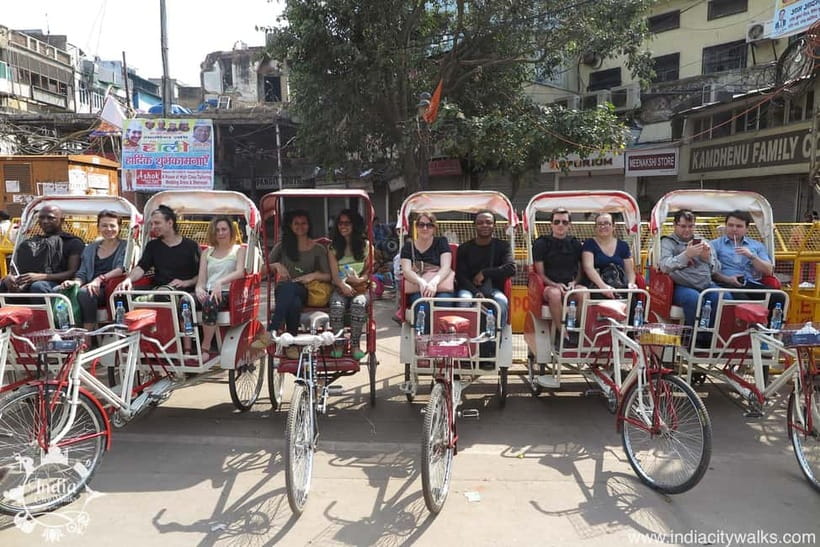
- A real cycle rickshaw ride through tight lanes around Chandni Chowk
- Market stops with guidance at Chandni Chowk and Khari Baoli, not just wandering
- Worship sites in the mix: Jama Masjid, then Gurudwara Bangla Sahib, with modest-dress reminders
- Red Fort is outside only, plus Raj Ghat for a quieter, reflective finish
- English, French, Spanish, or Russian guide options, with a private group feel
The real value: guided Old Delhi that doesn’t feel like a checklist

Old Delhi can be overwhelming fast—noise, smells, crowds, and touts all at once. What I like about this tour is that it gives you a clean route with built-in explanations, so you’re not just staring at landmarks without context. The guide’s job isn’t to lecture. It’s to help you read what you’re seeing as you go.
You also get a practical rhythm. The day starts with Jama Masjid (where you’ll actually have time), then you shift into market walking, then you taper into calmer stops. That matters because Old Delhi is not just “see a place,” it’s “be in a place.” Having a guide keeps you oriented when the streets narrow and the shopping gets intense.
If you choose the all-inclusive option, you also get transport and monument entry tickets bundled in. For a price like $2.61 per person, that’s the part that can feel almost too good to be true. The smartest way to think about it: you’re paying for a private guide, time-saving access, and an organized flow through several major stops—rather than paying for one monument and hoping the rest works out.
You can also read our reviews of more tours and experiences in New Delhi



Jama Masjid: a big start with rules you’ll want to respect
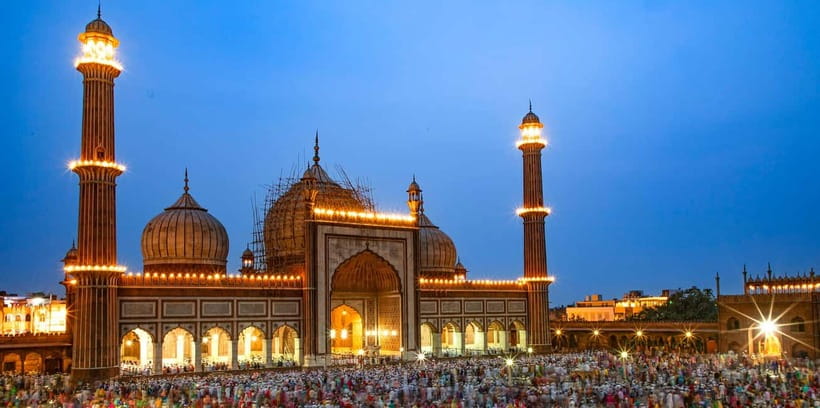
Jama Masjid sets the tone. It’s described as one of the largest mosques in India, built by Mughal emperor Shah Jahan, and it carries a lot of spiritual energy. You’ll get about 1.5 hours here with guided time, which is long enough to do more than just snap photos and rush out.
This is also where practical details matter. You’ll want comfortable shoes, and the tour specifically asks for a scarf—useful for dressing modestly. The tour also notes that shorts and sleeveless shirts aren’t allowed, and you won’t want to plan any indoor smoking.
One more thing: Jama Masjid may close during prayer. The good news is you’re not left idle—alternate stops are offered. That flexibility is a big deal in real-world sightseeing, because religious sites follow their own timetable, not yours.
Why I think this start works: by the time you leave Jama Masjid, you’ve already learned how to look at Old Delhi’s architecture and spiritual life. Then the markets make more sense, because you understand the neighborhood as more than “places to buy stuff.”
The cycle rickshaw through Old Delhi lanes
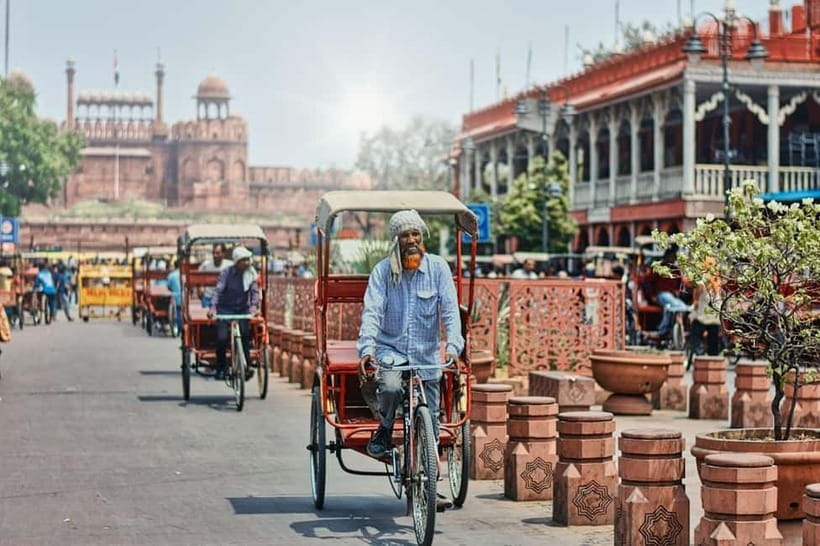
After Jama Masjid, you hop on a traditional cycle rickshaw for a short ride. The stop is timed at about 15 minutes, which keeps it from becoming a slow, overly long transit moment. You’ll travel through narrow, busy lanes, and the guide helps you interpret what you’re passing.
This part is worth it for two reasons. First, it changes the angle. When you’re on foot, you’re stuck in the crowd’s flow. On the rickshaw, you get a moving viewpoint and can spot how the lane layouts connect markets and worship areas.
Second, it helps with energy management. Old Delhi walking adds up. A brief rickshaw transfer gives you a mental reset without cutting the sightseeing.
If you’re sensitive to crowds, keep your expectations realistic. This is shared within your private group and guided by a local guide, so it’s not a silent scenic ride. It’s part transport, part street-level introduction.
Chandni Chowk walk and the market skills your guide teaches
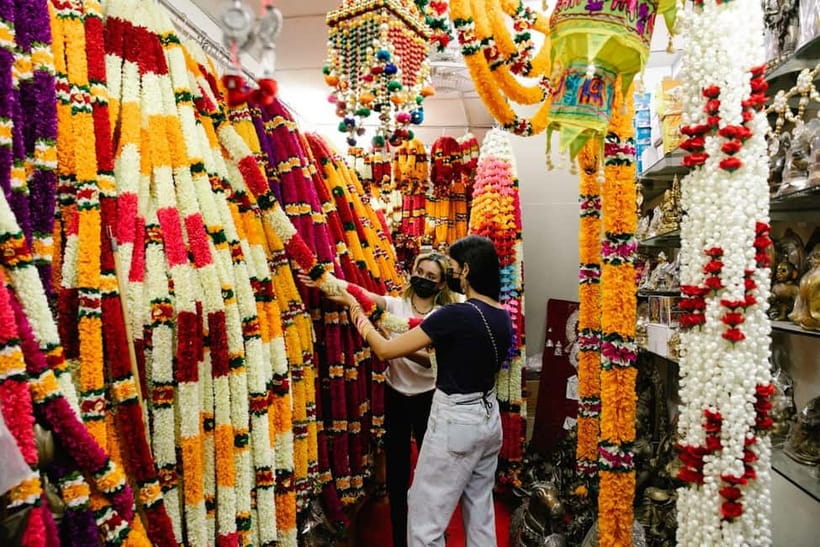
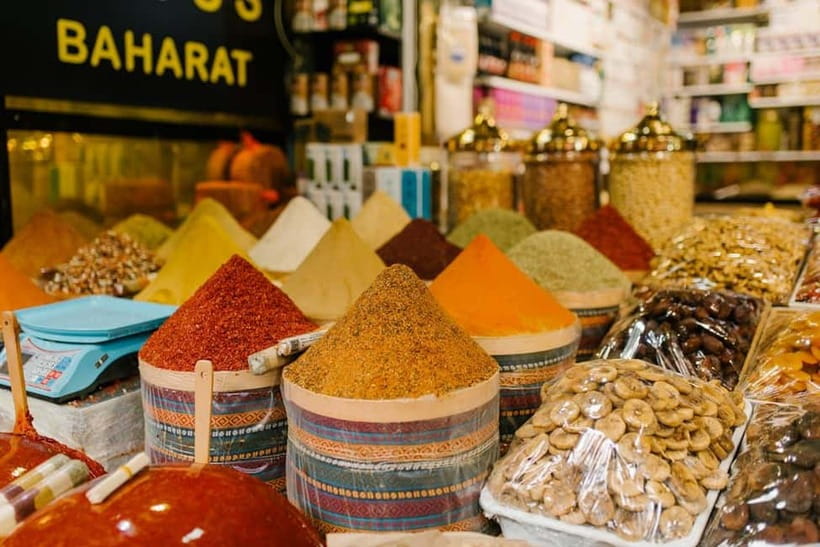
Chandni Chowk is the heart of the shopping circuit here. You’ll get about 1 hour for a guided visit and walk, with the guide pointing out the kind of stalls you’ll see: spices, saris, silver, sweets, and wedding-related items. That’s more helpful than it sounds.
In market streets, it’s easy to get lost in the noise and end up shopping just to stay busy. With guidance, you’ll learn what to look for and why different areas feel different. The tour also specifically calls out the spice market and highlights that there are historic havelis hidden in alleyways—exactly the sort of thing you’d miss if you’re only following the main road.
There’s also a built-in reality check: the tour warns that Chandni Chowk gets crowded. Plan your body for that. Comfortable shoes are non-negotiable, and expect slower progress in tight lanes.
If you like people-watching, this is a great section. But if you hate negotiating with shopfronts and the street energy, you’ll want to keep close to your guide and stick to the plan. The guide’s job is to help you navigate and interpret, not just escort.
Khari Baoli: another market stop with guided clarity

Next comes Khari Baoli, with about 1 hour for a guided visit. The tour frames it as another key stop for seeing daily commerce beyond the obvious tourist line.
I like this placement in the route. By the time you reach Khari Baoli, you already have context from Chandni Chowk. So you’re not starting from zero. You’re comparing. You can also notice how different markets feel even when they sell similar categories of goods.
Like Chandni Chowk, this is an area where your senses will be doing overtime. Your best tool here is your guide’s narration. You’ll get direction on what you’re looking at, what to watch for, and how to move through the space without getting stuck in the crowd.
You can also read our reviews of more guided tours in New Delhi






Gurudwara Bangla Sahib: a calm pause that still feels like Delhi
After the busy lanes and markets, you’ll stop at Gurudwara Bangla Sahib for around 30 minutes with guided time. This is a change of pace, and it’s not just a break—it’s a shift in mood.
The tour repeatedly flags modest dress for religious sites, and that’s the right mindset here too. Even if you’re not particularly religious, the “how you behave” part of visiting places of worship is the point. Think: slower pace, respectful posture, and letting the setting guide your behavior.
Why this matters in a half-day: it prevents your day from turning into pure shopping chaos. It also makes the tour feel like more than monuments. Old Delhi isn’t only built heritage. It’s also active faith communities and daily rituals.
Red Fort photo stop (outside only) and Raj Ghat’s quieter weight
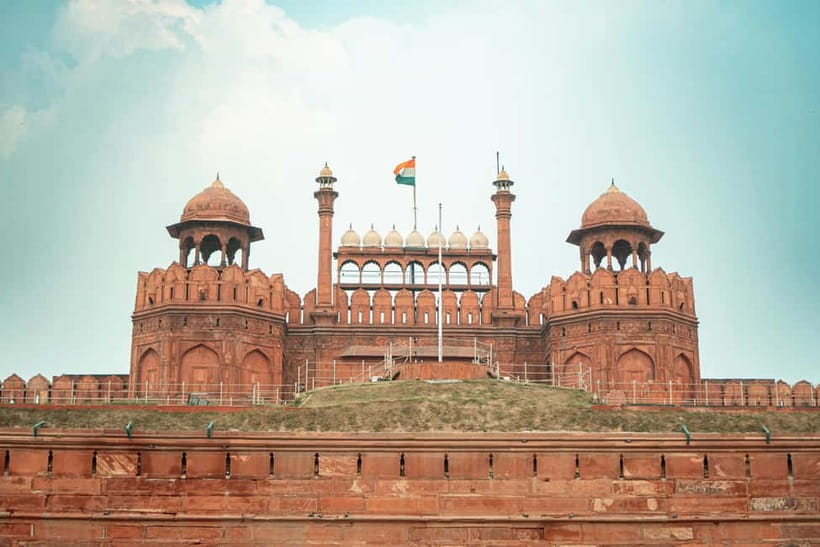
You’ll see Red Fort with a 15-minute photo stop and a pass-by. The tour is clear that you’ll only view it from the outside, and interior access needs more time. That’s a practical heads-up. If your main goal is deep time inside Red Fort, you’ll need a longer plan elsewhere.
Still, the outside view is a strong payoff if you’ve already learned the broader Mughal story through your guide. Seeing the imposing walls from the right angle can be satisfying, even without the interior.
Then you transition to Raj Ghat, with about 45 minutes for a guided visit. Raj Ghat is described as a memorial to Mahatma Gandhi. This stop brings the day’s tone down—less commercial street energy, more reflection.
If you want a route that balances spectacle with meaning, this pairing works. Red Fort gives you scale and atmosphere; Raj Ghat gives you stillness.
Price and logistics: when the right option saves real time
On paper, $2.61 per person is extremely low for a 5-hour private guided plan. The key is that the tour offers different booking options, and what you get can change depending on the package you choose.
Here’s the value logic I’d use:
- If you pick Guide Only, you’re mainly buying the narrative and direction.
- If you pick Guide + Rickshaw + Private Car, you’re also buying smooth movement across Delhi/NCR and not having to coordinate getting from stop to stop.
- If you pick All-Inclusive, you get the private car plus monument entry tickets too.
In a place like Old Delhi, time lost to lines and awkward transfers can hurt more than you expect. That’s why skip-the-line access and optional transport + entry tickets can turn a “nice tour” into a genuinely efficient half-day.
For transport, the tour uses air-conditioned vehicles with driver, and it even specifies vehicle sizes:
- 1–2 people: Toyota Etios or similar
- 3–5 people: Toyota Innova or similar
- 6–10 people: Tempo Traveler
Pickup and drop-off are also available depending on your chosen option, including areas like Delhi, Gurugram, Noida, Aerocity, Ghaziabad, and Faridabad. That matters if you don’t want to spend your morning figuring out how to reach the starting area.
The one small comfort add-on I appreciate: bottled water is included. It’s a small line item, but it helps when you’re out in the heat and street air.
The guide is the difference: Mr Roushan Kumar’s kind of service
A guide can make the whole day feel like a conversation instead of a schedule. In one verified booking, the guide Mr Roushan Kumar was praised for being super accommodating and for going out of his way to make sure the experience was comfortable—especially around pickup and drop-off.
That kind of service shows up most in the details: pacing you through crowded spots, keeping you from drifting, and making sure you understand what you’re looking at before you get swept up by the noise. When you’re doing Old Delhi by half-day tour, the guide’s attitude becomes part of the itinerary.
If you care about learning why places matter (architecture, faith spaces, market logic), this tour leans into that. You’re not just shown sights—you’re taught how to see them while you’re standing right there.
Who should book this Old Delhi tour, and who should skip it
This is a strong match if you want:
- a private group feel without planning every turn
- a blend of markets + major sites (not only one type of sightseeing)
- help with orientation in places that get crowded fast
It’s less suitable if:
- you’re pregnant
- you have mobility impairments
- you’re not comfortable with crowded market walking and religious-site dress expectations
Also, if you’re the type who hates rules at places of worship, note the tour’s clear guidance: modest dress is required, and certain clothing isn’t allowed. If that’s a hassle, you might feel friction.
Finally, do bring what the tour asks for: passport, cash, comfortable shoes, and a scarf. The cash piece is useful in markets where card payment may not be the focus.
Should you book this tour?
If your goal is a smooth, guided Old Delhi half-day—markets plus major landmarks—this is an easy yes. The biggest reasons are the structure (time at Jama Masjid, then guided market walking, then calmer stops), plus the practical options for transport and entry tickets. You’re buying convenience, and that’s a real benefit when you only have a limited window.
I’d especially recommend booking if you want help understanding what you’re seeing. Chandni Chowk and Khari Baoli aren’t “stand and look” places. They’re busy systems. A good guide helps you read them without feeling like you’re fighting the street.
One last thought: choose the option that fits your comfort level. If you don’t want to manage logistics, go for the package that includes a private car. If you’re already handling transport, the guide + rickshaw combination still makes sense, since the rickshaw piece adds that street-level perspective you won’t get from walking alone.
FAQ
How long is the Delhi Old Delhi guided tour?
The tour lasts about 5 hours.
Does the tour include a rickshaw ride?
It depends on the option you select. The tour offers options that include a traditional cycle rickshaw ride.
Are monument entry tickets included?
Entry tickets are included only if you choose the all-inclusive option that lists monument entry tickets.
Is pickup and drop-off included?
Pickup and drop-off are available depending on the option. Pickup is listed for accommodations in Delhi, Gurugram, Noida, Aerocity, Ghaziabad, and Faridabad, where the option includes transport.
What’s recommended to wear or bring for religious sites like Jama Masjid?
The tour suggests bringing a scarf and dressing modestly. It also notes that shorts and sleeveless shirts are not allowed.
Is the tour suitable for people with mobility impairments?
No. The tour is listed as not suitable for people with mobility impairments, and it is also not suitable for pregnant women.