REVIEW · NEW DELHI
Delhi: Private Old & New Delhi Guided Full or Half Day Tour
Book on GetYourGuide →Operated by India Holiday Plan · Bookable on GetYourGuide
Delhi feels like two cities in one.
That’s what makes this private Old & New Delhi tour such a smart way to see the best of the capital without wasting half your day finding your bearings. You’ll move between Mughal-era landmarks, major modern sights, and a working Sikh temple where the community kitchen feeds thousands daily.
I especially like the Old Delhi rickshaw ride through Chandni Chowk and the way your guide turns big sights into real places. The other standout for me is Gurudwara Bangla Sahib and its Langar kitchen, because you’re not just looking at buildings—you get a clear, human view of everyday religious life.
The main thing to consider is pacing. Half-day options can feel tight once you’re factoring in traffic, photos, and time for entries, so if you hate rushing, lean toward a longer window.
In This Review
- Key highlights at a glance
- How the Old + New Delhi mix saves your day
- Pickup and the flexible start window that actually matters
- Old Delhi: Jama Masjid, rickshaw lanes, and photo-proof contrasts
- Red Fort outside photos: worth it, but don’t expect a long stop
- Gurudwara Bangla Sahib: the Langar part is the unforgettable one
- New Delhi start points: Lotus Temple, then the big monument circuit
- India Gate area photo stops: quick, but good context
- Qutub Minar and Agrasen ki Baoli: two very different time machines
- Time, entries, and your guide’s role in the flow
- Comfort extras that quietly improve the experience
- Price at $18: why it can be good value (and what to budget for)
- Who this tour fits best in your Delhi plan
- Should you book this Old & New Delhi guided tour?
- FAQ
- How long is the tour?
- What time can I start the tour?
- Where do you pick me up?
- What’s included in the tour price?
- Is food included?
- Will I need to buy monument tickets?
- Do I get skip-the-line access?
- Is the tour available in English?
- What happens on Mondays?
- Can the tour be adjusted to my flight time?
Key highlights at a glance
- Old Delhi rickshaw ride through Chandni Chowk’s spice market lanes
- Jama Masjid inside access with architecture and history explained by your guide
- Gurudwara Bangla Sahib Langar and the daily community meal for 50,000+ people
- New Delhi landmarks including Lotus Temple, Humayun’s Tomb, Qutub Minar, and India Gate-area photo stops
- Skip-the-line entry using a separate entrance for included monuments (when selected)
- Private car + flexible start time with pickup anywhere in Delhi and nearby cities
How the Old + New Delhi mix saves your day
Delhi is huge, and the neighborhoods feel different enough to trick your brain. Old Delhi gives you the sensory overload: crowded markets, towering mosques, and lanes where history is still in motion. New Delhi is more spaced out and planned, with big monuments and government buildings that tell a different story.
This tour works because it pairs both sides into one route. I like that you’re not forcing yourself to return later just to see the other half of the city. You also get the advantage of a private guide instead of piecing together buses, tickets, and guessing the shortest walking route.
You can also read our reviews of more guided tours in New Delhi



Pickup and the flexible start window that actually matters
You can start between 6:30 AM and 4:00 PM, which is more useful than it sounds. Morning tends to feel easier for monument time and photos, but afternoon can work if you’re arriving late or want a slower rhythm.
Pickup is broad: your hotel, the airport, or any location in Delhi, Gurugram, Noida, Ghaziabad, or Faridabad. That matters because first-day Delhi logistics can be a headache, and being picked up where you are lets you get on with seeing sights rather than figuring out transport.
You’ll ride in an air-conditioned car, and after the tour you’ll be dropped back at your chosen location—again in Delhi or nearby cities. It’s a small detail, but it prevents the end-of-day scramble when you’re tired and traffic is thick.
Old Delhi: Jama Masjid, rickshaw lanes, and photo-proof contrasts
The Old Delhi portion starts with Jama Masjid, one of India’s largest mosques. The biggest win here is going inside, not just taking photos from outside. Your guide shares facts and stories about the mosque’s architecture and history as you’re there, so the place clicks faster than if you’re reading alone.
Next comes Chandni Chowk, and this is where the tour turns from sightseeing into experience. You’ll take a traditional rickshaw ride through the lanes, which is the most practical way to handle the crowd density without losing your whole day to slow walking.
Chandni Chowk’s spice market is the kind of place where color and smell hit you all at once. I like that the guide helps you understand what you’re seeing as you pass stalls, rather than it becoming random sensory overload. If you’re photo-focused, this is also where your camera will get the most action—think close-up textures, hanging goods, and street scenes.
Red Fort outside photos: worth it, but don’t expect a long stop
After Chandni Chowk, you’ll get an outside view of the Red Fort. This is mainly a photo opportunity, so the value is seeing the monument from a good viewpoint and placing it in the bigger Old Delhi picture your guide is building.
If you want more time inside Red Fort itself, you’ll likely need a different add-on. Still, even an outside stop can be satisfying when it connects the dots between Jama Masjid, market life, and the Mughal-era scale you’re seeing across Old Delhi.
Gurudwara Bangla Sahib: the Langar part is the unforgettable one
The tour continues to Gurudwara Bangla Sahib, a major Sikh temple in Delhi. You’ll learn about Sikh beliefs, and then the standout moment is seeing the community kitchen—Langar—which serves food daily to over 50,000 people free of charge.
This is one of those visits that changes your view of travel. You’re not only touring a landmark; you’re witnessing how faith becomes practical service. It also helps that Langar isn’t a one-time event for visitors. It’s a functioning system that runs every day, which gives the visit real weight.
Dress and etiquette matter at any place of worship, and you’ll want to follow local instructions. If you’re unsure, your guide can help you understand what to expect so you don’t feel awkward in the moment.
You can also read our reviews of more private tours in New Delhi





New Delhi start points: Lotus Temple, then the big monument circuit
When the tour shifts into New Delhi, you start with Lotus Temple. It’s known for its peaceful environment and unique design, and it’s a nice reset after the intensity of Old Delhi. Even if you’re not a design person, you’ll feel the change in atmosphere.
One practical note: Lotus Temple is closed on Mondays. On those days, the itinerary swaps to Raj Ghat instead. If you’re traveling on a Monday, don’t worry—your schedule is designed to keep you moving to a key historical stop rather than leaving you stuck.
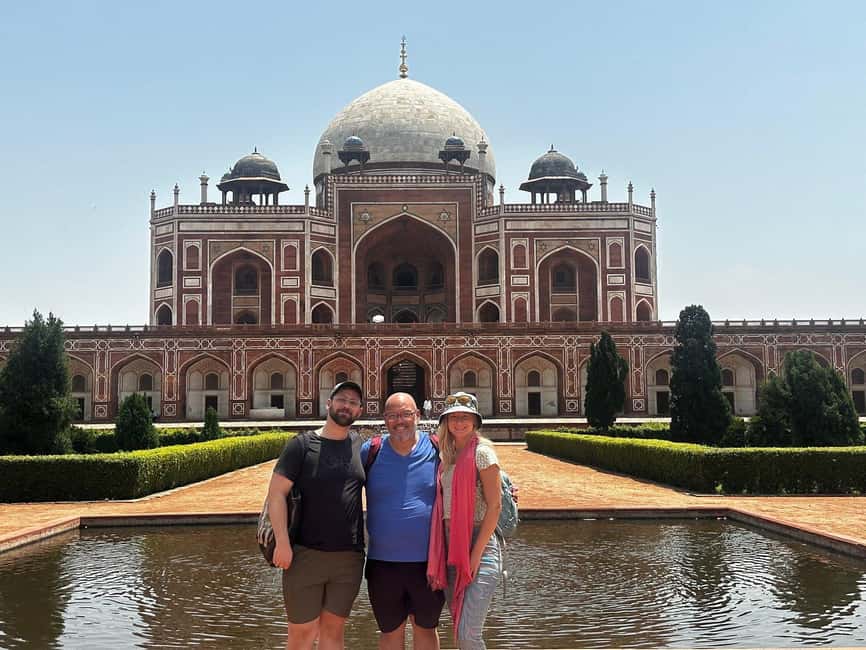
From there, the route usually includes Humayun’s Tomb, a UNESCO World Heritage Site that influenced the design of the Taj Mahal. This stop is especially useful if you want to understand how Indian architecture evolved, not just look at finished icons. Again, your guide’s explanations help you spot the ideas you might otherwise miss.
India Gate area photo stops: quick, but good context
You’ll drive past India Gate, the Presidential Residence, and Parliament House for photo stops and commentary. These are not long museum-style visits, but they’re valuable for grasping where modern Delhi sits and how the city projects power and governance.
If you like photography, these are straightforward opportunities to capture Delhi’s wider avenues and monumental government-era geometry without burning your day walking. If you dislike car time, you can still treat these as quick breaks rather than pure transit.
Qutub Minar and Agrasen ki Baoli: two very different time machines
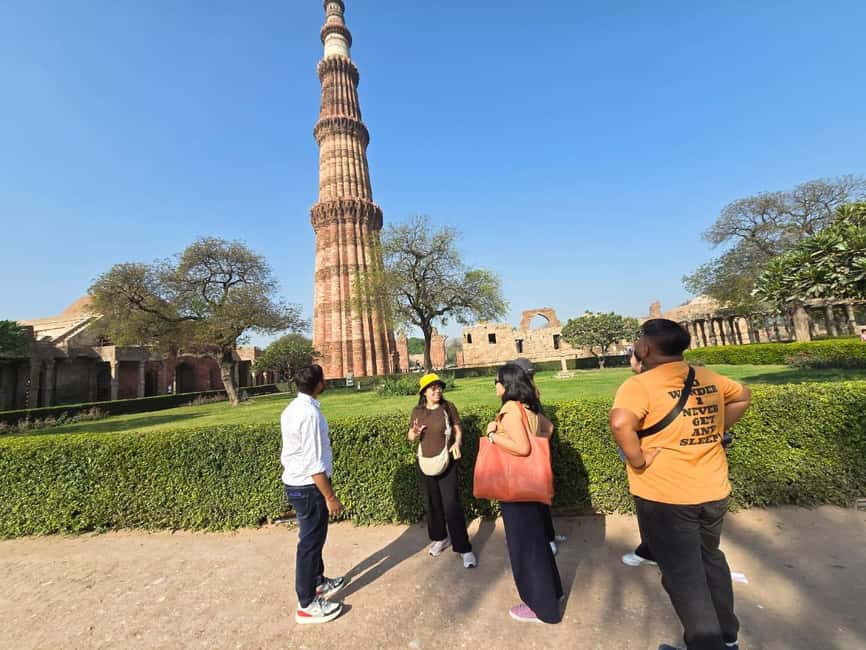
A key New Delhi highlight is Qutub Minar, a soaring 12th-century minaret and one of the city’s top attractions. I like that this stop gives you historical depth after the Mughal-era focus of Humayun’s Tomb. It’s a different period, a different style, and a different kind of landmark to wrap your head around.
Later you’ll visit Agrasen ki Baoli, a historic stepwell located in the heart of Delhi. This is the kind of place that rewards you for slowing down, because it’s less about grand open spaces and more about atmosphere. It also balances the trip nicely: after soaring monuments, you get a strong sense of place in something more tucked-in and quiet.
Time, entries, and your guide’s role in the flow
A private tour means you’re not waiting for a big group to shuffle forward. Still, you’re dealing with real Delhi timing—traffic, crowd levels, and the fact that entry lines vary by monument.
This is why the separate entrance for skip-the-line access can matter. It doesn’t remove every delay, but it reduces the worst-case scenario at busy sites, and it helps you keep your day moving.
Your guide plays a big part in how smooth it feels. In one example described by a previous guest, the guide Shalini stood out for clear, enjoyable explanations and a high level of energy, plus help with great photos. Even if you don’t get the same guide, the role is consistent: turning stops into a connected narrative and keeping your route efficient.
Comfort extras that quietly improve the experience
A few inclusions seem small until you’re actually in the heat, crowd, or both. You’ll have bottled water and umbrellas, plus parking fees and taxes handled in the tour price. That means you won’t keep making last-minute purchases or searching for change at every turn.
The car is air-conditioned, which is a lifesaver during the transit stretches between Old and New Delhi. Even with a great itinerary, comfort is what lets you enjoy the monuments once you arrive.
Also, this is a private group tour, so you aren’t negotiating pacing with strangers. You can focus on what you care about—photos, extra time at one stop, or just moving steadily and not feeling rushed.
Price at $18: why it can be good value (and what to budget for)
At about $18 per person, the big value is that you’re paying for a bundle: pickup and drop-off, a live English guide, air-conditioned transport, and the Old Delhi rickshaw ride. Add in umbrellas, water, and the practical help of getting skip-line entry when the option is selected, and the price starts looking like a bargain compared to doing it piece by piece.
The main cost you should plan for is food. Drinks and meals are not included, so you’ll want to budget for lunch or snacks depending on whether you choose half-day or full-day.
Another detail: monument entry tickets are included only if you select that option. If you don’t, you may pay for certain entries separately on the day. Either way, it’s smart to confirm what’s included before you set your expectations.
Who this tour fits best in your Delhi plan
This tour is a strong choice if you want an organized best-of route with minimal stress. It’s especially good for first-timers who feel overwhelmed by Delhi’s size, or for anyone with limited time who still wants both Old and New Delhi highlights.
If you’re traveling solo or as a couple, the private format makes the day feel personal. If you’re traveling with family, the private setup can help you manage slower pacing at religious sites.
It’s also a fit if you care about context. The stops aren’t just names on a list; your guide is there to explain architecture, beliefs, and what connects one landmark to the next.
The one group that might hesitate is people who hate any itinerary structure. You’ll get flexibility in the schedule adjustments (including flight timing), but it’s still a tour route. If you want wandering time with zero plan, you may prefer a driver-for-the-day and build your own route.
Should you book this Old & New Delhi guided tour?
I’d book this if you want the fastest path to a high-impact Delhi day: Old Delhi markets with a real rickshaw ride, major landmarks in both halves of the city, and an included guide who helps you understand what you’re seeing. At this price point, the combination of private transport, guided storytelling, and skip-line access is hard to beat.
You might skip it if you know you want long, unstructured time in one neighborhood, or if you dislike set routes and fixed stop durations. If your schedule is tight, consider choosing the longer option so the day doesn’t feel compressed.
If you do book, pack light, bring your passport or ID card, and plan for food costs since meals aren’t included. And if you’re visiting on a Monday, remember Lotus Temple closes and Raj Ghat replaces it—so your day still stays complete.
FAQ
How long is the tour?
It runs for 4 to 8 hours, depending on the option you choose.
What time can I start the tour?
You can start any time between 6:30 AM and 4:00 PM.
Where do you pick me up?
Pickup is available from your hotel or the airport, or from any location in Delhi, Gurugram, Noida, Ghaziabad, or Faridabad.
What’s included in the tour price?
Included are hotel or airport pickup and drop-off, air-conditioned transport, a live English guide, bottled water and umbrellas, parking fees and taxes, and a rickshaw ride in Old Delhi. Monument entry tickets are included only if you select that option.
Is food included?
No. Food and drinks are not included.
Will I need to buy monument tickets?
That depends on the option you select. Monument entry tickets are included if that option is selected.
Do I get skip-the-line access?
Yes, the tour includes skip-the-line access through a separate entrance.
Is the tour available in English?
Yes. The live tour guide is English.
What happens on Mondays?
Lotus Temple is closed on Mondays, so the tour visits Raj Ghat instead that day.
Can the tour be adjusted to my flight time?
Yes. The itinerary can be adjusted to match your flight schedule.