REVIEW · NEW DELHI
Same Day Jaipur Tour By Car
Book on Viator →Operated by Perfect India Trip · Bookable on Viator
Jaipur in one day sounds almost unreal. That’s what makes this tour work: you get a packed route through the Pink City with a guide, so the big sights make sense fast instead of feeling like random photo stops. I especially like how the itinerary strings together iconic buildings—Hawa Mahal to Jantar Mantar—so you see Jaipur’s royal life and science mindset side by side.
One thing to consider: it’s a long day, about 7 to 8 hours, and the stops are timed. If you want slow wandering, deep museum time, or lots of shopping breaks, you’ll feel the pace.
In This Review
- Key highlights at a glance
- From New Delhi to Jaipur’s top hits in one tight day
- The car ride matters more than you think
- Hawa Mahal: the palace built for watching life
- City Palace of Jaipur: royal power meets present-day rooms
- Jantar Mantar: a stone observatory you can actually grasp
- Royal Gaitor Tumbas: calm tombs under Nahargarh
- Jal Mahal on Man Sagar Lake: postcard views with a quick stop
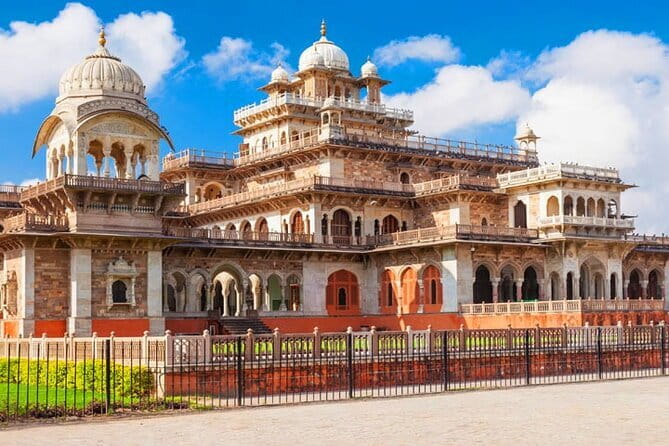
- Albert Hall Museum: art and artifacts with structure
- The free bonus: Jaipur Fort time without extra ticket cost
- Price and value: why $10 can feel unusually practical
- What the guided format adds (and what it can’t fix)
- Who should book this, and who should skip it
- Should you book this same-day Jaipur tour?
- FAQ
- How long is the Jaipur tour?
- Do I get pickup and transportation?
- What is included in the price?
- Are entrance tickets included?
- Is this tour private?
- What is not included?
- Can I cancel for a refund?
Key highlights at a glance
- Private A/C car with pickup and transfers to cut down stress on a long travel day
- Professional guide who keeps the sites readable and meaningful
- Iconic Jaipur sequence: Hawa Mahal → City Palace → Jantar Mantar → Jal Mahal → Albert Hall
- Admissions included for most major stops, plus a free Jaipur Fort segment
- Bottled water and an organized route so you can focus on the sights
From New Delhi to Jaipur’s top hits in one tight day
Doing Jaipur right usually means at least two days. This tour is the “I only have one day” solution, and it’s built around an efficient idea: hit the most recognizable landmarks while you still have energy and daylight. The payoff is momentum. One stop informs the next.
You’ll also like the flow if you’re the type who wants landmarks but also wants context. A good guide helps you spot what’s special in each place—window grids, palace design, stone astronomy, royal tombs—so you’re not just staring at pretty architecture and hoping it sticks.
The trade-off is simple: you can’t slow down enough to “live” in each spot for hours. You’ll get smart exposure, not a full, leisurely immersion.
You can also read our reviews of more tours and experiences in New Delhi.



The car ride matters more than you think

This tour runs with an A/C car and a friendly driver, plus private professional guiding. That matters because Jaipur’s big sightseeing blocks can be tiring when you’re bouncing between locations with separate transport and unreliable timing. Here, transfers are included along with fuel, parking, and taxes—so you’re not constantly budgeting for small extras.
Also, this is listed as a private tour for your group. That usually means less waiting around for random strangers to arrive late, and it makes it easier to ask your guide questions on the spot. If you want time for quick photos or a question about a building’s purpose, a private rhythm helps.
My practical tip: wear comfortable walking shoes. Even though many stops are about an hour or less, you’ll still move through ticket areas and courtyards, and Jaipur’s heat can add up.
Hawa Mahal: the palace built for watching life
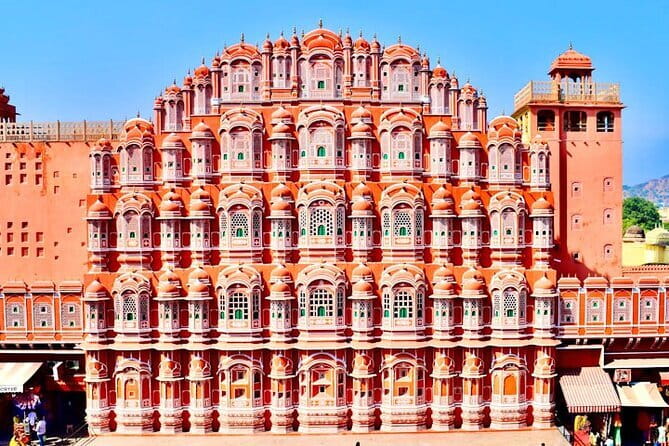
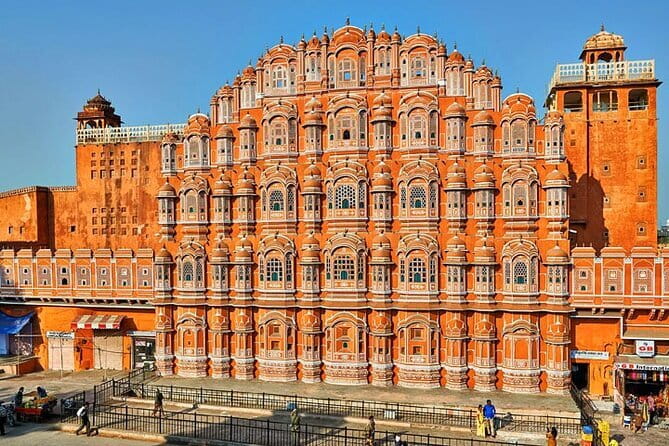
The day starts with Hawa Mahal (Palace of Wind), Jaipur’s most photographed landmark. Built by Sawai Pratap Singh, it was designed so the royal household could observe everyday city life. That’s a fun twist: you’re not only seeing the exterior beauty—you’re also stepping into the design logic behind it.
Why it’s worth the first stop:
- It sets a tone for the whole day: Jaipur’s royal storytelling isn’t just grand halls, it’s also everyday scenes and clever design.
- The architecture is full of repeating windows and honeycomb-like structure. With a guide, you learn what you’re looking at instead of guessing.
A consideration: time here is about 1 hour and it’s a very “see it, understand it, and move on” type of visit. If you want long indoor exploration, plan to come back on another trip.
City Palace of Jaipur: royal power meets present-day rooms
Next comes the City Palace of Jaipur, tied to Maharaja Jai Singh. This is the kind of place where you can feel layers—where royal heritage meets what’s used today. The description highlights that it’s partly the home of the erstwhile royal family, which gives the site a living, ongoing quality rather than a totally frozen museum.
You get about 2 hours here, and that’s a good window for a guided visit. You’ll likely spend time appreciating:
- The palace complex as an architectural statement
- The way the royal family’s legacy still shapes parts of the site
One drawback: a palace can be busy and detailed. If you’re tired from travel, you might feel like there’s a lot to absorb. That’s where your guide helps you pick the key rooms and design elements so you don’t leave with “I saw a lot of stuff” but no clear takeaways.
Jantar Mantar: a stone observatory you can actually grasp
Then you reach Jantar Mantar – Jaipur, a UNESCO World Heritage site. The big idea here is that Jaipur’s rulers used science as a tool of governance and exploration. This complex features nineteen architectural and astronomical instruments, including the world’s largest stone sundial.
You’ll get about 1 hour, and this is one of those stops where timing is perfect. You’re not trapped for half a day, but you’ll still have time to understand how the instruments work and why they were built in this form.
Why I like this stop in a same-day route:
- It balances the palaces with something grounded in measurement and design.
- It’s visually striking. Even if you don’t remember every detail, you remember the giant stone instruments.
A consideration: if you’re sensitive to sun or heat, spend a little time pacing yourself here. Stone surfaces can feel intense on long, bright afternoons.






Royal Gaitor Tumbas: calm tombs under Nahargarh
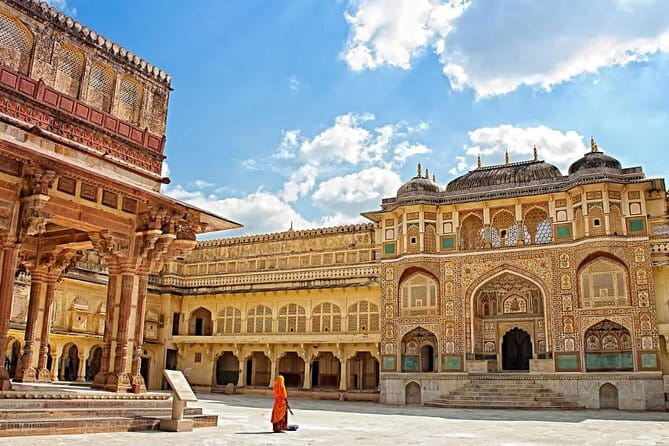
After the busy icons, you shift gears to Royal Gaitor Tumbas, a set of royal tombs holding remains including Pratap Singh, Madho Singh II, and Jai Singh II. It’s described as being located beneath Nahargarh Fort, in a more secluded area with a quieter atmosphere than the main sightseeing core.
You’ll have about 30 minutes, including admission. That short timing makes sense here: you’re there to understand the importance of the royal lineage and then pay respects, not to linger for a full museum-length visit.
What to expect:
- A more reflective pause in your day
- Fewer photo stops than the big monuments, but a different kind of historical focus
A practical note: because it’s a smaller, quieter stop, you’ll benefit from paying attention to what your guide explains about the people connected to the tombs.
Jal Mahal on Man Sagar Lake: postcard views with a quick stop
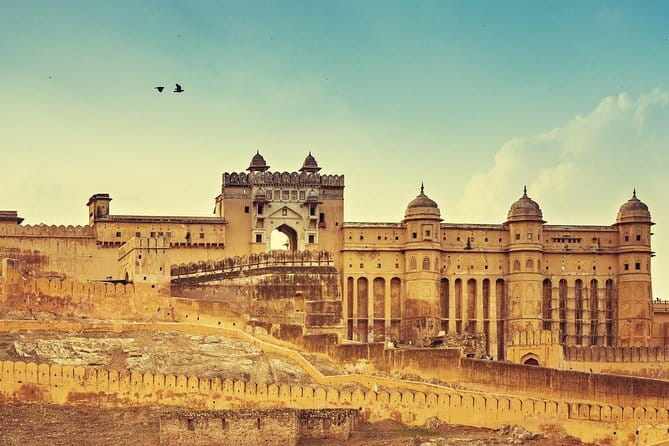
Next is Jal Mahal, the water palace in the middle of Man Sagar Lake. The description frames it as an exceptional structure of Rajput culture, and even with limited time, it’s a strong scenic break in the day.
You’ll get about 30 minutes. That’s enough to:
- See the palace positioned on the lake
- Take in the view composition (especially because the water setting gives it a unique look)
A consideration: this stop is more about scenery and atmosphere than deep “inside the building” time. If you want an extended lakeside hang, you’ll probably wish you had longer.
Still, it’s a great placement in the route: after tombs and astronomy stones, your eyes get a different kind of visual input.
Albert Hall Museum: art and artifacts with structure
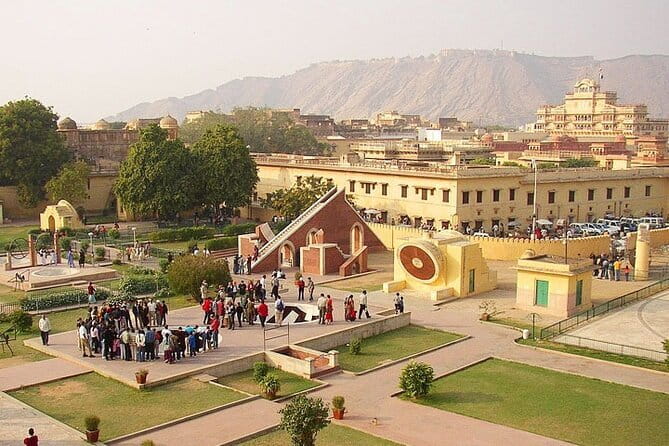
Then comes Albert Hall Museum, with about 1 hour. The museum is described as having artefacts, paintings, sculptures, and other items that reflect Rajasthan’s cultural heritage. Compared to outdoor monuments, a museum helps you reset—less walking in the open, more time to absorb stories at your own pace (with your guide steering what’s worth focusing on).
Why it’s a smart late-day stop:
- It turns the day from “see famous landmarks” into “understand the culture behind them.”
- It gives you a chance to connect the architecture and royal themes you’ve already seen.
A possible drawback: museum energy depends on your preferences. If you’re only into exterior architecture and you’re exhausted, you might wish for fewer indoor exhibits. But the structured focus tends to make it feel like time well used.
The free bonus: Jaipur Fort time without extra ticket cost
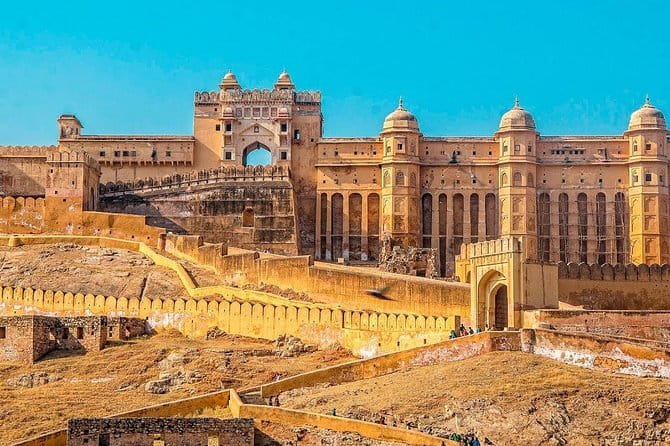
You also get time connected to Jaipur Fort, listed as free in the schedule, with about 2 hours. This is a meaningful inclusion because forts are where Jaipur’s geography and royal power really show up in physical form.
Even though the entry is listed as free, you still want to treat it like a real sightseeing segment. Two hours can go fast if you’re trying to take in viewpoints and architecture without a plan.
If you’re a history-or-views person, this is the part that can feel most “worth the effort” because forts reward staying attentive.
Price and value: why $10 can feel unusually practical
At $10 per person, this tour is designed to feel budget-friendly while still handling the stuff that normally costs time and money: A/C transportation, private transfers, a professional guide, bottled water, parking, taxes, and multiple admissions.
You do need to budget for what’s not included:
- Meals and other expenses
- Air/Train/Bus fare (you’re starting from New Delhi, but your transport to the pickup point is still on you)
- Tips for the driver and guide
Here’s how I’d judge the value:
- If you’re doing Jaipur anyway, paying for a guide and separate entry tickets can add up quickly.
- This format saves you from coordinating multiple bookings across distant stops.
- The admissions are included for most main sights, which makes the price feel more honest than a “cheap ticket with surprise costs.”
My suggestion: carry some cash for snacks or a quick drink. You’ll save time by not searching for meals during a packed day.
What the guided format adds (and what it can’t fix)
The reviews attached to this tour focus on the relationship part: the driver and guide were attentive and worked with you. That’s not a small detail. On a same-day route, you want someone who can adjust at the human level—answering questions, pacing your group, and handling the day’s tempo smoothly.
Still, your guide can’t create extra hours. If your goal is “see everything slowly,” this format won’t match that. But if your goal is “get the essentials with context,” it’s a strong fit.
Practical expectation-setting:
- You’ll learn enough at each stop to connect ideas across the day.
- You won’t have time for deep detours off the main route.
- You should be ready to move.
Who should book this, and who should skip it
This tour is a good match if you:
- Have limited time in the Delhi area and want a one-day Jaipur highlights package
- Like getting context from a guide rather than guessing your way through monuments
- Prefer the convenience of pickup and A/C car transfers without negotiating transport each stop
You might want to choose a slower Jaipur plan if you:
- Want long stays at one or two major sites
- Need lots of free time for shopping or independent walking
- Hate timed itineraries and prefer to linger without a schedule
Should you book this same-day Jaipur tour?
If you want a practical, high-coverage Jaipur day with a guide and fewer moving parts, I think this one makes sense. The big reasons are straightforward: private A/C transfers, admissions included at many stops, and a route that blends architecture, royal culture, and even astronomy (yes, stone tools for measuring the sky).
My call: book it if you’re optimizing for efficiency and meaning. Pass or switch to a longer stay if you’re the type who needs hours alone in a museum or wants to roam at your own rhythm for half a day. For most visitors with a tight schedule, this is a smart way to see the Pink City’s most famous faces without wasting your day on logistics.
FAQ
How long is the Jaipur tour?
The duration is listed as approximately 7 to 8 hours.
Do I get pickup and transportation?
Yes. Pickup is offered, and the tour includes all sightseeing and transfers by an A/C car with a friendly driver.
What is included in the price?
The tour includes all sightseeing and transfers by an A/C car, private professional guide, fuel, parking charges, and taxes, and bottled water. It also includes a mobile ticket and group discounts.
Are entrance tickets included?
Admission tickets are included for major stops like Hawa Mahal, City Palace of Jaipur, Jantar Mantar, Royal Gaitor Tumbas, Jal Mahal, and Albert Hall Museum. Jaipur Fort is listed as free for the visit segment.
Is this tour private?
Yes. This is described as a private tour/activity, so only your group participates.
What is not included?
Meals and other expenses are not included. Air/Train/Bus fare is not included. Driver’s and guide’s tips are also not included.
Can I cancel for a refund?
Yes. The tour offers free cancellation. You can cancel up to 24 hours in advance for a full refund. If you cancel less than 24 hours before the start time, the amount paid is not refunded.