REVIEW · NEW DELHI
Divine Temples Tour in Delhi
Book on Viator →Operated by Discover Activities · Bookable on Viator
Delhi gets spiritual fast. This private tour strings together old and new temple styles with comfortable transport, plus a storyteller host to help you understand what you’re seeing at Birla Mandir, Swaminarayan Akshardham, and the Digambar Jain Temple. I like that it’s private (your group only) but still structured enough that you don’t waste time figuring out routes and entry rhythms.
One thing to plan for: there’s no meal included. If you’re doing this mid-day, you’ll want to handle food on your own, and you’ll likely be on your feet inside temple areas for the full stretch.
In This Review
- Key things I’d circle before you book
- How this private temple route works in 4–6 hours
- Birla Mandir (Lakshmi Narayan): the 165-foot Vishnu landmark
- Swaminarayan Akshardham: pink sandstone and carved detail
- Digambar Jain Temple: red walls and three giant triangular tops
- Why the Hindu-and-Jain mix feels so Delhi
- Transportation and entry flow: where comfort really shows up
- Price and value: $39 for private transport and mostly-included entry
- Timing tips: how to make the 4–6 hours feel easy
- What to know before you go (small but important)
- Should you book this Divine Temples Tour?
- FAQ
- How long is the Divine Temples Tour in Delhi?
- Is pickup included?
- What temples are included in the route?
- Are temple admissions included?
- What’s included in the price?
- What’s the weather and cancellation rule?
Key things I’d circle before you book
- Three temples, three architectural moods: a Vishnu-focused temple, a grand modern complex, and a centuries-old Jain red temple.
- Comfort first: private transport plus pickup offered, so you’re not dodging Delhi traffic on foot.
- A real explanation layer: a local storyteller host helps translate the meaning behind icons and design.
- Smart time budgeting: roughly 40 min, 45 min, and 20 min at the main stops—enough time to see, but not so long you fry.
- Admissions are mostly easy: the first two stops are listed as free, and the Jain temple admission is included.
- Mobile ticket + customization: you get a mobile ticket and the tour can be tailored to your pace.
How this private temple route works in 4–6 hours
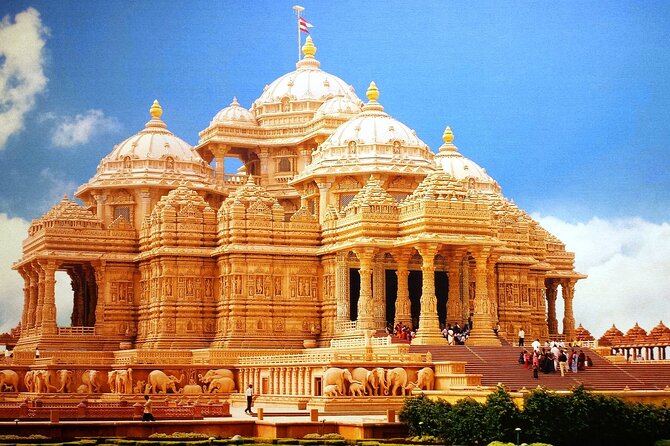
This is a private experience in New Delhi, built around a simple idea: you don’t just want photos of temples, you want to understand why they look the way they do. You’ll ride in private transport with pickup offered, and the schedule is set up for a 4–6 hour window. That matters in Delhi, because time gets eaten fast if you’re trying to connect sights with public transit.
The tour is also described as customizable. That’s useful when you have a specific interest—architecture, religious tradition, or just taking it slower to absorb the mood. Since only your group participates, you’re not stuck waiting on other people’s photo marathons. You also get a mobile ticket, which helps when you’re moving between busy temple areas.
One practical note: the tour includes transportation and a storyteller host, but it does not list a separate local guide. So, expect interpretation from the host, not an additional guided specialist layered on top.
You can also read our reviews of more tours and experiences in New Delhi.



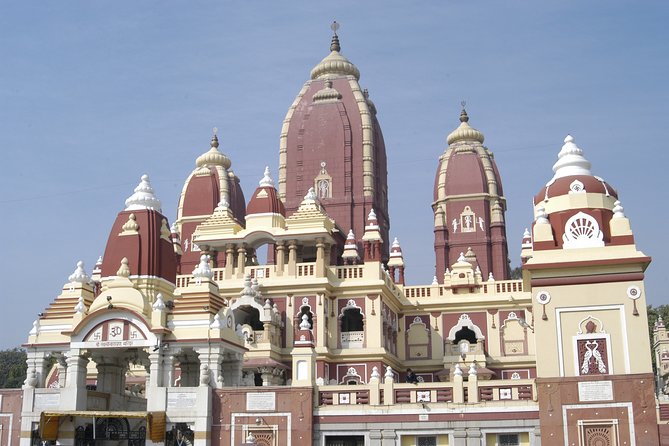
Birla Mandir (Lakshmi Narayan): the 165-foot Vishnu landmark
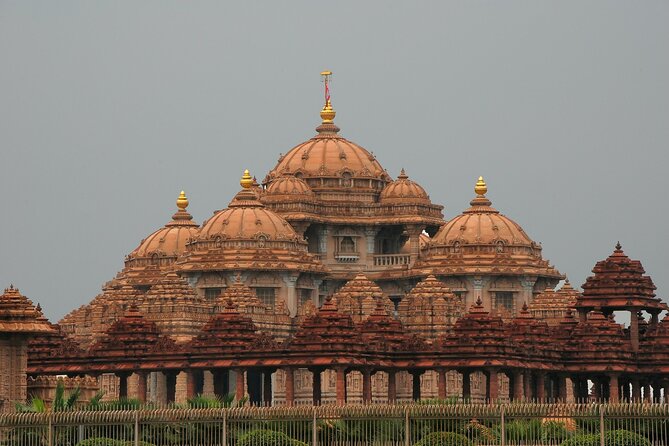
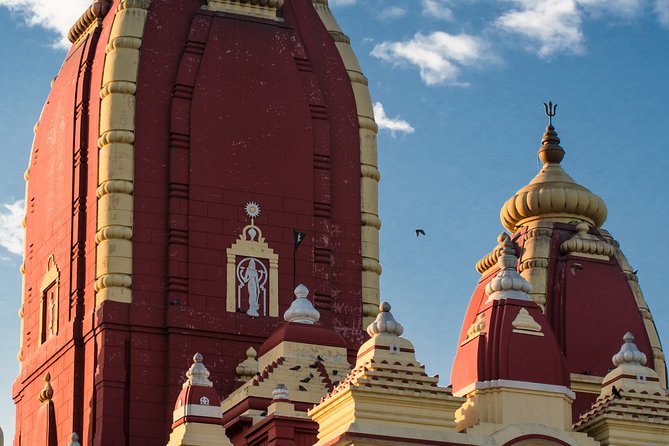
Your first stop is Birla Mandir Temple (Lakshmi Narayan). It’s dedicated to Lord Vishnu, and the description emphasizes it as one of Delhi’s oldest and grand temples. Even if you’re not a religion-history nerd, you can appreciate the scale quickly: the highest tower reaches about 165 feet, and the ancillary towers reach around 116 feet.
This is a great “orientation” temple to start with. Why? It gives you a clear visual baseline for Hindu temple design—towering forms, symmetry, and the way the compound feels designed for devotion rather than sightseeing. The tour description also calls out Geeta Bhavan, a hall within the temple complex. That kind of space is often where temples communicate teachings and stories, which pairs nicely with having a host explain what you’re looking at.
Timing here is around 40 minutes, and that feels about right. You’ll want enough time to look up (literally), notice details, and still have energy left before Akshardham.
Swaminarayan Akshardham: pink sandstone and carved detail
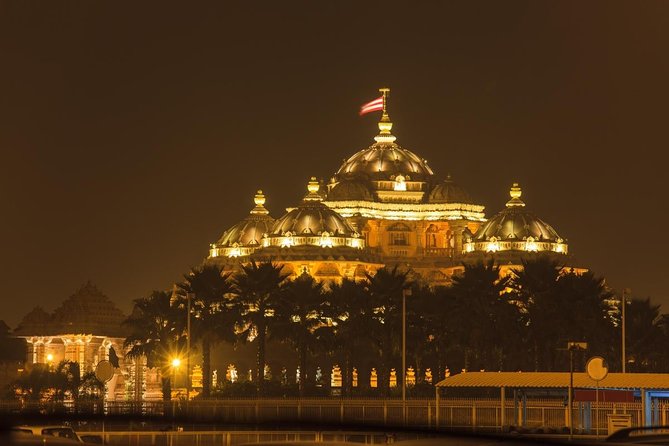
Next comes Swaminarayan Akshardham, described as the biggest temple of Delhi and heavily focused on decoration and craftsmanship. This stop tends to hit a different register than older temples: it feels grand, polished, and built to overwhelm your senses in the best way.
The description notes carved statues of dancers, deities, fauna, flora, and more. In other words, you’re not just looking at religious symbols—you’re looking at a whole visual program, where art is part of worship. The temple is built with Rajasthani sandstone in a pink color, and the description also mentions Italian elements. Even if you don’t go hunting for those specifics, the material choice and finish show up in how bright and clean the surfaces feel.
Expect about 45 minutes. This is the stop where you’ll likely want a bit of extra patience for how people flow through temple areas. The host is there to help with smooth entry and exit, which is a real quality-of-life upgrade when you’re moving between sites.
Digambar Jain Temple: red walls and three giant triangular tops
Your third stop is the Digambar Jain Temple, roughly 400 years old, painted dark red—hence the name that translates as red temple. It’s described as having three giant triangular tops, and the architecture is called mesmerizing. Even without a deep Jain background, you can usually read Jain temple style through its shape and strong color identity: the geometry grabs you first, and then you start noticing the finer structure.
This stop is shorter at about 20 minutes, and that actually works well here. You’ll get the main visual impact without dragging the day out. Admission is listed as included, which is a small but meaningful value boost because it removes one extra thing from your to-do list.
If you’re interested in Jainism as well as Hinduism, this is the cultural “contrast” that makes the whole tour feel more complete. Two faiths, one city, three very different visual languages.
Why the Hindu-and-Jain mix feels so Delhi
Delhi is not shy about religion in public life. The temple compounds can feel like separate worlds, with devotees dressed in traditional clothing and people showing up for prayer rather than sightseeing. On this route, you get that daily devotional energy across different traditions—Vishnu devotion at Birla Mandir, a major Swaminarayan complex at Akshardham, and Jain practice at the Digambar Jain Temple.
What I like about this lineup is how it teaches you without turning it into a lecture. The host-led storytelling approach helps you connect symbols to meaning, so the architecture doesn’t just look impressive—it makes sense. And because the tour is private, you can ask questions at natural pauses rather than feeling like you’re interrupting a busy schedule.
If you’re a spiritual traveler or you simply like learning how faith shapes art and daily life, the mix is the point. You’re not just collecting temples. You’re comparing how different communities express belief through space.






Transportation and entry flow: where comfort really shows up
This tour is built around comfortable private transport. That might sound generic, but in Delhi it’s not. Temple stops often sit in areas where traffic and walking can become unpredictable. Having a car and driver means you can arrive with your brain intact instead of wrestling with commute stress.
The day runs more smoothly because the tour includes a warm storyteller host. The host is specifically described as helping ensure smooth entry and exit to the temples. Translation: less dithering at gate checkpoints and fewer moments of wondering where to stand and when to move.
Punctual pickup is also mentioned in the experience feedback you’re likely to care about. When you’re stacking multiple temples, starting on time is everything. Late arrivals compress your time and increase fatigue. Here, the pacing stays reasonable.
Price and value: $39 for private transport and mostly-included entry
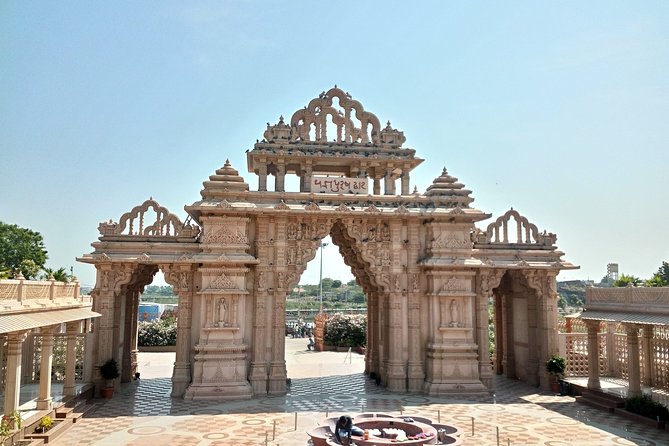
Let’s talk money like adults. The listed price is $39. That’s not much for a private half-day in New Delhi, especially when transportation is included. Your value comes from three buckets:
- Private transport for a multi-stop route (not just one sight)
- Storyteller host included
- Admissions are simplified: Birla Mandir and Akshardham are listed as free, while the Digambar Jain Temple admission is included
You do need to plan for what’s not included: meals and a local guide. If you’re expecting a separate guide on top of the host, check that your interpretation needs will be covered. If you’re happy with a host explaining as you go, you’ll likely feel the cost is fair for the convenience.
And because the tour is offered as free cancellation up to 24 hours before the start time, it’s easier to try without fear. Just keep an eye on the weather condition (it requires good weather, and a poor-weather cancellation should trigger a different date or a full refund).
Timing tips: how to make the 4–6 hours feel easy
Even with a good schedule, you’ll enjoy the tour more if you treat it like a temple day, not a museum loop. You’re likely to do some indoor movement and outdoor compound walking between stops.
Here’s how I’d make it feel smoother:
- Go in with the mindset that the stops are short on purpose. The 40/45/20-minute rhythm keeps the day manageable.
- Bring your own plan for food because meals aren’t included. If you wait until you’re hungry, you’ll lose time and patience.
- If you have flexibility, aim for a calmer part of the day. Temple areas can get busy, and it’s easier to enjoy the details when you’re not rushed.
Also, because the tour can be customized, you can often adjust pacing if you want more time at one place—especially if you’re more interested in Akshardham’s carved surfaces or in Jain architecture’s geometry.
What to know before you go (small but important)
A few practical points from the tour details:
- Pickup is offered, and it’s a private group experience.
- You’ll have a mobile ticket, so keep your confirmation details handy on your phone.
- Confirmation is received at the time of booking.
- It requires good weather. If conditions aren’t suitable, you’ll be offered a different date or a full refund.
If you’re coming from another part of Delhi that day, factor in travel time to the pickup point. That’s the only way to keep the temple schedule feeling relaxed instead of stressful.
Should you book this Divine Temples Tour?
Book it if you want a simple, private, multi-faith temple route without the hassle of figuring out logistics. It’s especially a good fit if you care about architecture and want a host to connect what you see to what it means—without turning your day into a classroom.
Skip it (or rethink it) if you specifically need a separate local guide beyond the storyteller host, or if you’re counting on meals being included. If you want food handled for you, this won’t.
My take: for $39, the combination of private transport, a host, and mostly-included admissions is strong value. It’s a good Delhi sampler that focuses on spirituality and design, not just famous buildings.
FAQ
How long is the Divine Temples Tour in Delhi?
The tour lasts about 4 to 6 hours.
Is pickup included?
Yes. Pickup is offered.
What temples are included in the route?
You’ll visit Birla Mandir (Lakshmi Narayan), Swaminarayan Akshardham, and the Digambar Jain Temple.
Are temple admissions included?
Birla Mandir and Swaminarayan Akshardham are listed as free. Admission to the Digambar Jain Temple is included.
What’s included in the price?
The tour includes private transportation and a local storyteller host. Meals and a local guide are not included.
What’s the weather and cancellation rule?
The experience requires good weather. If it’s canceled due to poor weather, you’ll be offered a different date or a full refund. Free cancellation is available up to 24 hours before the experience’s start time.