REVIEW · NEW DELHI
Five days Golden Triangle India Tour From Delhi
Book on Viator →Operated by Trek India Tours · Bookable on Viator
India’s Golden Triangle hits different in five days.
This tour is a practical way to cover Delhi, Agra, and Jaipur without living on a map all day. I like that you get a professional English-speaking guide plus an A/C vehicle for the big hops between cities, so your day stays focused on sights. I also like the way the plan mixes major icons (Taj Mahal, Amber Fort) with quieter “power stops” like Raj Ghat and Chand Baori.
One consideration: monument entrances aren’t included, and some must-sees depend on timing (like sunset viewpoints and a sunrise Taj Mahal). If you hate early mornings, the schedule might feel a bit intense.
In This Review
- Key highlights I’d plan around
- The Golden Triangle, five days, one smooth rhythm
- Day 1 in Delhi: Qutub Minar, Jama Masjid, and a stop for peace
- Day 2 to Agra: A countryside drive and the Taj from a calmer angle
- Day 3: Sunrise Taj Mahal and Agra Fort’s big power
- Jaipur Day 4: Amber, City Palace, Jantar Mantar, and Hawa Mahal
- Day 5 back to Delhi: plan for a travel-heavy finish
- Price and value: what $210 really gets you
- The guide and driver factor: what really makes the tour feel easy
- Practical tips before you go (so your days stay fun)
- Who this tour fits best
- Should you book this Golden Triangle tour?
- FAQ
- What cities does the 5-day Golden Triangle tour cover?
- Is pickup included?
- Are monument entrances included in the price?
- How is transportation handled?
- How many hotel nights are included?
- Where do you get dropped off on the last day?
- What are the cancellation rules if plans change?
Key highlights I’d plan around

- Taj Mahal twice: once at sunrise and once from a quieter sunset viewpoint across the river
- Delhi’s mix of old and new: Qutub Minar and Jama Masjid plus Lotus Temple and Akshardham
- Stepwell stop in Abhaneri: Chand Baori is a rainwater-harvesting marvel and an easy breather
- Jantar Mantar is UNESCO: built in 1734, you’ll see astronomy instruments you can actually stand in front of
- Private-group feel: it’s set up so only your party participates, with flexible pacing through the day
- Guide support with tickets and lines: the service focus shows up again and again, especially around Taj Mahal logistics
The Golden Triangle, five days, one smooth rhythm
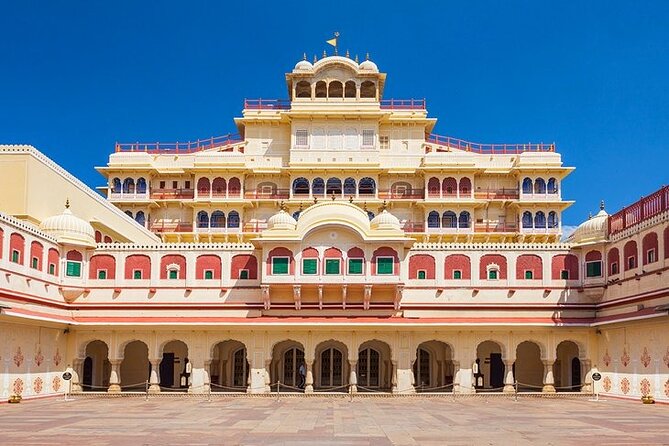
The Golden Triangle route is famous for a reason: you get three “India at a glance” cities where architecture and history show up everywhere you look. What makes this specific five-day version work is the rhythm—start early for the big moments, then balance heavy stops with calmer breaks so you don’t burn out by day two.
You’ll move by A/C vehicle throughout the trip, and you’ll have a guide who handles the storytelling and the flow. There’s also a mobile ticket approach, and pickup is offered, which helps if you don’t want to figure out first-mile logistics in Delhi.
You can also read our reviews of more tours and experiences in New Delhi



Day 1 in Delhi: Qutub Minar, Jama Masjid, and a stop for peace
Your first day is packed, but it’s packed with variety, not just “more buildings.” You start at Qutub Minar, part of the UNESCO-listed Qutub complex in the Mehrauli area. It’s a tall tapering minaret that’s easy to appreciate even before you know the details—look up and you’ll feel how dominant it is.
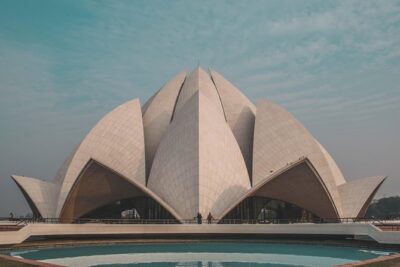
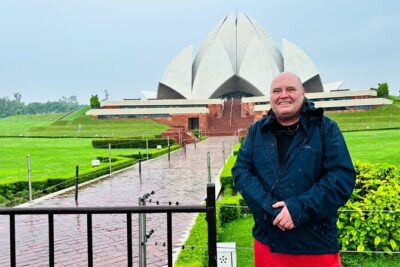
Next comes Jama Masjid, Old Delhi’s massive Friday Mosque. It sits above the surrounding streets and can hold tens of thousands of worshippers, so the scale hits fast. After that, you shift to something calmer: Lotus Temple. It’s a Bahá’í House of Worship with an instantly recognizable flowerlike shape, and it’s open to all visitors, regardless of religion—an oasis-feeling pause after Old Delhi traffic and energy.
From there, the day slows down again with Raj Ghat, a well-kept riverside memorial park marking where Mahatma Gandhi was cremated after his 1948 assassination. It’s a reflective stop, and I’d treat it like one: keep it unhurried.
You then take in government-and-imperial history from the outside with Rashtrapati Bhavan (President House) and Parliament House, designed by Edwin Lutyens and Herbert Baker. India Gate follows, a 42m memorial arch for around 90,000 soldiers from WWI and related campaigns. This is one of those “take it in, then move on” stops—great for photos and context, but don’t overstay.
The final major stop is Swaminarayan Akshardham, India’s large temple complex built in 2005. It’s listed as Monday closed, so if your Day 1 lands on a Monday, expect that part of the plan to change.
Day 2 to Agra: A countryside drive and the Taj from a calmer angle
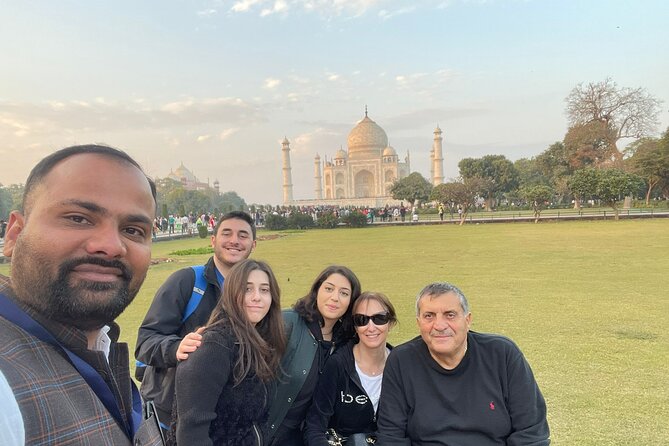
Day 2 begins with a drive to Agra, about three hours, taking you through countryside along the Yamuna Expressway area. That travel time matters more than you’d think: it breaks the trip up mentally and physically, so you arrive ready for monuments instead of still feeling like you’re stuck in transit.
Once in Agra, you’ll check into your pre-booked hotel. Then you hit Tomb of Itimad-ud-Daulah—often called the Baby Taj. It’s a Mughal mausoleum with a “jewel box” feel, and I like it because it gives you Mughal details before you go full-on Taj Mahal.
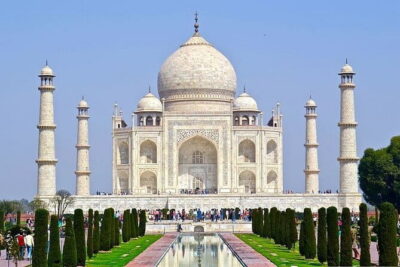
Later, you go to a Taj Mahal sunset viewpoint across the river. This is smart if you want the Taj without battling crowds at the main complex every single time. Sunset is also when you can understand why the Taj’s look changes with light—golden hues, softer contrast, and a skyline that feels more human and less tourist-heavy.
Day 3: Sunrise Taj Mahal and Agra Fort’s big power
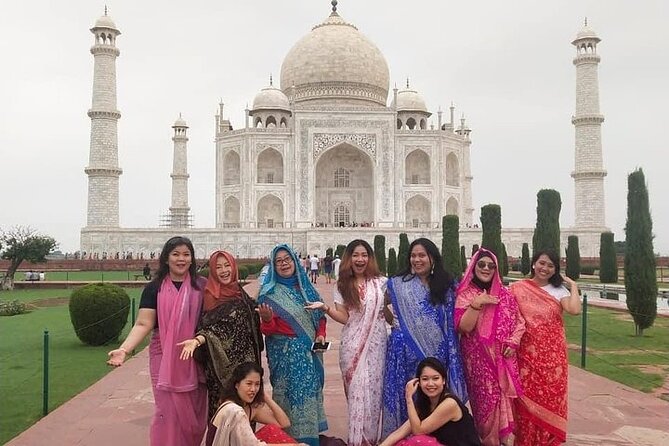
Day 3 is built around the one experience most people really care about: Taj Mahal at sunrise. Going early isn’t just about beating crowds. It’s also when the colors soften and the air often feels clearer, which makes the white marble read beautifully. You’ll learn the story of Shah Jahan building it as a memorial for Mumtaz Mahal, his third wife, who died in 1631. Even if you’ve heard it before, hearing it on-site changes how you see the details.
After your Taj visit, you head back for breakfast and a relaxed reset before checking out from the hotel. That structure is important. If you don’t slow down after the morning icon, the rest of the day can feel like a sprint.
Agra Fort follows. This UNESCO-listed fort was a key residence of Mughal emperors, and it has palaces, balconies, and gardens tucked inside its walls. It’s not as instantly photogenic as the Taj, but it gives you the political and military “why” behind the architecture. I find it makes the Taj story feel less like a standalone postcard and more like a whole era.
Then you drive to Abhaneri to see Chand Baori, the stepwell in a smaller town setting. This is one of the most interesting “change of pace” stops on the route. Chand Baori is famous for its stepped structure and its connection to rainwater harvesting. It’s also a great place to step back from large monuments and just watch how geometry behaves—light, shadow, and repeating lines.
Finally, you continue on to Jaipur, the Pink City, check in to your hotel, and rest. This buffer time is what keeps Jaipur from feeling like an instant burnout after a full Agra day.
Jaipur Day 4: Amber, City Palace, Jantar Mantar, and Hawa Mahal
Jaipur is where the Golden Triangle really turns into a visual feast. You start with Amber Palace (Amer Fort), located on a hill near Jaipur. You’ll explore with your guide over about two hours. Even without deep architecture knowledge, you’ll notice the fort’s scale and its layered courtyards.
Next is City Palace of Jaipur, a complex that includes parts associated with rulers of the Kachwaha Rajput clan. It’s a good “history anchor” stop—if Delhi gives you empire and Mughal power, and Agra gives you masterpieces of architecture, Jaipur shows you how royal authority looked in daily built form.
You also get Jal Mahal, the palace sitting in Man Sagar Lake. The plan includes it as a photo opportunity. You’re not meant to treat it as a full museum stop; it’s about that striking “floating palace” look and the lake setting around it.
After that, you go to Jantar Mantar, a UNESCO World Heritage Site built in 1734 by Sawai Jai Singh II. It’s not just a set of old instruments behind fences—you can see how they work and how someone could use them with the naked eye to observe astronomical positions. It’s a rare chance to meet science from the past in a very physical way.
Then comes Hawa Mahal, the Palace of Winds, made of red and pink sandstone. It’s a five-storey pyramidal façade built in 1799 and famous for its windows. The plan includes time for lunch at a local restaurant after full day sightseeing, which is helpful because Jaipur food is a big part of the experience and you don’t want to be hunting mid-afternoon.






Day 5 back to Delhi: plan for a travel-heavy finish
On your last day, you check out after breakfast and drive from Jaipur back to Delhi, about five hours. You’re dropped at Delhi Airport or your location, so it’s workable if you have an onward flight.
This return day is usually when people feel time compression. If your hotel checkout timing is tight, it helps to keep your day-bag ready the night before: water, any essentials, and a light layer. You won’t be sightseeing much on the road—so keep your energy for the monuments you already came for.
Price and value: what $210 really gets you
At $210 per person for roughly five days, the biggest “value math” is this: the package covers guiding, transport, lodging, and meals—but not monument entrances.
Included:
- Professional English-speaking city tour guide
- Air-conditioned vehicle throughout the tour
- 04 nights accommodation
- Breakfast (4)
- All tolls and taxes
Not included:
- Monument entrances
So the price is best for you if you want to:
1) avoid arranging separate drivers and tickets across three cities,
2) get a guide who knows the order of visits, and
3) keep your mornings and logistics from turning into a to-do list.
If you prefer to roam freely without a guide, or if you already have your entrances planned and want a “do it yourself” version, you might find you can spend less. But for many first-time visitors, this structure is the time-saver.
The guide and driver factor: what really makes the tour feel easy
This is one of those tours where the human touch matters more than the route. In the experiences I reviewed, guide support kept showing up as the difference between stumbling through a famous site and actually getting the most out of it.
Names that came up repeatedly include Praveen (often mentioned for Taj Mahal info and for help with entry tickets and navigating lines) and Rajiv Gupta (called out for meeting guests in Delhi and staying with them). Some experiences also credited drivers by name—Suresh for calm driving in busy Indian roads and Umesh for excellent driving support.
There’s also a clear pattern: communication before and during the trip mattered. Several comments mentioned WhatsApp contact and quick responsiveness with advice, plus flexibility for family needs and time constraints. If you’re traveling with parents, older relatives, or you just want fewer surprises, this kind of service is a real selling point.
Practical tips before you go (so your days stay fun)
Here’s how I’d set yourself up for a smooth Golden Triangle trip with this kind of pacing.
- Budget for entrances: since monument entrances aren’t included, confirm what you’ll pay on arrival. Even if some sites are free, many aren’t.
- Respect the early start: sunrise Taj Mahal is the crown jewel. Plan to sleep early the night before and keep your morning routine simple.
- Bring comfortable walking shoes: you’ll cover forts, courtyards, and large temple complexes over multiple days.
- Use shade and water wisely: this part of India can be hot. A refillable bottle and a hat go a long way.
- Watch the Monday closure risk: Swaminarayan Akshardham is listed as Monday closed. If your travel dates fall on a Monday, ask your operator what replaces that stop.
- Have your passport ready: a valid passport is required on the day of travel.
Who this tour fits best
This is a strong fit if you:
- want first-time-friendly structure across three cities,
- like history told with a guide (not just reading signs),
- want pickup and A/C transport so you can focus on sightseeing, and
- prefer a private-group feel rather than mixing with strangers.
It’s also a good option for families. Several experiences called out that the trip can be adapted for groups with different comfort levels and timing needs—especially around sites that get crowded.
Should you book this Golden Triangle tour?
Yes—if you want a guided Golden Triangle that’s built for efficiency, and you’re okay paying entrance fees on top. The best part here is that the trip isn’t just a checklist. You get thoughtful pacing: Delhi’s mix of icons and calm memorial stops, Agra with Taj Mahal twice from different angles, and Jaipur with fort, palace, and science-in-stone in one day.
Book it if:
- Taj Mahal at sunrise is on your must-do list,
- you’d rather have someone manage tickets and route timing,
- you want four nights of lodging handled for you, and
- you value consistent service from guides and drivers.
Consider a different option if:
- you hate early mornings,
- you want to skip guided history and handle everything solo, or
- you don’t want to plan for extra entrance costs.
If you match the tour style—structured days, a private-group feel, and iconic sights in a smart order—this one makes a lot of sense.
FAQ
What cities does the 5-day Golden Triangle tour cover?
It covers Delhi, Agra, and Jaipur, with overnight stays while moving between the cities.
Is pickup included?
Pickup is offered as part of the tour.
Are monument entrances included in the price?
No. Monument entrances are not included. You may also find that some specific stops are marked as free, but the general entrance cost isn’t covered in the package.
How is transportation handled?
You travel in an air-conditioned vehicle throughout the tour, with driving between Delhi, Agra, and Jaipur.
How many hotel nights are included?
The tour includes 04 nights accommodation.
Where do you get dropped off on the last day?
After breakfast and checkout, you’ll drive back to Delhi and be dropped at Delhi Airport or your location.
What are the cancellation rules if plans change?
You can cancel for a full refund up to 24 hours before the experience start time. If you cancel less than 24 hours before, the amount paid isn’t refunded.