REVIEW · NEW DELHI
Full Day Delhi Sightseeing Tour by Public Transport
Book on Viator →Operated by Reality Tours & Travel Pvt Ltd · Bookable on Viator
Metro first, history second. This Full Day Delhi Sightseeing Tour by Public Transport is built around getting your bearings fast, using local transport instead of taxis, while a guide keeps the day moving and makes the city easier to read. You’re also capped at 18 travelers, so it stays more human than a bus tour.
Two things I really like: the local English-speaking guide who walks you through key sights (and helps you not get lost), and the way the route mixes major landmarks with hands-on neighborhood stops. You hit big-name places like Connaught Place and India Gate, then shift into Mughal and religious sites, plus a practical break in Khan Market.
One consideration: the itinerary is packed and you’re moving a lot, and entrance fees and food aren’t included (Humayun’s Tomb is specifically marked as not included). So you’ll want a little cash budget for tickets and your own meals.
In This Review
- Key highlights worth planning for
- Why this public-transport format makes Delhi feel smaller
- Meeting at Connaught Place: your metro launch pad
- India Gate: a fast monument stop with breathing room
- Humayun’s Tomb: UNESCO Mughal gardens, and one ticket you must budget for
- Gurudwara Bangla Sahib: the Sikh temple and the free community meal
- Hazrat Nizamuddin Aulia: a short look at a big spiritual hub
- Agrasen Ki Baoli: a stepwell with 103 steps
- Khan Market: a market break built for food and shopping time
- Gandhi Smriti: the house where the final days happened
- Red Fort and Lodi Gardens: what the broader route is trying to accomplish
- Budget reality: what $43.12 covers, and what you still pay for
- How the guides shape the experience (and what to look for)
- Who should book this tour, and who might want a different style
- Should you book this Full Day Delhi Public Transport Tour?
- FAQ
- How long is the Full Day Delhi Sightseeing Tour by Public Transport?
- What is the meeting point for the tour?
- What time does the tour start?
- What’s included in the price?
- Are entrance fees included?
- Is the tour group small?
- Is food included?
- Is free cancellation available?
- Can children join this tour?
Key highlights worth planning for

- Public transport all day: Metro plus rickshaw-style rides, with tuk-tuks/pedicabs worked into the route
- Small-group cap (18 max): easier questions, more flexibility, less crowd pressure
- Guided shortcuts: you follow a plan but you’re not stuck walking in a straight line all day
- Free-and-included stops: several sights have free admission, and some entrance costs are covered
- Neighborhood context: you don’t just see monuments; you also get temple and market time
- Photo and pace support: guides in past groups have been flexible about timing and interests
Why this public-transport format makes Delhi feel smaller

Delhi can be overwhelming on day one. Streets feel chaotic, routes can be confusing, and it’s easy to waste time figuring out what goes where. This tour is designed to fix that with a simple idea: you ride like a local (metro, buses, tuk-tuks, pedicabs), and you do it with a guide who knows how to sequence stops.
The small-group size matters more than it sounds. When you’re with a larger crowd, everyone gets swept along and you have less room to ask questions or slow down for photos. With up to 18 people, the group stays tight enough for the guide to steer you through gaps in traffic and adjust timing when the moment calls for it.
This is also one of the better value setups because transport is included. You’re not paying separately for metro entries or the rickshaw rides that can otherwise add up. You also get water/cold drink, which helps when the day stretches.
You can also read our reviews of more tours and experiences in New Delhi



Meeting at Connaught Place: your metro launch pad
The tour starts at Rajiv Chowk Metro Station, inside Connaught Place (Inner Cir, Block B). This is a smart way to begin because it instantly turns the city from a map into a set of real directions. If you’re new to Delhi, starting near a major metro hub gives you confidence for the rest of the day.
At Connaught Place you also get a short orientation moment—10 minutes is not long, but it’s enough to understand where you are and how the area functions. Connaught Place is a central, recognizable landmark, so it works as a quick “anchor point” before the day moves into more historical zones.
Tip for you: wear shoes you can walk in comfortably. You’re starting with a landmark, but the day quickly shifts from viewpoints to places where you’ll be on foot.
India Gate: a fast monument stop with breathing room
Next up is India Gate, where you get about 30 minutes. Admission is free, and the stop is built for a simple purpose: orient yourself to one of India’s most recognizable memorial monuments.
A key value here is timing. Early in the day, you can still get photos and a calmer read of what the monument represents, without feeling like you’re late and rushed. This isn’t meant to be a long lecture stop—it’s more like a set-down point where the guide can tell you what to look for before you move deeper into the city.
You’ll likely enjoy this stop most if you’re okay with short segments. The tour’s style is “see a lot, with guidance,” not “linger for hours in one place.”
Humayun’s Tomb: UNESCO Mughal gardens, and one ticket you must budget for
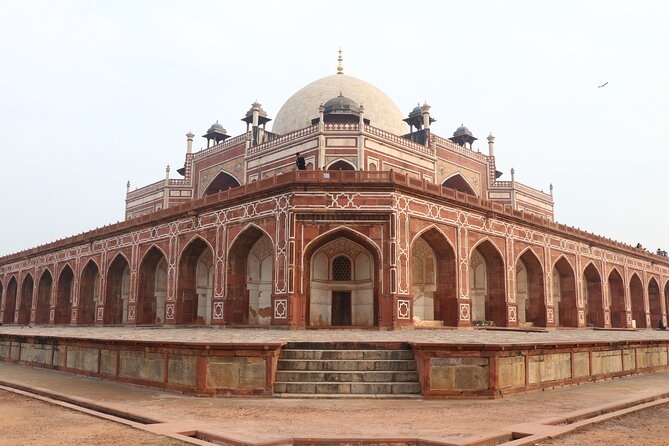
Humayun’s Tomb is a major highlight and the one stop where you’ll want to be prepared for cost. You’ll have about 45 minutes here, and the admission ticket is not included.
That’s a drawback for budget-conscious travelers, but it’s also why the time is worth it. This is a UNESCO World Heritage Site, and it’s the kind of place where your visit makes more sense when someone points out what you’re looking at: the Mughal architecture style, the layout, and the way the gardens shape the experience.
Practical way to handle it: keep a little extra aside for the entrance fee at Humayun’s Tomb. If you’re relying on included admissions only, this is the one item that can surprise you.
Gurudwara Bangla Sahib: the Sikh temple and the free community meal
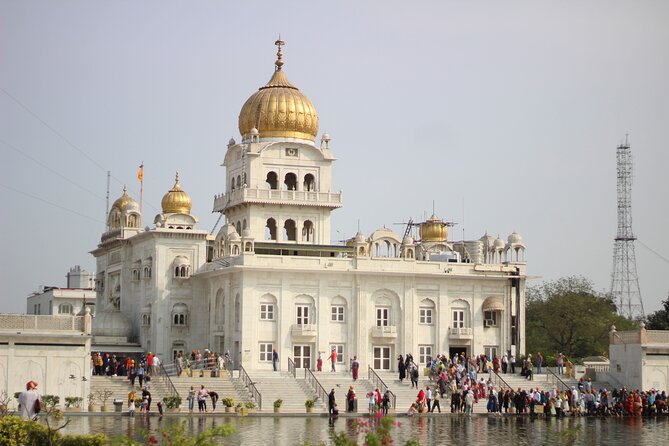
Gurudwara Bangla Sahib is about 30 minutes, and admission is free. This stop is one of the most meaningful in the day because you’re not just looking at buildings—you’re watching a living religious tradition in action.
Two things to expect:
- You’ll see the Sikh temple setting and learn about Sikhism through the guide’s explanations.
- You’ll also have a look at the communal kitchen, where anybody is allowed to eat for free.
The kitchen is volunteer run, which gives the stop a very “organized by people, not by tourism” feeling. It’s also a good break from monuments, because the focus shifts to practice and community.
Note for your day: even with a 30-minute slot, it’s enough to absorb the atmosphere and understand why this place matters to people who visit it regularly.




Hazrat Nizamuddin Aulia: a short look at a big spiritual hub
After the temple stop, you head to Hazrat Nizamuddin Aulia for about 15 minutes. The admission ticket is marked as included.
This is a quick stop, but it’s intentionally short because the area around Nizamuddin has its own pull—watching the flow of people, seeing how the neighborhood works, and then visiting the dargah complex. The dargah complex contains more than 70 graves and is visited by thousands of Muslim pilgrims each week.
A quick tip for you: take the 15 minutes seriously. In places like this, the best photos are often the ones you take while you’re actually present—rather than rushing for the perfect shot.
Agrasen Ki Baoli: a stepwell with 103 steps
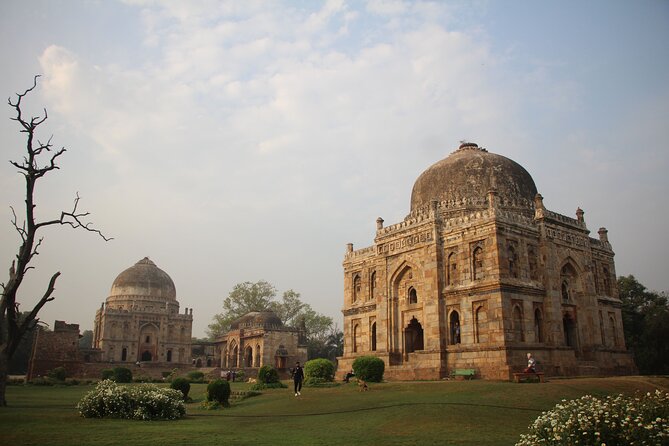
Next comes Agrasen Ki Baoli, with about 10 minutes on the schedule, and the admission ticket is marked as included.
This is an ancient stepwell, rumored to have been built in the 10th century and rebuilt in the 14th century. It has 103 steps and is around 60 meters long. What makes this stop special is that it gives you a different type of Delhi sight: not a fort, not a gate, not a monument you’ve already seen in postcards.
It’s also a rare chance to slow down for a “spatial” experience. Stepwells create a cool, enclosed, echoing feel compared to open plazas. Even in a short time, you can get a sense of why these structures mattered.
If you like photography, this is often a better subject than you’d expect. The lines and the angles help your pictures look more intentional than a quick snapshot outside a gate.
Khan Market: a market break built for food and shopping time
You’ll then stop at Khan Market for about 20 minutes, with admission marked as included for the stop time, and it’s positioned as a food break. Food itself is listed as not included, so think of this as time to buy and eat your own lunch snack or meal.
Khan Market is described as one of Delhi’s poshest neighborhood hangouts. People come to dine at restaurants, talk in cafes, and shop the latest trends. If you’ve been riding metro and walking through big historic zones, this is a smart reset.
One practical advantage: markets are chaotic in a good way. Even if you don’t shop much, you’ll get a feel for daily life—what people wear, how the street energy works, and what locals treat as normal.
If you want a smoother meal: ask your guide for what to try or where to sit. Past guides on this tour have recommended places to eat, and that can save you from picking randomly when your time window is short.
Gandhi Smriti: the house where the final days happened
The last major stop is Gandhi Smriti for about 30 minutes, with admission marked as included.
This is Gandhi’s house where he spent the final days of his life, and it’s a strong ending because it shifts the day from architecture and religion to a person-driven story. After a long route across monuments and neighborhoods, you get a slower, more reflective finish.
If you’re the type who likes connecting the dots between history and real places, you’ll appreciate the pacing here. It’s not a “quick view and move on” stop, but it’s not so long that you lose energy.
Red Fort and Lodi Gardens: what the broader route is trying to accomplish
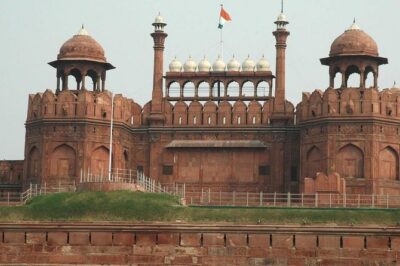
Your day isn’t only these listed stops in order. The overall concept is to see major Delhi highlights, including places like Red Fort and Lodi Gardens, plus landmark zones such as the government area near the Presidential Palace.
Even if you don’t get a long dedicated block at every big-name site, the value is that you’re still getting exposure to the places you’ll want to return to later. A day like this is how you build a mental map: you know where things are, how they connect, and what you want more time with on a second visit.
Budget reality: what $43.12 covers, and what you still pay for
At $43.12 per person, you’re paying for a guided, full-day loop that includes:
- local English-speaking guide
- all transport (including Metro and rickshaw rides)
- water/cold drink
That’s the heart of the value. In Delhi, the cost of getting around can balloon if you’re constantly paying for taxis or rides you didn’t plan. Here, the transport is pre-built into the price.
What you must budget separately:
- Food (not included)
- Entrance fees (not included overall)
- And specifically, Humayun’s Tomb admission is not included
Some stops are free or have admission marked as included, so it’s not a totally open-ended situation. But plan for at least one meaningful ticket cost (Humayun’s Tomb), plus meals you buy during free-time windows.
If you want the cleanest budgeting: bring a simple plan for lunch or snacks around the Khan Market break, and keep money aside for the Humayun’s Tomb ticket.
How the guides shape the experience (and what to look for)
The tour’s reviews point to a consistent theme: the guide can make the day feel smooth, even when the city is not.
You might get a guide like Kavita, Tavrej, Naresh, or Sam, and the common threads show up in the way they handle the day:
- friendly, efficient guiding
- a strong sense of pacing
- flexibility around where and how long you spend (especially for photo-focused visitors)
- practical help beyond sightseeing (one guide reportedly helped with something as simple as finding a SIM card)
In plain terms: you’re not just paying for directions. You’re paying for someone to translate the city’s “why.” That matters most in places where the details aren’t obvious at first glance, like Mughal architecture or working religious spaces.
Who should book this tour, and who might want a different style
This tour is a great match if:
- you want to see a lot in one day without hiring private transport
- you’re okay with moving around and switching scenes frequently
- you like guided context more than self-guided wandering
- you want a first-day confidence boost in Delhi transit
It might not be ideal if:
- you strongly prefer long stays in one museum or one site
- you hate paying separate entrance fees and buying your own meals
- you’re looking for a slow, contemplative day with lots of downtime
Since it’s capped at 18 and includes Metro and rickshaw rides, it sits in a sweet spot between “do everything yourself” and “sit on a bus all day.”
Should you book this Full Day Delhi Public Transport Tour?
If your goal is to get oriented and actually enjoy Delhi instead of just surviving it, I’d lean yes. The included transport plus a local English-speaking guide is the formula for cutting stress. You get the right mix: major landmarks, Mughal architecture, religious sites, a stepwell, and a market break.
Just go in with realistic expectations: this is not a ticket-all-in package, and Humayun’s Tomb is a key extra cost. If you budget for the one entrance fee and plan to buy your own food, this tour becomes a clean, efficient way to experience Delhi’s highlights in a way that feels local, not tour-bus manufactured.
FAQ
How long is the Full Day Delhi Sightseeing Tour by Public Transport?
It runs for about 7 hours.
What is the meeting point for the tour?
You meet at Rajiv Chowk Inner Cir, Block B, Connaught Place, New Delhi, Delhi 110001, India.
What time does the tour start?
The start time is 9:00 am.
What’s included in the price?
The tour includes a local English-speaking guide, all transport including Metro and rickshaw rides, and water/cold drink.
Are entrance fees included?
Food and entrance fees are not included. However, some stops are listed as free or have admission marked as included.
Is the tour group small?
Yes. The maximum group size is 18 travelers.
Is food included?
No. Food is not included, though the schedule includes a stop at Khan Market for you to get something to eat.
Is free cancellation available?
Yes. You can cancel for a full refund up to 24 hours in advance of the experience start time.
Can children join this tour?
Children must be accompanied by an adult.