REVIEW · NEW DELHI
Five Days Private Golden Triangle Tour To Agra Jaipur From Delhi
Book on Viator →Operated by Kita Private Taxi · Bookable on Viator
Big monuments, low stress, in one week. This private Golden Triangle route through Delhi pairs an airport welcome with a private car, so getting started feels organized instead of chaotic.
I like that the sightseeing mix is practical: you’ll tackle Old Delhi icons like Jama Masjid and Red Fort, then shift to New Delhi’s big landmarks such as India Gate and Rashtrapati Bhavan. It’s a smart way to see two sides of the capital without feeling like you’re bouncing around blindly.
One caution: for many of the big sights, the schedule lists admission as not included. You’ll want to budget for entry tickets for places like the Taj Mahal, Red Fort, and Qutub Minar.
In This Review
- Key highlights worth your attention
- Golden Triangle in a private car: why Delhi–Agra–Jaipur works
- Price and what you’re really getting for $239 per person
- Day 1 in Delhi: airport welcome and first-night reset
- Day 2 in Delhi: Jama Masjid, Red Fort, India Gate, Humayun’s Tomb, and Qutub Minar
- Jama Masjid and the Old Delhi market feel
- Red Fort and the shift from religion to empire
- India Gate, Rashtrapati Bhavan, and Parliament House
- Humayun’s Tomb, Lotus Temple, and Raj Ghat
- Qutub Minar: the classic Delhi skyline moment
- Day 3 Agra: Taj Mahal, Agra Fort, and Itmad-ud-Daula
- Taj Mahal (the reason you booked)
- Agra Fort: the fort version of Taj-level drama
- Itmad-ud-Daula (the smaller jewel box)
- Day 4 travel to Jaipur: Fatehpur Sikri and Chand Baori en route
- Fatehpur Sikri: Akbar’s abandoned capital
- Chand Baori in Abhaneri: stepped-well geometry
- Jaipur arrival and time to reset
- Day 5 Jaipur city day: Amer, Jal Mahal, City Palace, Jantar Mantar, Hawa Mahal, and Albert Hall
- Amer: the big fort start
- Jal Mahal: the palace in water
- Royal Gaitor Tumbas: cenotaphs and royal memory
- City Palace: Mughal-meets-Rajput palace design
- Jantar Mantar: astronomy in stone
- Hawa Mahal: the iconic facade
- Albert Hall Museum: the day ends with culture
- Day 6 back to Delhi: breakfast, checkout, and departure
- What to know before you book: tickets, timing, and comfort
- Entrance tickets are the main extra cost
- Expect long days and plan your pace
- Guide value in Jaipur
- Communication and support
- Who this tour suits best (and who should skip it)
- Should you book Kita Private Taxi’s Five Days Private Golden Triangle?
- FAQ
- FAQ
- How much does the Five Days Private Golden Triangle Tour cost?
- How long is the tour?
- Is this a private tour?
- Does the tour include transportation or pickup?
- Are entrance tickets included for the monuments?
- Which stops are marked as admission free in the schedule?
- Can I cancel for a full refund?
Key highlights worth your attention
- Airport welcome on arrival so you’re not stuck figuring out transport right after your flight
- Private group only meaning it’s just your party in the vehicle
- A long Delhi day that makes sense with Old Delhi, then government-landmark Delhi, then major tombs and temples
- Free admission stops called out clearly (Lotus Temple, Raj Ghat, Fatehpur Sikri, and Amer)
- Guide support in Jaipur, and the name Kumar shows up in customer feedback for both guiding and driving
Golden Triangle in a private car: why Delhi–Agra–Jaipur works
The Golden Triangle is famous for a reason. Delhi sets the stage with Mughal-era architecture and national landmarks. Agra brings the grand finale with the Taj Mahal. Jaipur turns up the color with palaces, forts, and astronomy tools that look like they belong in a science museum.
What you’re buying with this tour isn’t just the list of places. It’s the logistics. With private transportation across the route, you avoid the messy patchwork of buses, rickshaws, and ticket lines that can eat your day. You also get a smoother rhythm: pick up, see sights, drive to the next stop, repeat.
The tradeoff? This is a packed itinerary. You’ll spend plenty of time in the car. So if you prefer slow travel, you might find some days a bit full.
You can also read our reviews of more private tours in New Delhi



Price and what you’re really getting for $239 per person
The price is $239 per person, and the headline included item is private transportation. That matters because the Golden Triangle covers multiple cities and big distances between them. When transportation is handled for you, you’re usually saving both time and stress—even if you still pay entrance tickets separately.
Also, this tour is built as a private experience. Only your group participates, which is helpful if you’re traveling as a couple or family and you want the driver to match your pace. The tour also lists mobile tickets, plus confirmation at booking, so you’re not starting from scratch once you arrive.
One more value point: the itinerary explicitly notes some stops with free admission. That helps you plan your spending rather than guessing.
Day 1 in Delhi: airport welcome and first-night reset
Your first day starts in a simple, useful way. When your flight lands in New Delhi, a tour representative meets you at the airport and helps you reach your hotel smoothly. If you’re tired, you can relax and settle in instead of jumping into sightseeing straight away.
This is a big deal in Delhi. Arrival days can be tiring and confusing, especially if you land at a busy hour. Having that handoff from airport to hotel makes the trip feel like it actually starts when you arrive, not after you figure out transport.
What to do on Day 1 to make it easier on yourself:
- Keep your first evening low key. A short walk near your hotel can be enough.
- If you’re arriving late or jet-lagged, use the time to recover so you don’t burn out on the longer Delhi day next.
Day 2 in Delhi: Jama Masjid, Red Fort, India Gate, Humayun’s Tomb, and Qutub Minar
Day 2 is the kind of day you’ll remember. It strings together major sights across Old and New Delhi, with a market stop in between. The schedule lists these as key stops:
Jama Masjid and the Old Delhi market feel
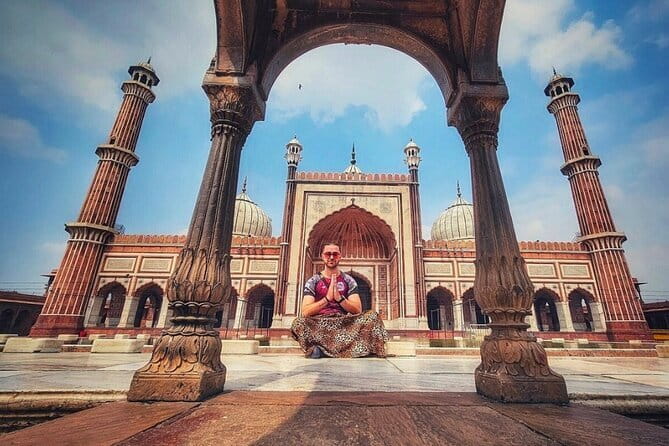
You begin at Jama Masjid, built in 1644 using red sandstone and marble, commissioned by Shah Jahan. The time on site is listed as about 1 hour, and admission isn’t included.
Then you’ll move into a nearby market area. The description emphasizes the density—people packed closely, colorful street stalls, and plenty of goods for sale. Even if you don’t buy anything, this is a good place to get your bearings for Old Delhi. You’ll understand what Delhi street life feels like before you move on to the more formal monuments.
Practical tip: wear shoes you can stand in. This portion of the day is less about one photo spot and more about navigating crowds carefully.
You can also read our reviews of more tours and experiences in New Delhi





Red Fort and the shift from religion to empire
Next up is Red Fort, a not-to-miss Delhi highlight. It’s described as majestic, with unique walls and towers, and again the schedule notes about 1 hour on site. Admission isn’t included.
What I like about pairing Jama Masjid with Red Fort is the context. You move from a major Mughal religious structure into a major Mughal imperial symbol. It helps you see the empire’s scale and priorities—worship, power, and architecture in one corridor of time.
India Gate, Rashtrapati Bhavan, and Parliament House
Then the tour steps into New Delhi’s memorial and government zone:
- India Gate, built as a war memorial where the Amar Jawan Jyoti is located
- Rashtrapati Bhavan, the President of India’s residence, with the famous Lutyens Delhi view
- Parliament House, described as a grade 1 landmark and a symbol of India’s democracy
The schedule shows short stops here—about 30 minutes for India Gate—and admission isn’t included.
This part is worth it because it shows Delhi beyond the fort-and-temple circuit. You see a capital that’s not just historical, but active and political.
Humayun’s Tomb, Lotus Temple, and Raj Ghat
After the government landmarks, you head to:
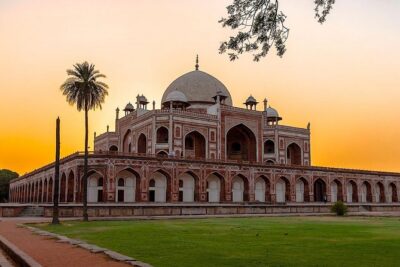
- Humayun’s Tomb (about 1 hour; admission not included), described as a garden tomb built in 1570
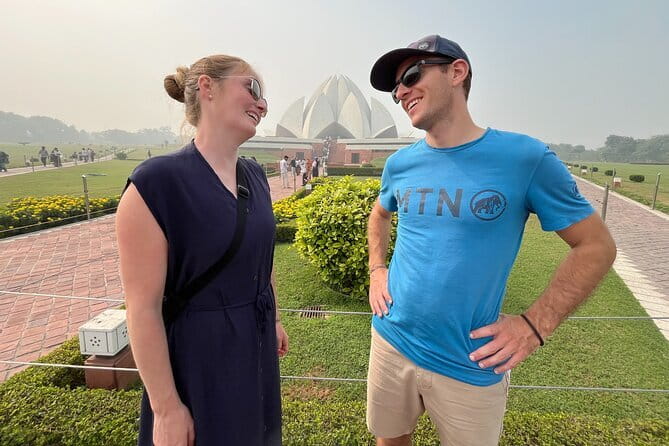
- Lotus Temple (about 30 minutes; admission free), a Baha’i temple shaped like a half-open lotus with calm pools and gardens
- Raj Ghat (about 30 minutes; admission free), the memorial where Mahatma Gandhi was cremated
This is a nice trio: tomb gardens, a peaceful modern temple space, then the nation’s most important grief-and-memory site.
If you’re short on time, Lotus Temple and Raj Ghat are the stops where the schedule gives you “free admission value.” They also add a different mood to the day. Expect quieter spaces compared with Old Delhi.
Qutub Minar: the classic Delhi skyline moment
You end this major day at Qutub Minar, listed as a 72.5-meter tall minaret within the Qutub Complex. The schedule allows about 1 hour, and admission isn’t included.
This is where Delhi’s skyline story clicks. You go from palace and fort silhouettes to this tall vertical landmark that’s visible from far away, and suddenly the whole city’s architecture makes more sense.
Day 3 Agra: Taj Mahal, Agra Fort, and Itmad-ud-Daula

Day 3 turns the volume up. Agra is where you’ll see the Golden Triangle’s headline monument and a couple of strong supporting acts.
Taj Mahal (the reason you booked)
The Taj Mahal is scheduled for about 2 hours. It’s described as an ivory-white marble mausoleum, built in 1632 by Shah Jahan over an area of about 17 hectares.
Admission isn’t included in the schedule, so plan for that cost separately.
The best way to get value from the Taj time slot is to go in with a simple plan:
- Spend your first chunk understanding the layout and symmetry.
- Use the rest of your time to focus on details like the marble surfaces and the way the complex feels different as light changes.
Even if you’ve seen photos before, the scale and finishing work are hard to fake.
Agra Fort: the fort version of Taj-level drama
Next is Agra Fort, about 1 hour, and described as a UNESCO-listed site. It’s compared to Delhi’s Red Fort in structure and vibe.
Admission isn’t included.
This is a useful pairing with the Taj Mahal because it adds military and political context. A mausoleum is about memory and legacy. A fort is about control and power. Together, they tell a fuller story of the era.
Itmad-ud-Daula (the smaller jewel box)
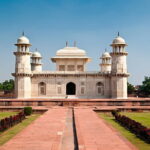
Your last Agra stop is Itmad-ud-Daula, also about 1 hour. It’s described as a mausoleum with craftsmanship so detailed people call it the Jewel Box and also Bachcha Taj.
Admission isn’t included.
This stop is a great “breather” after Taj and Agra Fort. It’s smaller, more intimate, and it rewards you if you like stonework and ornamental details.
Day 4 travel to Jaipur: Fatehpur Sikri and Chand Baori en route
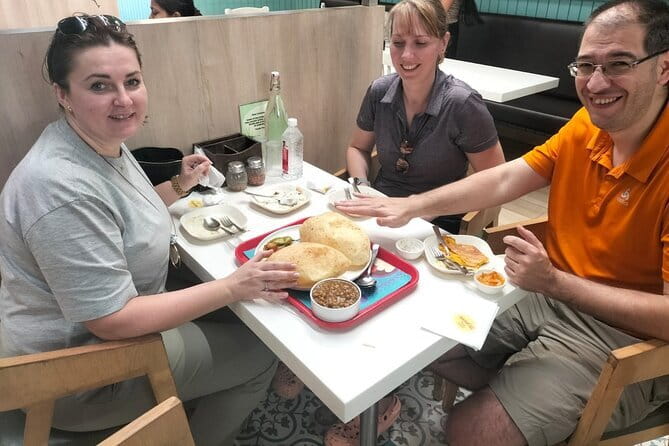
Day 4 is a long but rewarding shift. You’ll have breakfast in Agra, then head to Jaipur, with stops along the way.
Fatehpur Sikri: Akbar’s abandoned capital
Fatehpur Sikri is scheduled for about 1 hour, and it’s marked as free admission. The description says it was constructed by Akbar in the late 16th century and served as the Mughal capital for about 10 years.
This is one of those places where the “why it matters” is part of the experience. An abandoned capital makes you think about ambition, time, and how quickly power changes direction.
Chand Baori in Abhaneri: stepped-well geometry
You’ll also visit Chand Baori in Abhaneri. It’s described as a stepwell-like structure (called a baori), dropping about 30 meters below ground level. The schedule lists about 1 hour, and admission isn’t included.
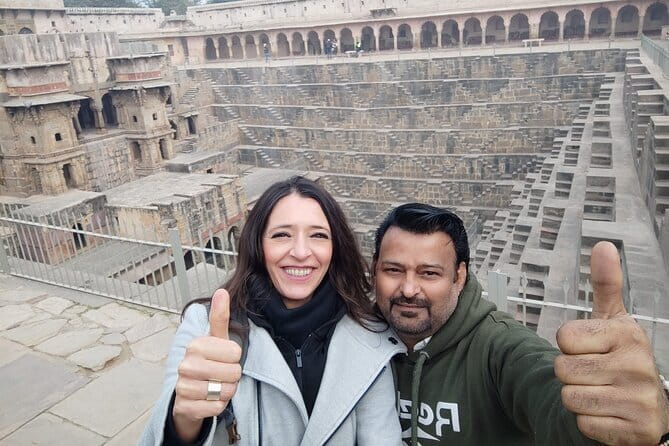
Even if you’re not into architectural nerd stuff, this is visually satisfying. The repeating steps create strong lines you can photograph from multiple angles.
Jaipur arrival and time to reset
Finally, you’ll reach Jaipur and spend several hours there in the schedule. The itinerary notes admission free for this Jaipur block, which usually means it’s time for orientation and getting your bearings rather than one specific paid attraction.
Practical approach: treat Jaipur arrival time as a chance to plan your next day. If you’re sensitive to sun, use the time to rest and hydrate before Amer and the palaces the next day.
Day 5 Jaipur city day: Amer, Jal Mahal, City Palace, Jantar Mantar, Hawa Mahal, and Albert Hall
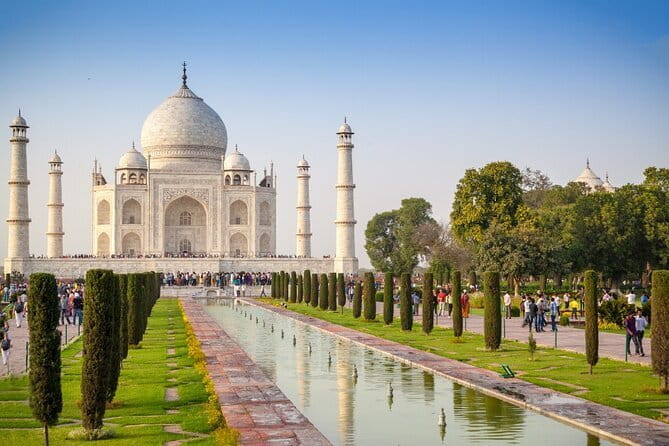
Day 5 is packed in the best way. You’ll have a guide accompany you for your Jaipur city touring.
The schedule starts outside the city at Amer, then moves through the main sightseeing zone, ending with a museum stop.
Amer: the big fort start
Amer is scheduled for about 2 hours and is marked as free admission. The description says Amer was Rajasthan’s capital before Jaipur became the capital.
Amer works because it gives you the fort-and-courtyard feel that matches Jaipur’s identity. It’s also a great start because you’ll feel the scale before moving to the city’s more detailed palace and observatory structures.
Jal Mahal: the palace in water
Next is Jal Mahal, about 30 minutes, with admission not included. The schedule describes it as a palace in the Man Sagar Lake, built in 1699, surrounded by water.
The timing matters here. If you arrive when the light is harsh, it can look less dramatic. If you get better light, you’ll get that iconic reflection effect.
Royal Gaitor Tumbas: cenotaphs and royal memory
Then you’ll visit Royal Gaitor Tumbas, about 30 minutes. The description calls them cenotaphs of the Kacchhawa rulers, noting the Kacchhawa kings ruled Jaipur from 1727 to 1947 AD.
Admission isn’t included.
This stop feels different from the showy palace sights. It’s more about remembrance and design, with a quieter tone.
City Palace: Mughal-meets-Rajput palace design
The City Palace of Jaipur is about 2 hours with admission not included. It’s described as built by Maharaja Sawai Jai Singh II and mixing Mughal-style elements with Rajput design. The description also notes the royal family still lives there.
If you like architectural transitions and mixed styles, this is where you’ll feel the blending clearly.
Jantar Mantar: astronomy in stone
Next is Jantar Mantar, about 1 hour, with admission not included. It’s described as an astronomical observatory and said to rank first as the oldest astronomical observatory globally.
Even if you don’t read the instruments, this site is fun because it looks like art and science fused. It’s a reminder that rulers weren’t only building palaces; they were measuring skies too.
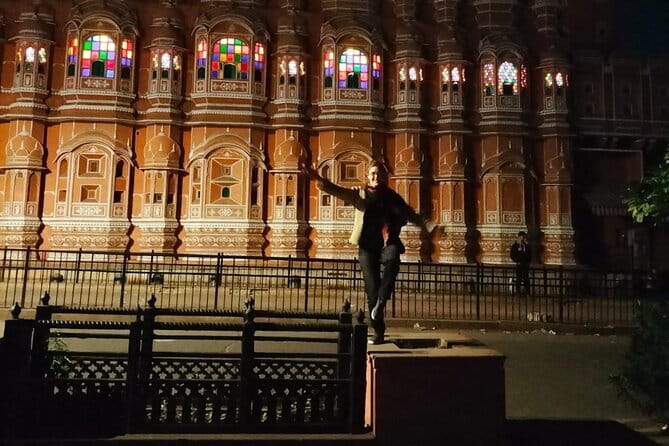
Hawa Mahal: the iconic facade
Then comes Hawa Mahal, the Palace of Wind, about 1 hour. It’s described as having five storeys and being constructed without a foundation, with a claim of maximum height.
This stop is often best for short, focused viewing. Walk around enough to see the facade’s structure, then move on before your feet revolt.
Albert Hall Museum: the day ends with culture
Finally, you’ll visit Albert Hall Museum, about 1 hour. It’s described as built in 1887 by Maharaja Sawai Ram Singh II and named after the Prince of Wales, who visited Jaipur in 1876.
Admission isn’t included.
Ending with a museum is smart. It gives you something calmer after a string of forts and palaces, and it helps you understand Jaipur beyond architecture alone.
Day 6 back to Delhi: breakfast, checkout, and departure
Day 6 is your return day. The schedule says you’ll have breakfast at the hotel, check out, and then a vehicle will take you back to Delhi.
This is designed to keep the trip from dragging into a late, stressful travel day. You start with a routine breakfast and a clean handoff to transport.
If you’re catching a flight later in the day, it’s still worth protecting your buffer time. Delhi traffic can surprise even experienced visitors.
What to know before you book: tickets, timing, and comfort
Here’s the practical stuff that makes or breaks this kind of trip.
Entrance tickets are the main extra cost
For many major sights, the schedule lists admission as not included. That includes big-name stops like:
- Taj Mahal
- Red Fort
- Qutub Minar
- Agra Fort
- City Palace, Jantar Mantar, Hawa Mahal, and more in Jaipur
There are also stops marked as admission free, including:
- Lotus Temple
- Raj Ghat
- Fatehpur Sikri
- Amer
(And the schedule labels some other segments as free as well, but these are the clear ones.)
So when you budget, don’t assume everything is covered.
Expect long days and plan your pace
On Day 2 and Day 5 in particular, you’ll hit multiple stops in one stretch. This is great for people who like structure and hate decision-making. If you’re the type who needs lots of downtime, consider building in small breaks and water stops.
Guide value in Jaipur
The itinerary explicitly says you’ll have a guide accompany you on the Jaipur city tour. In the information tied to this tour, the name Kumar comes up for both guiding and safe, comfortable driving. Having a guide matters most at places like Jantar Mantar and City Palace, where context makes the sights more meaningful.
Communication and support
The tour provides a contact channel via WhatsApp and references a product code (481832P1). That’s useful when you need to confirm timing, especially since the tour notes a start time listed as 7:00 pm. For your sanity, confirm your exact pickup time the day before.
Who this tour suits best (and who should skip it)
This tour makes the most sense if you want:
- Private transportation across the Golden Triangle
- A structured, stop-by-stop plan with major landmarks
- A trip designed to reduce stress and decision fatigue
It may not be the best match if you:
- Want a slow, flexible pace with lots of independent exploring
- Don’t want to manage entrance tickets for multiple paid sights
For couples, families, and first-timers, it’s a strong fit because it reduces the number of unknowns.
Should you book Kita Private Taxi’s Five Days Private Golden Triangle?
If you’re the type who values smooth logistics and wants to see Delhi, Agra, and Jaipur in one clean plan, I’d book this. The combination of airport welcome, private car, and a guide in Jaipur is exactly what helps a Golden Triangle trip feel manageable.
Before you go, do two quick checks:
- Add up likely ticket costs for the major paid stops listed as not included.
- Confirm your pickup timing, since the schedule references a 7:00 pm start time and your Day 1 airport meet depends on your flight.
If you handle those, you’ll get a well-organized route through India’s most famous stops—without turning your vacation into a logistics project.
FAQ
FAQ
How much does the Five Days Private Golden Triangle Tour cost?
The price is listed as $239.00 per person.
How long is the tour?
The duration is listed as about 6 days.
Is this a private tour?
Yes. The tour is private, and only your group will participate.
Does the tour include transportation or pickup?
Yes. The tour includes private transportation, and pickup is offered. The experience also lists a start time of 7:00 pm, so you should confirm your exact pickup timing.
Are entrance tickets included for the monuments?
The included section lists private transportation, not admissions. The itinerary notes admission as not included for many sights, while some stops are marked as admission free.
Which stops are marked as admission free in the schedule?
Lotus Temple and Raj Ghat in Delhi are marked as admission free. Fatehpur Sikri and Amer are also marked as admission free.
Can I cancel for a full refund?
Yes, there is free cancellation. You can cancel up to 24 hours in advance for a full refund based on the experience’s local time.