REVIEW · NEW DELHI
New Delhi Slum Walking Tour
Book on Viator →Operated by Street Tours India · Bookable on Viator
Zakhira in two hours changes your view. This New Delhi slum walking tour takes you into Delhi’s largest slum district with an English-speaking local guide and a small group feel. You’ll walk the lanes on foot and hear how community life works day to day, without the usual “look-but-don’t-touch” tourist vibe.
My favorite part is the small-group cap. Tours are limited to just a handful of people, so your questions don’t get rushed and your presence stays semi-private, even on busy days.
The main drawback: this is emotionally heavy. If poverty is hard for you to see, you might find the first moments uncomfortable, and the total time is only about two hours, so you’ll only get a slice of one community.
In This Review
- Key things that make this tour worth your time
- Why a Zakhira Walking Tour Hits Different Than Usual Sightseeing
- Santan and the Respect-First Approach That Makes People Feel Safe
- Getting There by Public Transport (Yes, Like Locals Actually Do)
- Zakhira in One Hour: What You’ll See and What It Means
- The Tea, the Stops, and Those Small Moments You Remember
- Group Size, Timing, and Why Two Hours Is Both Enough and Not Enough
- Price and Value: What $28.50 Actually Buys You
- Safety, Etiquette, and How to Be a Good Visitor in Zakhira
- Who Should Book This Tour (and Who Might Choose Another Option)
- Practical Details: Where It Starts and What to Expect During the Walk
- Should You Book This New Delhi Slum Walking Tour?
- FAQ
- How long is the New Delhi slum walking tour?
- Where does the tour start?
- Who will guide me?
- How big is the group?
- Do I need to pay for entry to the slum area?
- Is there public transportation involved?
- What’s included besides the walking and guiding?
- Can I bring most people from my group?
- Is there a cancellation option if my plans change?
- Where is the tour provided by?
Key things that make this tour worth your time

- Santan’s rapport with the community keeps the tone respectful, not intrusive
- Zakhira focus gives you one clear place to understand instead of a rushed montage
- Public transportation + walking helps you experience the city’s real rhythm
- Tea or coffee included gives you a human pause, not a “tourist break”
- Photo rules and etiquette are handled thoughtfully through your guide
- Small group pacing means you can ask questions without feeling like baggage
Why a Zakhira Walking Tour Hits Different Than Usual Sightseeing

A slum tour isn’t the same as a temple visit. You’re not chasing monuments or photo backdrops. You’re learning how people build routines, relationships, and small projects inside a place that outsiders often flatten into a headline.
Zakhira is the kind of area where you’ll notice contrasts fast: tight lanes, local shops, everyday conversations, and kids moving freely through the day’s heat. The guide doesn’t treat it like a stage set. The goal is context—what’s changing, what’s staying steady, and how life functions on the ground.
You’ll also get something rare in tours: space to reflect. Several people described the experience as humbling and eye-opening rather than flashy or “performative.” That matters, because the whole point here is understanding people, not consuming sadness.
You can also read our reviews of more walking tours in New Delhi



Santan and the Respect-First Approach That Makes People Feel Safe
This tour’s tone comes largely from the guide. In the reviews, Santan is the standout: warm, calm, and clearly connected. One review notes he has spent eight years walking these lanes, and it shows in how naturally he speaks with people.
The practical benefit for you: you’re less likely to feel like you’re barging in. Santan is the sort of guide who builds trust first, then explains. That helps you ask questions like a visitor who cares, not like a spectator hunting a moment.
You’ll also see respect in small rules. One common thread is that the guide asks the group not to take photos once you enter the area. That’s a big deal. It reduces the “tourist gaze” and helps your visit stay relational instead of extractive.
Getting There by Public Transport (Yes, Like Locals Actually Do)

You don’t just get dropped at the edge of the neighborhood. The tour uses public transportation and walking so you can feel how the city moves around the settlement.
In reviews, people mention a short rickshaw ride as part of the route into the area. That’s helpful because it saves your energy and gets you into the community without making the arrival feel like a dramatic entrance.
Why this matters: transit is part of the story of any city. When you travel with locals rather than arriving in a private bubble, you get a clearer sense of where the settlement sits inside Delhi’s daily life. Even if you’ve done lots of “offbeat” tours, this one keeps you grounded in how you actually move through town.
Zakhira in One Hour: What You’ll See and What It Means
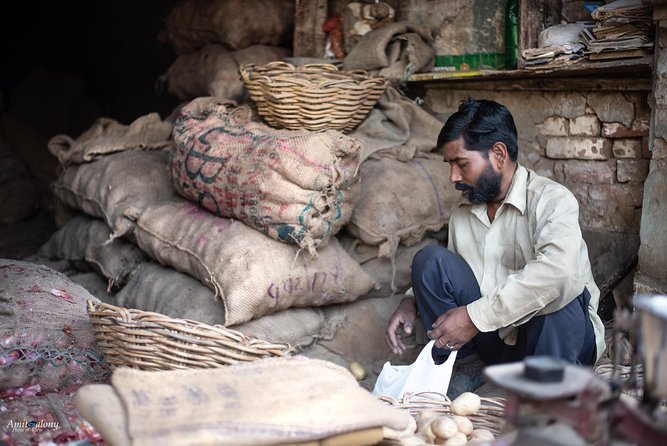
The tour’s main stop is Zakhira, described as one of Delhi’s largest slum areas. You’ll spend about one hour there during the walk.
What makes this portion powerful is the mix of everyday scenes and guided explanation. You’re not only looking at homes; you’re hearing about the social and economic context that shaped the place. Your guide talks through ongoing community projects and what independence or support can look like from the inside.
You’ll likely notice:
- Local lanes and small businesses, where daily trade keeps the community moving
- People interacting casually, which changes the emotional tone from shock to understanding
- Community spaces where conversation and routine are the real “attractions”
One review called the tour more like a relaxed walk-and-chat than a hard-edged tour. That’s usually what you want in a place like this. The pace gives you time to notice details without feeling trapped in a script.
The Tea, the Stops, and Those Small Moments You Remember
Your tour includes complimentary coffee or tea. In practical terms, it’s not just a free drink. It’s a pause that creates normalcy. You get to sit, reset, and talk—without rushing.
More than once, people mentioned stopping for a cup of chai during the visit. That’s a classic India moment, but here it functions as a social bridge, not a generic “refuel stop.”
Depending on the group and what’s active that day, you might also see other community activities. Reviews mention things like:
- watching work in a local bakery
- meeting children and chatting with community members
- receiving small gestures like henna painting
I wouldn’t count on every single add-on every day. But the overall pattern is consistent: your guide tries to show you real life inside the community, not just the boundaries.
There’s also a strong theme of care. One review described the guide using tour tips to buy food or treats for children during the walk. Another mentioned the guide reinvesting money from tours to help community members. Even if you can’t quantify that impact, the spirit is clear: it’s meant to support relationships and practical needs, not just awareness.






Group Size, Timing, and Why Two Hours Is Both Enough and Not Enough
This tour runs for about two hours total. It’s a half-day block, but the focus is tight. You’re centered on Zakhira rather than trying to cover multiple neighborhoods like a speed-run.
For many people, that’s perfect. You avoid the exhaustion of long transit and constant “next stop” movement. You also leave with a coherent impression: one community, one story arc, one place to process.
The tradeoff is obvious: you won’t see everything. One review even said the tour felt short and they expected more sights. That’s a fair consideration. If you’re craving a full day of learning, this may feel like a strong start, not a complete course.
A small group helps here. When there are fewer people, the guide can slow down for your questions and adjust for the comfort level of the group. One person mentioned they were lucky to have only two people, which is exactly the kind of spacing that makes conversations possible.
Price and Value: What $28.50 Actually Buys You
At $28.50 per person, the price is surprisingly approachable for what you’re getting: a local English-speaking guide, walking time in one of Delhi’s biggest informal settlements, and an included coffee or tea.
Here’s how I think about the value. You’re paying for access with context, and for a safer, more respectful experience than trying to figure it out alone. You’re also paying for the guide’s relationships—something you can’t replicate with a generic audio guide.
Could you spend less and walk around on your own? Sure. But you’d likely miss the “why” behind what you see, and you might accidentally create friction by not knowing the etiquette. In tours like this, that context is the product.
Also, the small group size matters. When a tour is capped low, the guide can guide. That increases value even if the ticket price stays simple.
Safety, Etiquette, and How to Be a Good Visitor in Zakhira

Safety here isn’t about “fear of danger” stories. Most of the reviews focus on feeling safe and cared for through the guide’s relationships and the community’s welcoming attitude.
Still, you should show up with the right mindset:
- Be respectful about boundaries, especially around photos. Expect the guide to guide you on this.
- Ask questions gently. Your guide can help you phrase things in a way that doesn’t turn people into case studies.
- Keep your tone human, not sensational. If you treat the area like a show, people feel that.
- Follow the guide’s lead on small interactions like where to walk and where to stop.
One review highlighted that the guide helped the group contact locals and also provided structure around what to look at. That structure is what keeps the experience feeling calm rather than chaotic.
If you’re the type of traveler who needs control, give it up a little. This tour works best when you’re flexible and open.
Who Should Book This Tour (and Who Might Choose Another Option)
This tour is a strong fit if you want:
- a break from “only famous sights”
- a people-first look at Delhi
- a guide who treats the community with respect and doesn’t chase shock
It’s also a good option if you’ve been traveling awhile and want something that challenges your assumptions in a grounded way. More than one person said it corrected their focus on life values, not just their knowledge.
You might want to think twice if:
- you’re easily overwhelmed by poverty visuals
- you want a light, funny, fully entertaining outing
- you’re looking for dozens of major stops and big sightseeing hits
This is not a checklist tour. It’s a conversation tour, and the emotional weight is part of the package.
Practical Details: Where It Starts and What to Expect During the Walk
The meeting point is listed at 3/21, Block A, New Moti Nagar, Moti Nagar, New Delhi, Delhi 110015, India, and the tour ends back at the meeting point.
It’s also noted as being near public transportation, which is key in a city where getting around can become its own mini-project. Plan on using transit to stay comfortable.
The included elements are straightforward:
- English-speaking local guide
- travel via public transportation and walking
- one main stop in Zakhira for about one hour
- complimentary coffee or tea
- capped small group size for an intimate pace
- mobile ticket
If you like to travel with a plan, good. If you prefer a guided human experience over strict timing, also good. This sits in the middle: guided, but not rigid.
Should You Book This New Delhi Slum Walking Tour?
I’d book it if you want to see another side of Delhi with a guide who leads with respect, not spectacle. The combination of Santan’s rapport, the tight Zakhira focus, and the small-group pacing makes it feel grounded and safe.
I would not book it if you need a “feel-good” outing or you’re likely to shut down when confronted with poverty. This tour can be deeply moving, and it asks something from you: attention, patience, and humility.
If that sounds like your kind of travel, you’ll probably leave with a different mental map of Delhi. Not just what the city looks like, but how people live inside it.
FAQ
How long is the New Delhi slum walking tour?
The tour lasts about 2 hours (approx.), with about 1 hour spent at the Zakhira stop.
Where does the tour start?
It starts at 3/21, Block A, New Moti Nagar, Moti Nagar, New Delhi, Delhi 110015, India, and it ends back at the meeting point.
Who will guide me?
You’ll visit the informal settlement with an English-speaking local guide.
How big is the group?
The experience is capped at only 8 travelers for an intimate feel. Additional info also lists a maximum of 4 travelers for this activity.
Do I need to pay for entry to the slum area?
Admission ticket cost is listed as free for the Zakhira stop.
Is there public transportation involved?
Yes. The tour includes travel like a local via public transportation and then traverses the slum area on foot.
What’s included besides the walking and guiding?
Coffee or tea is included, and the tour uses a mobile ticket.
Can I bring most people from my group?
Most travelers can participate, but the experience notes it’s designed to be inclusive and not intrusive.
Is there a cancellation option if my plans change?
Yes. Free cancellation is offered if you cancel up to 24 hours in advance for a full refund. Within 24 hours, you don’t get a refund.
Where is the tour provided by?
The experience provider listed is Street Tours India.