REVIEW · NEW DELHI
Full Day Private Guided Delhi City tour by Car with Guide
Book on Viator →Operated by Luxigo Tours · Bookable on Viator
Delhi turns your head fast. This private full-day loop strings together Old and New Delhi highlights with minimal hassle. I like that you get a private, air-conditioned car (not a constant hop from taxi to taxi), and I also like that monument entry fees are included so you’re not doing math all day.
A day like this is intense, though. One thing to keep in mind is the possible extra charges that can pop up around distance/route rules, like excess km or NCR-related taxes, based on what people have reported.
The payoff is the human touch. Guides named Sunny, plus Dharmendra and Anil, came up again and again for being punctual, friendly, patient, and clear when explaining history and culture in a way that doesn’t feel like a lecture.
In This Review
- Key things I’d pin on your planning list
- Old Delhi and New Delhi in One Day Without the Taxi Shuffle
- Price and Logistics: What $130 Really Buys
- The Day Starts at Gurudwara Bangla Sahib (And You’ll Feel Why)
- Jama Masjid Courtyard Time: Big Mosque Energy, Clear Layout
- Old Delhi Bazaars by Short Ride: Spice Shops and Street Signs
- Khari Baoli Spice Bazaar: A 30-Minute Sensory Hit
- Red Fort Area Details: Mughal Power in Stone
- From Unknown Soldier to Official Delhi Landmarks
- Connaught Place: A Useful 45 Minutes for Food and Reset
- Humayun’s Tomb: The One UNESCO Stop You’ll Remember
- Agrasen Ki Baoli: Legends, Urban Stories, and a Short Stop
- Lotus Temple: Bahá’í Architecture and a Calm End-Game
- Driver and Guide Quality: Why Sunny and Others Matter
- Who Should Book This Full-Day Delhi Loop?
- Quick Practical Tips for This Kind of Day
- Should You Book It?
- FAQ
- FAQ
- How long is the private Delhi city tour?
- Is pickup included, and can they pick me up anywhere in Delhi?
- Is this a private tour or shared with other people?
- What monuments have included admission fees?
- What’s not included in the price?
- Can I get a full refund if I cancel?
Key things I’d pin on your planning list
- Private car comfort for Delhi’s traffic: you keep moving without burning time.
- Entry fees included: Jama Masjid and Humayun’s Tomb won’t be an added surprise.
- Old Delhi sensory stop: Khari Baoli spice bazaar is a short, memorable punch to the senses.
- A UNESCO stop that’s not rushed: Humayun’s Tomb gets a full hour.
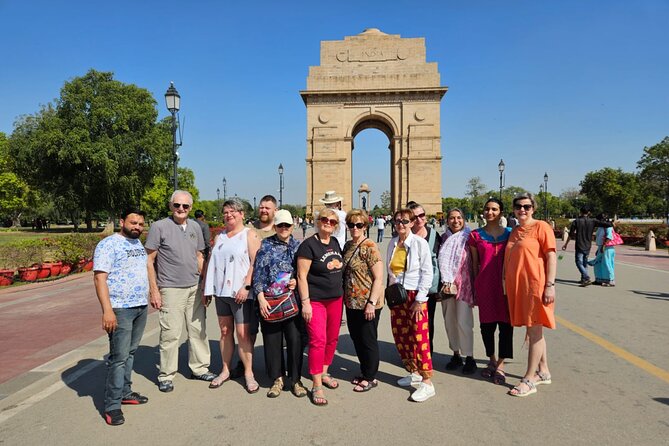
- You cover official Delhi too: Parliament House and Rashtrapati Bhavan are part of the route.
- Strong guide-driver reputation: Sunny, Dharmendra, and Anil are repeatedly praised for being patient and helpful.
Old Delhi and New Delhi in One Day Without the Taxi Shuffle
Delhi is two cities in one: the older chaos of Old Delhi, and the wider, more official feel of New Delhi. The smart move here is doing them in a single day with one team handling transport and navigating, because Delhi traffic punishes indecision.
You’re picked up from your hotel, airport, or train station in Delhi, and the tour runs about 7 to 8 hours. That time window matters. If you’re short on days, a full-day structure helps you see a lot without spending half your trip getting from one neighborhood to another.
The tour is private, too, meaning it’s just your group with your guide and driver. That makes a difference in places where crowds build quickly—your guide can adjust pacing and keep you moving when lines or bottlenecks start to form.
You can also read our reviews of more guided tours in New Delhi



Price and Logistics: What $130 Really Buys
At about $130 per person, this is one of those deals that only looks “cheap” if you check what’s included. Here, you’re paying for a private, air-conditioned car plus a guide, with round-trip pickup/drop-off in Delhi and bottled mineral water during the tour.
You also get entry fees to the monuments that require them, and the price includes taxes, fuel charges, tolls, and GST. That’s a big deal in India, where small “add-ons” can multiply fast if you’re not careful.
What’s not included is just as important. Meals aren’t included, and tips/gratuities aren’t included. Also note the practical caution from feedback: people have mentioned possible hidden costs like excess km or NCR-related taxes when entering and leaving. I’d plan to have a bit of flexibility in your budget just in case your route triggers those conditions.
The Day Starts at Gurudwara Bangla Sahib (And You’ll Feel Why)
Your first major stop is Gurudwara Bangla Sahib, a Sikh gurdwara known for the story linked to healing during a cholera outbreak in 1664. You’ll also see the sarovar, the sacred pond, described as having therapeutic qualities.
This stop is short—about 30 minutes—but it’s a strong way to begin. It’s calming, grounded, and different from the usual rush of monuments. Instead of sprinting straight into architecture, you start with a place of worship that’s also part of community life.
Admission is free, which makes it easy to enjoy without worrying about timing or cash. Dress politely here as you would at any house of worship, and expect a peaceful, respectful atmosphere.
Jama Masjid Courtyard Time: Big Mosque Energy, Clear Layout
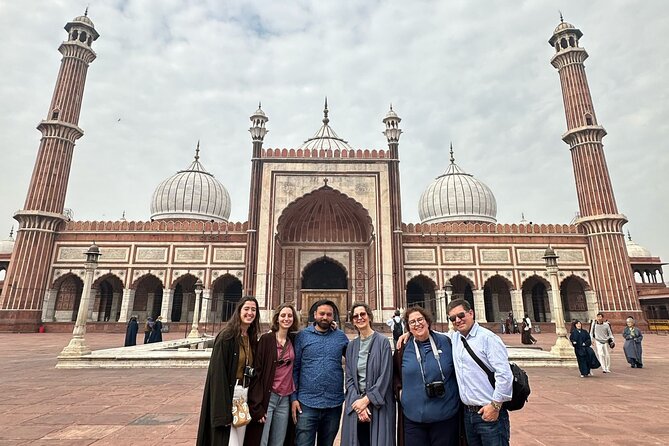
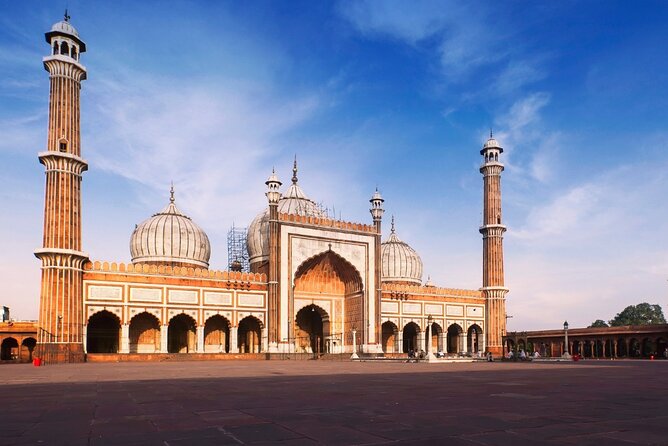
From Gurudwara Bangla Sahib you head to Jama Masjid, India’s biggest mosque. You get about 1 hour, which is enough to slow down, walk the courtyard, and take in the red sandstone setting.
The construction details are worth holding in your head as you look around: built in 1656 with help from 5,000 laborers. That fact isn’t just trivia. It helps you understand the scale you’re seeing. The courtyard gives you space to step back, find angles for photos, and absorb how the architecture frames the day.
Admission is included. This is one of the stops where having a guide matters. You’ll get help understanding what you’re looking at and which areas are best to view calmly during the time you’re there.
Old Delhi Bazaars by Short Ride: Spice Shops and Street Signs
After meeting your guide at Sunheri Masjid, you take a short ride (the plan includes a tuk-tuk segment) through Old Delhi’s area of busy bazaars. This isn’t about speed. It’s about orientation—getting your bearings without walking yourself into a full-day maze on your own.
As your guide points out the significance of the local trade streets, you’ll likely start noticing patterns: where people shop, what streets feel more residential, and which corners are most active. That kind of context makes the later spice stop much more meaningful.
If you’re sensitive to noise and crowds, this is the segment where you’ll feel it most. Still, the structure keeps it short and focused rather than turning into an endless wandering day.
You can also read our reviews of more city tours in New Delhi





Khari Baoli Spice Bazaar: A 30-Minute Sensory Hit
Next is Khari Baoli, one of the best-known spice areas connected with the broader Chandni Chowk spice market. You get about 30 minutes, and this is one of the most “hands-on with your senses” moments on the route.
You’re meant to experience the spices with sight and smell, and you’ll likely learn small, practical facts about spice uses along the way. This is the stop that tends to feel most alive because it’s commercial, specific, and layered—dry goods, bright stacks, and the rhythm of shopkeepers calling out.
Since admission is free, your biggest “cost” is time and attention. Wear comfortable shoes and be ready to slow down at entrances where the foot traffic gets tighter.
Red Fort Area Details: Mughal Power in Stone

The next major highlight is Red Fort, attributed to Shah Jahan and built between 1639 and 1648. It was used as the primary home of Mughal rulers, and you’ll see Indo-Islamic and Mughal styles reflected in the construction.
In the itinerary you’ll get this as a key stop in the day flow. Because the exact on-foot time isn’t specified in the data you provided, I’d treat this as a “planned stop with a set viewing window,” not a long museum-style experience.
Even if you don’t spend as long here as at some other stops, Red Fort works well as a visual anchor. It’s the sort of landmark that instantly tells you you’re not just touring—you’re stepping into the political center of an older era.
From Unknown Soldier to Official Delhi Landmarks
After Old Delhi, the tour pivots toward official New Delhi landmarks. You’ll pass by the Tomb of the Unknown Soldier area, built in 1921, with names of 13,300 Indian army soldiers who lost their lives in the First World War listed on the wall.
Then the route continues to Parliament House, home to India’s bicameral parliament: the Lok Sabha and Rajya Sabha. After that comes Rashtrapati Bhavan (President House). It started as the Viceroy’s House, the home of the Viceroy of India, and later evolved into the President’s residence.
These are powerful stops because they connect the day’s story: a shift from empire-era architecture and old-city trading streets to the modern governance of the country. Practically speaking, expect more “viewing and absorbing” than “wandering around.” Plan for short, guided look time rather than deep interior time unless your guide specifically indicates access.
Connaught Place: A Useful 45 Minutes for Food and Reset
Midday you reach Connaught Place, which gets about 45 minutes. This is a helpful breather because it’s more open, more planned, and easier to navigate than Old Delhi streets.
Your guide is expected to suggest eateries around the area, including food described as foreign and “real Mughlai,” along with dietary-specific and vegetarian choices. Meals aren’t included, so this is where you’ll likely decide what to eat based on what you can find that suits your timing.
If you’re traveling with someone who doesn’t love spice markets, this is a good compromise stop. Even if you don’t eat, it’s a clean place to regroup and recharge before the final wave of monuments.
Humayun’s Tomb: The One UNESCO Stop You’ll Remember
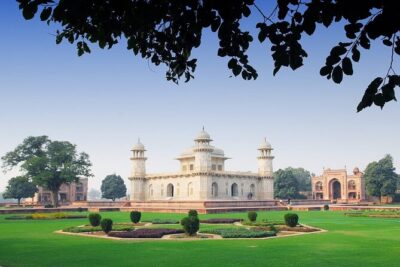
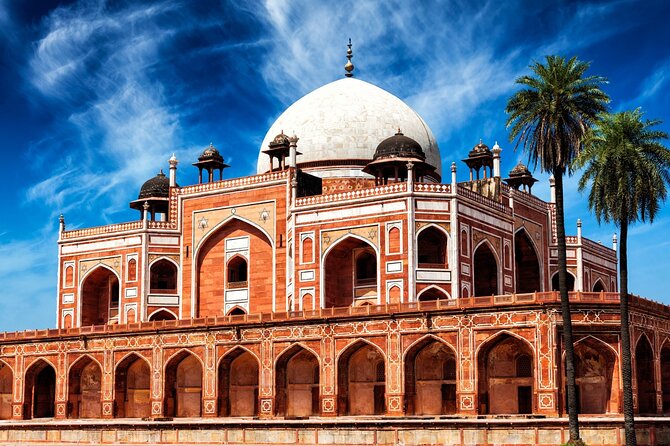
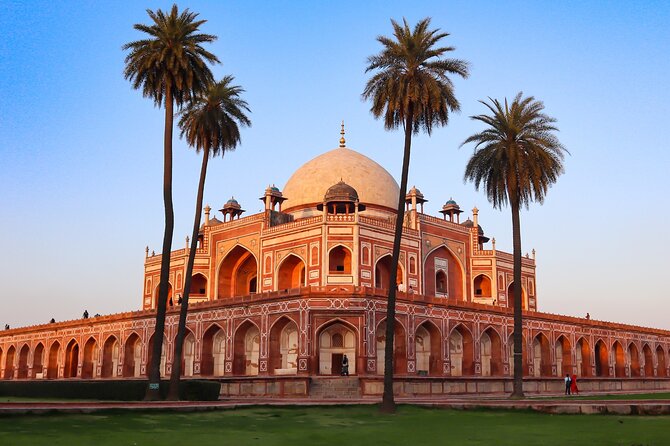
Next is Humayun’s Tomb, about an hour on-site. It’s described as India’s first garden tomb and a UNESCO World Heritage Site.
The story you’re meant to hold here is that after Humayun’s death, his wife’s goal was to construct the mausoleum. That angle matters because the gardens and layout don’t feel accidental. They’re part of an intentional design meant to create a calm, lasting space.
Admission is included, so you can focus on the architecture, the symmetry, and the pacing of the gardens rather than the ticket desk. This is one of the best stops on the schedule for photos and for slowing down without feeling like you’re losing time.
Agrasen Ki Baoli: Legends, Urban Stories, and a Short Stop
After Humayun’s Tomb, the itinerary includes Agrasen Ki Baoli for about 30 minutes. The vibe here is different: it’s known for urban tales of hauntings and paranormal events, and the site is described as being connected to stories people love to repeat.
Even if you treat the haunting stories as folklore, this stop is useful for mood. It adds variety to a day that’s otherwise dominated by big formal monuments and places tied to major empires.
Admission is free, and the time window is short, which helps if you’d rather not spend your whole day chasing only “official” attractions.
Lotus Temple: Bahá’í Architecture and a Calm End-Game
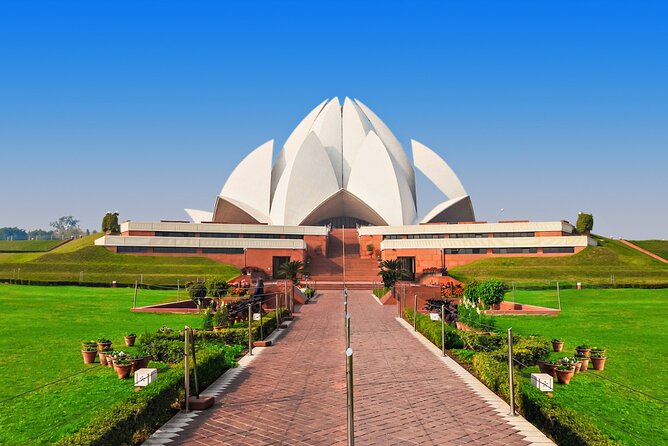
The final major stop is the Lotus Temple, with about 45 minutes. It’s a Bahá’í house of worship, consecrated in December 1986 and known for its flower-like form.
The architecture is the star. You’ll have time to walk around and view it from different angles, and it’s a good way to end the day because it’s less of a street-market experience and more of a calm, structured environment.
Admission is free here too, and the temple’s reputation as a major attraction means you’ll likely see plenty of visitors coming in and out. Your guide can help you find the best spots to take in the building without turning the experience into a race.
Driver and Guide Quality: Why Sunny and Others Matter
A private car is only as good as the person steering it through a day. In the feedback, names kept showing up: Sunny came up as an amazing driver—kind, patient, and punctual. Other guides named Dharmendra and Anil were also praised, with comments that they were good guides who managed the day well.
What you should take from that: this isn’t just “transport.” A good guide changes how you experience the places. People described explanations that stayed simple and interesting, not heavy and academic. That matters at places like Jama Masjid, Humayun’s Tomb, and even the official-landmark stretch, where a few context sentences can make everything click.
Also, vehicle quality popped up in the feedback: clean car, comfortable ride, and a driver who keeps things moving smoothly. In Delhi, that’s not a luxury—it’s part of making the schedule actually work.
Who Should Book This Full-Day Delhi Loop?
This is a good fit if you want:
- A structured day that covers Old Delhi and New Delhi without you planning every route.
- Comfort-first transport in an air-conditioned car, especially if it’s hot or you don’t want constant stops for taxis.
- A mix of religious sites, Mughal-era architecture, a UNESCO tomb, and modern civic landmarks.
It’s also a solid option for first-time Delhi visitors who don’t want to guess what to prioritize. If your style is to arrive, wander for hours, and feel totally free, you might find the schedule a little tight. The stops are planned, and you’ll feel the day moving from one landmark mood to another.
Quick Practical Tips for This Kind of Day
No wild assumptions here—just the basics that keep the day enjoyable:
- Wear comfortable shoes. Even “short” visits add up.
- Bring a hat or sunglasses if you’re sensitive to sun, especially in the open areas.
- If you want your meal to go smoothly, use the Connaught Place window to decide where to eat rather than guessing last minute.
- If you want to be extra safe about costs, ask your driver/guide ahead of time how distance-related charges are handled.
Also, one thing to double-check: the tour concept is marketed as covering major sights like Akshardham Temple and Qutub Minar, but your provided stop list doesn’t show them. If those are must-sees for you, confirm the exact route when you book.
Should You Book It?
I’d book this tour if you’re the type who wants Delhi in one day with minimal stress and included entry fees. The private car setup, the reasonable time allocations (30 minutes to 1 hour at key monuments), and the praised guide quality make it a strong value for a first pass through the city.
I’d think twice if you dislike structured schedules or you want lots of free time for deep wandering. Also, if you’re worried about any potential extra distance-related charges, ask clear questions ahead of time so the day stays comfortable for your budget.
FAQ
FAQ
How long is the private Delhi city tour?
The tour runs about 7 to 8 hours.
Is pickup included, and can they pick me up anywhere in Delhi?
Yes. You can be picked up from any location in Delhi, including hotel, airport, or train station, and you’ll be dropped back at the end.
Is this a private tour or shared with other people?
It’s private. Only your group participates.
What monuments have included admission fees?
Admission is included for Jama Masjid and Humayun’s Tomb, and the tour includes entry fees to monuments as listed in the itinerary.
What’s not included in the price?
Tips and gratuities, plus meals and personal expenses, are not included.
Can I get a full refund if I cancel?
Yes. There is free cancellation, and you can cancel up to 24 hours in advance for a full refund.