REVIEW · NEW DELHI
Full-Day Private Old and New Delhi Combo Tour
Book on Viator →Operated by A Star Tours · Bookable on Viator
One day, two Delhis, zero guesswork. This private route strings together Old Delhi chaos and New Delhi government-era landmarks with a guide handling the logistics. You get an air-conditioned vehicle, hotel pickup, and a tight plan that helps you check off the big hitters without wasting hours stuck in traffic.
I love that the day is built around two very different sides of Delhi, so you actually see the contrast instead of just hopping between monuments. And I really like the human touch: guides like Asim and drivers like Sakil and Sunil focus on getting you oriented, answering questions, and keeping the pace steady without feeling like you’re being rushed.
One thing to plan for: it’s a full, high-sight day. Old Delhi markets can turn into sensory overload, and there can be time spent at shops along the way—so if you want zero shopping pressure, you’ll need to politely stay focused on the itinerary.
In This Review
- Key things to know before you go
- Delhi in One Long Day: When This Combo Works
- A note on timing
- The Pickup Setup: Comfort, Punctuality, and Less Traffic Stress
- Old Delhi First: Jama Masjid and the Big Courtyard Moment
- Chandni Chowk and Khari Baoli: Spice Market Reality Check
- Possible drawback to flag
- The Red Fort Slot: A Crown-of-Empire Stop
- Humayun’s Tomb: UNESCO Garden-Tomb Clarity
- New Delhi Monuments: India Gate, Rashtrapati Bhavan, Parliament
- Lotus Temple and Qutub Minar: One Easy, One Sky-High
- What You Actually Get for $20 (and What Costs Extra)
- Price sanity check
- Guide and Driver Quality: The Human Factor That Shows Up
- Who This Tour Best Fits
- Should You Book This Old and New Delhi Private Combo Tour?
- FAQ
- How long is the Old and New Delhi combo tour?
- Is this tour private or shared?
- Do I get hotel pickup and drop-off?
- Is the vehicle air-conditioned?
- Does the price include entrance fees?
- Is food or drinks included?
- Are camera fees included?
- Is Lotus Temple open every day?
- What about ages and children?
- Can I cancel for a full refund?
Key things to know before you go

- Private, air-conditioned transport with pickup: less stress in Delhi traffic and fewer navigation headaches.
- Old Delhi market time with a rickshaw/tuk-tuk ride: a short, memorable way to experience Chandni Chowk’s lanes.
- UNESCO stops built in: Humayun’s Tomb and Qutub Minar are included with admission when the all-inclusive option is booked.
- Flexible itinerary within a structured day: you can adjust the order to match your interests, as long as you stay within the 8–9 hour window.
- Lotus Temple has a weekday schedule: it’s closed on Mondays, so plan around that.
Delhi in One Long Day: When This Combo Works

This tour is for the “I only have one day in Delhi” problem. Old Delhi is all sound, spice, and old streets. New Delhi is wider roads, memorials, and formal architecture. Doing both in a single day is intense, but it’s also efficient.
The best part is that the plan handles the moving pieces. You’re not figuring out where to start, what’s near what, or how to get between the markets and the monument zone. Your guide sets the rhythm, and your driver does the hard work of threading you through traffic.
If you like structure but still want personal attention, private tours fit well. A lot of the glowing feedback centers on guides tailoring the day—asking what you care about and adjusting on the fly without turning it into chaos.
You can also read our reviews of more private tours in New Delhi



A note on timing
The tour runs about 8 hours (often described as 8–9 hours). That’s plenty of time to see the highlights, but not enough for long, slow wandering. If you love lingering for photos or you’re easily tired by crowds, build in mental buffer time and expect “quality stops,” not “all-day exploring.”
The Pickup Setup: Comfort, Punctuality, and Less Traffic Stress
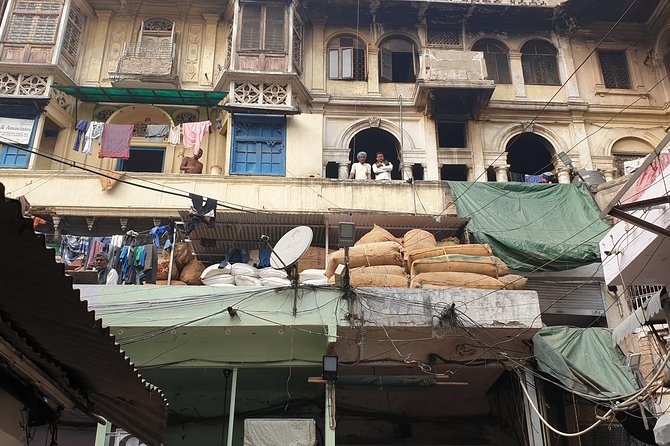
Hotel pickup and drop-off is one of the biggest quality-of-life perks. You avoid the “where do I meet?” scramble and you start with a clean plan.
Delays in Delhi are real, and traffic can be unpredictable. The point of hiring a private driver is simple: you spend the day sightseeing, not negotiating routes. The vehicle is air-conditioned, which matters when you’re doing market stops and open-air monuments back to back.
Many guides and drivers are praised for arriving early and communicating clearly—one solo traveler noted that the guide called to confirm and the team reached the pickup point ahead of time. That’s not just nice; it’s practical. Early pickup helps you get into the Old Delhi area with more energy.
Old Delhi First: Jama Masjid and the Big Courtyard Moment
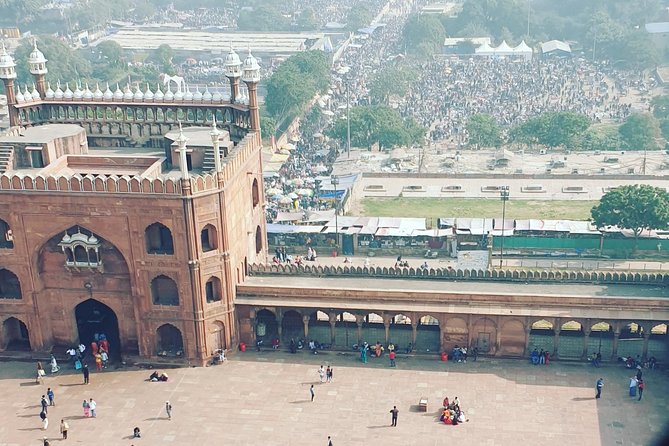
You start at Jama Masjid, one of India’s largest mosques. It’s Mughal-era in scale and built for huge gatherings; the courtyard can hold up to 25,000 devotees. Even if you’re just seeing it as a visitor, it’s the kind of place that changes the way you look at the neighborhood.
The visit is about an hour, and admission is free. That timing works well early in the day because the light and crowd level can feel more manageable than later. Bring a practical mindset: this is an active religious site, and you’ll want to be respectful with dress and behavior.
Jama Masjid also sets the tone for Old Delhi. After this, the markets won’t feel random. You’ll start seeing the city as a layered system—religion, commerce, and empire all running through the same streets.
Chandni Chowk and Khari Baoli: Spice Market Reality Check
Next comes Chandni Chowk (about 30 minutes) followed by Khari Baoli (about 1 hour). These are free stops, but they’re not “quick and easy” stops. Chandni Chowk is known for being old and extremely busy, and Khari Baoli is famous as a massive spice market—ideal for chefs and food lovers, and honestly fun even if you just like watching people shop.
Here’s how to make it enjoyable instead of exhausting:
- Wear comfortable shoes. You’ll be in crowds and moving at a human pace.
- Expect sensory overload: smells, sounds, and dense foot traffic are part of the experience.
- Keep your camera ready, but don’t rush past the moments that feel calm for a second.
A number of people love the short rickshaw/tuk-tuk ride through the spice market area. It’s one of those “small slice, big memory” experiences. The ride gives you a different angle on the lanes, and it can feel like a reset between photo stops.
You can also read our reviews of more tours and experiences in New Delhi






Possible drawback to flag
Old Delhi can sometimes include time that feels more like a shopping detour than a sightseeing detour. Some visitors noted pressure to buy at an artisan shop, and one person said they felt they missed later stops because the shop took too much time. If you’d rather skip that energy, tell your guide clearly that you want to keep moving toward monuments.
The Red Fort Slot: A Crown-of-Empire Stop
The Red Fort appears in the itinerary after the market section. It was built in 1648 by the 5th Mughal emperor, Shah Jahan, and served as an imperial residence for about 200 years until 1857.
What makes this stop worth it is perspective. Old Delhi gives you daily life and commerce. Red Fort gives you the political core that shaped the city. Even if you don’t go deep into details inside every section, seeing the scale helps you connect the dots.
The itinerary doesn’t list a specific time for this stop, so plan on it being “important but flexible.” If you’re the type who wants extra minutes at fewer places, you can use your customization option to ask for more time here.
Humayun’s Tomb: UNESCO Garden-Tomb Clarity
Next you head to Humayun’s Tomb, a UNESCO World Heritage Site. It’s described as the first garden-tomb on the Indian subcontinent and a key Mughal monument. You get about an hour here, and admission is included.
This is the calm contrast after markets. The garden-tomb layout gives you a visual structure: paths, symmetry, and a sense of intention. It also helps you appreciate why Mughals invested in architecture and landscape together.
If you’re the kind of traveler who likes specific details, this is a great stop for it. Guides often point out architectural elements you’d otherwise miss, and Humayun’s Tomb is full of those cues.
New Delhi Monuments: India Gate, Rashtrapati Bhavan, Parliament
After Old Delhi, the tour shifts into New Delhi’s grand geometry. You pass India Gate, a 42-meter memorial-like arch built to honor 70,000 India soldiers killed in World War I. The itinerary also includes Rashtrapati Bhavan (the President of India’s official residence at the western end of Rajpath) and Parliament House.
These stops are more about sightlines than long museum-style visits. Expect you’ll get enough time to understand what you’re looking at and take photos from the accessible areas.
This sequence is valuable because it gives context to modern Delhi. You’re not just collecting old monuments; you’re seeing how power is displayed today—on wide avenues, monumental buildings, and memorial architecture.
If you’re interested in politics or the way modern India presents itself, this part is a good use of your limited day.
Lotus Temple and Qutub Minar: One Easy, One Sky-High

Toward the end you visit Lotus Temple, built in 1986 from pure white marble and designed as one of seven major Bahai temples. Admission is free, and the stop is about 45 minutes. One practical detail: it’s closed on Mondays, so if your date falls on a Monday, the itinerary needs to adjust.
Lotus Temple is a “reset” stop. It’s known for its clean, flower-like shape and the nine pools of water that reflect light through the marble environment. After dense market areas and fort architecture, it’s refreshing to hit something that feels open and calm.
Then you go to Qutub Minar for about an hour. This is the sky-high finale: the 73-meter tower is famous as the tallest brick minaret in the world. It was built in 1193 by Qutub-ud-din Aibak after the defeat of Delhi’s last Hindu kingdom, and it’s also described as a UNESCO World Heritage Site. Admission is included for this stop.
If you only remember one “wow” monument from the day, Qutub Minar is the likely candidate. The scale hits fast. Plus, it’s the kind of site where your guide’s explanations can really sharpen what you’re seeing.
What You Actually Get for $20 (and What Costs Extra)
At $20 per person, the big value isn’t just the price—it’s the reduction in friction. You’re paying for:
- hotel pickup and drop-off
- private air-conditioned transport
- a professional English-speaking guide
- a structured day that covers Old + New Delhi highlights
- and a rickshaw/tuk-tuk ride
However, you should read the inclusions carefully because entrance fees depend on the option. The tour includes entrance fees only if the all-inclusive option is booked. Humayun’s Tomb and Qutub Minar are listed with admission included, but that’s typically tied to whether you selected the all-inclusive package.
Also plan for:
- food and drinks not included
- still and video camera fees not included
- tips/gratuities not included
In practical terms, you’re getting a lot of transportation and guiding value. If you also want a smooth, low-effort day with all entry fees handled up front, choose the all-inclusive option. If you’re comfortable paying some entry fees yourself, you can still get good value—but you’ll want to budget.
Price sanity check
This tour can feel like a bargain compared to bigger cities where “full day + private driver + guide” often costs much more. The tradeoff is that you’re packing many stops into one day. It’s efficient, not slow. If you want leisure and long visits at fewer locations, you might prefer spreading monuments over two days.
Guide and Driver Quality: The Human Factor That Shows Up
This tour’s reputation isn’t just about the itinerary. It’s about how the day is run.
Names show up again and again in positive feedback: guides like Asim and Manu, plus drivers including Sunil, Sakil, and others. People highlight communication, patience, and the ability to adapt when someone is more interested in architecture, photos, or cultural context.
One common theme: guides use the day to answer your questions and point out details that turn a photo into a story. If you care about that kind of context, this private setup is a real win.
Another theme: driving skill. Delhi traffic takes confidence. A skilled driver helps the day feel smooth, even if the streets themselves never really quiet down.
Who This Tour Best Fits
This is a great match if:
- you have one day and want the main highlights
- you’re visiting solo and want help with navigation and comfort
- you care about history and architecture, but not at the expense of logistics
- you want a private guide who can respond to your interests
It’s less ideal if:
- you hate crowded markets (Chandni Chowk can be a sensory shock)
- you want a leisurely pace with minimal travel time between stops
- you strongly want to avoid any shopping detours (politely set expectations with your guide)
Should You Book This Old and New Delhi Private Combo Tour?
I’d book it if your goal is fast orientation and maximum monument coverage without the stress of planning the route. The combination of Humayun’s Tomb, Jama Masjid, Qutub Minar, and the New Delhi memorial zone gives you a rounded Delhi picture in one working day.
Choose it especially if you value a guide who can explain what you’re seeing and a driver who can handle the city’s driving realities. And if you’re sensitive to shopping pressure, tell your guide up front that you’re skipping extra stops and sticking to monuments and viewpoints.
If your schedule includes a Monday, double-check your plan for Lotus Temple, since it’s closed on Mondays. For everyone else, this tour is a strong one-day solution—busy, but well organized, and built for first-time visitors who want the highlights without the headaches.
FAQ
How long is the Old and New Delhi combo tour?
It runs about 8 hours (approximately), with the plan described as fitting into an 8–9 hour day.
Is this tour private or shared?
This is a private tour/activity. Only your group participates.
Do I get hotel pickup and drop-off?
Yes. Hotel pickup and drop-off are included.
Is the vehicle air-conditioned?
Yes. Transport is by an air-conditioned private vehicle.
Does the price include entrance fees?
Entrance fees are included only if the all-inclusive option is booked.
Is food or drinks included?
No. Food and drinks are not included.
Are camera fees included?
No. Still and video camera fees are not included.
Is Lotus Temple open every day?
No. Lotus Temple is closed on Mondays.
What about ages and children?
Ages 2 and under are free.
Can I cancel for a full refund?
Yes. Free cancellation is available, and you can cancel up to 24 hours in advance for a full refund.