REVIEW · NEW DELHI
8 Days Golden Triangle Tour with Ranthambore Tiger Tour
Book on Viator →Operated by Tour Guide Delhi · Bookable on Viator
Tigers, Taj sunrise, and old Delhi in one week. This 8-day Golden Triangle tour strings together Delhi, Agra, Jaipur, and then swaps palace corridors for the real thing: Ranthambore’s wildlife. I really like the way the days are timed—especially the early starts—so you’re not wasting daylight on long, aimless drives.
I also like the people layer: professional tour guides in each city and a driver who focuses on safety and comfort. In at least one group, guides such as Sonia and Vivek were described as accommodating and knowledgeable, and drivers like Rajendra Sharma and Ajay were praised for making guests feel safe and looked after. The main drawback to plan around is the pace and added cost: there’s a lot to cover, and monument entrance fees are not included (listed at $79 per person), so your total can rise fast.
In This Review
- Key highlights you’ll actually feel on the trip
- Golden Triangle Plus Ranthambore: What this tour delivers
- Day 1 in Delhi: arrive, settle, and get positioned
- Day 2 in Delhi: Old Delhi rickshaw + the New Delhi monument circuit
- Day 3 to Agra: Forts, gardens, and a sunset plan
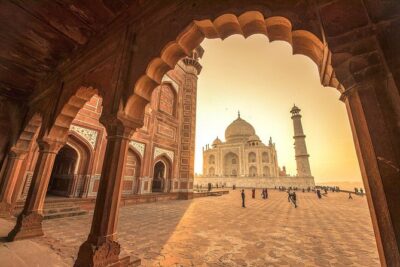
- Day 4: the 5:45 AM Taj Mahal sunrise (and why it’s worth it)
- Days 5: Ranthambore tiger safari, two drives, real wildlife rules
- Day 6: drive to Jaipur, then choose your temple mood
- Day 7 in Jaipur: Fort views, City Palace, observatory time, and the Hawa Mahal photo moment
- Day 8: depart from Jaipur or head back to Delhi
- Price and value: is $749 a fair deal here?
- Who this tour fits best (and who should rethink it)
- Should you book this one?
- FAQ
- How long is the tour?
- Does the tour include sunrise at the Taj Mahal?
- Are monument entrance fees included?
- How many Ranthambore safari drives are included?
- What kind of transportation is used between cities?
- Are hotel and airport/railway station transfers included?
- Is this tour only for my group?
- Can I choose to depart from Jaipur or Delhi on the last day?
- When can I get a full refund if I cancel?
Key highlights you’ll actually feel on the trip
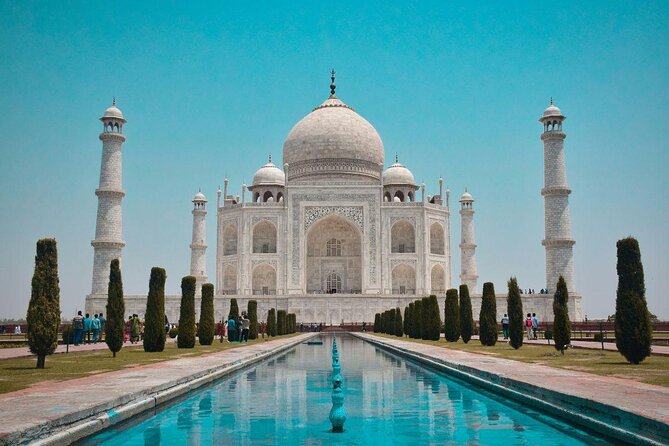
- Sunrise Taj Mahal with a scheduled meeting time so you see the marble in early light.
- Two Ranthambore game drives (early morning and afternoon/evening) to improve your odds for tiger sightings.
- Old Delhi street time with a rickshaw ride in Chandni Chowk, not just photos from a bus.
- UNESCO hits across the Triangle: Qutub Minar, Humayun’s Tomb area, and more.
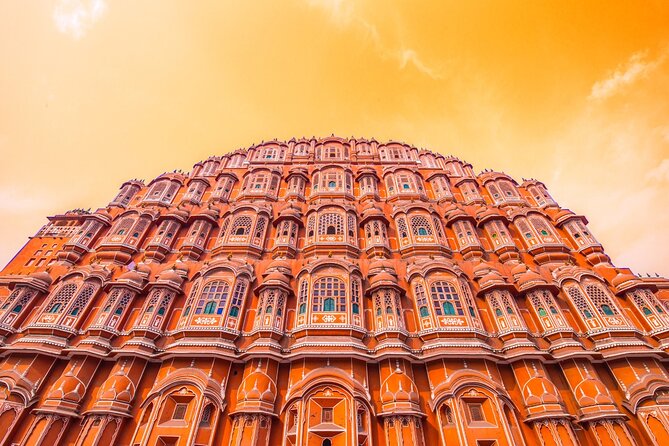
- Photo stops built in (Parliament House, Rashtrapati Bhavan, Hawa Mahal) so you can skim without adding full guided time.
- Private, guided structure for your group, plus shared jeeps/canters for safaris where that’s standard.
Golden Triangle Plus Ranthambore: What this tour delivers

This is one of those trips that’s easier to like than to explain. On paper it looks like a checklist: Delhi monuments, Agra’s big one, Jaipur’s forts and temples, then a tiger safari. In real life, the order matters. You get the cultural “build” first, then the wilderness. By the time you’re in Ranthambore, you’ll be ready to trade architecture for tracks.
You’re also traveling with structure instead of just hopping between cities. You’ll have a private air-conditioned vehicle with water between destinations, plus pickups and drop-offs at your hotel and the airport/rail station. That matters in India, where “just taking a taxi” can turn into a whole day of logistics headaches.
The best value piece is that the trip includes the hard parts you’d otherwise have to arrange yourself: guides in each city, hotel pick-up and drop-off, and safaris in Ranthambore. Where you should keep your wallet open is entrances. Monument entrance fees are listed separately at $79 per person, and those can be the difference between a deal and a surprise bill.
You can also read our reviews of more tours and experiences in New Delhi.



Day 1 in Delhi: arrive, settle, and get positioned
Day 1 is straightforward: you arrive in New Delhi, meet your chauffeur, and get transferred to your pre-booked hotel. After check-in, the rest of the day is yours. I like this kind of start because Delhi can feel like information overload—traffic, sound, pace. Having the first day as a “land and breathe” day helps you actually enjoy the next morning.
Practical tip: keep your essentials easy to grab. You’ll be starting early later, and in multi-day trips it’s the little things (water, sunscreen, a hat) that save time.
Day 2 in Delhi: Old Delhi rickshaw + the New Delhi monument circuit

This day is built like two different cities in one. Morning goes into Old Delhi-style sights, then you move toward the grand British-era layout of New Delhi.
You’ll visit:
- Jama Masjid (built in 1656 by Emperor Shah Jahan). The guide context here helps: it’s not just big; it’s the kind of space designed for large worship gatherings. Architecture is red sandstone and white marble, with three domes and two minarets.
- Chandni Chowk with a rickshaw ride. This is one of the few “hands-on” moments of the tour, where you’re not just watching from inside a vehicle.
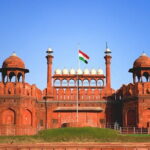
- Red Fort from outside (you don’t do the full interior here, because most of it is used by the Indian Army). You’ll still get the classic postcard angles without losing the day to access rules.
- Raj Ghat, the memorial to Mahatma Gandhi. It’s intentionally simple: a black marble platform with an eternal flame.
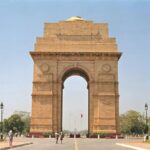
- India Gate, designed by Sir Edwin Lutyens in 1931, and honoring the 74,187 soldiers listed in its memorial context.
- Photo stops at Parliament House and Rashtrapati Bhavan.
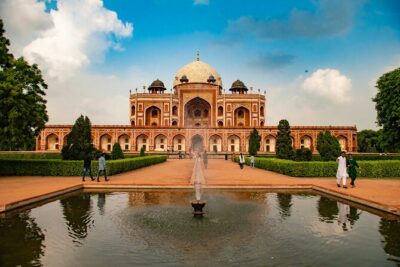
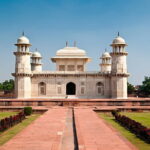
- Humayun’s Tomb and Qutub Minar (UNESCO). Qutub Minar is a standout even if you’re not the “I love towers” type—the tallest brick minaret at about 73 meters, with Indo-Islamic design details.
Is it a lot? Yes. But it’s also the smart way to see Delhi without spending hours chasing buses and tickets. The consideration: you’ll be walking at a decent pace and moving constantly, so comfortable shoes are not optional.
Day 3 to Agra: Forts, gardens, and a sunset plan
After breakfast, you drive to Agra. Check in, then get a focused mini-tour the same day.
Agra Fort comes first. You’re told it was a UNESCO World Heritage Site and the former residence of Mughal emperors, built by Emperor Akbar (with later modifications by Shah Jahan). Having the “who changed what” context makes the fort feel less like random walls and more like a timeline.
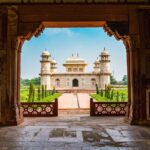
Then comes Mehtab Bagh, the Moonlight Garden area for sunset views of the Taj Mahal. Even if clouds or haze happen, the idea is solid: you’re choosing a viewpoint at golden-hour lighting. That timing is part of why the Taj experience can feel different day to day.
One thing to note: your day ends in Agra. So you don’t have the “arrive and immediately rush off” vibe. You can actually rest after the biggest day is still ahead.
Day 4: the 5:45 AM Taj Mahal sunrise (and why it’s worth it)
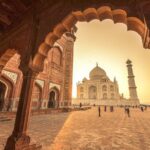
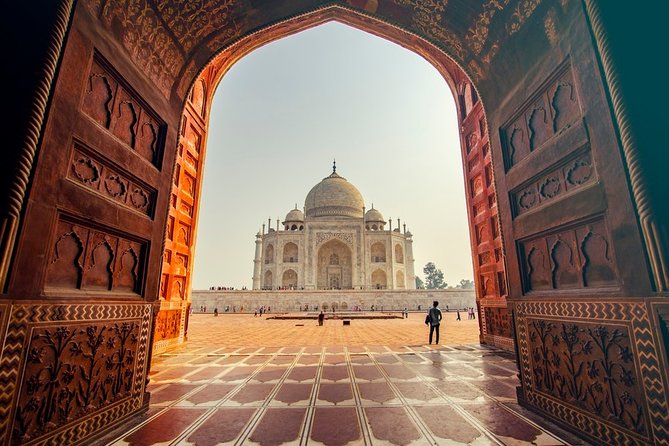
Day 4 is the headline. You’re picked up around 5:45 AM for a sunrise visit, and you meet your private guide in the hotel lobby. That detail matters because sunrise Taj visits aren’t about sleeping in. They’re about showing up when the marble is catching early light—golden hues across ivory-white marble, and a calm feel before the day warms up.
The Taj Mahal is described as a Seven Wonders–type landmark, built by Emperor Shah Jahan in memory of his wife (the guide context helps you understand this isn’t just a pretty building). You’ll get about two hours at the site.
After exploring, you head back for breakfast, then you start moving again—this time to the next Mughal highlight before Ranthambore:
- Fatehpur Sikri (UNESCO), the abandoned Mughal capital about 35 km west of Agra, built by Akbar in 1571.
Then the long drive takes you to Sawai Madhopur, where you check into your Ranthambore hotel for the night.
Drawback to plan around: it’s a full-throttle day. Sunrise, then a second major stop, then travel. If you’re the type who hates early mornings, this tour will still work—but you’ll feel it.


Days 5: Ranthambore tiger safari, two drives, real wildlife rules
Now the trip shifts from monuments to survival biology. You start with a 6:00 AM pickup for the first game drive. The morning safari runs about 2–3 hours, and the wildlife window is the reason this park is famous for its Bengal tigers.
After that, you return to your hotel for breakfast and a midday break. This isn’t just “sit around.” It’s how you keep your energy for the next chase.
The second drive is at about 2:30 PM, running roughly 3–4 hours. Two safaris is the big advantage here. Tigers are not guaranteed on any given drive—wildlife timing is wildlife timing—so doing morning plus afternoon gives you more chances to match what animals feel like doing that day.
How to make it easier in the moment:
- Dress for early and late temperature swings (you’ll feel a difference between morning and afternoon).
- Bring a reusable water bottle if you can; you’ll have water in the vehicle between cities, but safari days can still get dry and long.
- Keep your expectations flexible. Even if you don’t lock onto a tiger sighting, the park experience isn’t only about the tiger.
Your safari rides are in shared jeeps/canters, which is normal for this kind of park setup. You’ll still have your own guide support structure, but the vehicle part is shared.
Day 6: drive to Jaipur, then choose your temple mood
Morning starts with a drive to Jaipur. After breakfast, you check out and move through Rajasthan’s landscapes.
Once you arrive, you get a hotel check-in and then an evening option:
- Galta Ji Monkey Temple: known for seven sacred water tanks (kunds) and a large group of rhesus macaques and langur monkeys.
- Birla Mandir: a modern Hindu temple built entirely of white marble, dedicated to Vishnu and Lakshmi.
This is a nice touch because it lets you steer the vibe of the evening. Want nature chaos and temple views with monkeys? Galta Ji. Prefer calm and clean marble details? Birla Mandir.
Either way, you sleep in Jaipur, not in a rushed transit hotel. That’s a real quality-of-life win.
Day 7 in Jaipur: Fort views, City Palace, observatory time, and the Hawa Mahal photo moment
Jaipur day is a classic “greatest hits,” but with enough variety that it doesn’t feel copied and pasted.
You’ll tour:
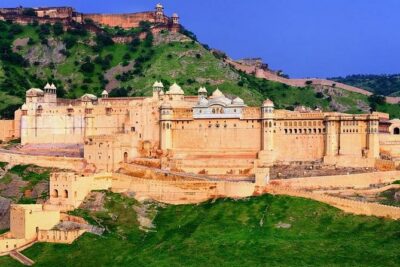
- Jaipur Fort (UNESCO), built from pale yellow/pink sandstone with white marble. Raja Man Singh I built the original complex in 1592, later expanded by Jai Singh I.
- Jal Mahal: a photo stop at the Water Palace in Man Sagar Lake. The idea is the structure looks like it’s floating because floors can sit submerged when the lake is full.
- City Palace: a royal residence built by Maharaja Sawai Jai Singh II in 1729, mixing Rajput, Mughal, and European styles.
- Jantar Mantar (UNESCO): an astronomical observatory with 19 instruments, including the world’s largest stone sundial (as stated in the tour description).
- Hawa Mahal: another photo stop. The Palace of Winds is designed so royal women could observe street life without being seen—five stories of red and pink sandstone.
The day ends with time for local markets for handicrafts, jewelry, textiles, and Rajasthani souvenirs, and then you return to your hotel.
Here’s the main consideration: Jaipur can feel like a lot of “big sites in a row.” If you’re tired, use the market hour for a gentle reset. Go slow. Pick one or two things you actually want, not ten things you feel obligated to buy.
Day 8: depart from Jaipur or head back to Delhi
Your final morning is flexible. You either:
- depart from Jaipur by driving to Jaipur International Airport, or
- choose departure from Delhi, with a driver dropping you at Delhi International Airport or your preferred spot in Delhi.
If your flight timing allows, I love the freedom to choose. It can save you from a last-minute scramble and lets you avoid forcing one more long drive if you don’t need it.
Price and value: is $749 a fair deal here?
At $749 per person, this tour sits in the “not cheap, but not crazy” zone for what’s included. Here’s what you’re getting that usually costs extra when you book pieces separately:
- 3, 4, or 5-star hotels (depending on your option)
- private air-conditioned vehicle with water between cities
- professional guides in each city
- hotel and airport/railway station pickup/drop-off
- two Ranthambore safaris in shared jeeps/canters
- breakfast for 7 days
What’s not included is the big variable: monument entrance fees are listed at $79 per person. So if you’re budgeting, plan on adding that amount, plus anything you choose to do outside the schedule.
The other value signal is staffing. In real feedback, drivers like Rajendra Sharma and Ajay were singled out for professionalism and safety, and guides like Sonia and Vivek were noted for being accommodating when requests came up. In a trip this packed, that kind of coordination is more than comfort—it keeps your days running.
Who this tour fits best (and who should rethink it)
This works best if you:
- want the Golden Triangle highlights without building the itinerary yourself
- like guides and structured sightseeing
- care about wildlife, but still want cultural stops
- can handle early starts (Taj sunrise and morning safari)
It may be less ideal if you:
- hate time pressure and would rather spend days slowly in one city
- want all entrance fees included in the base price (they aren’t)
- don’t handle long days well, since Delhi and Jaipur are both packed with multiple stops
Should you book this one?
I think you should book it if you want a well-run “big India sampler” with two safari opportunities and a Taj Mahal sunrise that’s scheduled, guided, and built into the plan. The private vehicle between cities, guide support in each city, and hotel setup are the reasons this tour feels manageable instead of chaotic.
If you’re on the fence, do this quick math in your head: compare the $749 cost against what it would take to arrange hotels, guides, internal transfers, and two Ranthambore safaris on your own. Add the stated monument entrance fees. If that total still fits your budget, you’re buying convenience and coverage—and you’re paying for a day-by-day structure that’s hard to replicate cleanly.
FAQ
How long is the tour?
It’s listed as 8 days (approx.).
Does the tour include sunrise at the Taj Mahal?
Yes. It includes a 5:45 AM sunrise visit to the Taj Mahal with a private guide.
Are monument entrance fees included?
No. Monument entrance fees are listed as $79 per person and are not included.
How many Ranthambore safari drives are included?
Two. The tour includes a morning game drive and an afternoon/evening game drive in Ranthambore National Park.
What kind of transportation is used between cities?
You use a private air-conditioned vehicle with water for the Golden Triangle portions, plus shared jeep/canter safaris in Ranthambore.
Are hotel and airport/railway station transfers included?
Yes. Pickup and drop-off are included at the hotel and airport/railway station.
Is this tour only for my group?
It’s described as a private tour/activity with only your group participating.
Can I choose to depart from Jaipur or Delhi on the last day?
Yes. On day 8, you can depart from Jaipur (to Jaipur International Airport) or depart from Delhi (to Delhi International Airport or your preferred location).
When can I get a full refund if I cancel?
You can cancel up to 6 days in advance for a full refund, with the cutoff based on the local start time of the experience.