REVIEW · NEW DELHI
Golden Triangle Group Tour with 5 Star Hotels – All Inclusive
Book on Viator →Operated by Select India Holidays · Bookable on Viator
Golden Triangle in six days, without the chaos. This is a small-group trip (up to 9 people) that strings together Delhi, Agra, and Jaipur with an air-conditioned car and key admission tickets handled for you.
I especially like two moments: the electric rickshaw ride through Old Delhi’s lanes and the built-in chance to catch the Taj Mahal from a Taj viewpoint before you actually go inside. One thing to plan for: lunch and dinner are not included, so you’ll still want a daily budget.
In This Review
- Fast reasons this Golden Triangle tour feels well-run
- Golden Triangle Tour in 6 days: what the rhythm really feels like
- The Delhi plan: airport transfer, Old Delhi lanes, and Qutub Minar time
- Old Delhi by electric rickshaw at Chandni Chowk
- Jama Masjid: Mughal capital, imperial mosque setting
- Raj Ghat: a short stop that hits hard
- World War I memorial, then the former Viceroy’s House area
- Diplomatic area drive-by on Shantipath
- Qutub Minar: included entry and real monument scale
- Agra travel day: the 4-hour move plus an early Taj moment
- Taj Mahal and Agra Fort: two very different kinds of Mughal power
- Taj Mahal: 2 hours at the main monument
- Agra Fort: UNESCO scale, military architecture focus
- Jaipur: Amber Fort to Jantar Mantar, with stops that make sense
- Amber Fort (2 hours): the main royal wow-factor
- Jal Mahal: a quick photo stop with big postcard value
- City Palace (1 hour): architecture + living history
- Jantar Mantar (45 minutes): the observatory break from monuments
- Birla Mandir (30 minutes): a calm finale
- Day 6 back to Delhi: how to plan your timing
- Hotels and “all inclusive” reality check (the useful version)
- Value for $190: when it’s a good deal and when it’s not
- Who this Golden Triangle group tour suits best
- Should you book it
- FAQ
- What cities are included on this Golden Triangle tour?
- Is pickup offered from the airport?
- Is this tour really all inclusive?
- How big is the group?
- What monument entrances are included?
- Do I ride in a rickshaw in Delhi?
- What meals are included each day?
- What does the tour include for transportation?
- Can I cancel and get a refund?
Fast reasons this Golden Triangle tour feels well-run
- Small group size (max 9): enough company for fun, not so many people that you feel like cattle.
- Private air-conditioned vehicle: long drives between cities feel manageable.
- Monument entrance fees included: Qutub Minar, Taj Mahal, Agra Fort, Amber Fort, Jantar Mantar, and City Palace.
- Old Delhi experience with electric rickshaw: a very practical way to sample Chandni Chowk.
- Longer sightseeing blocks at the big stops: Taj Mahal gets real time, not a quick photo sprint.
- Breakfast included for 5 days: helps you start early without hunting for food.
Golden Triangle Tour in 6 days: what the rhythm really feels like

The Golden Triangle is classic India for a reason. You’re doing three cities that basically explain why people fall in love with the country: Delhi for layered empires and spiritual landmarks, Agra for Mughal scale, and Jaipur for forts, palaces, and royal-era planning.
What makes this version work for you is the pacing. You’re not bouncing every 20 minutes. The plan builds in actual time at major sites, then uses travel time smartly between cities. You’ll also have a local English-speaking guide for sightseeing, which matters more than you’d think once you’re standing in front of monuments that took centuries to create.
This is priced as a $190 tour, and the value comes from the combo: guided transport + included monument tickets + breakfast + pickup/driver support. If you’re the type who hates paying surprise fees at every gate, this package does a good job of handling that up front. Still, remember: lunch and dinner are on you.
You can also read our reviews of more tours and experiences in New Delhi.



The Delhi plan: airport transfer, Old Delhi lanes, and Qutub Minar time
Day 1 starts simply: you land at Indira Gandhi International Airport and get transferred to your hotel for two nights. That’s a solid move if you want less stress on arrival day. You don’t have to figure out where to go or how to get there after a travel day.
Then Day 2 is where Delhi gets real.
Old Delhi by electric rickshaw at Chandni Chowk
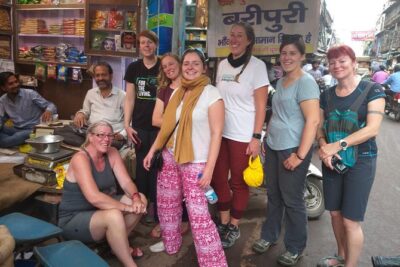
You’ll head to Chandni Chowk by electric rickshaw, which is a nice touch for a busy market area. Chandni Chowk is one of the oldest and busiest market zones in central north Delhi, and it’s known for wholesale-style shopping energy. You also get a quick window to absorb the atmosphere without spending the whole day navigating on your own.
A practical note: markets like this are easiest when you move with purpose. Think: comfortable shoes, light layers, and don’t plan on impulse-shopping every minute. Use the rickshaw ride and short stop to get oriented and pick a couple of things you genuinely want.
Jama Masjid: Mughal capital, imperial mosque setting
Next is Jama Masjid, the great mosque associated with Shahjahanabad, the Mughal capital. The key here is context. You’re not just looking at an impressive building—you’re seeing the spiritual centerpiece of a historic empire-era city layout.
You’ll get about a half hour here, so keep it simple: take in the scale from the main areas, then decide if you want extra time for photos and details.
Raj Ghat: a short stop that hits hard
Then you go to Raj Ghat, Gandhi’s memorial where he was cremated. Even with limited time, this is one of those stops that changes the tone of the day. It’s quiet, reflective, and straightforward.


World War I memorial, then the former Viceroy’s House area
The itinerary also includes a 42-meter memorial for the 70,000 Indian soldiers who died fighting for the British Army. After that, you’ll drive through the area of the former Viceroy’s House, now the residence of the President of India, designed by Sir Edwin Lutyens and Herbert Baker. Even if you don’t go inside anything here, the drive helps you connect Delhi’s modern political center with its colonial-era architecture.
Diplomatic area drive-by on Shantipath
There’s also a drive through Shantipath, the diplomatic area where embassies are located. This is less about “sightseeing” and more about giving your eyes a broader map of the city.
Qutub Minar: included entry and real monument scale
Finally, you end Day 2 with Qutub Minar. This is a big deal: it’s 72.5 meters tall and tied to Qutab-ud-din Aibak in 1192. You’ll have enough time to appreciate the monument’s height and shape, and because admission is included, you’re not juggling fees.
Tip: plan to stay aware of sun and shade. Standing still for long monument time can feel warmer than you expect, especially depending on season.
Agra travel day: the 4-hour move plus an early Taj moment
Day 3 is a 4-hour journey from Delhi to Agra, with a 30-minute tea/coffee stop. That break matters. It’s long enough to reset, and short enough that you’re not losing half the day.
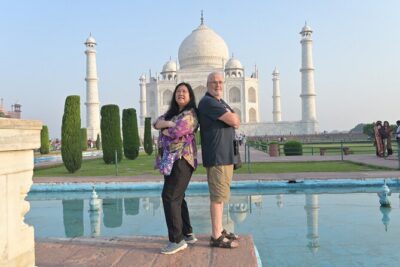
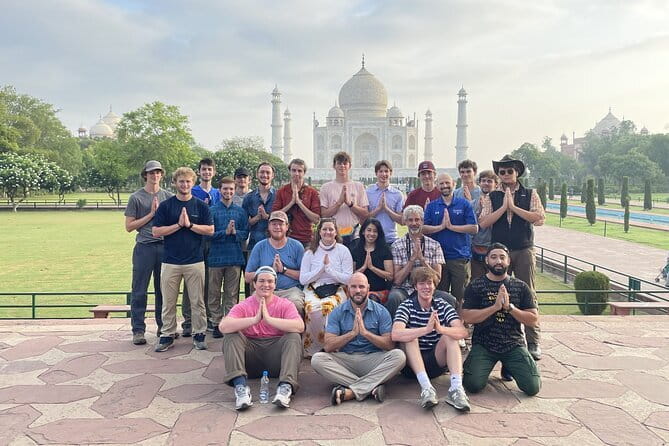
When you arrive, you check into your hotel for one night. Then you get a special extra: a Taj Mahal View Point across the Yamuna River with panoramic views.
This is one of the smart parts of the plan. When you see the Taj from across the river first, you build a mental picture before you enter. Later, when you’re inside the Taj complex, you can match what you’re seeing to the view you already got. That reduces the “wait, where am I looking?” feeling.
Taj Mahal and Agra Fort: two very different kinds of Mughal power
Taj Mahal: 2 hours at the main monument
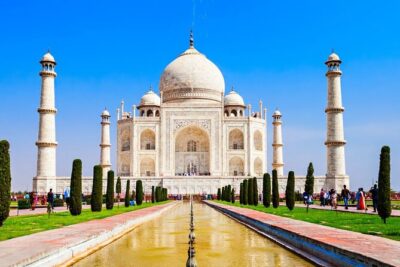
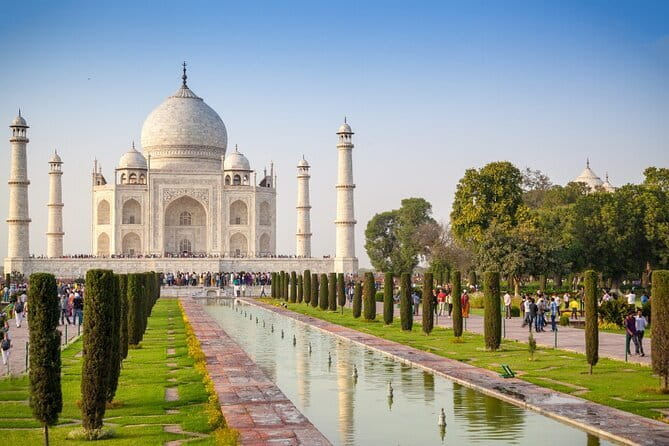
Day 4 includes the big one: Taj Mahal with admission included and about 2 hours on site. That’s enough time to do more than a quick walk-and-go.
What I’d prioritize with your time:
- Take a slow first look to understand the layout.
- Then focus on details that are hard to spot in fast passes—scale, symmetry, and the way the complex is designed around key viewpoints.
Also, bring patience. This is one of the world’s most photographed places, so expect a camera-and-crowd vibe at many moments.
Agra Fort: UNESCO scale, military architecture focus
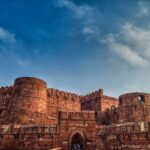
You’ll then visit Agra Fort, a UNESCO World Heritage Site. The fort is tied to Akbar for the Mughal Army, and Shah Jahan added royal palaces for residential use. The included time is about 1 hour.
The value here is that Agra isn’t only romance. This is the “power and defense” side of the Mughal story. If Taj Mahal is emotion, the fort is structure.
Jaipur: Amber Fort to Jantar Mantar, with stops that make sense
Day 4 after Agra includes the drive to Jaipur, about 5 hours including 1 or 2 tea/coffee stops. Keep your water handy and wear layers. Long car days are easier when you’re not stuck in sweaty clothes.
Then Day 5 is stacked with the best Jaipur hits, and the order helps you feel the city in stages: fort → palace → science → temple.
Amber Fort (2 hours): the main royal wow-factor
You’ll start with Amber Fort for about 2 hours, with admission included. It was originally built by Raja Man Singh and expanded by Maharaja Jai Singh I. Improvements continued under later rulers for roughly 150 years.
This matters because it means you’re not looking at one single style. You’re seeing layers of royal-era decisions, and that’s part of the fun. Don’t rush it. Forts like this are meant for slow wandering.
Practical note: plan for uneven ground and steps. Comfortable shoes are non-negotiable.
Jal Mahal: a quick photo stop with big postcard value
Next is Jal Mahal, the palace in the middle of the water, with a 15-minute photo stop. It was built in 1799 in Rajput style with pink sandstone and a symmetrical look. This stop is short on purpose, so you get the best view without eating your whole day.
If you want more time, you’ll have to do it independently after the tour day, since this plan doesn’t promise extra minutes here.
City Palace (1 hour): architecture + living history
Then you go to the City Palace of Jaipur with included entry and about 1 hour. The palace is described as a fusion of Rajputana and Mughal architecture. It’s still tied to the royal family via private sections, and you’ll see museums such as Chandra Mahal, Mubarak Mahal, Shri Govind Dev Ji Temple, and the City Palace museum.
The best way to use your hour is to pick a few areas you care about most, not try to absorb everything. City palaces can feel like mini-cities.
Jantar Mantar (45 minutes): the observatory break from monuments
Next is Jantar Mantar, an astronomical observatory with 19 instruments, built by Maharaja Sawai Jai Singh II in the 18th century. You’ll have about 45 minutes, and admission is included.
This is one of my favorite “change of pace” stops on the Golden Triangle route. It shifts you from palace power to the science of how time and sky were measured. It also gives you a break from nonstop architecture photos.
Birla Mandir (30 minutes): a calm finale
To finish the day, you visit Birla Mandir, a Hindu temple dedicated to Lord Vishnu and Goddess Laxmi. This is listed as one of the major Birla family temples.
With about 30 minutes, it’s enough time for a quiet look without turning the day into a long temple marathon.
Day 6 back to Delhi: how to plan your timing

Your final day is a 5-hour road transfer back to Delhi, with the plan to drop you at the airport or another spot you prefer in Delhi.
This last-day drive is simple, but do treat it like travel time—not sightseeing. If you want souvenirs, grab them earlier on the city days. On the final day, keep energy for the flight or next leg of your trip.
Hotels and “all inclusive” reality check (the useful version)
The tour is sold as 5 Star Hotels – All Inclusive, and the itinerary clearly includes hotels (two nights in Delhi, then one night in Agra, then you’re in Jaipur across Day 5). You also get:
- Air-conditioned vehicle across the itinerary
- A local English-speaking guide for sightseeing
- Breakfast included for 5 days
- Admission fees for the listed monuments
What it does not include:
- Lunch and dinner (you’ll pay these yourself)
- Gratuities (optional)
So how should you read “all inclusive” here? Think: you’re covered for transport, guide, lodging, and monument tickets. You’re not covered for every meal.
That’s still good value if you like having your mornings guided and your afternoons structured. If you hate deciding where to eat, you’ll want a plan (or ask your guide what’s nearby each day).
Value for $190: when it’s a good deal and when it’s not
At $190 for about 6 days, this can be a strong bargain—mainly because it bundles the stuff that adds up fast in India:
- Monument admission fees
- Private transport with fuel and parking/tolls handled
- Hotel nights across multiple cities
- Breakfast included
- Group size kept small (max 9)
Where you may feel the cost: lunch and dinner aren’t included. If you typically eat out well, your daily total could rise quickly. Also, long drives are part of Golden Triangle travel. Even with an air-conditioned car, it’s still time in transit.
If you’re a first-timer, or you want the key sights done without planning chaos, this package is built for you. If you prefer total freedom and skipping crowds, you might find a cheaper, self-guided approach better.
Who this Golden Triangle group tour suits best
This is a great match if:
- You want the core Delhi-Agra-Jaipur highlights with a guide
- You appreciate included entrance tickets and don’t want to budget each gate
- You like small-group travel (up to 9)
- You’re okay paying for your own lunch/dinner
You might skip it if:
- You want to stop where you like, not where the schedule goes
- You’re extremely price-sensitive for meals
- You dislike early or structured days (this is not a slow, flexible trip)
Should you book it
I’d book it if your priority is a smooth first Golden Triangle. The included monument access, the small group size, and the mix of Delhi (old lanes + major monuments), Agra (Taj inside plus viewpoint across the river), and Jaipur (fort, palace, observatory) makes it feel efficient without being frantic.
Book with one mindset: you’re buying structure. If that sounds relaxing, you’ll enjoy it. If you want total independence, you’ll feel the limits.
FAQ
What cities are included on this Golden Triangle tour?
The tour focuses on Delhi, Agra, and Jaipur. You travel between the three cities by private vehicle during the itinerary.
Is pickup offered from the airport?
Yes. The start point is Indira Gandhi International Airport, New Delhi, with arrival/departure by private vehicle and transfers to your hotel or airport.
Is this tour really all inclusive?
It includes 5-star hotels, breakfast (5), a local English-speaking guide for sightseeing, air-conditioned transport, and monument entrance fees for the listed sights. Lunch and dinner are not included.
How big is the group?
The group size is limited to a maximum of 9 travelers.
What monument entrances are included?
Included admission fees cover Qutub Minar, Taj Mahal, Agra Fort, Amber Fort, Jantar Mantar (Jaipur), and City Palace of Jaipur.
Do I ride in a rickshaw in Delhi?
Yes. You’ll take an electric rickshaw ride in Old Delhi at Chandni Chowk.
What meals are included each day?
Breakfast is included for 5 days. Lunch and dinner are not included.
What does the tour include for transportation?
You get an air-conditioned vehicle as per the itinerary, plus all fuel, parking, tolls, and taxes for the listed travel.
Can I cancel and get a refund?
Yes. You can cancel up to 3 days in advance for a full refund. If you cancel less than 3 days before the experience start time, the amount paid is not refunded.