REVIEW · NEW DELHI
3-Day Delhi, Agra and Jaipur Private Tour – India Golden Triangle
Book on Viator →Operated by Delight Tours India · Bookable on Viator
Three days, three icons, zero wasted fuss. This private Golden Triangle tour strings together Delhi, Agra, and Jaipur with an A/C car, two breakfasts, and a sunrise Taj Mahal morning that helps you beat the chaos. Guides such as Faiz in Agra and Abbas in Jaipur are repeatedly singled out for making the big landmarks feel personal, not just checklist-y.
I also like the way the day-by-day plan hits serious UNESCO stops without leaving you stranded between places. Day 1 pairs Qutub Minar and Humayun’s Tomb with Old Delhi time that includes a rickshaw ride through Chandni Chowk and a visit to Khari Baoli (the Spice Market). One potential downside: the pace is full, and you may also be taken to shops during the sightseeing, which can feel pressuring if you want zero shopping.
In This Review
- Key things I’d watch before booking
- The big picture: how this 3-day route works
- Day 1 in Delhi: Qutub Minar, Humayun’s Tomb, and Old Delhi in one sprint
- Qutub Minar and Humayun’s Tomb: UNESCO with context
- New Delhi landmarks that give you a quick bearings moment
- Chandni Chowk rickshaw ride and Khari Baoli Spice Market
- Red Fort outside and then the drive to Agra
- Day 2: Taj Mahal sunrise plus Agra Fort and Itmad-ud-Daula
- The 6:00 AM Taj Mahal plan
- Agra Fort after breakfast
- Itmad-ud-Daula (the Baby Taj) for a calmer contrast
- Drive onward to Jaipur and your second overnight stay
- Day 3: Amber Fort, the Water Palace, and Jaipur’s iconic photo stops
- Amber Fort: the first big hit
- Panna Meena ka Kund and the geometric stepwell break
- Jal Mahal and the “Water Palace” pause
- Hawa Mahal: Palace of Winds for the façade lovers
- City Palace and Jantar Mantar: Jaipur’s power and science
- End options: Jaipur airport or drive back to Delhi
- Private vehicle reality: comfort, control, and long-distance sanity
- Price and value: what $110 covers (and what you should budget for)
- What can slow you down: pace, shopping stops, and traffic days
- Who this tour is perfect for
- Should you book this Delhi Agra Jaipur private tour?
- FAQ
- What time do the pickups happen?
- Is this tour private or shared with others?
- Are hotel rooms included?
- Are entrance fees included in the price?
- What’s included for meals?
- Where does the tour end on the last day?
- What happens if Day 2 falls on a Friday?
Key things I’d watch before booking
- Sunrise Taj Mahal pickup at 6:00 AM on Day 2: You start early so the Taj is a moment, not a deadline.
- Old Delhi by rickshaw: Chandni Chowk is handled in a fun, efficient way instead of by wandering tired.
- Agra’s “Baby Taj” (Itmad-ud-Daula): Short visit, big payoff, and it balances the Taj with something calmer.
- Amber Fort first thing at 8:00 AM: You get a head start before the day gets loud.
- Guides and drivers emphasized for safety and smooth driving: Multiple praised drivers kept the long road days manageable.
- Two nights in 3–5-star hotels with breakfast: That’s real value on a road trip where rest matters.
The big picture: how this 3-day route works
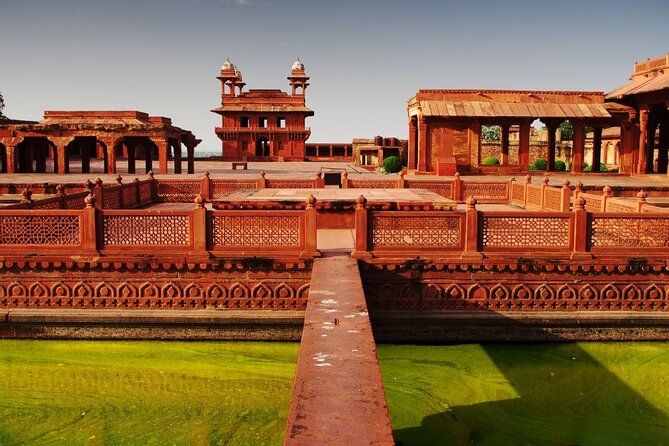
This is a classic Golden Triangle loop—Delhi, Agra, Jaipur—handled by private road travel, not buses that cram strangers together. The tour runs about 3 days and focuses on the main sights you came for: Qutub Minar and Humayun’s Tomb in Delhi, the Taj Mahal and key Agra landmarks, then Amber Fort plus Jaipur’s signature viewpoints and palaces.
What you get that’s actually useful is the structure. You’re not trying to coordinate separate tickets, timings, and transport across three cities. Instead, you’re on a planned route with a driver and live guide in your preferred language, plus daily breakfast to keep your energy up when days start early.
The tour is also flexible in one important way. If a Friday falls on the second day, the itinerary can swap (Delhi–Jaipur–Agra–Delhi). If you’ve booked hotels yourself, the provider asks that you message them for the revised plan.
You can also read our reviews of more private tours in New Delhi
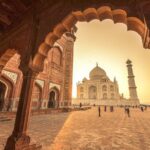
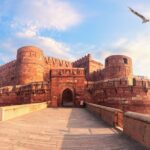
Day 1 in Delhi: Qutub Minar, Humayun’s Tomb, and Old Delhi in one sprint
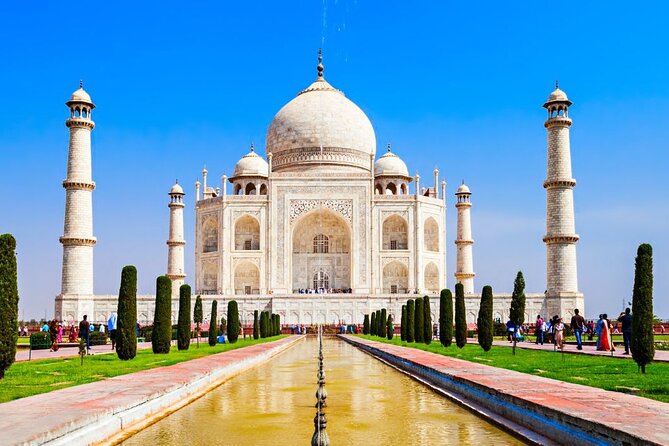
Day 1 starts with pickup from your hotel (or preferred Delhi location) at 9:00 AM. After that, the schedule leans into two “style modes” of Delhi: UNESCO monuments in New Delhi, then Old Delhi’s street life.
Qutub Minar and Humayun’s Tomb: UNESCO with context
You begin at Qutub Minar, a UNESCO World Heritage Site and the world’s tallest brick minaret, built in 1193. The tour time is about an hour, and it’s paced to let you explore the Qutub Complex, including the Iron Pillar, Alai Darwaza, and Quwwat-ul-Islam Mosque.
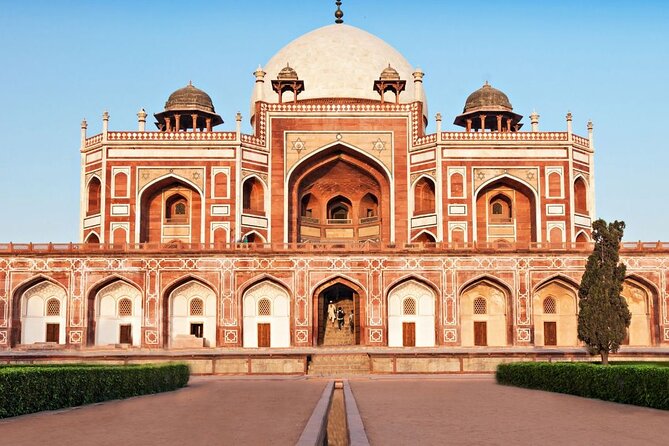
Next is Humayun’s Tomb, another UNESCO World Heritage Site, built in 1570. It’s described as a Mughal architecture masterpiece and as an inspiration behind the Taj Mahal. You get Persian-style gardens and the intricate Mughal design as part of the visit (again, about an hour). This stop is great if you like seeing the “roots” of later Mughal work before you get to Agra.
New Delhi landmarks that give you a quick bearings moment
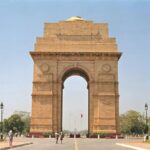
After the UNESCO hits, you’ll also see India Gate (free), the iconic circular building associated with India’s legislature designed by Sir Edwin Lutyens, and then Jama Masjid—one of India’s largest mosques, built by Shah Jahan in 1656. Jama Masjid is allotted around an hour, with time for the courtyard and the marble and red sandstone architecture.
Even if you don’t read every detail on-site, these stops help you understand how Delhi layers different eras in a small geographic area.
Chandni Chowk rickshaw ride and Khari Baoli Spice Market
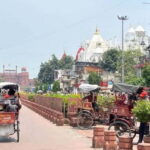
Then you pivot into Old Delhi. The tour includes a rickshaw ride through Chandni Chowk, plus a visit to the Spice Market at Khari Baoli, described as Asia’s largest spice market. This is one of the most practical parts of the day because it’s energy-efficient—you get the feel of the lanes and bazaars without spending your entire afternoon threading through traffic on foot.
You can also read our reviews of more tours and experiences in New Delhi





Red Fort outside and then the drive to Agra
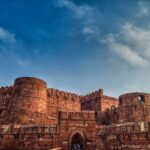
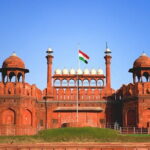
There’s also time to view Red Fort from the outside; it’s described as a UNESCO World Heritage Site built by Shah Jahan in 1648. After lunch time on your own (lunch isn’t included), you head toward Agra via the Yamuna Expressway, and you check into your Agra hotel for a free afternoon and an overnight stay.
If you’re booking the 3–5-star hotel option, this is where you’ll feel the value. Two nights of accommodation with breakfast (and taxes) means you’re not searching for a place to sleep that fits your route and schedule.
Day 2: Taj Mahal sunrise plus Agra Fort and Itmad-ud-Daula
Day 2 is the emotional headline of the Golden Triangle.
The 6:00 AM Taj Mahal plan
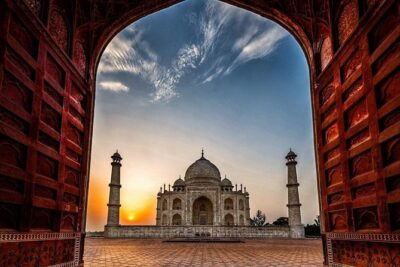
You get an early morning pickup from your Agra hotel at 6:00 AM for the Taj Mahal sunrise experience. You’re allotted about 3 hours, which usually gives enough time to watch the light shift and take photos without feeling like you’re being rushed out the second your brain catches up.
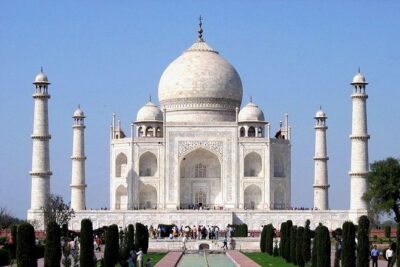
The Taj is described as an ivory-white marble mausoleum on the south bank of the Yamuna river. Knowing the basic location and that it’s marble can help you focus once you’re there. The guide’s job here is less about facts and more about helping you understand what you’re seeing—especially with a sunrise schedule that rewards patience.
Agra Fort after breakfast
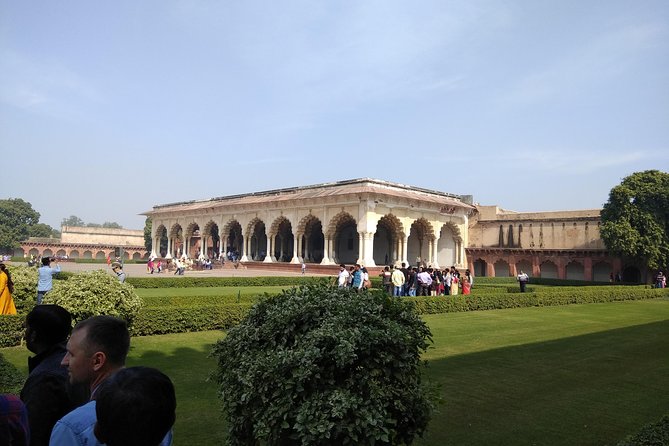
After you return to the hotel, you’ll have breakfast and check out, then visit Agra Fort. This stop is about 1 hour, with admission included. Agra Fort is described as the main residence of the Mughal emperors in Agra, which is a helpful framing because it turns the fort from “just walls” into a sense of where power sat.
Itmad-ud-Daula (the Baby Taj) for a calmer contrast
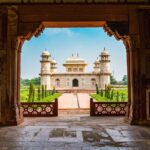
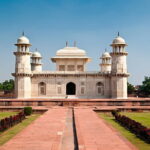
Next comes Itmad-ud-Daula, often called the “Baby Taj.” The visit is shorter—around 30 minutes—but it’s a smart contrast after the scale of the Taj Mahal. It’s described as a white marble mausoleum built in the early 17th century by Empress Nur Jahan for her father Mirza Ghiyas Beg.
When your route is packed into only three days, a shorter “breather” stop like this can be a relief. It breaks up the big-ticket landmarks and gives your feet a chance to recover.
Drive onward to Jaipur and your second overnight stay
When you’re done in Agra, the day continues to Jaipur. You check in at your hotel and get the next overnight stay.
Day 3: Amber Fort, the Water Palace, and Jaipur’s iconic photo stops
Day 3 starts in Jaipur with pickup from your hotel at 8:00 AM. If you like “first stop wins,” this is one of those mornings. Your itinerary is designed around major Jaipur sights, with a mix of forts, palace architecture, and viewpoint-style stops.
Amber Fort: the first big hit
Amber Fort is first, with about 2 hours on the site and admission included. The tour description points out it’s located in Amer, Rajasthan. This timing matters because Amber Fort usually benefits from earlier hours when the day’s pace hasn’t fully kicked into gear.
Panna Meena ka Kund and the geometric stepwell break
Next is Panna Meena ka Kund, a 16th-century stepwell near Amber Fort. It’s a quick stop—about 15 minutes—and it’s described for its symmetrical staircases and geometric design. This is the kind of stop that can be easy to skip if you’re rushed, but the design is the whole point. A short time here helps you slow down without losing the day.
Jal Mahal and the “Water Palace” pause
You also visit Jal Mahal, the Water Palace in the middle of Man Sagar Lake. It’s allotted about 30 minutes. This stop is mostly visual and reflective: a change of scenery compared to fort walls and palace corridors.
Hawa Mahal: Palace of Winds for the façade lovers
Then comes Hawa Mahal, the Palace of Winds. It’s a five-story palace built in 1799 by Maharaja Sawai Pratap Singh and known for 953 small jharokhas (windows). You get about 30 minutes, and the description focuses on the red and pink sandstone look and how those windows are meant for viewing.
City Palace and Jantar Mantar: Jaipur’s power and science
Next is City Palace of Jaipur, about 1 hour with admission included. The tour description notes it was the seat of the Maharaja of Jaipur and that it’s made up of courtyards, gardens, and buildings. It helps to see it after Hawa Mahal because you’re shifting from façade spectacle into how the city’s rulers lived and governed.
Finally you’ll hit Jantar Mantar, also a UNESCO World Heritage Site. It’s described as one of the largest and best-preserved astronomical observatories built in India, constructed in the 18th century by Maharaja Sawai Jai Singh II. This is another “short but satisfying” stop at about 1 hour.
End options: Jaipur airport or drive back to Delhi
At the end of Day 3, you can either be dropped at Jaipur Airport or drive back to Delhi. The drive is described as about 4 hours, with arrival expected by 8–9 PM. That’s late, but it’s doable if you’d rather not fly and you’re okay with finishing the road day in the evening.
Private vehicle reality: comfort, control, and long-distance sanity
This tour’s comfort angle is a big part of why it scores so high. You’ll have a private air-conditioned car with a driver, with car size based on your group:
- Sedan for 1–2 people
- SUV for 3–5 people
- 13-seater coach for 6–12 people
That matters because fewer people per vehicle usually means easier coordination at stops, plus more space to keep your daypack and water sorted.
You also get mineral water bottles, driver allowances, and all tolls, parkings, and taxes included. Lunch and dinner are not included, so plan on meal breaks happening when the itinerary gives you time rather than exactly when your stomach demands it.
In the reviews, the driver quality repeatedly shows up. Names come up often (for example Sumit, Mukesh, Ravi, Pankaj, and Rajat), and the common thread is careful, safe driving on Delhi–Agra–Jaipur roads. If you’re worried about traffic stress, having a calm driver and a fixed route is the difference between enjoying the day and counting the minutes until you can sit down.
Price and value: what $110 covers (and what you should budget for)
The tour price is listed at $110.00 per person and includes pickup/drop service, private A/C vehicle, live guide service, rickshaw ride in Old Delhi, and 2 nights of hotel accommodation with breakfast and taxes if the hotel option is booked.
Breakfast is included on two mornings (so you’re covered for Day 2’s early start and Day 3 pacing). Mineral water bottles are included as well.
The confusing bit is entrance fees. The “Included” section says entrance fees are included via the guide/entry, but the “Not Included” section specifically states entrance fees to monuments of about $65.00 per person. Here’s how I’d handle it: assume you might need to pay an entrance-fee amount even if the headline includes them, and confirm what’s already covered for your exact dates before you go. That one check can save you from an awkward moment at the gate.
Even with that possible add-on, the value is strong if you:
- Want all transport between cities solved for you
- Want a guided plan for multiple UNESCO sites
- Prefer hotel nights with breakfast rather than coordinating sleep yourself
What can slow you down: pace, shopping stops, and traffic days
This is not a “sit and watch” tour. It’s a see-the-main-sights-and-move tour, with early pickups and multiple monuments each day. If you’re the type who likes long breaks and deep wandering, you may find the schedule feels tight by the end of Day 2 or Day 3.
There’s also a pattern worth being aware of: the itinerary can include stops at shops during each day. In the feedback, some people described it as feeling pressured, and others were fine with it. If you don’t want that, be clear with your guide early, and set your boundaries at the start of the day rather than trying to negotiate mid-stop.
Traffic is another factor. During major festivals and busy travel periods, road delays can happen, which can shrink sightseeing time. The good news is that the guides you’ll get are described as helpful at adjusting plans when needed, but you should still expect a little friction in India’s road rhythm.
Who this tour is perfect for
This private Golden Triangle trip is ideal if you:
- Have only about 3 days and want the Delhi–Agra–Jaipur highlights without extra planning work
- Prefer private transport over group bus schedules
- Like early starts when the payoff is worth it (the sunrise Taj Mahal is the star here)
- Want a guide to explain what you’re looking at, especially at places like Qutub Minar, Humayun’s Tomb, and Jantar Mantar
It also works for solo travelers who want safety and comfort on long drives. Multiple review notes connect the experience to feeling safe with the driver and guides, not just the sights.
Should you book this Delhi Agra Jaipur private tour?
Yes, if you want an efficient, low-stress Golden Triangle with real “wow” moments built in—especially sunrise Taj Mahal and the UNESCO pairing of Qutub Minar and Humayun’s Tomb.
I’d think twice if you:
- Hate shopping stops and need a strict no-shop policy (it seems to be part of the rhythm)
- Want lots of free time each day (this is a packed itinerary)
- Don’t want any uncertainty about entrance fees (since pricing information can differ on whether monument tickets are fully covered)
If you book, do one thing that pays off: confirm your entrance-fee coverage in advance and tell your guide how you want the shop stops handled. Get that straight, and this route is a smart use of three days.
FAQ
What time do the pickups happen?
Day 1 pickup from your Delhi hotel or preferred location is at 9:00 AM. Day 2 starts with an early 6:00 AM pickup for the Taj Mahal sunrise. Day 3 pickup from your hotel is at 8:00 AM for Amber Fort.
Is this tour private or shared with others?
It’s a private tour/activity. Only your group participates.
Are hotel rooms included?
Yes. You get 2 nights of hotel accommodation with breakfast and taxes, with hotel options described as 3–5 star (depending on the option booked).
Are entrance fees included in the price?
The included information says entrance fees are included, but the not-included information lists monument entrance fees of about $65.00 per person. You should confirm what’s covered for your dates before you go.
What’s included for meals?
Breakfast is included for two mornings. Lunch and dinner are not included.
Where does the tour end on the last day?
You can either be dropped at Jaipur Airport or drive back to Delhi. The return drive is described as about 4 hours, with arrival expected by 8–9 PM.
What happens if Day 2 falls on a Friday?
If there is Friday on the second day of the tour, the itinerary switches into Delhi – Jaipur – Agra – Delhi. If you book hotels on your own, you should message the provider to get the revised itinerary.