REVIEW · NEW DELHI
Golden Triangle India: 5-Day Delhi, Agra, Jaipur & Pushkar Tour
Book on Viator →Operated by TRAVEL INDIA ONE DAY · Bookable on Viator
There’s a reason this route is called the Golden Triangle, and then someone adds Pushkar for good measure. You get big-name Mughal sights in Delhi and Agra, then the royal architecture of Jaipur, and finally a slower, spiritual reset in Pushkar with its holy lake and temple traditions.
I like that the plan hits the main “you’ll remember this” monuments—Taj Mahal, Agra Fort, and the standout Jaipur viewpoints—while still giving you time to experience everyday Rajasthan life in Pushkar’s bazaars. I also like the people side: guides such as Ali, Kamal, Arjun, and Balvir are repeatedly praised for clear explanations, and drivers like Santosh, Dinesh, Mukesh, and Raj are credited with punctual, careful transport.
One possible drawback: it’s a packed itinerary with a lot of road time. Also, a few Jaipur attractions are marked as not included for admission tickets (Hawa Mahal, Jantar Mantar, and Panna Meena ka Kund), so you’ll want to budget a bit beyond what you pay up front.
In This Review
- Key highlights worth planning around
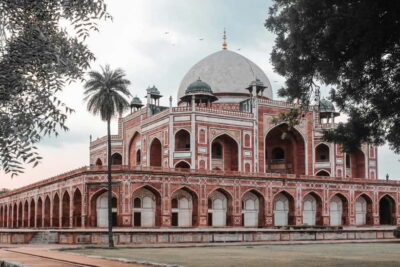
- Delhi first: Humayun’s Tomb and Qutub Minar set the stage
- The Agra drive and Taj Mahal visit: the main event, done efficiently
- Agra Fort and the Baby Taj: two Mughal moods, one city
- Pushkar: a spiritual break from monuments and road time
- Jaipur’s Amber Fort and City Palace: the royal core you shouldn’t skip
- Jaipur icons: Hawa Mahal, Jantar Mantar, stepwell and Jal Mahal
- Price and value: what you’re really paying for
- Getting the most out of a private group schedule
- Should you book this Golden Triangle India tour with Pushkar?
- FAQ
- Where does the tour start and end?
- How long is the tour?
- Is pickup included?
- Is this a private tour?
- Which major sights are included across the route?
- Are entrance tickets included?
- Will I get confirmation when I book?
- What is the cancellation policy?
Key highlights worth planning around
- Private group touring: only your group participates, which usually means less waiting and more flexibility.
- Taj Mahal + Agra Fort pairing: you see the love story and the power story back-to-back.
- Itmad-ud-Daula (Baby Taj): a smaller stop that adds depth without eating your whole day.
- Pushkar’s holy lake focus: a clear change of pace from fort-and-palace sightseeing.
- Jaipur “photo icons” plus viewpoints: Hawa Mahal, Jal Mahal, Amber Fort area—each serves a different visual mood.
- Ticket details are mixed: some admissions are listed as free, but others in Jaipur are not included.
Delhi first: Humayun’s Tomb and Qutub Minar set the stage
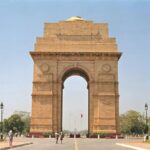
Your tour starts in New Delhi, and it makes sense to begin here. Delhi is where India’s eras stack on top of each other: Mughal-era grandeur next to modern city energy. The schedule gives you a full block for New Delhi sights, with stops that typically include Humayun’s Tomb and Qutub Minar.
What I like about this opening day is that it gives you an easy mental map. Humayun’s Tomb helps you understand Mughal funerary architecture, and Qutub Minar puts you in the older, sultanate-era frame of reference. Even if you’re not the type who memorizes dynasties, these places work because they’re visually strong and historically readable.
Practical consideration: Delhi traffic can be unpredictable. If you’re the type who hates being rushed, plan your expectations for timing and build in some patience for road movement.
You can also read our reviews of more tours and experiences in New Delhi



The Agra drive and Taj Mahal visit: the main event, done efficiently
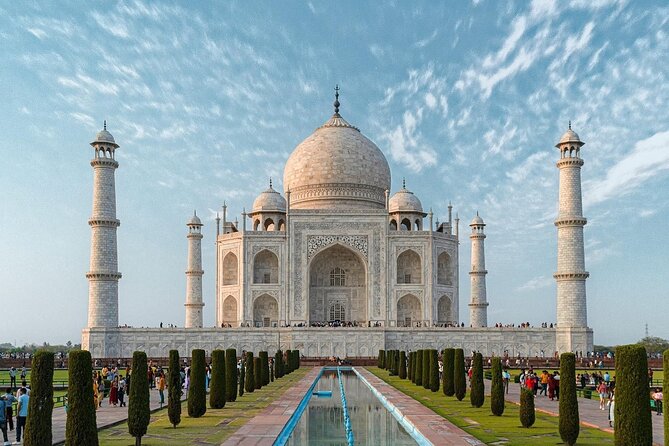
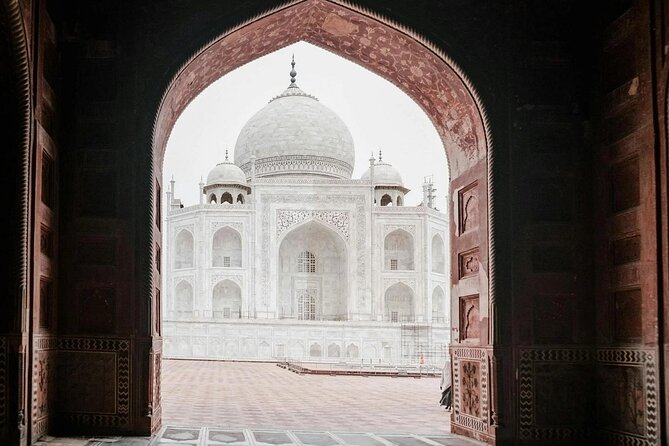
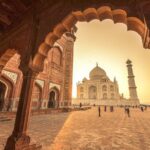
After Delhi, you head toward Agra. The plan includes a guide meeting on arrival and then a focused visit to the Taj Mahal, built by Shah Jahan for Mumtaz Mahal. The tour time is set for a dedicated Taj Mahal slot, which is the right approach: don’t treat it like a quick photo pass.
Here’s what makes this stop valuable for your trip: the Taj Mahal isn’t just a landmark, it’s a craft lesson. You’ll see how symmetry, white marble, and careful garden design are used to create emotion and scale. Even on days when the sky is bright, the building holds up—people often forget how much the light changes how the marble looks.
Potential drawback: Taj Mahal visits can still come with crowds and heat depending on the day. The good news is that the schedule marks admission as free, which helps keep your spending predictable. Just bring sun protection and plan for walking time.
Agra Fort and the Baby Taj: two Mughal moods, one city
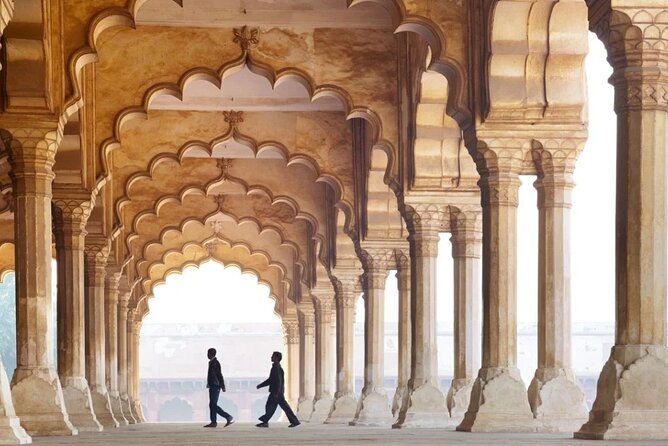
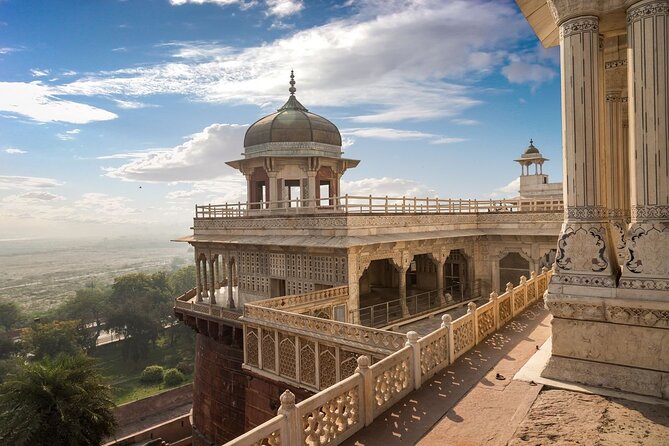
Once the Taj Mahal box is checked, the itinerary keeps you in the Mughal world with Agra Fort. This is described as a red-stone massive structure built under Emperor Akbar, and it’s also part of UNESCO heritage coverage in the region. The vibe here is different from the Taj: more fortress, more authority, less romantic hush.
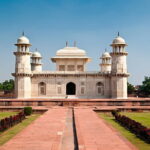
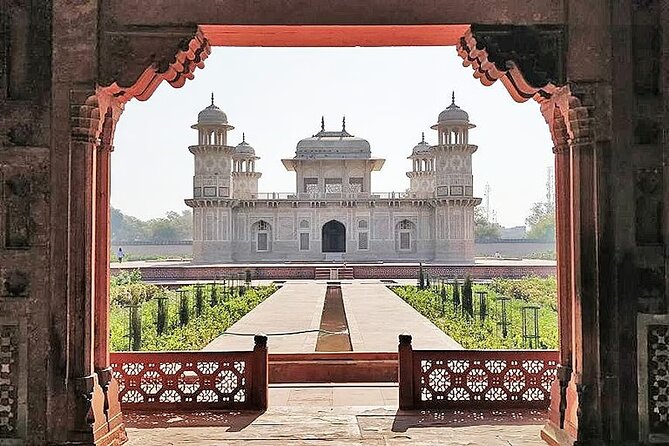
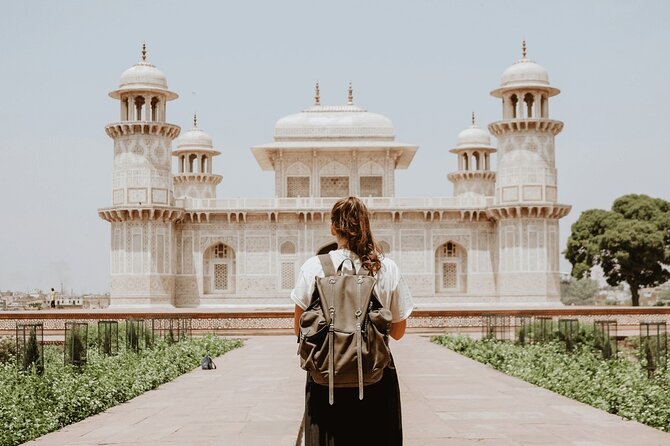
Then you add Itmad-ud-Daula, often called the Baby Taj. This stop is shorter, but it matters because it gives you something the Taj alone can’t. Itmad-ud-Daula is known for intricate inlay work and delicate carvings, and it’s described as a precursor to the Taj Mahal. Translation: it helps you see the “how” behind the “wow.”
What you’ll enjoy here is pacing. The plan doesn’t try to cram every Agra monument into one marathon; it gives you a strong trio: Taj Mahal, Agra Fort, and Itmad-ud-Daula. If you’re someone who likes architecture, you’ll feel like you got more than one dimension of Mughal creativity.
Pushkar: a spiritual break from monuments and road time
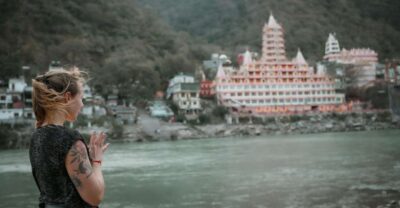
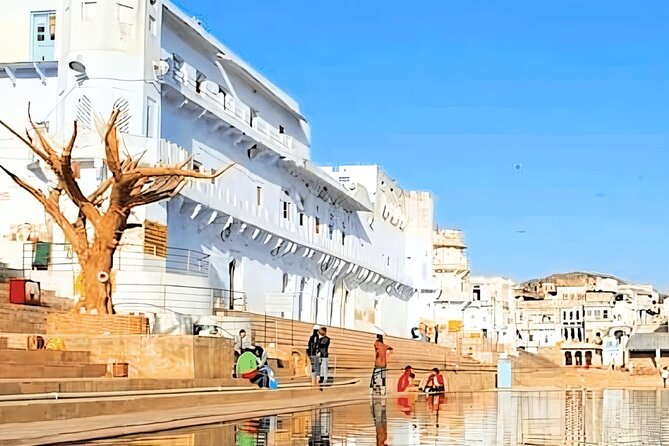
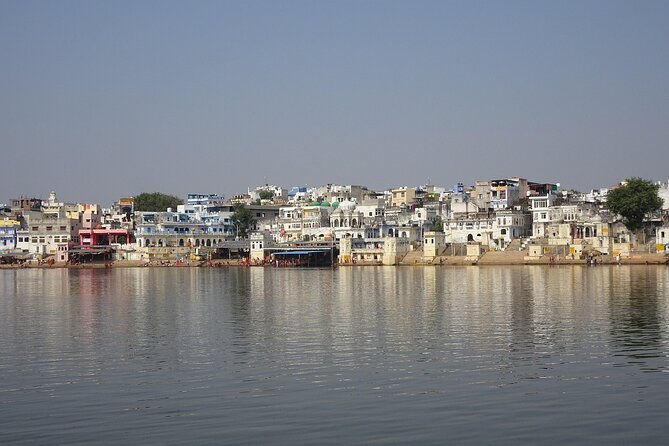
From Agra you move to Pushkar, a sacred town in Rajasthan that works as a reset button. Instead of forts and marble, the focus shifts to Pushkar Lake, and the plan highlights the area’s spiritual identity, including the rare Brahma Temple and local bazaars.
This is the part of the route that I’d call the personality change. Golden Triangle tours can feel like a greatest-hits album. Pushkar feels more like a place you’d stay an extra day for slow walks, conversation, and watching how people live around the water.
Why it’s worth your time: you get a rare chance to experience the Rajasthan version of calm. The schedule gives you a longer block for Pushkar, which helps because Pushkar is not a “stand and leave” kind of town. Even if you only go at a comfortable pace, you’ll notice how the lake area pulls the day along.
Practical consideration: Pushkar days can include heat and lots of sun exposure. Wear something breathable and keep water handy.
Jaipur’s Amber Fort and City Palace: the royal core you shouldn’t skip
Next stop is Jaipur, the Pink City. The itinerary starts with the Amber Fort area and the City Palace. Amber Fort is described as a majestic fort with spectacular views and Mughal history, and City Palace is explicitly marked as admission ticket included.
This pairing is smart. Amber Fort gives you the “fort on a hill” feeling—plus the kind of sweeping views that make you understand why rulers wanted elevation. City Palace then adds the palace interior, where you can shift from outside-scale to human-scale detail.
If you like architecture, this is where you’ll start seeing the connections between Mughal and Rajasthani styles. The plan notes City Palace as a blend of Rajasthani and Mughal architecture, and that mix is exactly what makes Jaipur different from Agra.
One caution: if you’re visiting during hot weather, fort sightseeing can feel like a workout. Bring good footwear and accept that you’ll walk more than you think.




Jaipur icons: Hawa Mahal, Jantar Mantar, stepwell and Jal Mahal
Jaipur keeps going with several iconic landmarks, but the itinerary clearly separates what’s included from what isn’t.
You stop by Hawa Mahal (Palace of Wind)—a recognizable building with intricate lattice windows. The itinerary marks this as admission ticket not included, so you’ll likely be buying entry yourself if you want full access beyond the exterior views.
Next is Jantar Mantar, described as an observatory with the world’s largest stone sundial. This is also marked admission ticket not included. If you’re the type who likes science-in-stone, you’ll enjoy it. If you’re not, at least use the short time to spot the big structures and get your bearings.
Then you have Panna Meena ka Kund, a 16th-century stepwell near the Amber Fort area. Again, admission is marked not included. Stepwells are fascinating because they’re part engineering, part social infrastructure, and part architectural design. Even if you don’t stay long, the idea of a carefully planned water space is a neat contrast to all the dry-road travel you’ve done up to now.
Finally, there’s Jal Mahal (Water Palace) at Man Sagar Lake. This one is marked admission ticket free, and it’s described as an 18th-century palace that appears to float on water. Even short stops here can be worth it because it gives you a visual palate cleanser: water and sand tones instead of only stone walls.
Price and value: what you’re really paying for
The price shown is $6.96 per person, which is so low that you should treat it as a starting point, not the whole story. In practice, the value in this kind of Golden Triangle + Pushkar tour usually comes from three things:
First, you’re paying for transport between major cities with a plan that doesn’t rely on you to figure out timing. The format described as private means you’re not fighting for space with other groups.
Second, you’re paying for guidance at the right moments. Past guests highlight guides including Kamal, Ali, Arjun, and Balvir, with praise often centered on clear explanations and getting to places on time.
Third, you’re paying for structure. When you don’t have to plan every “how do we get there?” step, you spend more brainpower appreciating what you’re looking at.
One detail worth checking before you book: the itinerary data doesn’t spell out hotel class or meals, but at least one traveler described getting three hotel options in the later cities and selecting a medium-priced tier. If the operator offers choices, that’s where your personal value will be decided. Choose based on sleep quality and location convenience, not just price.
Getting the most out of a private group schedule
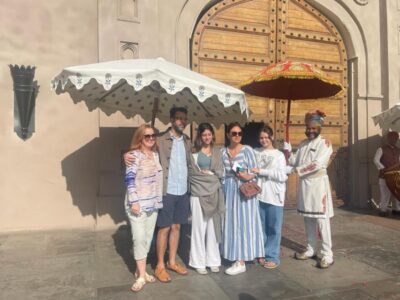
Because this is a private tour/activity (only your group participates) and pickup is offered, you can make the trip feel more personal. That can help a lot in India, where the difference between a stressful day and an enjoyable day is often just timing and communication.
A few practical moves I’d recommend:
- Ask your guide about which sights are best early or later in the day. This helps with heat and crowds.
- Bring a small day bag for water and sunscreen, especially on Jaipur fort and stepwell areas.
- Double-check which Jaipur monuments have admission not included so you don’t hit “surprise paywalls” when you’re already tired.
The other thing to notice from the names associated with good service—Dinesh, Mukesh, Santosh, and Raj—is that punctual, clean, comfortable transport is part of why people rate the experience so highly. You’re not just buying sights. You’re buying a smoother day.
Should you book this Golden Triangle India tour with Pushkar?
I think it’s a good fit if you want a classic India intro with a twist. You’ll like it if you:
- want a structured route that covers Delhi, Agra, Jaipur, and Pushkar in one go
- value private transport and guiding over self-planning
- care about both major monuments (Taj Mahal) and the “in-between” stops (Itmad-ud-Daula and the stepwell)
I’d think twice if you dislike packed days, strong sun, or paying extra admission fees at a few Jaipur stops (Hawa Mahal, Jantar Mantar, Panna Meena ka Kund). Also, because the format lists an approx 1 day 16 hours duration alongside a 5-day itinerary, I’d clarify how many hours are guided each day so your expectations match reality.
If you want a fast, meaningful sampler that still includes the spiritual pause of Pushkar, this one makes sense.
FAQ
Where does the tour start and end?
The tour is listed as starting in New Delhi and includes a return to New Delhi after Jaipur.
How long is the tour?
It’s described as a 5-day Golden Triangle with Pushkar tour, and the experience duration is also listed as about 1 day 16 hours (approx.).
Is pickup included?
Yes. Pickup offered is included in the tour details.
Is this a private tour?
Yes. It’s described as a private tour/activity, meaning only your group participates.
Which major sights are included across the route?
Stops highlighted include Humayun’s Tomb and Qutub Minar in Delhi; Taj Mahal, Agra Fort, and Itmad-ud-Daula in Agra; Pushkar (including Pushkar Lake and the Brahma Temple area); and in Jaipur Amber Fort, City Palace, Hawa Mahal, Jantar Mantar, Panna Meena ka Kund, and Jal Mahal.
Are entrance tickets included?
Some are marked admission ticket free (for example Taj Mahal, Agra Fort, Itmad-ud-Daula, and Jal Mahal), while City Palace is marked as admission ticket included. For Hawa Mahal, Jantar Mantar, and Panna Meena ka Kund, admission is marked not included.
Will I get confirmation when I book?
Yes. Confirmation will be received at time of booking.
What is the cancellation policy?
You can cancel for a full refund if you cancel up to 24 hours in advance. If you cancel less than 24 hours before the start time, the amount paid is not refunded.