REVIEW · NEW DELHI
Golden Triangle India
Book on Viator →Operated by Services International Ltd. · Bookable on Viator
Three cities. One tightly planned route. In about six days, you’ll see Delhi, Agra, and Jaipur with an airport pickup plus an English-speaking guide, and most big monument entry fees are handled as part of the package. It’s a classic Golden Triangle run, but with enough structure that you can spend your energy on the sights instead of the small stuff.
I like the way the days are built around landmarks with clear “why it matters” context, so the stops feel connected instead of random. I also really like the included hotel set-up: Suryaa in Delhi, Four Points by Sheraton in Jaipur, and Grand Mercure in Agra, which keeps your travel rhythm smooth.
The main thing to consider is that this is still an intense itinerary. You’ll be on-site for multiple monument visits each day, and the tour notes a moderate physical fitness level, plus the final day ends with an airport transfer (no extra Delhi hotel night).
In This Review
- Key highlights
- Private Golden Triangle pacing that keeps you sane
- Day 1 arrival in Delhi: getting oriented in one transfer
- Delhi Day 2: Raj Ghat to Qutub Minar, with tickets handled
- Raj Ghat: the Gandhi memorial stop
- Chandni Chowk drive-by: see the city at street level
- Jama Masjid: Shah Jahan’s mosque in scale and history
- Qutub Minar: UNESCO early Delhi storytelling
- Humayun’s Tomb: a moving, beautiful UNESCO stop
- India Gate: a war memorial that reads like a landmark
- Parliament-area drive-by and Lakshmi Narayan Temple
- Day 3 travel to Jaipur: the Golden Triangle switch to royal Rajasthan
- Day 4 Jaipur sights: City Palace and Jantar Mantar
- City Palace: Mughal, Rajput, and European mix in one place
- Jantar Mantar: the observatory that turns math into monuments
- Hawa Mahal drive-by and then a fort visit
- Day 5 Agra day trip: Taj Mahal first, then Agra Fort
- Taj Mahal: Shah Jahan’s marble masterpiece by the Yamuna
- Agra Fort: a UNESCO fortress with palace-like spaces
- Day 6: leaving Agra for your Delhi flight, without extra city nights
- Hotels, vehicle, and guide support that matter on the ground
- Included admissions and breakfasts: where the package saves you money and time
- Price and value for a group of up to 2
- How to pace yourself with a moderate-fitness itinerary
- Who should book this Golden Triangle run
- Should you book the Golden Triangle India tour?
- FAQ
- Where does the tour start?
- Is pickup offered?
- Is this a private tour?
- How long is the tour?
- What hotels are included?
- What language is the guide?
- Are entrance fees included for monuments?
- How many breakfasts are included?
- What is the cancellation window for a full refund?
Key highlights
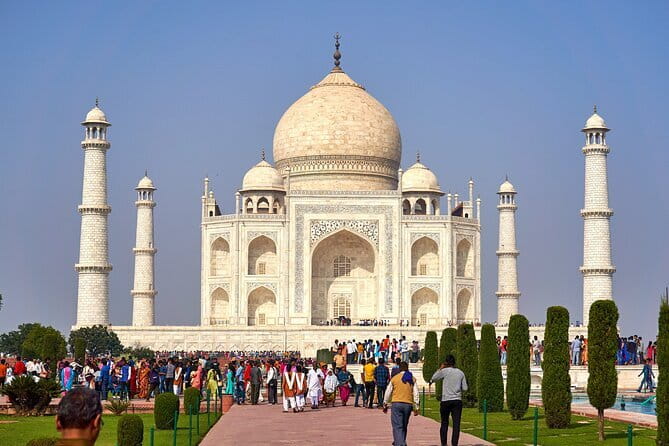
- Taj Mahal and Agra Fort with included admission time to actually enjoy the monuments, not just pose and rush
- UNESCO sights in Delhi including Qutub Minar and Humayun’s Tomb with guided context
- A private-group setup with an air-conditioned vehicle and an English-speaking guide
- Comfort-focused hotel choices across the three cities (Suryaa, Four Points by Sheraton, Grand Mercure)
- Memorial + mosque + temple stops in Delhi, so you get a fuller picture of how religions shape the city
Private Golden Triangle pacing that keeps you sane
The Golden Triangle (Delhi–Agra–Jaipur) works because the route is efficient: you get the iconic “big three” without flying or constantly changing plans. Here, you get that efficiency with a private-group format and an air-conditioned vehicle, which matters in India because transit time and road conditions can turn a day into a stress test if you’re doing everything yourself.
You’re also not starting from scratch. You’re met at Indira Gandhi International Airport and transferred to your first hotel, with a tour manager staying in touch during the trip. That reduces the usual first-day scramble and helps you settle in faster.
You can also read our reviews of more tours and experiences in New Delhi.



Day 1 arrival in Delhi: getting oriented in one transfer
Day 1 is straightforward: you arrive in Delhi, meet a representative, and head to your hotel. The tour also frames Delhi with the story of Indraprastha and the Pandavas from the Mahabharata, which is a good reminder that Delhi isn’t just a modern capital—it’s layered with older cultural memory.
What I like about this first day is that it’s not stuffed. You’ll need some breathing room after arrival, and this format gives you a proper start before the monument-heavy days kick in.
Delhi Day 2: Raj Ghat to Qutub Minar, with tickets handled
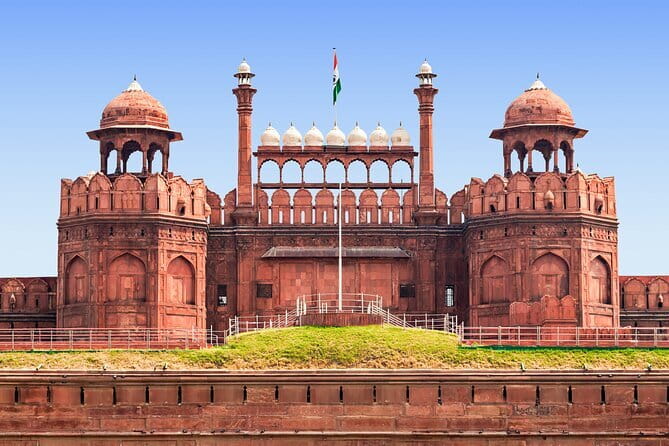
Day 2 is the kind of day that makes first-time visitors fall in love with Delhi. You’ll move through major religious and political landmarks, and the guide helps you understand what each one represents in the larger story of India.
Raj Ghat: the Gandhi memorial stop
You begin at Raj Ghat, where Mahatma Gandhi was cremated. For Indians, it’s a peak moment of national spirit; for you, it’s one of the most powerful places to slow down and understand modern India through its symbolism.
This is also one of those stops where included time really helps. You’re not sprinting from one photo to the next—you’re given about half an hour to take it in.
Chandni Chowk drive-by: see the city at street level
Next, you pass by Chandni Chowk, one of Delhi’s most famous and busy market areas. This is a great “eyes-open” interlude: you get a sense of daily life in old Delhi without turning your day into a shopping marathon.
If you’re the type who loves street scenes, this quick pass can be more valuable than another “perfectly curated” viewpoint.





Jama Masjid: Shah Jahan’s mosque in scale and history
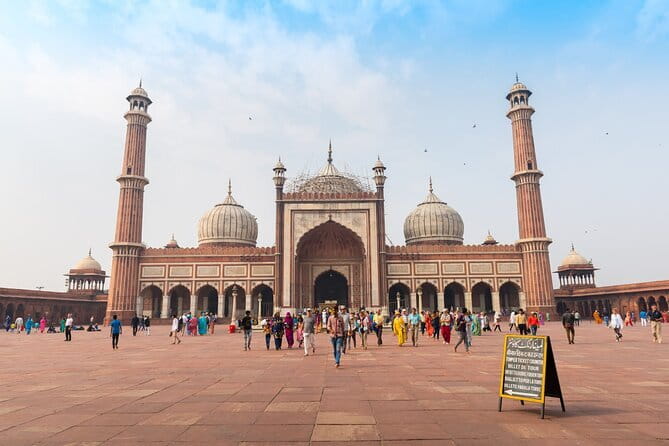
Then comes Jama Masjid, built by Shah Jahan. The tour includes admission here, and it’s a reminder that Delhi’s monumental architecture isn’t only Mughal palaces and tombs—it’s also deeply tied to faith and community.
About 45 minutes is enough to notice scale, materials, and the way the complex functions as a living space, not a museum box.
Qutub Minar: UNESCO early Delhi storytelling
After that, you visit Qutub Minar, India’s largest minaret and a UNESCO World Heritage Site. The tour notes it was built in 1192 by Qutb-Ud-Din Aibak, which is a detail that helps you place it in time.
One of the best parts here is the feel of the area: you’ll find it scenic and active, with people around and daily energy in the background. You get around an hour, which is workable if you’re comfortable walking through uneven historic grounds.
Humayun’s Tomb: a moving, beautiful UNESCO stop
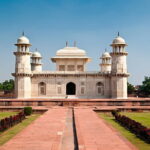
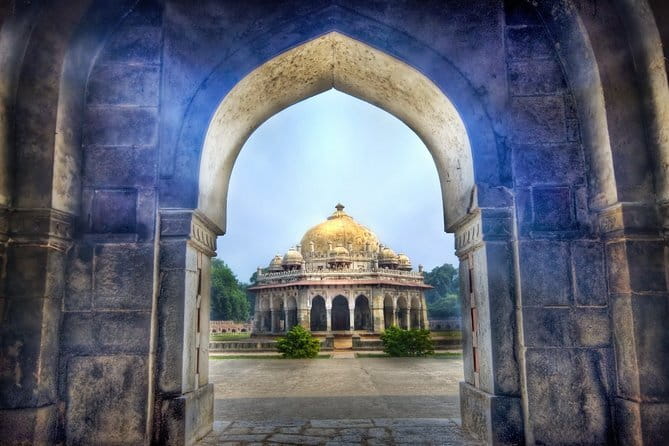
Humayun’s Tomb follows, also UNESCO-listed. The tour describes it as historically touching and very beautiful, and in practice that tends to mean you’ll slow down here more than at some of the faster stops.
You’re allocated about 1.5 hours, so you can look longer at the garden layout and the tomb itself without feeling like you’re always rushing onward.
India Gate: a war memorial that reads like a landmark
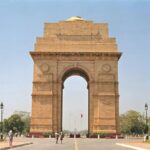
Next is India Gate, the war memorial in New Delhi and a symbol of national pride. The included time is shorter, about 30 minutes, but it’s enough to understand why this spot is still central to how Delhi marks remembrance.
This is also where the day starts to feel like a map of the modern capital.
Parliament-area drive-by and Lakshmi Narayan Temple
You’ll pass through the Parliament House, President’s House, and government secretarial buildings, then visit Lakshmi Narayan Temple. This mix is practical: it shows the axis of power and then switches to a different kind of spiritual landmark.
That last temple stop lands nicely because it gives your day a calmer emotional tone before you head back for dinner and rest.
Day 3 travel to Jaipur: the Golden Triangle switch to royal Rajasthan
Early on Day 3, you drive from Delhi to Jaipur. The tour frames Jaipur’s origins as about 260 years back, built by Maharaja Jai Singh, and notes that the city’s name connects to him.
This is more than a simple transit day. You’re changing regions and atmosphere: Delhi’s grand political monuments and Mughal-era sites give way to a city known for fortifications and palace architecture. In a tight itinerary, this kind of “reset day” is exactly what you want.
Day 4 Jaipur sights: City Palace and Jantar Mantar
Jaipur Day 4 is built around two major ideas: royalty and science. You’ll go from the stage of power (City Palace) to the observatory mind (Jantar Mantar).
City Palace: Mughal, Rajput, and European mix in one place
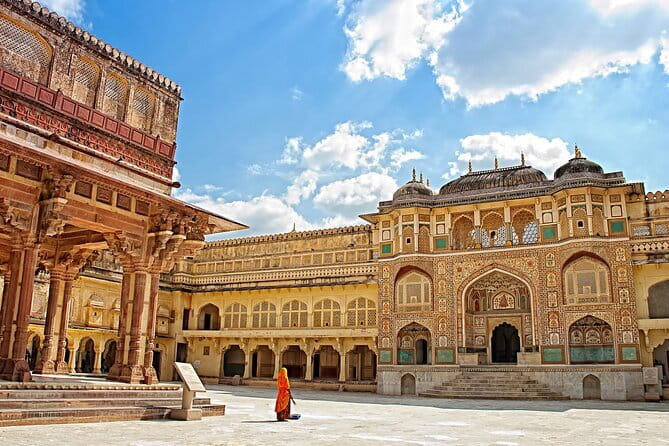
You’ll visit the City Palace, described as a royal palace with seven stories and a blend of Mughal, Rajput, and European architectural styles. That combination is a big deal because it helps you understand Jaipur’s court not as one uniform aesthetic, but as an evolving cultural mix.
The allotted time is about 45 minutes. It’s enough to appreciate key sections without getting overwhelmed.
Jantar Mantar: the observatory that turns math into monuments
Next is Jantar Mantar, the observatory. The tour notes it attracts mathematicians and astronomers from around the world, which is a useful clue: this isn’t random-looking stonework. It’s an outdoor toolset for measuring sky patterns.
Again, you get about 45 minutes, which is usually the sweet spot. You can watch how the instruments relate to the landscape, and you can ask questions without feeling rushed.
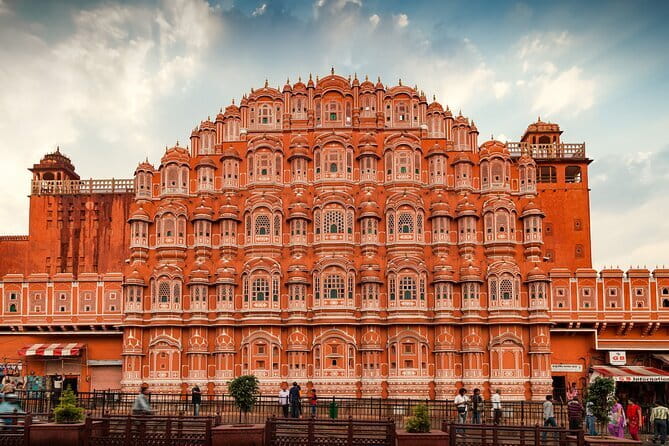
Hawa Mahal drive-by and then a fort visit
You’ll drive past Hawa Mahal, famous for its distinctive structure, then later visit a fort. The fort isn’t specifically named in the tour details you provided, so I’d treat it as a guided stop that likely includes viewpoints and palace-fort views.
Even with limited time, forts in Jaipur can be worth it because you see how power and geography were planned together.
Day 5 Agra day trip: Taj Mahal first, then Agra Fort
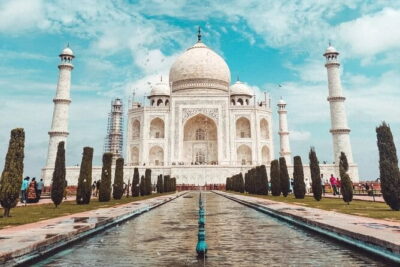
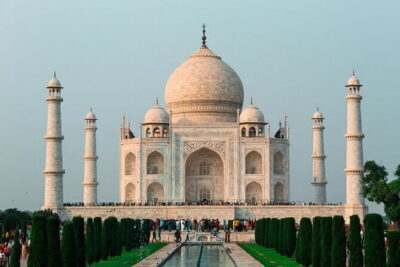
Day 5 is the big one. You’ll head to Taj Mahal, and the schedule gives you around two hours there with admission included. That time matters, because Taj Mahal is the kind of monument where your first 10 minutes are “wow,” but the next 40 minutes are when you start noticing details.
Taj Mahal: Shah Jahan’s marble masterpiece by the Yamuna
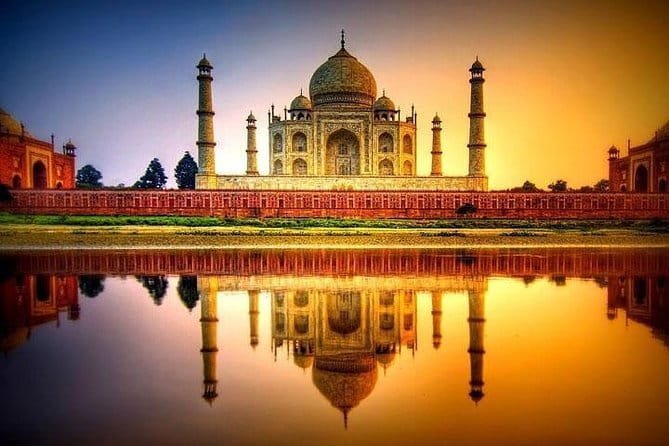
The tour describes Taj Mahal as built elegantly with white marble by Mughal Emperor Shah Jahan, majestically standing on the banks of the Yamuna River. Two hours is enough to appreciate symmetry, marble texture, and the way the site’s design guides your eyes.
Agra Fort: a UNESCO fortress with palace-like spaces
After that, you visit Agra Fort, a UNESCO World Heritage Site. The tour notes it was built in the 16th century by Shah Jehan and includes fairy-tale palaces like Khas Mahal and Jahangir-era spaces.
You’ll spend about one hour here. That’s a good fit because forts can sprawl, and you still need enough energy to enjoy the Taj memories before the day ends.
Day 6: leaving Agra for your Delhi flight, without extra city nights

On Day 6, you’ll be transferred from Agra to Delhi airport in time for your return flight. The tour notes that many flights leave after midnight, and lodging isn’t included in Delhi, which makes sense for avoiding another hotel night close to departure.
This day is about logistics, not sightseeing. If you hate being rushed at the end of a trip, plan to keep your last-day expectations simple: get to the airport calmly and enjoy the fact that your accommodation is already handled for the earlier days.
Hotels, vehicle, and guide support that matter on the ground
This tour includes five nights of hotel accommodation, with specific properties listed for each city. In Delhi, you stay at The Suryaa. In Jaipur, it’s Four Points by Sheraton. In Agra, you’ll be at Grand Mercure.
That matters because hotel quality can make or break a Golden Triangle run. If your day is packed, you’ll want a place that feels like a reset button, not a punishment for your planning.
You’ll also have an English-speaking guide and an air-conditioned vehicle throughout. From a practical travel standpoint, this is a major value driver: it reduces misunderstandings and gives you context while you’re moving between cities.
One extra note from the experience descriptions is that the driver and guide can make the trip feel smoother. Names that have come up include Mr. Vipin as a driver, and guides such as Mr. Arun, plus a tour manager named Siddant Maheshwari. You can’t count on any one person, but it’s a sign that this operator places attention on day-to-day guidance.
Included admissions and breakfasts: where the package saves you money and time
Entrance fees are included at monuments as per the itinerary. That includes the major Delhi stops (Raj Ghat, Jama Masjid, Qutub Minar, Humayun’s Tomb, India Gate, and Lakshmi Narayan Temple) plus Jaipur’s City Palace and Jantar Mantar, and Agra’s Taj Mahal and Agra Fort.
You also get breakfast on 4 mornings. That’s a real convenience in India, where starting the day without planning meals can take more mental energy than you expect. With four breakfasts included, you’ve got at least part of the daily routine handled.
Price and value for a group of up to 2
The price is $1,542 per group for up to 2 people, for an approximately 6-day trip. For many travelers, the question is simple: what’s actually inside that number?
Here’s what you can count on being covered: hotel accommodation for 5 nights, air-conditioned vehicle transport, an English-speaking guide, monument admission fees included for the stated stops, and 4 breakfasts. When you add those categories up, this becomes less like a “tour of sites” and more like a managed service that removes the heaviest planning tasks.
The trade-off is also clear: you’re buying into a set route with set time windows. If you love deep wandering on your own, you might find the schedule a bit tight. But if you want the best-known sights covered properly, the package format is a strong way to do it.
How to pace yourself with a moderate-fitness itinerary
The tour calls for a moderate physical fitness level. That’s not just legal wording: your day has multiple stops, with scheduled time like 1 to 2 hours at key monuments.
My practical advice: wear shoes you can walk in for uneven historic surfaces, and keep water and a small snack strategy in mind for between stops (the tour includes vehicle and guidance, but not extra food items). Also, if you’re sensitive to standing in crowds, plan to arrive with patience; several of these sites are popular.
This is also where the private-group setup helps. You’re not navigating a chaotic, mixed group for every decision. Your guide can keep the day moving at a pace that still lets you enjoy the stops.
Who should book this Golden Triangle run
This is a strong fit if you:
- Want the classic first-timer circuit of Delhi, Agra, and Jaipur
- Prefer guided monument visits over self-planning
- Care about having your hotels named and included (Suryaa, Four Points by Sheraton, Grand Mercure)
- Are traveling as a private group of up to 2 and want the schedule built around you
If you want a slower pace, more time in each city, or a more off-the-beaten-path route, you may feel the itinerary is too compact. But for many people, that compactness is the point: you get the icons without spending days figuring out how to connect them.
Should you book the Golden Triangle India tour?
I’d book this if you want a well-structured Golden Triangle where the heavy lift is done for you: airport meeting, hotel stays, a private air-conditioned vehicle, English guidance, and included tickets for the big landmarks. It’s especially appealing if you like the idea of seeing Taj Mahal and Qutub Minar on a plan that keeps your days from turning into logistics puzzles.
I wouldn’t book it if you strongly prefer unstructured time or you’re worried about packing too much walking into a short trip. For those travelers, a slower multi-day breakdown with more free time might fit better.
FAQ
Where does the tour start?
The tour starts at Indira Gandhi Intl Airport, New Delhi, with a start time of 9:00 am.
Is pickup offered?
Yes. You’ll be met by a representative at the airport and transferred to your hotel, and the tour also notes that pickup is offered.
Is this a private tour?
Yes. It’s a private tour/activity, and only your group participates.
How long is the tour?
It’s listed as approximately 6 days.
What hotels are included?
You get 5 nights of hotel accommodation at The Suryaa in Delhi, Four Points by Sheraton in Jaipur, and Grand Mercure in Agra.
What language is the guide?
The tour includes an English speaking guide.
Are entrance fees included for monuments?
Yes. Entrance fees at monuments are included as per the itinerary.
How many breakfasts are included?
Breakfast is included for 4 mornings.
What is the cancellation window for a full refund?
You can cancel up to 6 days in advance of the experience for a full refund. The policy states you must cancel at least 6 full days before the experience’s start time.