REVIEW · NEW DELHI
Golden Triangle Tour Delhi-Agra-Jaipur
Book on Viator →Operated by Royal Majestic Tour · Bookable on Viator
Sunrise Taj Mahal feels like the real deal. This Golden Triangle route stitches Delhi, Agra, and Jaipur into one smooth loop, with AC transport and day guides in each city. I love how the trip is built around the sunrise Taj Mahal, and I also love the structure of guided time so you get the key facts instead of wandering like a tourist with a map.
There’s one catch: this is an efficient circuit. You’ll sit through several long drives (each leg is about 4 to 6 hours), and some stops are intentionally brief, so if you hate photo sprints, you may want to slow your pace and linger where it matters. Also, monument entry fees are not included, so budget for those once you arrive.
In This Review
- Key Highlights I’d Prioritize on This Tour
- The Golden Triangle in 4 Days: Why This Route Works
- 8:00 AM Start, AC Vehicle, and Realistic Pacing
- Delhi Morning: Qutb Minar, Lotus Temple, and Rajpath Monuments
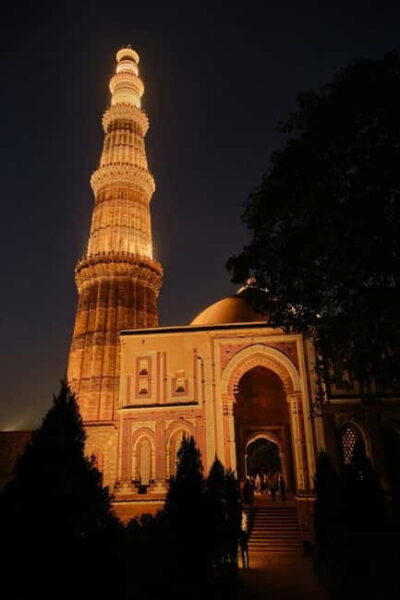
- Qutb Minar: the tower with built-in history
- Lotus Temple: quiet, open, and free
- India Gate and the ceremonial axis
- A note on timing
- The Drive to Agra and Why the Road Time Matters
- Taj Mahal at Sunrise: The Best Reason to Book
- Agra Fort: Beyond the Taj
- Jaipur Arrival: A New Setting, Same Schedule Discipline
- Hawa Mahal: Quick Photos, Big Impact
- Amber Palace and the Stepwell Detour You’ll Thank Yourself For
- Jal Mahal: The Lake Palace Pause
- City Palace and Jantar Mantar: When Jaipur Turns Scholarly
- City Palace: court life in stone
- Jantar Mantar: astronomy as architecture
- Back to Delhi (or Drop at Jaipur Airport): Finishing the Loop
- Value Check: Is $283.32 a Fair Deal?
- Who This Tour Fits Best (and Who Should Skip)
- Should You Book This Golden Triangle Tour?
- FAQ
- What time does the tour start?
- How long is the Golden Triangle tour?
- Does the price include hotel accommodation?
- Are monument entry fees included?
- Is food included in the tour price?
- What sights are included in Delhi?
- Is the Taj Mahal visit at sunrise?
- How much notice do I need for a full refund if I cancel?
Key Highlights I’d Prioritize on This Tour

- Sunrise Taj Mahal timing that lets you see the mausoleum at its most iconic hour
- Guides in each city (Delhi, Agra, Jaipur) for context that actually helps you enjoy the sites
- A classic Delhi starter pack: Qutb Minar, Lotus Temple, India Gate, and the Rajpath government buildings
- Amber-area mix of big sights plus smaller stops like the stepwell and Jal Mahal views
- AC vehicle and pickup that make the 720 km by road feel manageable
- Private group format so your day planning stays consistent
The Golden Triangle in 4 Days: Why This Route Works
India’s Golden Triangle is famous for a reason: it concentrates the big-name highlights—without forcing you to piece together separate trips. The triangle shape is just a map idea, but the travel logic is real. You’re linking New Delhi to Agra (for the Taj Mahal) and then west to Jaipur (for Rajasthan’s royal-city sights). The full loop is about 720 km by road, and the days are arranged so you don’t spend your whole trip commuting.
What makes this tour feel practical is the combo of transport + guided time. You’re not just getting moved around. You also get explanations during the main sightseeing days in each city. That matters because Delhi’s monuments, Mughal-era Agra landmarks, and Jaipur’s royal architecture can feel like separate worlds if you’re trying to decode them alone.
You can also read our reviews of more tours and experiences in New Delhi.



8:00 AM Start, AC Vehicle, and Realistic Pacing
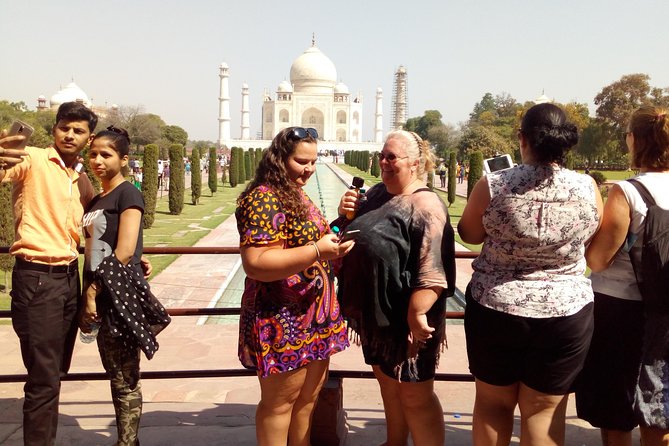
The tour begins around 8:00 am, and you should expect a day that moves. There’s an air-conditioned vehicle, which is a big plus for the road legs between cities. Each leg—Delhi to Agra, then Agra to Jaipur—is typically in the 4 to 6 hour range, so plan to treat travel time as part of the schedule, not something to fight.
A quick heads-up: several stops are listed with short durations (think 10 to 30 minutes). That doesn’t mean they’re not worth it. It means you’ll want to pick what you want to photograph most and let the guide lead you to the best viewpoints quickly. If you rush through everything at full speed, you’ll miss the moment you’re actually there for. I’d rather you slow down for a couple of key photo opportunities than try to collect every angle.
Delhi Morning: Qutb Minar, Lotus Temple, and Rajpath Monuments
Day 1 is a strong “best of Delhi” foundation, and it’s a nice way to get your bearings before you head out of town.
Qutb Minar: the tower with built-in history
You’ll visit Qutub Minar, part of the Qutb complex (a UNESCO World Heritage Site) in the Mehrauli area. It’s described as a minaret and victory tower—its height is 73 meters before the final fifth section was added after 1369. Even if you don’t memorize the timeline, the guide help matters here because you’ll understand why this tower mattered to the city’s story.
Practical tip: wear shoes you can stand in. The best photos often come from moving around for angles.
Lotus Temple: quiet, open, and free
Next is the Lotus Temple, famous for its flowerlike shape. The key detail I like: it’s open to everyone regardless of religion. Admission is free, so you can spend time just sitting with the calm atmosphere.





India Gate and the ceremonial axis
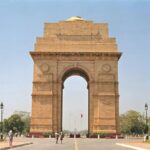
Then you’ll reach India Gate, a memorial for 70,000 soldiers and located along Rajpath, on the ceremonial axis of New Delhi. Admission is also free, which makes it easy to fit into a day without adding extra cost. Nearby, you’ll also pass the Parliament House and the Rashtrapati Bhavan area, both designed in the early 20th-century British planning era (Parliament was designed in 1912–1913 by British architects Sir Edwin Lutyens and Sir Herbert Baker).
A note on timing
Because these are big central sights, you can do a lot quickly. But if you prefer unhurried exploring, treat the Delhi portion as orientation plus a handful of must-sees. Save your slower, deeper time for Jaipur and Agra, where the monuments are more self-contained and you’ll feel less pressure to move on.
The Drive to Agra and Why the Road Time Matters
After lunch, you head to Agra via the Yamuna Expressway. This is one of those times where the comfort level of the vehicle matters. You’re covering serious distance, and you’ll appreciate AC because the day is still part of your sightseeing load.
Also, the road leg affects how you enjoy the next morning. If you want the full sunrise Taj Mahal experience, being rested is a big deal. Even if the schedule feels firm, do yourself a favor: keep your evenings low-key and don’t overschedule extra stops.
Taj Mahal at Sunrise: The Best Reason to Book
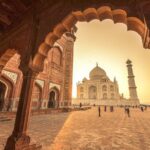
If you choose this tour for anything, make it the Taj Mahal at Sunrise. The Taj Mahal is an ivory-white marble mausoleum on the southern bank of the Yamuna. It was commissioned in 1632, and you can feel the design focus instantly—symmetry, lines, and that iconic marble glow that only really hits during early light.
Admission isn’t included, so plan for entry fees. But the timing is part of the value: you’re not just visiting a famous site, you’re visiting it when the atmosphere is at its best for photos and for a calmer first impression.
Practical advice:
- Bring something for early morning comfort if you’re sensitive to cool air.
- Stay flexible with your photo positions. The best shots may require a couple of steps, not a single perfect spot.
Agra Fort: Beyond the Taj
After the Taj, you’ll visit Agra Fort, a major Mughal landmark and historically the main residence of Mughal emperors until the capital shifted from Agra to Delhi in 1638 (as described). If the Taj feels like a symbol of emotion and beauty, Agra Fort gives you the power-and-administration side of the era.
This is where a guided explanation can make a difference. Forts can otherwise feel like walls and courtyards. With context, you start seeing how the complex fit together as a royal seat.
Jaipur Arrival: A New Setting, Same Schedule Discipline
When you move from Agra to Jaipur (about 4 hours by drive), you’ll feel the geographic shift instantly. Jaipur’s architecture and color palette are different enough that you can mentally reset into a “Rajasthan mode” even before you reach the palaces.
One practical upside of doing this circuit: you’re not coordinating separate transportation or hunting for last-minute guides. The tour keeps you on rails. The downside is the same rails can make time feel tight at the day’s first stops, so arrive ready to focus.
Hawa Mahal: Quick Photos, Big Impact
In Jaipur, one of the first sights is Hawa Mahal, the Palace of Breeze. It’s built from red and pink sandstone and sits on the edge of the City Palace, extending toward the women’s chambers. The visit time is short, but that palace shape is worth the stop because it gives you Jaipur’s visual signature right away.
If you love architecture, spend a little extra attention at the viewpoints the guide directs you to. The value here isn’t a long museum-style session. It’s learning what the structure is and why it was designed the way it was.
Amber Palace and the Stepwell Detour You’ll Thank Yourself For
Next comes Amber Palace (Amber Fort area). You’ll be visiting Amer, a town about 11 km from Jaipur, and the fort complex has roots tied to the Meenas before later development by others. The time is about 1 hour 30 minutes, which is enough to see major sections without feeling like you’re rushing through a checklist.
Then there’s a stop that’s smaller but interesting: Panna Meena ka Kund, a square-shaped stepwell with stairs on all four sides and a room on the northern wall. It’s described as being associated with religious ceremonies before weddings or other occasions. Even if you think you only came for palaces, this is the kind of stop that breaks up the royal-hall vibe with something more local and specific.
Jal Mahal: The Lake Palace Pause
You’ll also see Jal Mahal, a palace in the middle of Man Sagar Lake. The palace and lake area were renovated and enlarged in the 18th century. It’s a quick stop, but it gives you a different visual texture from the forts and palaces—more reflective, more atmospheric.
Keep your expectations realistic: you’re not spending hours here. You’re getting the view and moving on, which is exactly why the tour format makes sense.
City Palace and Jantar Mantar: When Jaipur Turns Scholarly
After the forts and lake views, the tour brings you to the center of Jaipur’s royal story.
City Palace: court life in stone
The City Palace was established when Maharaja Sawai Jai Singh II founded Jaipur and moved his court from Amber in 1727. The visit runs about 1 hour 30 minutes, enough time to understand it as more than one building. This is where you start seeing Jaipur as a designed capital, planned with purpose.
Jantar Mantar: astronomy as architecture
Then comes Jantar Mantar, a collection of 19 architectural astronomical instruments built by Sawai Jai Singh II, completed in 1734. If you’ve ever looked at old maps and wondered how people measured the sky without modern tools, this is the place to see it made physical.
This stop is also a good reminder that Jaipur wasn’t only about royal display. It was about knowledge and measurement too.
Back to Delhi (or Drop at Jaipur Airport): Finishing the Loop
On the final day, you’ll head back toward Delhi with about a 5-hour journey, or you can be dropped at Jaipur airport. This day is mostly travel, so it’s best not to plan anything heavy right after you arrive in Delhi unless you truly enjoy jet-lagged naps.
If you want the most satisfying send-off, have one last moment ready—maybe an overview stop photo or a quick walk—then let the drive take over.
Value Check: Is $283.32 a Fair Deal?
At $283.32 per person for roughly 4 days, the pricing makes sense when you factor in what’s actually included:
- AC vehicle across long road legs
- Pickup offered
- Tour guides for 1 day in each city (Delhi, Agra, Jaipur)
- Group discounts and a mobile ticket
What’s not included is also clear:
- Hotel accommodation
- Food and beverage
- Monument entry fees
So the value is strongest if you’d otherwise pay separately for guided time and car transfers between cities. If you’re the type who prefers doing big-ticket sights efficiently, this tour can feel like a shortcut to fewer headaches. If you’re planning to travel on your own anyway, you might compare costs by booking transport and buying day guides separately.
One more practical note: one of the most complimentary bits of feedback I’ve seen for this kind of trip is that it can feel money-well-spent when you consider you’re getting multiple full days of coverage plus transportation. Another helpful note is the reminder to not rush every stop. You’re moving a lot—so build in a calmer pace for the sights that matter most.
Who This Tour Fits Best (and Who Should Skip)
This Golden Triangle tour is a great fit if you:
- want the Delhi–Agra–Jaipur highlights without managing intercity logistics
- appreciate guided explanations during major stops
- like a structured schedule that keeps you from wasting time between cities
You might consider skipping or customizing if you:
- hate short stop durations and prefer long, slow museum-style visits
- want monuments where you can linger for hours at a time (entry fees aren’t included, so you may be making extra decisions daily)
The sweet spot is someone who enjoys seeing a lot, but still knows which sights are the core. Prioritize Taj Mahal, then let the rest of the circuit support that big first memory.
Should You Book This Golden Triangle Tour?
Yes, if you want a clean, efficient way to experience Delhi, Agra, and Jaipur with AC transport and guides in each city, and especially if sunrise at the Taj Mahal is your top goal. The biggest decision you’re making isn’t whether the sights are famous—they are. It’s whether you’re okay with a pace that includes long road legs and some brief photo windows.
If that sounds like your style, this is an easy yes. If you’re looking for a slower, deeper stay in one city, you’d likely enjoy a different plan with more nights and more unstructured time.
FAQ
What time does the tour start?
The tour starts at 8:00 am.
How long is the Golden Triangle tour?
It runs for 4 days (approx.).
Does the price include hotel accommodation?
No. Hotel accommodation is not included.
Are monument entry fees included?
No. Monument entry fees are not included.
Is food included in the tour price?
No. Food and beverage are not included.
What sights are included in Delhi?
Delhi includes Qutub Minar, Lotus Temple, India Gate, Parliament House, and Rashtrapati Bhavan.
Is the Taj Mahal visit at sunrise?
Yes. The tour includes Taj Mahal at Sunrise.
How much notice do I need for a full refund if I cancel?
You can cancel up to 3 days in advance for a full refund. If you cancel less than 3 full days before the start time, the amount you paid won’t be refunded.