REVIEW · NEW DELHI
Golden Triangle Tour Package Delhi Agra Jaipur
Book on Viator →Operated by India Bon Voyage · Bookable on Viator
Three cities, one smooth plan. This private Golden Triangle package strings together Delhi, Agra, and Jaipur with a local guide and comfortable transfers, so the days feel structured instead of stressful. Door-to-door hotel pickup and drop-off plus an air-conditioned vehicle make the long hops far easier than doing it on your own.
I like that the tour keeps the highlights tight and guided, with a professional team handling the handoffs between sites. One thing to watch: several big sights list admission tickets as not included, so your final cost can shift depending on whether you add monument entrances (and dinner/hotels).
In This Review
- Key highlights worth choosing this route
- Why the Golden Triangle feels manageable in 3 days
- Door-to-door pickup and AC comfort across Delhi, Agra, and Jaipur
- Delhi Day 1: Qutub Minar, Humayun’s Tomb, Lotus Temple, and the grand memorials
- Qutub Minar: the tall brick symbol
- Humayun’s Tomb: an early garden-tomb model
- Lotus Temple: marble calm in the middle of the day
- India Gate and Rashtrapati Bhavan: big Delhi in small doses
- Day 2 to Agra and Fatehpur Sikri: Taj Mahal time you can actually enjoy
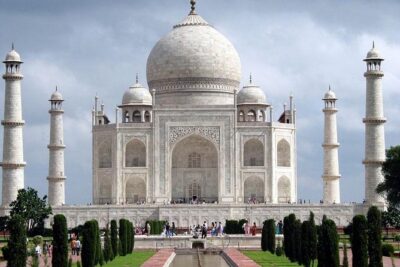
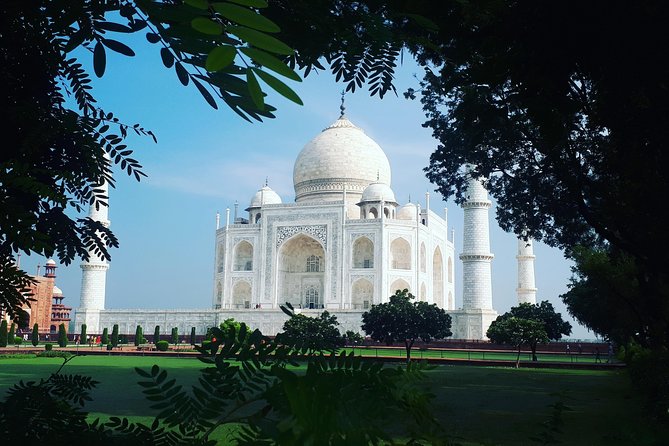
- Taj Mahal: the big focus, with a guided plan
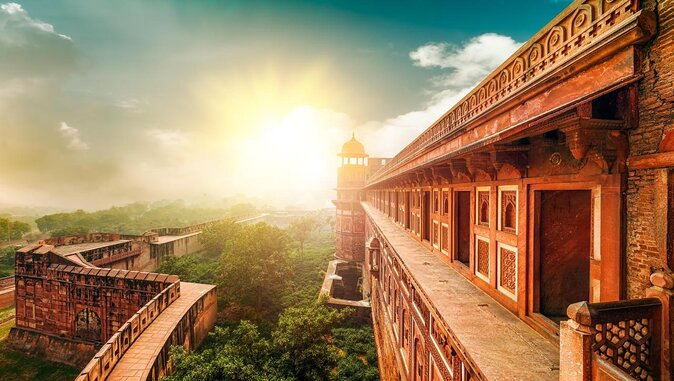
- Agra Fort: Mughal power beyond the postcard
- Fatehpur Sikri: a red sandstone stop en route
- Jaipur Day 3: Hawa Mahal, Amber Fort, and the palace-fort mix
- Hawa Mahal (Palace of Breeze): the red facade and the clever idea
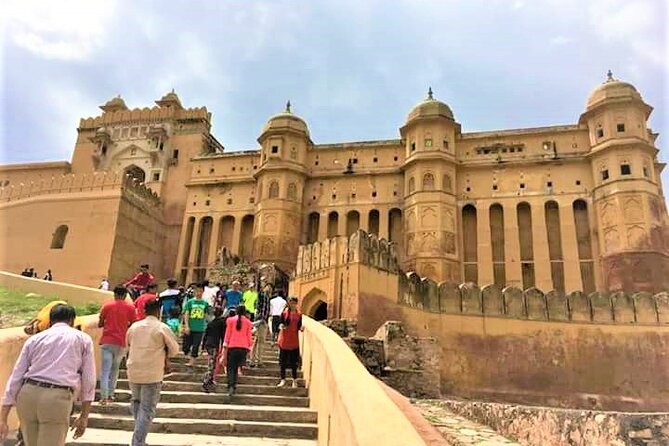
- Amber Fort: the main attraction up on the hill
- Jal Mahal: a palace in the lake
- City Palace: the royal museum-residence hybrid
- Jantar Mantar: 19 instruments and UNESCO recognition
- Tickets, lunch, and upgrades: where costs can change
- What the guide and driver add (and why people remember it)
- Who this tour suits best (and who should rethink it)
- Quick practical tips before you go
- Should you book this Golden Triangle tour?
- FAQ
- What is the price per person for this tour?
- How long is the Golden Triangle tour?
- Does the tour include hotel pickup and drop-off?
- Will I ride in an air-conditioned vehicle?
- Is this a private tour or shared group?
- What about tickets—are monument entrances included?
- Is lunch included?
- Is breakfast included?
- Is dinner included?
- Does the tour include mobile tickets?
- What if I need to cancel?
Key highlights worth choosing this route
- Door-to-door pickup and drop-off in New Delhi to start and end your trip cleanly
- Private guided format with only your group, plus professional guides in Delhi, Agra, and Jaipur
- Air-conditioned transport between cities to reduce fatigue on travel days
- Smart grouping of famous stops: Delhi icons first, then Agra’s two anchors, then Jaipur’s forts and forts-and-palaces mix
- Flexible upgrades for hotels, dinner, and monument entrance tickets
- Good value for $72 per person when you want guides + transport packaged together
Why the Golden Triangle feels manageable in 3 days
The Golden Triangle route is famous for a reason: you get three of India’s most photographed places in one trip. What makes this version feel practical is the tempo. You’re not stuck figuring out directions between monuments, and you’re not paying for separate guides city by city.
The structure matters because each city has its own “style” of sightseeing. Delhi mixes monumental gates, tombs, and spiritual architecture. Agra is all about the Mughal-era power story, especially around the Taj Mahal and Agra Fort. Jaipur brings forts and palace buildings that look like they belong to a different century (and the colors help).
For me, the strongest selling point is how much comfort you’re buying: pickup and drop-off, plus air-conditioned vehicle rides between stops. Even when the day is full, you’re not dealing with long, uncomfortable transfers.
You can also read our reviews of more tours and experiences in New Delhi.



Door-to-door pickup and AC comfort across Delhi, Agra, and Jaipur
A lot of Golden Triangle days can feel like “get on a bus, get off a bus, repeat.” Here, you’re picked up at your hotel and dropped off after the sightseeing windows. That small detail can make your trip feel lighter—especially when you’re juggling luggage or you want to avoid extra local transport planning.
The ride itself is in an air-conditioned vehicle, which is a real quality-of-life upgrade. This route includes time in moving between Delhi and Agra and then back toward Jaipur, and those transfers add up fast. Having AC on board helps you arrive at each site feeling more human.
There’s also a group element: the experience is described as private for your group, and group discounts are mentioned. That’s often where private tours can still feel cost-sane compared to piecing everything together.
Delhi Day 1: Qutub Minar, Humayun’s Tomb, Lotus Temple, and the grand memorials
Delhi on Day 1 is a classic setup: you start with monumental Mughal and Sultanate architecture, then move into iconic landmarks around central New Delhi.
Qutub Minar: the tall brick symbol
Qutub Minar is described as the world’s tallest brick minaret, starting in 1192. It reaches about 73 meters tall, with a diameter around 14.3 meters at the base. Even if you don’t climb it, the scale is the point—this is one of those structures that makes the whole area feel instantly historic.
In this tour plan, you’ll spend about 1 hour 30 minutes here. Admission is listed as not included. If you don’t add monument entrances, budget time to buy tickets on-site.
Humayun’s Tomb: an early garden-tomb model
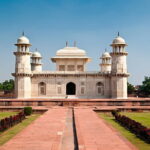
Next comes Humayun’s Tomb, commissioned by Humayun’s first wife. It’s noted as the first garden-tomb on the Indian subcontinent, built in 1560. That garden setting matters because it slows your pace a bit compared to a purely fortress-style stop. You’re meant to look around, not just stand and snap a photo.
Plan for about 1 hour 30 minutes, with admission also listed as not included.






Lotus Temple: marble calm in the middle of the day
Then you pivot to the Lotus Temple, made with marble and shaped like a lotus leaf. The plan gives you about 45 minutes. This one is labeled as admission free, which is handy for keeping costs steady.
Inside, you can sit and choose your own spot for a quieter moment, which is a nice contrast after tomb and minaret visuals.
India Gate and Rashtrapati Bhavan: big Delhi in small doses
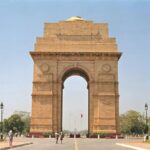
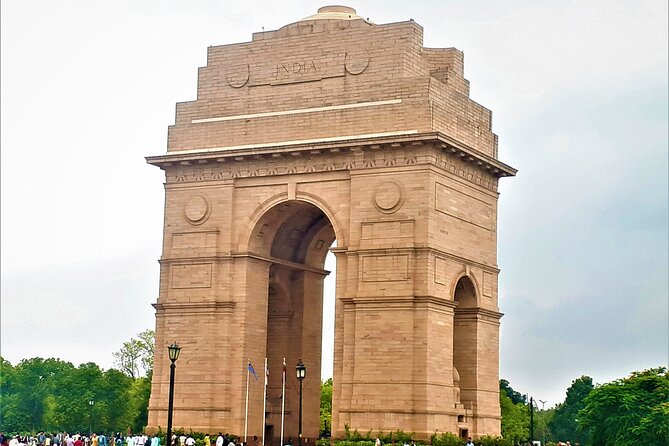
India Gate is framed as the central memorial, commemorating 70,000 Indian soldiers who died fighting for the British Army during World War I. You’ll also stop near Rashtrapati Bhavan, the official residence of India’s President, at the western end of Rajpath.
These are shorter stops—about 45 minutes for India Gate and roughly 15 minutes for Rashtrapati Bhavan. They’re worth it because they help you get oriented fast. If Delhi is your first stop in the country, these anchors help you understand the city’s layout.
Day 2 to Agra and Fatehpur Sikri: Taj Mahal time you can actually enjoy
Agra is where your Golden Triangle route becomes “real.” The main attraction is Taj Mahal, and this tour gives it a dedicated 2 hours on Day 2.
Taj Mahal: the big focus, with a guided plan
The Taj Mahal stop is listed at about 2 hours, and admission is not included by default. That means you’ll likely pay entry separately unless you choose an add-on for monument entrances.
A guided visit is especially useful here, because the Taj is so iconic that it’s easy to miss the story while chasing the perfect angle. A solid guide can help you understand what you’re seeing and how to time your viewing better within your set time window.
Agra Fort: Mughal power beyond the postcard
After Taj Mahal, you head to Agra Fort, with about 1 hour allocated. The description calls it a red stone monument tied to Mughal rule and the city’s former status as an imperial capital. This is a good counterbalance to the Taj, since it brings the political and everyday “where people lived” perspective into the picture.
Admission is also listed as not included here by default. So again, your total out-of-pocket can depend on whether you upgrade with entrance tickets.
Fatehpur Sikri: a red sandstone stop en route
On the way toward Jaipur, there’s a stop at Fatehpur Sikri for about 2 hours. The site is described as red sandstone buildings and is labeled as admission free in this plan.
This is a clever inclusion because it breaks up the transit day with another major architecture stop. It also gives you a chance to swap from the intense “Taj moment” into something broader: a whole complex rather than one single monument.
Jaipur Day 3: Hawa Mahal, Amber Fort, and the palace-fort mix
Jaipur’s Day 3 is designed around contrast: from the famous windowed facade at Hawa Mahal to the hillside presence of Amber Fort, then over to lake views and the city’s museum-like palace spaces. You’ll see five major stops, with time blocks that keep the pace active.
Hawa Mahal (Palace of Breeze): the red facade and the clever idea
Hawa Mahal is the headline exterior in Jaipur. It’s described as a red stone structure inspired by the unique structure of Khetri Mahal. This stop is about 30 minutes, and admission is listed as not included.
Even with a shorter time window, it’s worth going because it’s one of those places where the design is the attraction. You get the “why it looks like that” explanation, not just the picture.
Amber Fort: the main attraction up on the hill
Amber Fort (Amer Palace) is allocated about 2 hours and is described as the main attraction. It sits high on a hill and functions as a Rajput living palace. One standout detail in the tour description: there are 12 queen rooms.
Admission is not included by default. This is also where a guide matters most, since Forts can feel like endless rooms unless someone helps you connect the dots about what each space likely signaled.
Jal Mahal: a palace in the lake
Jal Mahal is described as a beautiful palace in the middle of Man Sagar Lake. The plan says it was used during Jaipur’s hot season by the royal family. You’ll have about 30 minutes, and admission is labeled free.
Even if you can’t spend long here, it’s a visually refreshing break after fort walls and palace corridors.
City Palace: the royal museum-residence hybrid
Next is City Palace, with about 2 hours. Construction is noted as completed in 1732, and the description mentions a blue palace built according to the Hindu Vastushastra. Admission is not included by default.
This is one of the stops where you can slow down a little mentally. You’re not just looking at architecture—you’re seeing how “royal spaces” were organized, with a museum-like presentation alongside the idea of residence.
Jantar Mantar: 19 instruments and UNESCO recognition
The day closes at Jantar Mantar, allocated about 1 hour. It’s described as a UNESCO World Heritage Site and as a collection of 19 astronomical instruments built by the Rajput king Sawai JaiSingh.
Admission is listed as not included. If you like science-as-architecture, this is a satisfying way to end the trip because Jaipur isn’t only “forts and textiles.” It also shows precision and observation in built form.
Tickets, lunch, and upgrades: where costs can change
This tour is advertised at $72.00 per person and is built around guides, door-to-door pickup/drop-off, and air-conditioned transfers. That’s a strong baseline value if you want the planning work removed.
But pay attention to how the tour is structured around upgrades:
- Accommodation (2 nights) is included only if you book with the hotel option.
- Dinner is included only if you book with the dinner option.
- All monument entrance tickets are included only if you book with the admission option.
- Breakfast is included twice.
- Lunch is not included.
In other words, your total out-of-pocket isn’t just the headline price unless you select the entrance-ticket add-on. Many of the major sights (Taj Mahal, Agra Fort, Qutub Minar, Humayun’s Tomb, Hawa Mahal, Amber Fort, City Palace, Jantar Mantar) list admission as not included, while a couple are specifically marked free (Lotus Temple and Jal Mahal, plus Fatehpur Sikri as free in this plan).
If you want the simplest expense math, the monument entrance upgrade is the cleanest way to go. If you prefer paying as you go, you’ll just want to budget admission on-site.
What the guide and driver add (and why people remember it)
A Golden Triangle tour is mostly about logistics. The reason this one gets strong feedback is that the guide and driver keep the day smooth and safe.
Your guide is described as professional for each city. In the past, guides such as Jitu (also referenced as Jitendra) have been credited for friendliness and for spotting the good photo viewpoints around major sites like Taj Mahal and Agra Fort. One note also mentions Jitu delivering a Taj Mahal tour in Spanish, which shows the guide can adapt to the group’s needs.
A reliable driver is equally important on this route. Pawan is mentioned as a particularly good driver in feedback, with notes about safe, dependable performance.
What you’re really buying with a good guide isn’t facts you could Google. It’s speed without rushing, and context at the right moment—so the famous stops don’t turn into a checklist.
Who this tour suits best (and who should rethink it)
This works best if you:
- Want a private plan with your own group and a professional guide.
- Prefer door-to-door pickup rather than figuring out transport between cities.
- Have limited time and want Delhi, Agra, and Jaipur in about 3 days.
- Like guided pacing at major icons, rather than self-driving between them.
It may feel too structured if you:
- Want lots of free time in each city without an organized schedule.
- Are allergic to extra ticket decisions. Since many entries are not included by default, you’ll want to decide on the admission upgrade up front.
Quick practical tips before you go
- Bring a plan for entrances: check whether you selected the admission option, because several stops list tickets as not included.
- Plan for meals: lunch isn’t included, so you’ll likely want to grab it on your own during gaps.
- Wear comfortable shoes: even shorter stops (like Hawa Mahal) still involve walking and queue time.
- Expect a packed route: 3 days across three cities means fewer “slow wander” hours than a longer trip.
Should you book this Golden Triangle tour?
If you want the classic Golden Triangle highlights with a plan that reduces hassle, I think this is a smart pick—especially at $72 per person when guides and air-conditioned transport are the core of the service. The door-to-door pickup and the private guide format help the day stay on track.
I’d book it if your priority is convenience and you’re okay choosing either:
- the admission-ticket upgrade for fewer on-site payments, or
- paying monument entries separately where needed.
If you’d rather fully control your own ticket schedule, double-check which sites are marked free in this plan and decide how you want to handle the rest.
FAQ
What is the price per person for this tour?
The price is listed as $72.00 per person.
How long is the Golden Triangle tour?
The duration is approximately 3 days, with 2 nights.
Does the tour include hotel pickup and drop-off?
Yes. Door-to-door hotel pickup and drop-off are included.
Will I ride in an air-conditioned vehicle?
Yes. The tour includes an air-conditioned vehicle for travel between locations.
Is this a private tour or shared group?
It’s described as private, with only your group participating.
What about tickets—are monument entrances included?
Monument entrance tickets are not included by default for many stops. Entrance tickets are included only if you book the option that includes all monuments entrance.
Is lunch included?
No. Lunch is listed as not included.
Is breakfast included?
Yes. Breakfast is included for 2 mornings.
Is dinner included?
Dinner is included only if you book with the dinner option.
Does the tour include mobile tickets?
Yes. Mobile ticket is listed as a feature.
What if I need to cancel?
Free cancellation is listed. You can cancel up to 24 hours in advance for a full refund.