REVIEW · NEW DELHI
Haridwar and Rishikesh 1 Day Tour from Delhi With Lunch And Guide
Book on Viator →Operated by A Star Tours · Bookable on Viator
One long day, two sacred cities. I like how this trip stacks Haridwar and Rishikesh into one smooth plan, with a private guide handling the hard parts and you getting the big spiritual sights, morning and night. You’ll start early with a visit to Har Ki Pauri, then move through Mansa Devi Temple and the famous Rishikesh bridges, ending with the evening Ganga Aarti back in Haridwar.
Two things I really like: the guided commentary that helps you understand what you’re seeing, and the fact that the trip includes practical must-haves—pickup/drop-off, lunch, bottled water, and the listed fees and taxes. One thing to consider is the sheer schedule: it’s roughly 14–15 hours, so you’ll want to be ready for a long day of sitting in the car and walking in holy areas.
In This Review
- Key things to know before you go
- The real value: what $200 buys on this Delhi-to-Uttarakhand day
- The early start: 5:30 A.M. pickup and the long ride north
- Har Ki Pauri morning: the ghats that start the spiritual tone
- Mansa Devi Temple (and Bilwa Tirath): wishes, pilgrimage, and tradition
- Rishikesh arrival and the Lakshman Jhula moment
- Chotiwala lunch stop: a reset in AC
- Beatles Ashram (Chaurasi Kutia): why this stop draws people
- Ram Jhula: another crossing, another angle on the river
- Ganga Aarti at Haridwar: the night ceremony that pulls it all together
- Guide and driver: the difference between seeing and understanding
- Timing, stamina, and who this day tour fits best
- What you should bring (and what to plan for)
- Should you book this 1-day Haridwar and Rishikesh tour from Delhi?
- FAQ
- What are the main stops on the Haridwar and Rishikesh 1 day tour?
- How long is the tour from Delhi?
- When does pickup happen?
- Do I get hotel pickup and drop-off?
- Is lunch included?
- Are entrance fees included?
- Is bottled water provided?
- Is this tour private?
- What about camera fees?
- Is there a cancellation fee?
- Is there a guide during the tour?
Key things to know before you go
- Early-morning Har Ki Pauri start at 5:30 A.M., then a later evening Aarti on the return.
- Private guide for on-the-ground context, with the option of a multi-lingual guide.
- Rishikesh bridges time, including Lakshman Jhula (450 ft long, about 70 ft above the river).
- Lunch handled for you at a multi-cuisine air-conditioned restaurant.
- Beatles Ashram (Chaurasi Kutia) on the Rishikesh side, stopping long enough to get the atmosphere.
- Camera fees may apply at a few places, since they’re not included.
The real value: what $200 buys on this Delhi-to-Uttarakhand day
Let’s talk value, because this is one of those days where costs can sneak up on you if you book piecemeal. This tour is priced at $200 per person, but it also bundles what usually adds friction and expense: hotel/area pickup and drop-off in Delhi/Noida/Gurgaon, a professional guide, bottled water, lunch, and the listed taxes and charges (including express highway toll, parking, fuel, and state taxes). You’re also not handling admissions day-of, since entrance tickets are shown as free for the included stops.
So what are you paying for? Time plus coordination. You’re traveling round-trip from Delhi to Haridwar and Rishikesh, and the day is built around two sacred anchors: Har Ki Pauri and the Ganga Aarti. When a guide drives the schedule, you spend less time negotiating transportation and more time in the places that matter.
Is it a bargain? Not exactly. But it’s also not just a driver “dropping you off.” The plan is structured so you cover key spots efficiently, and you get commentary to turn a checklist day into an explanation-heavy day.
You can also read our reviews of more guided tours in New Delhi

The early start: 5:30 A.M. pickup and the long ride north
Your day begins when the driver picks you up at 5:30 A.M. from your hotel or a pickup point in Delhi/Noida/Gurgaon. You’ll ride in an air-conditioned private car, and the drive to Haridwar takes about 4.5 hours.
That timing does two useful things. First, it gives you a quieter, more morning-focused arrival for Har Ki Pauri. Second, it creates the necessary window later so you can return for the night-time Aarti. The tradeoff is obvious: by the time the day ends, you’ll be ready for a proper shower, proper food (lunch helps), and a long nap.
If you’re the kind of traveler who likes to see sights but also hate rushing, this tour can work well—just plan your energy. Keep your day bag light, bring water (you’ll have bottled water), and be ready for a lot of “go with the flow” movement.
Har Ki Pauri morning: the ghats that start the spiritual tone
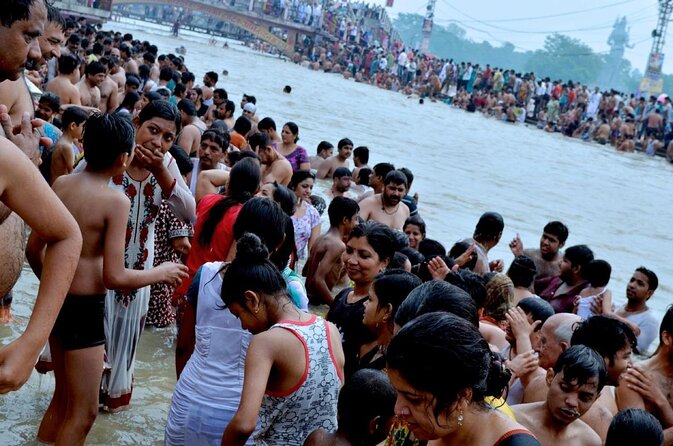
The first major stop is Har Ki Pauri, with about 1 hour 30 minutes there. The ghats at Haridwar are among the most famous Ganges riverfront pilgrimage spots in North India, and arriving early is a smart move. It’s easier to orient yourself, watch the river activity, and take in the atmosphere without feeling like you’re fighting the crowd right away.
This stop matters because it sets the theme for the entire day. You’re not just sightseeing temples; you’re stepping into a living religious place—one that you’ll revisit later through the lens of the night Ganga Aarti.
Practical tip: expect lots of activity near the water. Move at a respectful pace, follow your guide’s lead on where to stand and when to step back, and keep your camera ready but not in your face. The best moments are usually the ones you’re watching without constantly trying to capture.
Mansa Devi Temple (and Bilwa Tirath): wishes, pilgrimage, and tradition
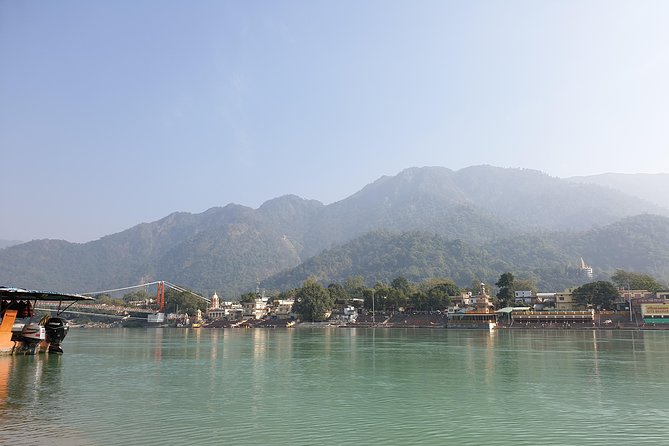
Next up is Mansa Devi Temple (also referred to as Bilwa Tirath), a stop connected to the idea of wishes fulfilled. It’s described as one of the five pilgrimage destinations (Panch Tirath) of Haridwar.
You’ll have about 1 hour here, and it’s one of those visits that’s less about one single photo and more about feeling the devotional energy. Mansa Devi is a major Hindu goddess destination, and even if you’re not there for a personal ritual, the cultural context is the point—how people pray, how space is used, and how the temple fits into the broader Haridwar pilgrimage map.
The main benefit of a guided trip here is timing and interpretation. Without context, temple stops can blur together. With a guide, you understand why this one is part of the Haridwar tradition and what people are seeking.
Rishikesh arrival and the Lakshman Jhula moment
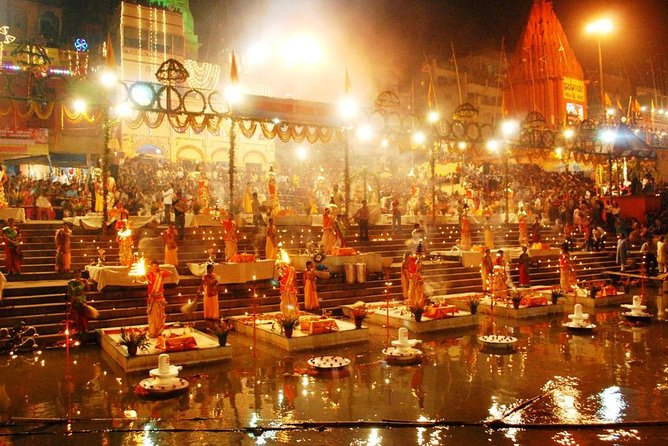
After Haridwar, you head toward Rishikesh. One of the first views you get is Lakshman Jhula, a popular hanging bridge across the Ganga. The tour info highlights that it’s 450 ft long and built about 70 ft above the river, roughly 3 km away from Rishikesh.
You’ll have about 1 hour at this stop. The bridge is a “pause and look” kind of place. You’re in a landscape that mixes spirituality with everyday life, from pedestrians to river views. For many people, this is where Rishikesh stops feeling like a destination name and starts feeling like a real place you can navigate.
A small caution: bridges can be busy. Go when your guide suggests, move deliberately, and don’t expect a quiet photo shoot. Instead, aim for a few good shots plus a real sense of the river and the town’s flow.
You can also read our reviews of more tours and experiences in New Delhi

Chotiwala lunch stop: a reset in AC
For lunch, you go to Chotiwala, with about 30 minutes allotted. This is listed as a multi-cuisine air-conditioned restaurant, which matters on a long day. When you’re doing a Delhi-to-Uttarakhand round trip, lunch can either be a stressful detour or a clean reset.
Here, it’s built into the schedule. You’re not left hunting for food or negotiating menus while your day falls apart. The tour description keeps it simple: enjoy a taste of different flavors, then get back on track.
One of the best signs that this works: the feedback includes praise for lunch quality. If you care about comfort during long travel days, this stop is a real plus because it gives you a breather, not just a meal.
Beatles Ashram (Chaurasi Kutia): why this stop draws people
Then you head to The Beatles Ashram, also known as Chaurasi Kutia. The visit is about 30 minutes.
This ashram is mentioned as close to Rishikesh and tied to international attention in 1968 (between February and April). Even if you don’t come with Beatles knowledge, it helps to think of the ashram as a symbol: Rishikesh has long attracted people looking for spiritual study, music, meditation, and a break from normal routines.
Why this stop can feel worthwhile on a 1-day itinerary: it adds a layer beyond temples and bridges. You see how Rishikesh became a magnet for visitors from outside India, and you get a sense of why modern pilgrims and long-term seekers keep returning.
The drawback of a quick stop: 30 minutes is enough to understand the vibe, but not enough to linger deeply. If you want a longer, slower ashram experience, you might do it as a separate trip. But for a first-timer day plan, it fits well.
Ram Jhula: another crossing, another angle on the river
After the Beatles Ashram stop, you visit Ram Jhula, another iron suspension bridge on the Ganga. The tour notes that while it’s built for pedestrians, you’ll see plenty of people riding bicycles across it.
The stop time is about 30 minutes. This is a shorter “sight and take in the view” stop, which works because by now you’ve already seen Lakshman Jhula. The value of doing both is perspective—you see the river and town from slightly different angles, and you start to understand how the crossings connect daily life with pilgrimage routes.
If the day starts to feel rushed, this is a good place to slow down anyway. Even a half hour on the river crossings can be calming if you let it be.
Ganga Aarti at Haridwar: the night ceremony that pulls it all together
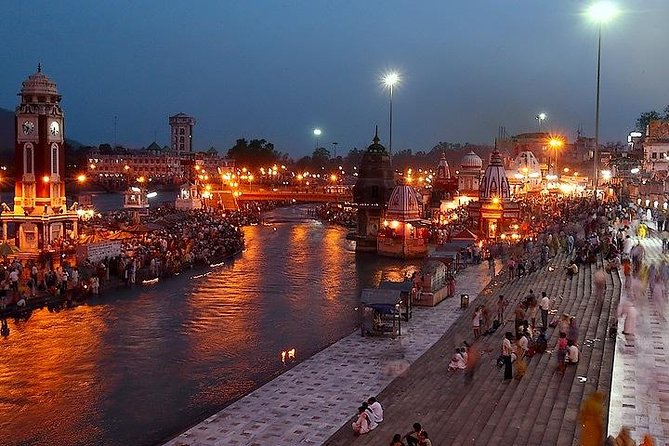
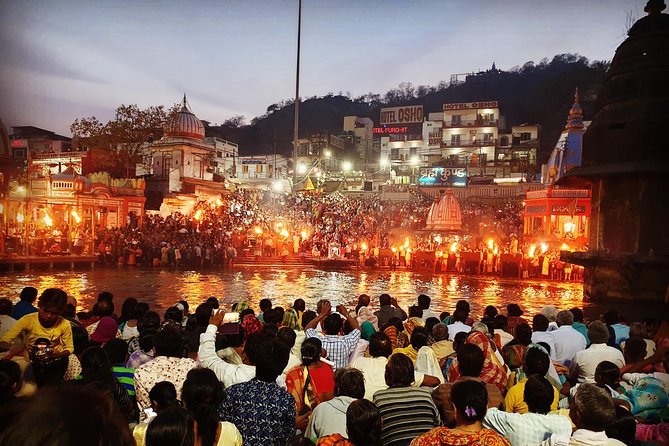
On the way back, you’ll return to Haridwar for the Ganga Aarti at night. The stop is listed for about 1 hour.
This is the emotional centerpiece of the itinerary. The description paints the scene: thousands of devotees holding diyas and flowers along the river. In other words, this isn’t just a temple visit—it’s a shared public ritual where the river becomes part of the performance.
This is also where the guide’s help really matters. Aarti can look chaotic if you don’t know what you’re watching. With the commentary, you’re better able to follow the meaning of the ceremony and the flow of the ritual.
How to make the most of it:
- Arrive calmly and follow your guide’s instructions on where to stand.
- Keep your voice low and your movements respectful.
- Don’t over-schedule your photos. Watch for the moment when the light and movement line up, then capture one or two clean shots.
Guide and driver: the difference between seeing and understanding
The experience is built around logistics plus interpretation. You get a professional guide, and pickup/drop-off is managed in an AC private car. The reviews also underline that the driver and guide are key to a good day.
One review specifically names Asim, and highlights how he made a solo female traveler feel safe. That matters. On a long day with early departure, clear communication and confident handling of crowd situations are not “nice to have”—they’re the backbone of the trip.
The tour also notes that it may be operated by a multi-lingual guide. If you have language preferences, it’s worth checking in at booking so you’re matched with someone who can explain the story behind the places you’ll visit.
Timing, stamina, and who this day tour fits best
This is best for you if you want a first-timer overview without turning the trip into a DIY project. It fits:
- Couples and small groups who want an organized route
- Religious and cultural travelers who value explanation
- Anyone who wants the major Haridwar-Rishikesh highlights in one long day
It might be less ideal if you hate long road time. The full schedule is 14–15 hours, with an early 5:30 A.M. start and a later night return. You’ll be doing several short stops rather than one or two slow, deep visits.
What you should bring (and what to plan for)
The data doesn’t list a strict packing list, but the day’s structure gives clues. Expect walking near riverfront areas and time outdoors around religious spaces.
I’d pack:
- Comfortable shoes for uneven or crowded ground
- A light layer for early morning and evening air near the river
- A small bag that’s easy to manage in crowds
- Phone charged for photos, but also time without it (the Aarti is easier to enjoy that way)
Also remember: camera fees are not included at a few places. If photography matters to you, ask your guide when you arrive so you’re not surprised mid-stop.
Should you book this 1-day Haridwar and Rishikesh tour from Delhi?
If your goal is to see the big spiritual highlights with minimal planning, I think you should book this. The value comes from how much is handled for you: AC pickup/drop-off, a guide, lunch, bottled water, and the included fees and taxes that usually become a hassle.
I’d only hesitate if you can’t handle a very early start and a very long day. If you want slow, deep time in fewer places, you’d likely do better with a multi-day itinerary in the region.
But for a one-day “get oriented fast” trip—especially if you care about the night Ganga Aarti—this plan is one of the smarter ways to do Haridwar and Rishikesh from Delhi.
FAQ
What are the main stops on the Haridwar and Rishikesh 1 day tour?
You’ll visit Har Ki Pauri, Mansa Devi Temple (Bilwa Tirath), Lakshman Jhula, Chotiwala for lunch, Beatles Ashram (Chaurasi Kutia), Ram Jhula, and the Ganga Aarti at Haridwar.
How long is the tour from Delhi?
The duration is about 14 to 15 hours.
When does pickup happen?
The itinerary states pickup at 5:30 A.M. from your hotel in Delhi/Noida/Gurgaon.
Do I get hotel pickup and drop-off?
Yes. Pickup and drop-off are included to your hotel (or airport) in New Delhi.
Is lunch included?
Yes. Lunch is included at a multi-cuisine air-conditioned restaurant.
Are entrance fees included?
The included stops are listed with admission ticket free in the itinerary, and the tour includes entrance fees as part of what’s covered.
Is bottled water provided?
Yes, bottled water is included.
Is this tour private?
Yes. It’s described as private, meaning only your group participates.
What about camera fees?
Camera fees are not included at a few places.
Is there a cancellation fee?
Free cancellation is available. You can cancel up to 24 hours in advance for a full refund.
Is there a guide during the tour?
Yes. A professional guide is included, and the guide may be multi-lingual.