REVIEW · NEW DELHI
New Delhi Sanjay Colony slum Tour (Private Tour)
Book on Viator →Operated by Delhi by Locals · Bookable on Viator
Delhi’s real stories don’t come from brochures. This private Sanjay Colony slum tour takes you into everyday life in a community of about 60,000 people, with stops tied to faith, education, and day-to-day basics like water and hygiene.
I especially like how the visit is run with care and boundaries—there’s a strong emphasis on a respectful approach, and you won’t be allowed to photograph. The whole point is understanding how the system works for people, not “touristing” the place.
I also love the small-group feel: up to 6 people per booking, plus a guide who talks you through what’s happening in the area. You’ll get included local tea and a water bottle as you explore, and the tour includes time at Learning by Locals to see how education and community support show up on the ground.
The main drawback to plan for: no photography. If your travel brain is wired for photo stops, this one will feel restrictive—but it’s part of the respect-first design.
In This Review
- Key things to know before you go
- Sanjay Colony teaches Delhi’s daily systems up close
- Price and value: $35 for a short, relationship-based visit
- Getting there: the Okhla Metro meeting point and the private-group pace
- Stop 1: s.d.m.c primary school and what you’re really observing
- The temple stop: faith as daily structure, not just a sightseeing moment
- Learning by Locals: education support, local interaction, and daily-life challenges
- No photography: why it changes the tone (and how to handle it)
- What to expect from the guide experience (and why names matter)
- Who should book this tour (and who might pass)
- Should you book the Sanjay Colony slum Tour?
- FAQ
- How long is the Sanjay Colony slum tour?
- Is this tour private?
- What is the group size limit?
- Where does the tour meet?
- What is included in the price?
- Do I need to pay for admissions?
- Is photography allowed during the tour?
- What will I see or learn during the stops?
- How much does the tour cost?
- What is the cancellation policy?
Key things to know before you go
- No photography allowed, so expect conversation, not camera time
- Small private group (max 6) for more direct interaction with locals
- Temple + faith focus, so you’ll see how religion shapes daily routines
- Education spotlight, including a look tied to the local primary school
- Learning by Locals link, with tea and a water bottle included
- 50% profit goes back to the non profit Learning by Locals in the community
Sanjay Colony teaches Delhi’s daily systems up close
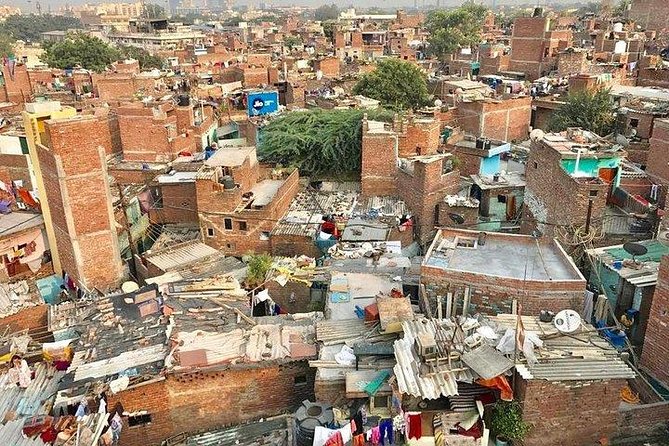
Sanjay Colony isn’t presented as a “shock value” experience. It’s framed as a way to understand culture and systems—how people live, how they learn, and how basic needs get handled in a tight urban setting. Over roughly 90 minutes, you’ll hear about the real day-to-day challenges of living in the area, including access to water, electricity, and hygiene.
One of the most practical parts of the tour is that it doesn’t stop at “what’s different.” It explains why things feel hard, what people manage anyway, and where faith and community support show up in daily life. There’s also an explicit focus on how education works in Delhi and what it looks like in this neighborhood. That’s the kind of context that makes a city click in your head.
And yes, it’s a community. Sanjay Colony has a population of about 60,000. That detail matters because it keeps the experience grounded: you’re not visiting a set or an exhibit. You’re walking through a place where tens of thousands of people make life work every day.
You can also read our reviews of more private tours in New Delhi


Price and value: $35 for a short, relationship-based visit
At $35 per person for about 1 hour 30 minutes, this tour isn’t trying to compete with cheap “checklist” tours. Instead, you’re paying for something more intimate: a private group of up to 6, a local guide, and an experience designed around access with boundaries.
The value gets stronger because the tour builds in community impact. Half of the profits go back to Learning by Locals, the non profit operating inside the slum community. You’re not just consuming information—you’re supporting a local organization tied to education and community learning. That also explains why the structure is careful and why photography is restricted.
You’ll also get practical basics included: a local tea and a water bottle during the tour. For a short visit, that’s not just a nice extra. It helps you stay comfortable so you can listen and talk instead of calculating logistics mid-walk.
Getting there: the Okhla Metro meeting point and the private-group pace
The meeting point is at Harkesh Nagar Okhla Metro Gate no. 2G7VG+62H, Harkesh Nagar, Okhla, New Delhi, Delhi 110020. The good news for your planning brain: it’s near public transportation.
This is a private tour, meaning only your group participates. With a maximum of 6 people, the guide can actually keep things moving at a human pace. It also helps with the “feel safe, feel guided” side of the experience; the guides and organizers are repeatedly described as professional and friendly, with an emphasis on taking care of you.
Expect the tour to end back at the meeting point. That’s useful. You don’t have to guess your next move while you’re still processing everything you just learned.
Stop 1: s.d.m.c primary school and what you’re really observing
Your first stop is s.d.m.c primary school. The time here is short—about 5 minutes—so don’t expect a full classroom visit or a long Q&A session. Instead, this stop works like an orientation moment. You’ll connect the tour’s themes—education and systems—to a real local setting.
Since the school visit is focused as part of understanding education in Delhi, it helps to go in with the right questions. Rather than looking for “tour photos” or a dramatic moment, watch for practical clues: how the school fits into the neighborhood rhythm, and how education is positioned as a pathway inside constrained daily life.
If you prefer deeply structured tours with lots of time at each location, the short duration might feel like a teaser. But the tradeoff is that the overall tour stays focused on understanding multiple parts of daily life within a single, manageable timeframe.
The temple stop: faith as daily structure, not just a sightseeing moment
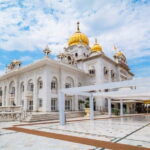
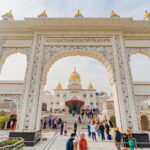
One of the tour’s stated themes is the role of faith in people’s lives, and you’ll visit a temple during the experience. This isn’t framed as a quick cultural photo-op. It’s part of learning how religion shapes routines, community behavior, and the way people find meaning during challenges.
Even in a city as fast as Delhi, faith can act like a steady “support system.” The value of including this stop is that it balances the practical themes—water, electricity, hygiene, education—with something harder to measure. You get to understand not only what people face, but what helps them cope and keep going.
Here’s the practical tip: treat this as a lived religious space. Move calmly, follow your guide’s directions, and keep your attention on respectful observation. With the no-photography rule in place, you’ll be encouraged to stay present rather than scanning for shots.


Learning by Locals: education support, local interaction, and daily-life challenges
The second stop is Learning by Locals, with about 15 minutes allocated. This is where the tour shifts from “seeing” to understanding systems through direct local context.
At this stage, the tour experience is built around several threads:
- seeing the education setup tied to a public school from outside
- understanding the daily challenges of living in the slum, including water and electricity access
- discussing hygiene and how it affects day-to-day comfort
- interacting with locals as part of the learning process
- visiting a temple again through the lens of faith’s everyday role
- enjoying a cup of local tea and a water bottle while you explore
You’ll also learn about the clothing industry and how people work in it. That matters because it broadens the tour beyond “hardship.” Work is part of dignity. Skill is part of identity. And in a community like this, daily labor systems are woven into the same spaces as education and home life.
Time here is limited, so you’ll get the most out of it if you’re ready to listen more than you talk. But if you’re the kind of traveler who enjoys asking thoughtful questions, this stop is where you can make the experience feel personal. The guide is your translator for what’s happening and why it matters.
No photography: why it changes the tone (and how to handle it)
The tour has a clear rule: no photography. That’s not a minor detail—it’s central to how the experience stays respectful.
When you remove the camera, the day becomes less about capturing and more about connecting. You’ll still see plenty: homes, school-related areas, the temple, and the practical realities of access to basics like water and electricity. But you’ll see them through conversation and observation instead of through your camera feed.
If you’re worried you’ll miss a chance to document your trip, that’s understandable. Still, I’d treat this as a chance to travel differently. Put the phone away early so you don’t start negotiating with yourself halfway through. The tour’s boundaries are there for a reason, and you’ll enjoy it more when you go along with the format from the start.
What to expect from the guide experience (and why names matter)
This tour is guided by locals, and the tone you’re looking for is clear: professional, kind, and focused on understanding rather than judgment.
In feedback about Delhi by Locals, names come up often. People mention guides such as Sukh and Badal, and they also highlight Pradeep as part of the organization’s leadership. The common thread isn’t just friendliness—it’s that the guide experience helps you feel safe and supported throughout the visit, so you can focus on what you’re learning instead of worrying about what’s allowed.
That guide role is especially important in a space like Sanjay Colony. Without a guide, it’s easy to turn a neighborhood into a blur of impressions. With the guide, you get structure: what to notice, how to ask, and how to understand daily-life challenges without turning them into a spectacle.
Who should book this tour (and who might pass)
This experience fits best if you:
- want a real Delhi beyond monuments
- care about education, community support, and daily-life systems
- enjoy conversation and learning from local context
- are comfortable with a no-photography format
- like small-group travel with up to 6 people
It may not be for you if you’re looking for a photo-heavy itinerary or if you want lots of time in each location. The whole tour is about 90 minutes, and several key stops are intentionally short. Think of it as a focused orientation plus a community learning session, not a long documentary-style walkthrough.
If you’re traveling with kids or older family members, you might find it doable since the tour states that most travelers can participate. Still, remember the walking and the “respect boundaries” tone. It’s a conversation-first visit.
Should you book the Sanjay Colony slum Tour?
I’d book it if you want an experience that trades spectacle for understanding—and if you’re okay with boundaries like no photography. The $35 price makes sense when you factor in the private small-group format, included tea and water, and the fact that 50% of profits supports Learning by Locals.
You’ll walk away with more than impressions. You’ll understand how faith, education, work (including the clothing industry), and basic services like water and hygiene connect in day-to-day life in Sanjay Colony. That’s the kind of knowledge that follows you after Delhi’s traffic noise fades.
If your travel style is strictly camera-first, then skip this one and look for a different type of city tour. Here, the real “souvenir” is perspective.
FAQ
How long is the Sanjay Colony slum tour?
The tour is about 1 hour 30 minutes (approx.).
Is this tour private?
Yes. It’s a private tour/activity, and only your group will participate.
What is the group size limit?
A maximum of 6 people per booking.
Where does the tour meet?
The meeting point is at Harkesh Nagar Okhla Metro Gate no. 2G7VG+62H, Harkesh Nagar, Okhla, New Delhi, Delhi 110020, India.
What is included in the price?
You’ll get a local guide, local tea, and a water bottle.
Do I need to pay for admissions?
Admission tickets are free for the stops listed in the tour.
Is photography allowed during the tour?
No. Photography is not allowed on this tour.
What will I see or learn during the stops?
You’ll visit a temple, visit/see s.d.m.c primary school (tied to education), and spend time at Learning by Locals to understand education, daily challenges like water/electricity/hygiene, and daily life in the community.
How much does the tour cost?
The price is $35.00 per person.
What is the cancellation policy?
Free cancellation is available. You can cancel up to 24 hours in advance for a full refund; changes made less than 24 hours before the start time aren’t accepted, and the amount paid won’t be refunded.