REVIEW · NEW DELHI
Old and New Delhi city tour with Live tour guide
Book on Viator →Operated by Chaman Duggal Private Tours · Bookable on Viator
Delhi makes sense when someone else drives. This private Old and New Delhi day tour gives you exactly that: a live English guide to translate what you’re seeing, plus an included rickshaw ride through the food and textile lanes of Old Delhi. I also like that the tour is built for comfort with round-trip pickup and an air-conditioned car. One consideration: entrance tickets for several major sites (like Jama Masjid, Humayun’s Tomb, and Qutub Minar) are not included, so you’ll want to budget for that.
You’re looking at an 8-hour loop that mixes big monuments with moments of pause—Gandhi’s memorial at Raj Ghat, the towering Qutub Minar, and the calm Lotus Temple. The vibe is practical rather than rushed: you get guided context, then time to take photos and look around at your pace.
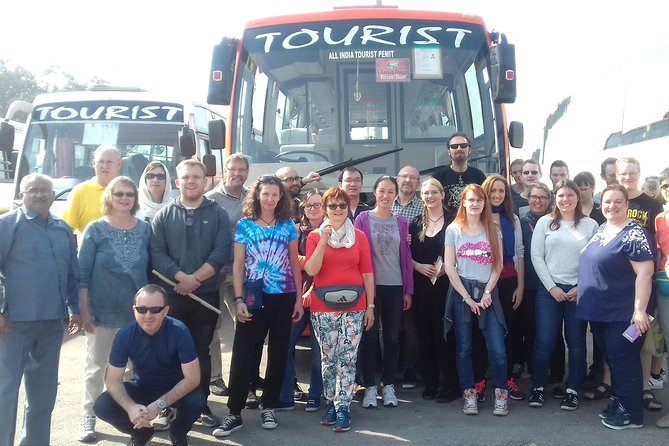
With a maximum of 4 people, this works well if you want personal attention instead of feeling like you’re being shepherded through Delhi’s traffic and crowds.
In This Review
- Key highlights you’ll care about
- Why this Old and New Delhi loop works (and who it suits)
- Price and value: what you get for about $29
- Getting started in Karol Bagh: transport that saves your energy
- Jama Masjid: seeing a Mughal giant with context
- Old Delhi by rickshaw: food and textile lanes up close
- India Gate quick stop: a New Delhi breather
- Humayun’s Tomb: UNESCO-level details you’ll actually notice
- Raj Ghat: a free memorial stop that slows the day
- Qutub Minar: the tower you measure with your eyes
- Lotus Temple: calm, free, and close enough for a proper visit
- What this tour includes (and what you may still pay for)
- Who should book this Delhi day tour (and who should look elsewhere)
- Should you book this Old and New Delhi tour?
- FAQ
- How long is the Old and New Delhi city tour?
- Do you get round-trip pickup from Delhi hotels?
- Is the rickshaw ride included?
- Are entrance fees included for Jama Masjid, Humayun’s Tomb, and Qutub Minar?
- Is the tour price per person?
- Does the tour include a meal?
- What is the cancellation policy?
- What’s the maximum group size?
Key highlights you’ll care about
- Small-group private format (max 4 people) means fewer waits and easier questions.
- Live English-speaking guide helps the landmarks click instead of feeling like name-only stops.
- Rickshaw ride is included for an in-the-moment taste of Old Delhi’s food and textile areas.
- Round-trip hotel transport by AC car saves you time and energy on a long day.
- UNESCO World Heritage stops are part of the route, not just quick photo breaks.
- Bottled water is included, so the day stays comfortable on the move.
Why this Old and New Delhi loop works (and who it suits)
Delhi can feel like three cities at once: the formal, planned avenues of New Delhi; the layered lanes of Old Delhi; and the spiritual anchors you pass in between. This tour is designed to stitch those parts together with a guide who explains what you’re looking at, rather than dumping you at monuments with a map and a shrug.
The private setup is a big deal. With a maximum of 4 travelers, you’re more likely to get real conversation—why a certain mosque looks the way it does, what a memorial represents, or what to notice at a UNESCO site. It also helps with timing. When you’re in a place like Jama Masjid or Qutub Minar, the best experience often depends on pacing: how long you spend looking up at details, or how quickly you move through the courtyard areas.
This day tour is also efficient. You’re covering Old Delhi highlights plus major New Delhi anchors (like India Gate, Raj Ghat, and Lotus Temple) in about 8 hours, with hotel-to-hotel transport included. If you’re short on time and don’t want to plan multiple tuk-tuk/taxi hops, this is built for you.
Who it’s best for:
- You want a guided “big hits” day without the stress of logistics.
- You like history, but you also want explanations you can understand quickly.
- You’d rather ride in comfort for transfers and save your walking energy for the sights.
Who might not love it:
- If you hate group-style timing, note that the route includes several scheduled stops. You’ll still have time at each place, but the day has a plan.
- If you’re allergic to entrance fees, factor in that some key stops list admission as not included.
You can also read our reviews of more guided tours in New Delhi



Price and value: what you get for about $29

At $29.21 per person, the value is strongest because the tour bundles several cost-heavy elements together: an AC car with a driver, live English guide time, mineral water, parking, state tax, and permit fees, plus the included rickshaw ride. Entrance tickets are separate for some attractions, but most guided-city days in major capitals charge extra for guide time and transport.
A smart way to think about the price is this: you’re paying for a guided route that covers multiple major sites in one day, while someone else handles the driving and coordination. For a first visit to Delhi, that can save you time and reduce the odds of getting stuck in the wrong traffic pattern at the wrong hour.
Also, the tour is marked with mobile ticket convenience and group discount availability. Combine that with the small group size and you get a better chance of a smooth, personal experience rather than a crowded “tour line.”
Getting started in Karol Bagh: transport that saves your energy
The day begins in Karol Bagh and ends back there. Practically, this matters because it sets you up for an efficient loop through Old and New Delhi. You’re also promised convenient round-trip transport from Delhi hotels, so you’re not left negotiating meeting points across town.
You’ll travel by air-conditioned car with a driver, which is a comfort win in Delhi. Even if you enjoy moving around, an 8-hour day with several stops can wear you down fast. The car segments take the strain off so you can spend your energy where it counts: at the monuments, memorials, and temples.
Tip: since the tour includes multiple outdoor portions and walking inside sites, wear comfortable shoes and keep your day-bag light. Your guide will help you plan your pacing, but you’ll still do the normal sightseeing walking.
Jama Masjid: seeing a Mughal giant with context
Jama Masjid is one of Delhi’s most important mosques, built under the Mughal Emperor Shah Jahan between 1650 and 1656. It’s huge, and the scale alone can be overwhelming if you don’t know what you’re looking at.
On this tour, you get about 30 minutes at Jama Masjid. Admission is not included, so plan for that cost separately if you want full access. The upside of the short time window is that it keeps the day moving. You’ll spend enough time to appreciate the main courtyard and key architectural features without turning the rest of the day into a wait-and-queue schedule.
What I like about guided time here: a good guide doesn’t just list dates. They point out architectural logic—how the complex is arranged, and what the mosque’s setting in Old Delhi means historically. That turns the visit from a quick “big building” stop into something you can actually read.
Practical consideration: since it’s a religious site, you may face security checks and rules about movement and clothing. Modest, respectful attire and flexibility help you move smoothly.
Old Delhi by rickshaw: food and textile lanes up close
Then you shift gears to Old Delhi, where you ride through the historic walled city areas associated with Shahjahanabad, founded in 1639. The tour includes an Old Delhi rickshaw ride of about 45 minutes.
This is where the day feels most personal. From the rickshaw you experience the rhythm of the streets in a way you can’t replicate from a parked viewpoint. You’ll pass through areas tied to textile and food markets, and your guide can explain what you’re seeing as the landscape of shops, signage, and street activity flashes by.
A key value here: the guide helps you avoid the tourist version of market sightseeing. Markets aren’t just for browsing. They’re for understanding how people eat, shop, and trade. Even if you don’t plan to buy anything, the tour gives you a framework for what those lanes represent.
Possible drawback: Old Delhi streets can be tight and busy. You’ll need to enjoy the “slow progress in a small vehicle” feeling. If you’re prone to motion discomfort, bring that up in advance so your guide can advise on best seating and timing.
You can also read our reviews of more city tours in New Delhi





India Gate quick stop: a New Delhi breather
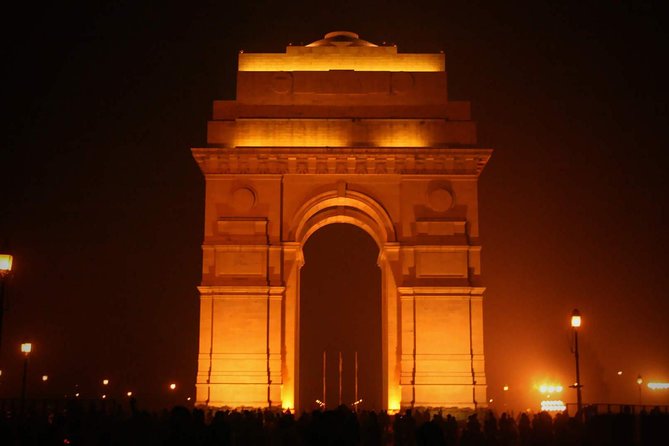
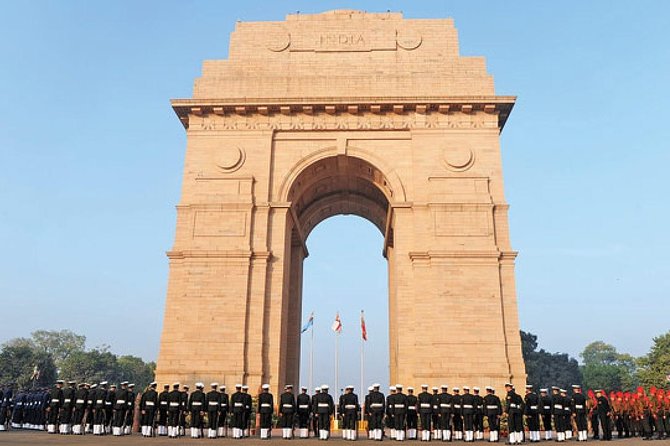
After Old Delhi, you get a stop at India Gate, the iconic sandstone war memorial on Rajpath. The tour description frames it as part of the route rather than a long dedicated visit, so think of it as a structured break: a chance to reset visually after the dense market areas.
Why it’s worth including even as a shorter stop: India Gate provides a counterpoint to Old Delhi. It’s planned, open, and visually simple compared to the layered streets you’ve just left. That contrast helps you see Delhi as more than one story.
Practical tip: if you’re visiting in daylight, you’ll likely get the easiest photos. If the light is harsh, ask your guide when it’s better for pictures—small timing tweaks can make a big difference.
Humayun’s Tomb: UNESCO-level details you’ll actually notice
Humayun’s Tomb is about 1 hour on this itinerary, with admission not included. This is a UNESCO World Heritage site and also a place many visitors remember for its garden-tomb layout and Mughal-era significance.
The description for the tomb highlights a fascinating angle: it’s often called the dormitory of the Mughals because over 150 members of the Mughal family are buried in the cells. That’s the kind of detail a guide can translate into something meaningful. Instead of just walking through, you start understanding why the tomb’s layout matters—how the design supports the idea of dynasty, memory, and monumentality.
What you’ll like if you enjoy “look closely” sightseeing:
- You can take your time with symmetry, the garden setting, and the tomb structure.
- You’ll have enough time to pause for photos and still listen to explanation.
Possible drawback: since entry fees aren’t included, your total day cost depends on whether you decide to pay for admission. If you’re determined to keep costs down, you may still appreciate the setting from outside, but you’ll lose some of the full experience.
Raj Ghat: a free memorial stop that slows the day
Raj Ghat is dedicated to Mahatma Gandhi, and your tour gives you about 30 minutes here. Admission is listed as free, which makes it an easy inclusion. It’s also a good pacing tool: after monuments and a long travel day, you get a calmer, reflective stop.
Why this stop matters on a first-time tour: the route doesn’t treat Delhi like a museum of architecture only. It ties into identity and modern history through a national memorial. A guide’s commentary can help you connect the location to Gandhi’s broader story, not just the physical place.
Practical advice: bring quiet patience. Even though it’s short, Raj Ghat can feel emotionally heavy. Treat it like a moment, not a checkpoint.
Qutub Minar: the tower you measure with your eyes
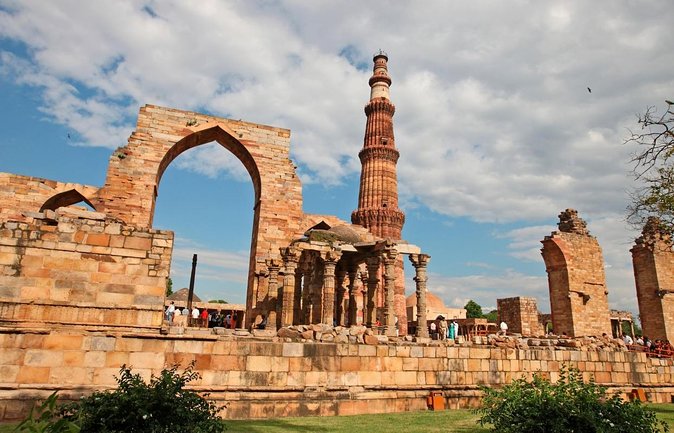
Qutub Minar is one of Delhi’s most dramatic sights. It’s described as a tower of victory, built in 1193 by Qutab-ud-din Aibak after the defeat of Delhi’s last Hindu kingdom. The tower rises to about 73 meters and has five distinct storeys.
You’ll spend about 1 hour here, with admission not included. This is another UNESCO site, and it’s one of those places where a guide can save you from doing the sightseeing equivalent of speed-reading. Look up. Notice how the storeys are marked and how the tower shape changes as you move around it.
Why a guided stop helps: you’re not just looking at a tall structure. You’re looking at a timeline of power, building styles, and historical transitions. A good guide points out those layers so the site feels less like a random photo background.
Possible drawback: Qutub Minar can involve more walking than you expect, and your experience depends on what’s open and how crowds move. Comfortable shoes really matter here.
Lotus Temple: calm, free, and close enough for a proper visit
Lotus Temple rounds out the route with about 1 hour of time. It’s listed as free, and that’s a major perk. The temple’s design is described through the symbolism of the lotus flower—beauty, purity, and knowledge. You don’t need extra context to appreciate the simplicity of the form, but a guide’s explanation helps you connect design to meaning.
Why I think it earns its place on this itinerary: after tombs, towers, and memorials, it gives you a reset. It’s also a strong “last stop” because you can enjoy it without worrying about entrance fees and without committing to a longer guided track.
Practical tip: treat it as a slow-walk stop. If you rush, you miss what makes it calming.
What this tour includes (and what you may still pay for)
Here’s the straightforward breakdown of what’s covered:
- AC car with driver and parking
- Mineral water
- Fuel, state tax, permit fees
- Live English-speaking guide
- Rickshaw ride is included as part of the Old Delhi segment
Not included:
- Meals
- Entrance/admission tickets for some stops (listed as not included for Jama Masjid, Humayun’s Tomb, and Qutub Minar)
So your day budget should include a little extra for monument entries if you plan to go inside.
Meal note: since meals are not included, decide where you’ll eat ahead of time. The tour length is about 8 hours, so you’ll want a simple plan for lunch or an early snack.
Who should book this Delhi day tour (and who should look elsewhere)
Book it if:
- You want a first-time Delhi overview that still includes meaningful time at each major stop.
- You care about understanding sites, not just taking photos.
- You prefer door-to-door transport and a small group.
Consider skipping (or choosing a different format) if:
- You only want places with entrance fees fully included.
- You dislike structured pacing and fixed timing between stops.
- You want a food-focused market crawl where you stop often to eat and bargain. This tour’s markets are a ride-through experience with guided context, not a full tasting itinerary.
A small plus: the maximum group size of 4 means this tour tends to feel more like a guided day out with a plan, not a big group production.
Should you book this Old and New Delhi tour?
If you’re doing Delhi on a tight schedule, I’d say yes—especially if it’s your first visit and you want help making sense of what you’re seeing. The best part is the combination of live English guidance, a real Old Delhi rickshaw ride, and an efficient route that hits major landmarks in one day without making you wrestle with transport.
Just go in with one mindset: entrance fees for key sites are on you, and the tour runs long enough that good shoes and a light bag will make a difference. If you can handle that, this tour is a solid way to get your bearings fast and leave Delhi with stories that actually make sense.
FAQ
How long is the Old and New Delhi city tour?
The tour lasts about 8 hours.
Do you get round-trip pickup from Delhi hotels?
Yes. Convenient round-trip transport is included from Delhi hotels, and the tour ends back at the meeting point.
Is the rickshaw ride included?
Yes. The Old Delhi rickshaw ride is included as part of the tour.
Are entrance fees included for Jama Masjid, Humayun’s Tomb, and Qutub Minar?
No. Admission is listed as not included for Jama Masjid, Humayun’s Tomb, and Qutub Minar.
Is the tour price per person?
Yes. The price is listed as $29.21 per person.
Does the tour include a meal?
No. Meals are not included.
What is the cancellation policy?
You can cancel for a full refund if you cancel up to 24 hours in advance. If you cancel less than 24 hours before the start time, you won’t receive a refund.
What’s the maximum group size?
The tour has a maximum of 4 travelers.