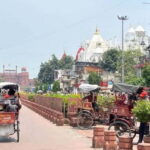
Old Delhi is a maze; this fixes it. I love the audio headsets and the luxury rickshaw ride that keeps you oriented while you move through busy lanes. One thing to keep in mind: you’re only out for about 2 to 4 hours, so each stop gets a quick look rather than a long, slow visit.
This is a practical way to experience Old Delhi when you’re short on time but still want the key sights plus the smaller, less obvious stops. You’ll get live commentary while you ride, and you won’t have to crane your neck or strain your ears to understand what’s going on.
If your group is guided by someone like Jeswin (a name that’s shown up with this tour), you can expect clear explanations and a steady pace that helps you keep moving without feeling rushed. The route is also built for variety—temples, mosques, historic lanes, and markets—so you get a fuller sense of the area than a single-sight plan.
In This Review
- Quick takeaways
- Old Delhi by luxury rickshaw: why this route works
- Audio headsets and live commentary: hearing the story without stress
- Price and what $85 buys you in the real world
- Your Old Delhi route: from Red Fort to Jama Masjid
- Stop 1: Red Fort (UNESCO site)
- Stop 2: Sri Digambar Jain Lal Mandir
- Stop 3: Mirza Ghalib Ki Haveli
- Stop 4: Naughara (Row of Nine Houses)
- Stop 5: Fatehpuri Mosque
- Stop 6: Gadodia Market and old spice warehouses
- Stop 7: Gauri Shankar Temple
- Stop 8: Gurudwara Sis Ganj Sahib
- Stop 9: Jama Masjid
- How the mix of temples, mosques, and markets tells a bigger story
- Food tasting, bottled water, and staying sane in the crowds
- Where it starts and how the timing usually feels
- Who this Old Delhi rickshaw tour is best for
- Should you book this Old Delhi rickshaw tour?
- FAQ
- How long is the Old Delhi rickshaw tour?
- What’s included in the tour price?
- Is hotel pickup and drop-off included?
- Is this tour private?
- Are entrance tickets included for all stops?
- What is the cancellation policy?
Quick takeaways
- Audio headsets make the guide easy to hear, even in crowded streets
- Luxury rickshaw transport helps you explore Chandni Chowk’s tight lanes without getting lost
- Food tasting + bottled water + snacks keep you fueled during the ride
- A stop-by-stop mix of Red Fort, Jain sites, Mughal-era landmarks, and major mosques
- Jama Masjid entry isn’t included, so you’ll plan for that final admission
Old Delhi by luxury rickshaw: why this route works
Old Delhi can be unforgettable, and also exhausting. The streets around Chandni Chowk are narrow, busy, and full of turns that make it easy to lose your bearings. A rickshaw ride is the antidote: you’re sitting comfortably as the driver threads you through the lanes.
I like that this tour is designed for motion. Instead of asking you to walk long distances just to “see stuff,” it uses the rickshaw to cover ground while you focus on what the guide is telling you. That matters if you only have a half-day and you want to feel like you actually accomplished something.
You’ll also spend real time at places that are easy to miss on your own. Some stops aren’t the kind you plug into a map and instantly find on the first try, so having a guide who knows where to turn can save you a lot of time and frustration.
You can also read our reviews of more guided tours in New Delhi



Audio headsets and live commentary: hearing the story without stress
Delhi noise is real. It’s traffic, vendors calling, footsteps, honking—the whole soundtrack. The tour includes audio headsets, so you can listen to live commentary without leaning forward or missing details when people pass.
This is one of the biggest quality-of-life upgrades on the itinerary. If you’ve ever tried to tour Old Delhi while juggling attention between signage, crowds, and your guide’s voice, you know how often you miss the best parts of the explanation. Here, your audio stays steady.
Another plus: the commentary helps connect the stops. You’re not just collecting random monuments—you’re learning why these places sit next to each other and how different communities have shaped the neighborhood over time.
Price and what $85 buys you in the real world
At $85 per person, this isn’t the cheapest way to do Old Delhi. But it can be good value when you look at what’s included.
You’re paying for:
- a local guide
- audio headsets
- live guided commentary
- bottled water, food tasting, and snacks
- guided time at multiple religious and historical stops
- rickshaw transport through the maze of lanes
It’s also listed with group discounts and uses a mobile ticket, which can make the whole thing smoother if you’re traveling with others. Plus, it runs about 2 to 4 hours, so you’re not burning a full day to cover what you can cover in a half-day.
If you’re the type of traveler who would otherwise spend half your time figuring out logistics, this price starts to look more reasonable. The big value is not only access—it’s the reduced stress of not getting lost while you’re trying to see the right mix of places.
Your Old Delhi route: from Red Fort to Jama Masjid
The tour is built around a focused loop that hits major landmarks and lesser-known stops, with short on-the-ground visits at each location.
Stop 1: Red Fort (UNESCO site)
You start at Red Fort, a UNESCO World Heritage site. The fort is associated with Mughal rule and is a must-see anchor for Old Delhi. Even if you don’t spend long inside, the surrounding area gives you the right starting point for the rest of the tour.
Admission is listed as free for this stop, which is great for saving money early in the itinerary.
You can also read our reviews of more tours and experiences in New Delhi

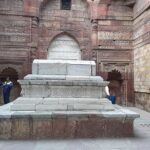
Stop 2: Sri Digambar Jain Lal Mandir
Next up is Sri Digambar Jain Lal Mandir, a Jain temple. The explanation here brings in the idea that multiple major religions trace roots to India—Hinduism, Buddhism, Jainism, and Sikhism. The guide also compares Jainism and Buddhism as being similar in some practices, with both traced to around 599 BC in the tour’s storytelling.
Jain temples often reward a closer look at details, so even a short stop can feel meaningful if you keep your eyes open.
Admission is listed as free here too.
Stop 3: Mirza Ghalib Ki Haveli
Then you’ll see Mirza Ghalib Ki Haveli, connected to Mirza Ghalib, a famous Mughal-era poet. This is the kind of stop that makes Old Delhi feel more human: it’s not only grand architecture, but also the places tied to artists and writers.
The tour notes that this haveli is tucked inside a narrow lane, which is exactly where a guide helps. You’d probably walk past it without realizing it was the right place.
Admission is listed as free.
Stop 4: Naughara (Row of Nine Houses)
You’ll pass by Naughara, also known as the row of nine houses. The tour points out that Nau Ghara refers to nine 18th-century mansions that keep their traditional appearance. You also get context that there’s an ornate Jain temple in the area, which ties the stop back into the neighborhood’s religious mix.
This is a great moment for photos and street-level observation. If you like architecture and city textures, this part can be one of the most fun.
Admission is listed as free.
Stop 5: Fatehpuri Mosque
Next is Fatehpuri Mosque, located on the western end of Chandni Chowk. The tour highlights Fatehpuri as one of Shahjahan’s wives, giving you a straightforward political and personal link to the site.
This stop works well if you’ve already started noticing how the area mixes different traditions in close proximity.
Admission is listed as free.
Stop 6: Gadodia Market and old spice warehouses
Then the tour shifts to commerce: Gadodia Market. The story is that it used to be a palace linked to someone named Mr. Gadodiya. After his death, people turned it into spice warehouses, which is why it feels like a place built for storing and trading goods rather than grand ceremonies.
The interesting part is the open warehouse feel—an in-the-street sense of how spices moved through the city. Even if you’re not shopping, it gives you texture.
Admission is listed as free, and the stop runs a bit longer at 15 minutes.
Stop 7: Gauri Shankar Temple
Next is Gauri Shankar Temple, identified as an important Hindu temple within Shivism. The tour explains that Shiva is a major deity and that Shiva is linked with destruction or death. You’ll also hear about an 800-year-old brown lingam, plus bejeweled statues associated with Gauri and Shankar.
This is where the tour’s variety really shows. You go from Mughal-era religious architecture to older local worship traditions and symbolism, all within a short span of time.
Admission is listed as free.
Stop 8: Gurudwara Sis Ganj Sahib
Then you’ll reach Gurudwara Sis Ganj Sahib, a Sikh place of worship. The tour notes that “gurudwara” is understood as a gateway to spiritual enlightenment. It also explains that Sikhism was established and developed by ten Gurus over the period 1469 to 1708.
If you like learning frameworks—how religions define themselves—this is one of the clearer stops.
Admission is listed as free.
Stop 9: Jama Masjid
The final major stop is Jama Masjid, described as the largest mosque of India and one of the top ten largest mosques worldwide. The tour also highlights a world’s tallest brick minaret and notes that it’s considered a pilgrimage site for Muslims.
This is the big closing image for the tour: the kind of scale that makes Old Delhi feel like a capital city built for more than daily life.
One practical catch: Jama Masjid admission is not included. So you should expect there may be an entry cost at the end.
How the mix of temples, mosques, and markets tells a bigger story
What I really like about this itinerary is how it moves through different kinds of landmarks without turning the tour into a checklist. You’ll see:
- fort and imperial architecture (Red Fort)
- Jain worship and symbolism (Sri Digambar Jain Lal Mandir)
- a poet’s haveli and Mughal-era cultural memory (Mirza Ghalib Ki Haveli)
- a street of 18th-century houses and local temple context (Naughara)
- mosques tied to Mughal royal history (Fatehpuri Mosque, then Jama Masjid)
- food-and-trade spaces that explain how daily life and goods worked (Gadodia Market)
- Hindu and Sikh worship spaces (Gauri Shankar Temple, Gurudwara Sis Ganj Sahib)
In short, the tour isn’t only about seeing big names. It’s about seeing how communities and everyday commerce sit side-by-side in Old Delhi.
If you’re trying to understand the city beyond postcards, this kind of variety is worth more than adding another single monument.
Food tasting, bottled water, and staying sane in the crowds
The tour includes bottled water, food tasting, and snacks. That sounds like a small bullet point, but it matters in Old Delhi. When streets are crowded, it’s easy to run out of energy—or to end up skipping meals until you’re too tired to enjoy what you’re seeing.
So I suggest you treat the included tasting as part of the experience, not a side note. Take your time with it, ask what you’re eating if your guide offers context, and then keep moving.
Also, you’ll be drinking water during the tour, which is the kind of basic comfort that can make or break a half-day plan in Delhi.
Where it starts and how the timing usually feels
The tour starts at Charity Birds Hospital, next to Shri Digambar Jain Lal Mandir, opposite Red Fort, in Chandni Chowk. The tour ends back at the meeting point.
Because the itinerary includes short visits—often around 10 minutes—the pace stays lively. You won’t have time to go deep at every stop, but you’ll come away with a solid orientation: where the major sites are, what each area feels like, and how the neighborhood layers itself.
If you want a calm, long-form temple visit where you sit and read every sign, you might find the timing a bit tight. But if you want momentum and guided context, the duration fits the goal.
Who this Old Delhi rickshaw tour is best for
This tour is especially suitable if:
- you have a short time in Delhi
- you want to see Old Delhi without getting turned around
- you like religious and cultural sites and want them explained
- you prefer guided listening over guessing what you’re looking at
- you appreciate a plan that includes food tasting and water
It’s also listed as private for your group, meaning you’re not mixing with random strangers from many schedules. That can make the experience feel more controlled and less chaotic.
If you’re traveling with a group, the group discounts can make it even more attractive.
Should you book this Old Delhi rickshaw tour?
Book it if your goal is a guided, time-efficient introduction to Old Delhi’s major sights and nearby corners, with audio headsets doing the heavy lifting for your ears and the rickshaw doing the heavy lifting for your feet. The included tasting and snacks also help you stay comfortable through the busiest streets.
Skip it (or plan something else alongside it) if you want long stays inside each monument or if you’re hoping to browse markets at leisure without a structured loop. This is built for seeing a lot in a half-day, not for slow wandering.
If you fall into the first group—time-limited but curious—this tour is one of the more practical ways to experience Chandni Chowk and the surrounding religious and historic landmarks.
FAQ
How long is the Old Delhi rickshaw tour?
It runs about 2 to 4 hours.
What’s included in the tour price?
The tour includes bottled water, food tasting, snacks, and headsets so you can hear the guide clearly, plus live commentary and a local guide.
Is hotel pickup and drop-off included?
No. Hotel pickup and drop-off is not included. The tour starts and ends at the meeting point.
Is this tour private?
Yes. It’s listed as a private tour/activity, with only your group participating.
Are entrance tickets included for all stops?
Most stops show admission as free, but Jama Masjid admission is not included.
What is the cancellation policy?
You can cancel for a full refund up to 24 hours before the experience starts. If you cancel less than 24 hours before, the amount paid is not refunded.