REVIEW · NEW DELHI
4-Days Private Luxury Golden Triangle Tour Agra Jaipur New Delhi
Book on Viator →Operated by Golden Triangle Tours India · Bookable on Viator
Four days, three icons, one smooth route.
This private luxury-style Golden Triangle tour is built for people who want the big-ticket sights—Delhi, Agra, Jaipur—without the daily hassle of figuring out drivers, routes, and timing.
I like two things right away: the door-to-door, air-conditioned transfers each day, and the way you get a guide to make sense of what you’re looking at instead of just snapping photos and hoping. That combo is especially helpful on first trips, when the cities can feel overwhelming.
One consideration: most major monuments require extra spending. Entrance tickets aren’t included (listed as about $90 per person), and lunch/dinner are on you, so plan your budget beyond the tour price.
In This Review
- Key things that make this tour click
- Private Golden Triangle logistics that save your vacation energy
- Day 1 in Delhi: from Qutub Minar to Jama Masjid, then down to Agra
- Day 2 in Agra: sunrise Taj Mahal, Baby Taj, and a fort-and-stepwell day
- Day 3 in Jaipur: Amber-area wells, Jal Mahal photos, and the City Palace mix
- Day 4 in Jaipur: Birla Mandir and Galtaji Monkey Temple, then back to Delhi’s hub
- Price and value: what $173.07 covers, and what you should budget next
- The guide/driver setup that makes the days feel manageable
- What this tight schedule feels like day-to-day
- Who should book this 4-day private Golden Triangle
- Should you book this tour?
- FAQ
- Is this tour private?
- Where does the tour start and end?
- What’s included in the price besides transportation?
- Are hotel stays included?
- Do I need to pay for monument entrance fees?
- Does the tour include the Taj Mahal parking approach?
- What kind of guide do I get?
Key things that make this tour click
- Private, air-conditioned vehicle with parking and fuel handled for fewer stress points
- English-speaking guides for all sightseeing, plus help buying entrance fees so you waste less time waiting
- Sunrise Taj Mahal with a guided visit and a battery bus ride from the parking area
- 3 nights of hotel accommodation if you choose that option, plus daily breakfast (3)
- Route planning that builds in travel time, including a drive via Yamuna Expressway toward Agra
- A full Delhi–Agra–Jaipur sweep that hits UNESCO sites and classic viewpoints without forcing you to connect transport on your own
Private Golden Triangle logistics that save your vacation energy
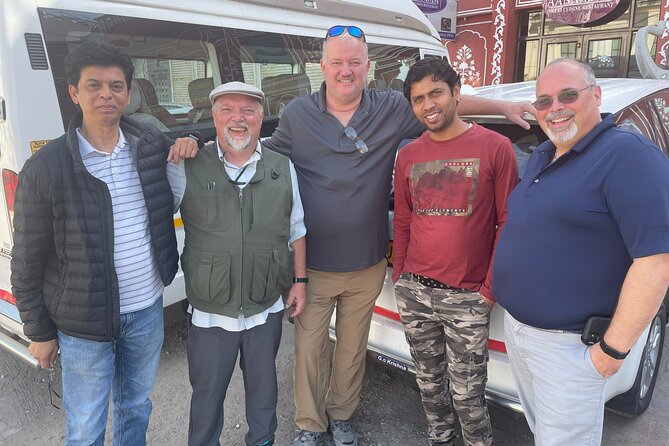
The biggest value here is not just comfort—it’s time. In Delhi, Agra, and Jaipur, traffic and distances can turn a sightseeing plan into a long endurance test. This tour reduces that burden with a private, air-conditioned car and daily transfers that start and end at your pickup location (in Delhi). You’re not hunting for rides, bargaining, or zig-zagging between neighborhoods after a tiring museum day.
You also get mineral water during journeys, which sounds minor until you’re walking in heat with a schedule that doesn’t pause. Add in the fact that you’ll have private local guides for sightseeing, and you get context that helps the sights make sense fast—Qutub Minar becomes more than a tall tower, and the Taj Mahal stops being just a postcard moment.
The pacing is still busy, but it’s busy with intention: each day groups sights by area and then moves on with the help of a driver who knows how to run the route. For a first Golden Triangle, that’s the difference between enjoying the trip and feeling like you’re constantly catching up.
You can also read our reviews of more private tours in New Delhi


Day 1 in Delhi: from Qutub Minar to Jama Masjid, then down to Agra

Day 1 is a classic Delhi sampler, but you’re seeing it with a private guide and a smooth transport plan. The day starts with Qutub Minar, a UNESCO World Heritage site and a 73-metre tall tower with a construction date given as 1193. Even if you’re not a medieval-history person, it’s worth slowing down here. The height and the layered design make it easy to understand why this site matters.
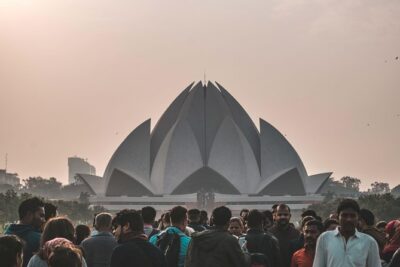
Next comes Lotus Temple, known for its flower-like shape and an open-door philosophy: it’s open to everyone regardless of religion. It’s also a good break from the “stone and script” feeling of older monuments—this one leans more into architecture and calm space.
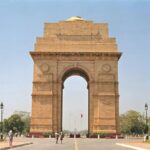
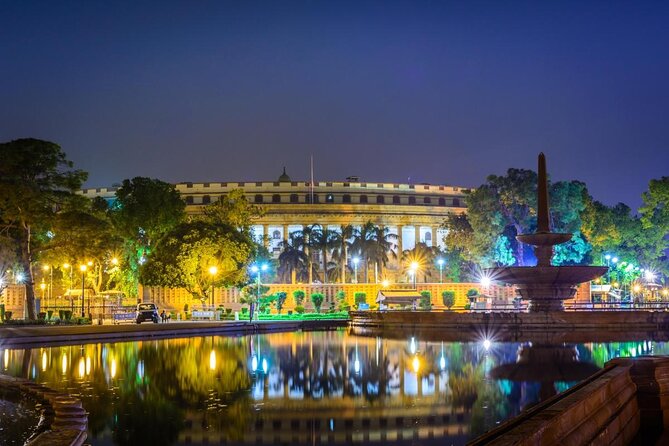
Then you roll into the war memorial setting of India Gate near Rajpath. It’s often a relaxed place to pause with people watching, which makes it a nice middle stop after early walking. Shortly after that, you’ll see Parliament House (Sansad Bhavan), described as circular in spirit due to its shape referencing the Ashoka Chakra. Even if you’re viewing from outside, it gives you a quick sense of how modern India frames national identity.
Old Delhi is the real mood shift, and the stops reflect that. Jama Masjid is one of the largest mosques in Delhi, built between 1650 and 1656 under Shah Jahan. It’s a big-picture stop too—scale matters here, and your guide can help you read what you’re seeing.
You then get Agrasen ki Baoli, a protected stepwell site. The stepwell design is visually strong, and it’s quick enough to add without draining your energy for the rest of the day. After that, Humayun’s Tomb brings the Mughal era into focus again. It’s listed as commissioned in 1558, and it’s a great place to connect dots between Delhi’s older monumental style and what you’ll see later in Agra.
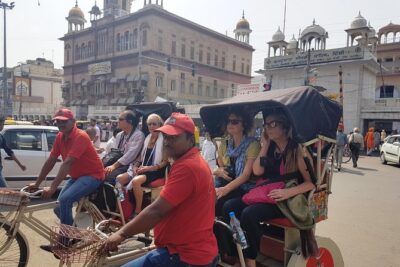
Finally, you end in Chandni Chowk, the heart of Old Delhi shopping streets. Plan for a one-hour stroll where you’ll likely want to slow your pace and look carefully at spices, textiles, and small shops. It’s not a “museum” stop; it’s sensory travel.
After that, you break for lunch at a local restaurant and drive to Agra via Yamuna Expressway. When you arrive, you check in and the rest of the day is yours at leisure. That free time matters. It gives your legs a reset before Taj Mahal day.
Day 2 in Agra: sunrise Taj Mahal, Baby Taj, and a fort-and-stepwell day
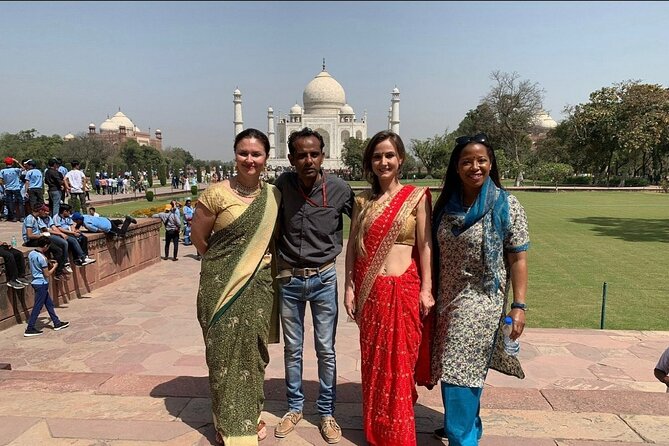
Day 2 is the heart of the Golden Triangle for most people, and the plan reflects that with a sunrise approach to the Taj Mahal. The tour description notes a guided visit inside for about two hours, with historical context around Shahjahan and the tomb built in 1630 to enshrine his wife. Sunrise means you’ll be up early, but it’s also when the Taj typically feels most special—light changes the stone and the crowds tend to be different than later in the morning. This is a day where you’ll be glad you chose a guided visit rather than rushing through on your own.
After the Taj, you move to Agra Fort, another UNESCO site and described as a main residence for the Mughal emperor’s court. Your guide points out palaces, balconies, and gardens. Forts can be tricky for DIY visitors because you need context for what each section once did. With a guide, you’re not just wandering through walls—you’re connecting the architecture to how power was staged.
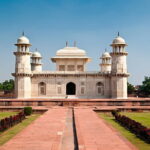
Next is Itmad-ud-Daula, often called Baby Taj. The name is helpful, but don’t let it shrink your expectations. This is still a Mughal mausoleum complex, and your guide can help you appreciate it as a building with details that work as both craft and symbolism.
Then the plan adds Chand Baori, a massive ornate stepwell reached by 3,500 steps. You might not walk all the steps, and that’s okay. It’s still a strong visual stop, and it’s a good reminder that Indian architecture isn’t only about temples and forts—water engineering and geometry show up everywhere.
After your Agra sightseeing block, you travel onward to Jaipur and check in for the night. The schedule gives you enough time to land, shower, and regroup before Jaipur’s longer day.
Day 3 in Jaipur: Amber-area wells, Jal Mahal photos, and the City Palace mix
Jaipur day is where you feel the Rajasthan texture the most—pink stone, fort views, and a mix of royal-era buildings and later cultural stops. You start with Panna Meena ka Kund, a stepwell near Amber Fort. This is one of those “small but smart” stops. It’s short (about 15 minutes), but it sets you up to see stepwells as part of the region’s way of living, not just random roadside sights.
Then comes the big one: Jaipur’s most famous fort, described as the capital of Rajasthan until 1728. Your guide takes you through about two hours of palaces, squares, and monuments. If you like photo angles, forts in Jaipur deliver them constantly—just be ready for uneven walking surfaces. If you prefer to take things slowly, ask your guide to point out the highest-value viewpoints so you’re not lost in the maze of rooms and courtyards.
Jal Mahal follows next, mainly for photos. It’s described as a palace floating on Man Sagar Lake, with a short stop around 15 minutes. Don’t expect to go inside based on the tour’s wording. Treat it like a “pause and picture” stop: enjoy the view, grab your shots, and move on without getting stuck waiting.
City Palace is next, with an hour to explore Maharaja’s seat and the administrative and ceremonial character of the complex. The tour notes an admission fee not included, so if you’re budgeting, remember this is one of the paid stops. The value is in the variety: the setting, the scale, and the way the site connects different periods of royal life.
Then you get Jantar Mantar, a UNESCO World Heritage site made in 1734. It’s a set of nineteen astronomical instruments built by Sawai Jai Singh II. This is a great stop for travelers who like when sights have an intellectual backbone. You’ll see it as a system, not just metal. Your guide’s job here is especially important.
Hawa Mahal, or Palace of Breeze, is next. It’s described as a five-storey pyramidal shape made with red and pink sandstone. The stop is short, around 15 minutes, and that’s normal. It’s a best-at-a-distance structure plus a quick inside/near view moment, so keep your camera ready when you arrive.
Albert Hall Museum appears after that, but with a tight visit time (about 15 minutes) and listed as an admission not included stop. If you’re museum-prone, you may find you want more time here; if you’re more sight-focused, the short stop still gives you a quick taste of what the building represents.
Then the day shifts to a modern-feeling photography stop: Patrika Gate at Jawahar Circle’s entrance. It’s about 15 minutes and meant for photos, so keep it light and move when it feels like you’ve gotten what you came for.
You finish with Royal Gaitor Tumbas, described as a historical complex from the 18th century with intricate wall carvings and temples. It’s listed as about 1 hour. If the rest of the day is “royal buildings,” this is more “royal resting place,” and that contrast helps the day feel complete.
Day 4 in Jaipur: Birla Mandir and Galtaji Monkey Temple, then back to Delhi’s hub
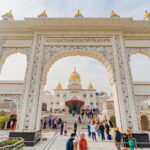
Day 4 is a calmer closing day compared with the heavy walking days before it. You start at Birla Mandir Temple, described as special for intricate latticework in white marble and dedicated to Lord Vishnu. It’s about 30 minutes. This is a good stop for a change of pace: religious sites like this often feel less frantic than forts and old bazaars, even if they’re still active places.
Then you visit Galtaji Temple, also known as the Abode of Monkeys. The tour notes three sacred pools of water and a complex structure. This stop is about 30 minutes, and it’s listed as free admission in the tour details. Even if you’re not into animal-focused sightseeing, the pools and carved setting create enough visual interest to make it worth your time.
After your last sightseeing block, the tour ends back at the meeting point. Since the tour’s start point is Indira Gandhi Intl Airport in New Delhi, you’ll want to plan your final day travel around this return. If your flight timing is tight, keep a safety buffer. Transfer durations can change with time of day and traffic.
You can also read our reviews of more tours and experiences in New Delhi






Price and value: what $173.07 covers, and what you should budget next
The listed price is $173.07 per person for a 4-day private experience. That price is attractive mainly because it includes the parts that often cost extra on DIY trips: private transportation, private local guides, and daily logistics. You’re also getting bottled mineral water during journeys and three breakfasts included.
Hotel accommodation is included only if you book the option that adds hotels. The tour notes 3 nights accommodation in that case. If you’re already planning to stay in hotels and handle transport yourself, you lose much of the value. But if you want the whole framework handled, it’s where this tour earns its keep.
Two costs to plan for:
- Monument entrance fees are not included, listed as about $90 per person. That covers a lot of the big names you’ll likely want to see properly.
- Lunch and dinner aren’t included. The tour mentions lunch during the Delhi-to-Agra travel day, but it doesn’t say lunch is included for all days. Assume you’ll pay for meals on your own.
Tips are also not included. That’s normal on private tours, but it’s still a real budget item.
One extra practical win: your guide helps you buy entrance fees so you don’t lose time waiting in line. In India, waiting can eat hours. Reducing line time is one of the best “hidden” values of a guided, planned tour.
The guide/driver setup that makes the days feel manageable
This tour is private, so your time isn’t shaped by random strangers’ preferences. You’ll be working with a private driver and private local guides. The tour data also says guides and drivers are fully vaccinated, which may matter to you when choosing where to spend money and time.
Your guide is described as English-speaking. If you need another language, you’re asked to mention it at booking. That’s important because it changes the quality of your sightseeing experience. The most meaningful parts of the tour—Qutub Minar’s context, Mughal connections between tombs, the science behind Jantar Mantar—depend on explanation, not just photos.
The tour also includes a battery bus ride to and from the Taj Mahal parking lot up to the monument. That’s a small logistical detail, but it can make a big difference when you’re on foot and the ground gets uneven or crowded. It also helps your day feel less like a trek and more like a controlled experience.
What this tight schedule feels like day-to-day
If you like structure, this tour fits your style. Each day is packed with major sights, but the order is sensible: Delhi’s mix of medieval monuments, then Agra’s Taj and fort area, then Jaipur’s fort-and-city blend.
Where you’ll feel it: walking time adds up. Fort days usually mean more uneven ground and stairs. Sunrise Taj adds an early start, even if the stop is planned for the experience. If you’re someone who needs long stretches of downtime each day, you might find the schedule brisk.
On the flip side, if you only have a few days and you want to see the headline places in one go, this kind of private Golden Triangle is one of the most efficient ways to do it.
Who should book this 4-day private Golden Triangle
This tour is a strong fit if:
- You’re first-time in India and want the logistics handled.
- You want private guides and don’t want to piece together transport between cities.
- You care about getting the story behind major sites like the Taj Mahal, Agra Fort, and Jantar Mantar.
- You’re traveling as a group or couple and want a schedule that moves when you want it to.
It may be less ideal if:
- You want long, unscripted wandering with no set order of stops.
- You’re trying to minimize walking and early mornings.
- You don’t want to pay separate monument entrance fees (listed as about $90 per person) on top of the tour price.
Should you book this tour?
I’d book it if your priorities are comfort, speed, and explanation. The combination of private air-conditioned transfers, English-speaking guides, and targeted stops like sunrise Taj Mahal and the battery-bus convenience makes it a practical way to see the Golden Triangle without your trip turning into a travel puzzle.
If you’re on a strict budget, pencil in the major entrance fee estimate and plan for meals outside the inclusions. If you do that, the price starts to look fair for what’s being handled—transport, guides, sightseeing coordination, and even parts of the Taj logistics.
FAQ
Is this tour private?
Yes. It’s listed as a private tour/activity, and only your group participates.
Where does the tour start and end?
The start meeting point is Indira Gandhi Intl Airport in New Delhi. The activity ends back at the meeting point.
What’s included in the price besides transportation?
The tour includes transport by private air-conditioned car with a driver, private local guides for sightseeing, bottled mineral water during journeys, parking and fuel surcharge, taxes, and a pickup offered from the airport, railway station, hotel, or any pickup location in Delhi. Breakfast is included for 3 days (3 breakfasts).
Are hotel stays included?
Accommodation is included only if you book the option including hotels. If booked with hotels, it includes 3 nights.
Do I need to pay for monument entrance fees?
Yes. Admission fees are listed as not included, estimated at $90 per person for all cities.
Does the tour include the Taj Mahal parking approach?
Yes. It includes a battery bus ride to and from the Taj Mahal parking lot up to the Taj Mahal monument.
What kind of guide do I get?
You get an English-speaking guide. If you need another language, you’re asked to inform the provider in special requirements upon booking.