REVIEW · NEW DELHI
Old & New Delhi Full or Halfday Guided Tour with Street Food
Book on GetYourGuide →Operated by Taj Explore Tourism · Bookable on GetYourGuide
A day in Delhi feels like two cities in one. This guided mix of New Delhi landmarks and Old Delhi street scenes is built for big sights with less wasted time. I like that you get private, air-conditioned transport with a live guide, so you’re not stuck guessing your way around. Another strong point is the Old Delhi rhythm: tuk-tuk ride, Jama Masjid, spice stops, then Chandni Chowk. One drawback to plan around: Monday closures can change the order, especially around Lotus Temple and Red Fort.
You’ll start with iconic government-area photo stops like India Gate and then move into major religious sites. I also like that the pace includes breaks and practical timing, plus an optional swap depending on what day you’re there. For some people, the long stretch of walking and busy lanes in Old Delhi may feel intense, so wear comfortable shoes and expect crowds.
The tour is also refreshingly straightforward about what you get for the money: entrance tickets, bottled water, and skip-the-line access are included. If you’re hoping to cover both Delhi styles in one outing without stress, this is a solid value play.
In This Review
- Key things that make this Delhi tour work
- Private a/c car and a guide who keeps the day moving
- New Delhi photo stops: India Gate and the seat of power
- Rashtrapati Bhavan to Swaminarayan Akshardham: modern scale, mythic feel
- Humayun’s Tomb: a garden tomb that teaches you how to look
- Lotus Temple and Qutub Minar: two styles, optional order
- Qutub Minar: historical scale you can feel
- Monday heads-up
- Old Delhi by tuk tuk: the quickest way to understand the neighborhood
- Jama Masjid and street-food lunch: worship first, then flavor
- A balanced expectation for street food
- Khari Baoli spice market: facts that make the smells make sense
- Chandni Chowk: the marketplace brain of Old Delhi
- Gurudwara Bangla Sahib: the scale of the kitchen surprises people
- Red Fort (pass by) and the big-picture Mughal storyline
- Qutub Minar swap logic and choosing your own pace
- Price and logistics: what $11 really buys you
- Who this tour is best for
- Should you book this Delhi Old + New Guided Tour?
- FAQ
- How long is the Old and New Delhi guided tour?
- Do I get pickup and drop-off?
- Is transportation private and air-conditioned?
- Are entrance tickets included?
- Is lunch included, and is it street food?
- Which Old Delhi sites are included?
- Can I choose between Lotus Temple and Qutub Minar?
- Is Raj Ghat included?
- What happens on Mondays?
- What do I need to bring?
- Is the tour suitable for everyone?
Key things that make this Delhi tour work
- Private a/c car + driver + live guide means you control the flow and don’t lose time negotiating buses or rickshaws
- Skip-line ticket handling via a separate entrance helps you spend time seeing, not waiting
- New Delhi photo stops (India Gate, Parliament House, Rashtrapati Bhavan) set the context fast
- Old Delhi by tuk tuk keeps the experience fun while the guide explains what matters to locals
- Street-food lunch after Jama Masjid gives you a very Delhi way to refuel, without turning the day into a food-only detour
- Built-in options for Mondays (Lotus Temple and Red Fort closed) so you can still hit major highlights
Private a/c car and a guide who keeps the day moving
Delhi can be a full-contact sport when you’re doing it on your own. This tour sidesteps the biggest headache: you get a private car with an experienced driver and a live guide who handles the timing. Pickup is from your hotel or airport area in Delhi, then the guide and driver meet you right away. That matters because your first hour in a new city often decides whether the day feels smooth or stressful.
The tour runs about 4 to 8 hours depending on the exact starting time and which optional stops you choose. Even within that window, the structure is clear: New Delhi viewpoints first, then the heritage cluster, then Old Delhi and the food-focused section.
One practical detail I appreciate: the guide meets you and you get bottled mineral water included. It’s not glamorous, but it’s useful when you’re walking through warm afternoons and crowded bazaars.
If you want a French-speaking guide, you can ask and one guide name you might hear in the mix is Vansh, which makes the day easier if you prefer that language.
You can also read our reviews of more food & drink experiences in New Delhi



New Delhi photo stops: India Gate and the seat of power
The New Delhi portion is built around fast, high-impact landmarks and good photo angles. You’ll drive past major government buildings and stop for photos around India Gate, with the guide sharing the building’s historical background as you look.
After that, you pass Parliament House and then Rashtrapati Bhavan. Even when you’re not entering, the exterior context helps you understand why this part of Delhi feels so formal compared to Old Delhi.
What makes these stops valuable is the contrast they set up. After hours in Old Delhi’s lanes and markets, New Delhi’s wide roads and monumental architecture can feel like a reset button. You’ll notice how the city blends modern government spaces with older cultural weight.
Rashtrapati Bhavan to Swaminarayan Akshardham: modern scale, mythic feel
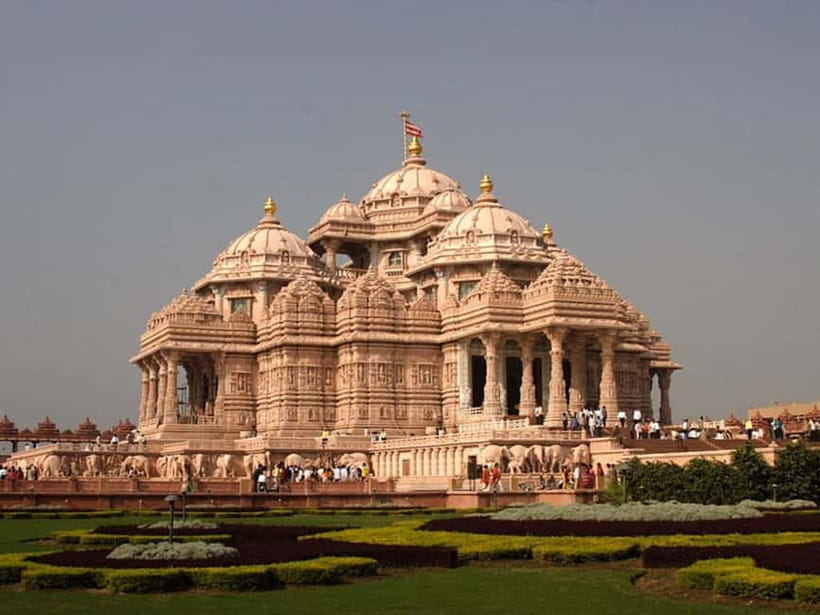
From the government zone, the tour shifts to major religious and architectural landmarks. One highlight here is Swaminarayan Akshardham. It’s described as one of the biggest Hindu temples, and the point isn’t just size. The architecture gives the feeling that it spans centuries, even though it was constructed in 2005.
That’s the kind of detail your guide can translate into meaning. You’re not just staring at stonework; you’re seeing how faith and design language show up in very modern construction.
Humayun’s Tomb: a garden tomb that teaches you how to look
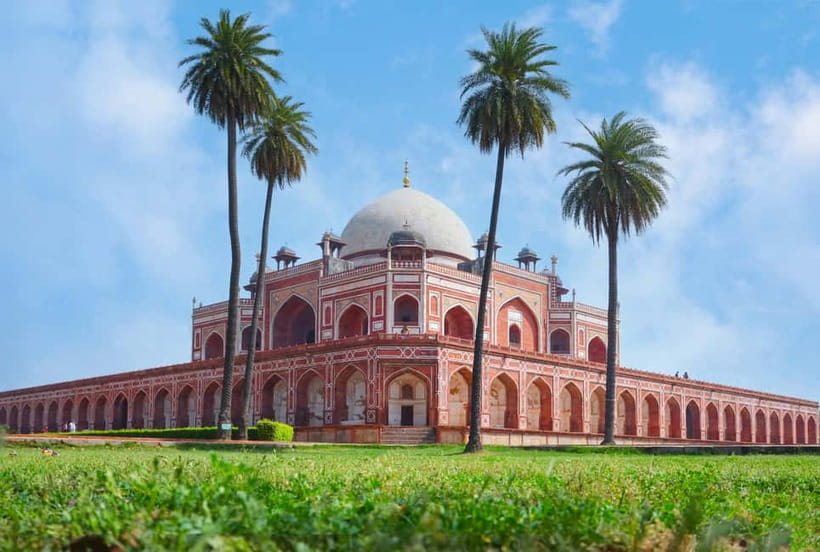
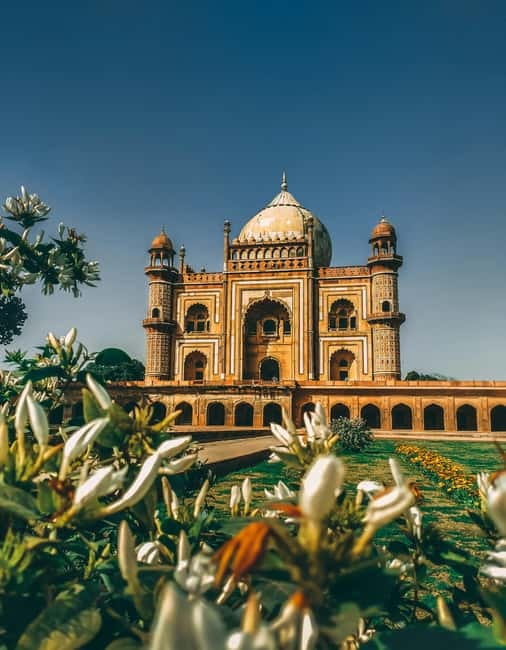
Next is Humayun’s Tomb, a UNESCO World Heritage Site and noted as the first garden tomb in India. The context matters here: it was built by the wife of Humayun, which adds a personal layer to the monument. Expect a calmer visual atmosphere than what you get in traffic and markets—more room to slow down and take in the layout and gardens.
This stop works well as a breathing point before you jump into the busier religious-and-market cycle of Old Delhi.
Lotus Temple and Qutub Minar: two styles, optional order
Depending on your schedule and your preferences, Lotus Temple and Qutub Minar can be included. The tour description allows some flexibility: Lotus Temple can be your last Delhi stop if you want to skip Qutub Minar, or you can go for Qutub Minar too.
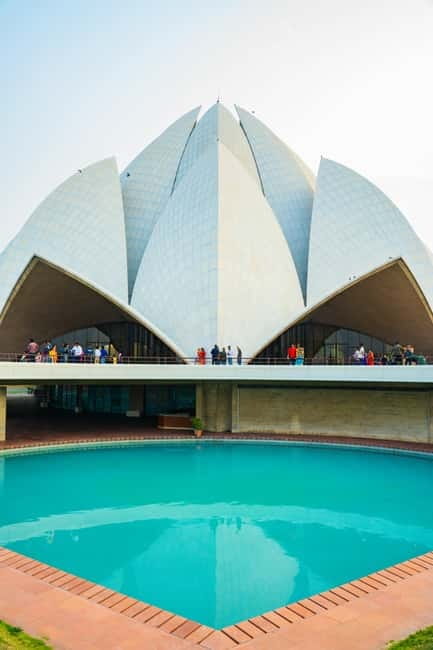
Lotus Temple is a Bahá’í House of Worship dedicated in December 1986. It’s famous for its flower-like shape, and it has become a prominent attraction in the city. If you’re tired of crowds and want something visually clean and easy to photograph, this stop usually hits the sweet spot.
You can also read our reviews of more tours and experiences in New Delhi





Qutub Minar: historical scale you can feel
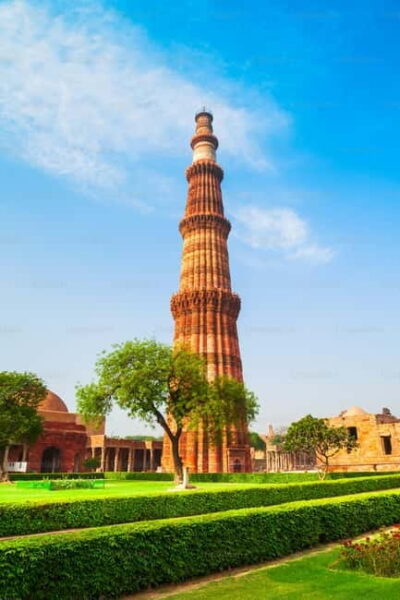
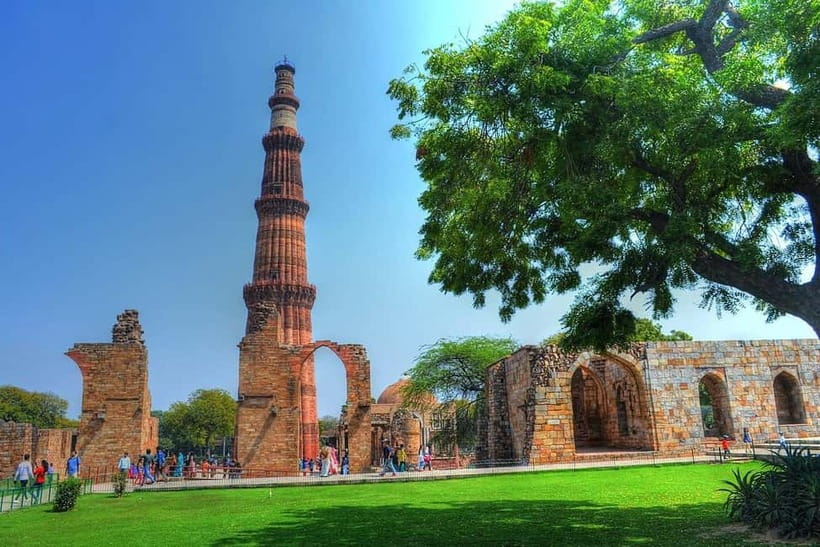
If you choose Qutub Minar, you’ll see one of Delhi’s signature landmarks. It’s described as the highest brick tower in India, built in 1192, and connected to the early Muslim empire in India. It’s also part of a UNESCO World Heritage Site.
These are big, important stops—but the key for your day is timing. If you’re going for both Lotus Temple and Qutub Minar, wear shoes that can handle walking on uneven ground and plan for photo time.
Monday heads-up
Lotus Temple and The Red Fort are closed on Mondays. On those days, the tour can adjust so you can instead visit Raj Ghat and Jantar Mantar. That’s actually helpful: you’re not forced into a shortened day. You just shift the landmarks you see.
Old Delhi by tuk tuk: the quickest way to understand the neighborhood
Once you reach Old Delhi, the tour changes gear. You’ll enjoy Old Delhi on a tuk tuk ride, with your guide explaining the important role the area plays for locals. This isn’t just transport; it helps you grasp the geography of the place faster than if you were walking from scratch.
This is where you’ll feel the day become more sensory: tight lanes, constant activity, and a marketplace logic that doesn’t follow modern boundaries.
One practical note: the Old Delhi sections can involve uneven pavement and crowd density. If you’re sensitive to motion or prefer fully flat walking, you might want to take breaks early and keep water handy.
Jama Masjid and street-food lunch: worship first, then flavor

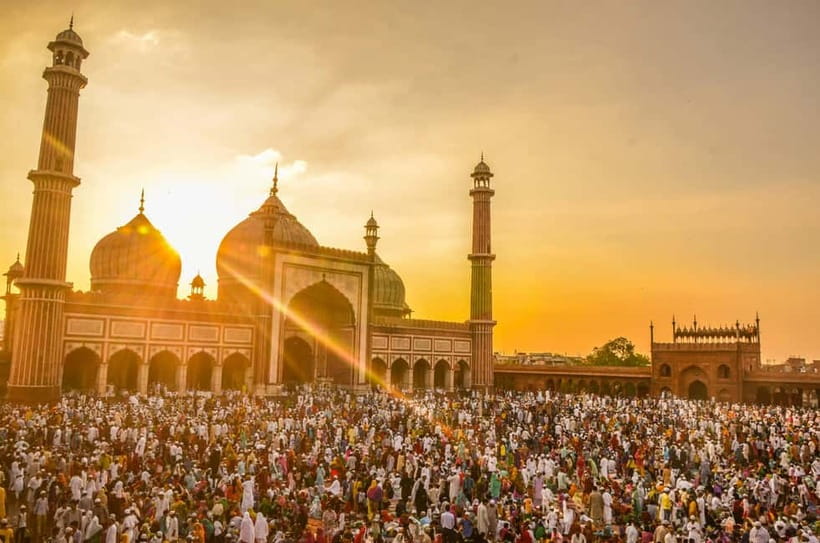
The first major stop in Old Delhi is Jama Masjid, described as India’s largest mosque. It was built by Mughal Emperor Shah Jahan between 1644 and 1656, and the tour shares the story of its cost and construction timeline. That time window matters because it frames Jama Masjid as a Mughal-era centerpiece, not a casual stop.
Then comes the part you can’t skip if you came for street food: lunch after Jama Masjid. The tour is set up so you taste the famous dishes of Delhi as lunch. You don’t need to pick a stall yourself, which saves time and reduces the risk of ending up at a place that’s good only for photos.
A balanced expectation for street food
Street food is part of Delhi’s everyday culture, but it’s also spicy and busy by nature. What I like about this tour format is that you’re guided through it in a structured way: religious landmark first, then food, then onward to the spice market and markets of Chandni Chowk. It keeps you from turning lunch into a scavenger hunt.
If you have dietary restrictions, you’ll want to tell your guide ahead of time so lunch can match your needs.
Khari Baoli spice market: facts that make the smells make sense

After exploring the markets around Old Delhi, you’ll head to Khari Baoli, a famous spice market. This stop is one of the best for learning without feeling like you’re stuck in a lecture. The guide shares interesting facts and uses of spices, which helps you understand what you’re seeing and smelling.
For practical travelers, this is also a good time to mentally map what you might want to buy later. Even if you don’t shop, you’ll leave with stronger context for how spices are used in everyday cooking and why these ingredients matter locally.
Chandni Chowk: the marketplace brain of Old Delhi
Then you get Chandni Chowk exploration, where the guide takes you through narrow lanes filled with shops. The tour highlights the range: spices, sweets, jewelry, textiles. This is the place that feels like the city’s shopping engine.
What makes Chandni Chowk valuable on a guided tour is direction. Left to your own devices, it can turn into wandering. With a guide, you know which lanes to prioritize and what to pay attention to as you pass by.
There’s also a fun transportation rhythm here. Depending on your day and route, the Old Delhi portion may include tuk-tuk or e-rickshaw-style movement that keeps you from getting stuck in a single lane for too long.
Gurudwara Bangla Sahib: the scale of the kitchen surprises people

Next you’ll visit Gurudwara Bangla Sahib, described as having the largest kitchen of India. It prepares food for 10,000 people every day. That number changes how you see the space. It’s not just a building you walk past; it’s a working community institution.
Even if you’re not religious yourself, this stop gives you a human takeaway. In a day full of monumental architecture and Mughal-era storytelling, the daily rhythm of a kitchen for thousands grounds the experience.
Red Fort (pass by) and the big-picture Mughal storyline
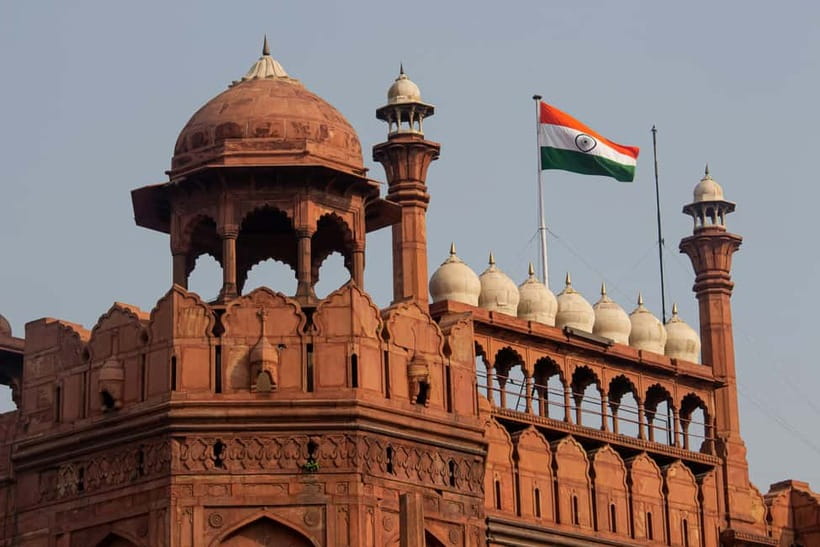
The tour includes Red Fort as a pass-by stop. It’s described as a massive Mughal structure built by Shah Jahan between 1639 and 1648, serving as the main residence for Mughal emperors. Passing by is often the right choice in a time-limited itinerary. You still get the visual moment and the guide supplies the storyline, without turning the day into an hours-long detour.
If you’re visiting on a Monday, Red Fort is closed, which is why your route can shift to Raj Ghat and Jantar Mantar.
Qutub Minar swap logic and choosing your own pace
One thing you should like about this tour is that it doesn’t trap you into a fixed checkbox list. The route provides options: Lotus Temple can be last if you want to skip Qutub Minar, and Raj Ghat can be optional.
That matters because Delhi days are about tradeoffs. Want more modern architecture and visual calm? Choose Lotus Temple. Want early historical monument energy? Choose Qutub Minar. Want the quiet memorial route? Add Raj Ghat if it fits your schedule.
The guide can also adjust the schedule to suit your flight, which is a real quality-of-life feature if you’re flying in and out the same day.
Price and logistics: what $11 really buys you
At about $11 per person, this tour is priced like a best-value intro to two sides of Delhi. You’re not paying extra for the big basics—private a/c transport, a live guide, entrance tickets, bottled water, and taxes are included.
That’s important. In India, many tours look cheap until you add tickets, private transport, and guiding. Here, those essentials are bundled in, which makes the math simpler and the day less fragmented.
You do need to understand what you’re getting in return: it’s a guided highlights route, not a slow, deep-study museum tour. But if your goal is to see major New Delhi anchors and then experience Old Delhi’s street life and food culture in the same day, the price-to-output ratio makes sense.
One possible consideration: it’s a private group, but you’re still moving through crowded areas. So your comfort depends on your ability to handle dense streets and active market zones.
Who this tour is best for
This tour is a great fit if you:
- Want a structured highlights day covering both New and Old Delhi
- Like street food but don’t want to plan stalls and logistics from scratch
- Prefer a private car and guide so you can keep the day on schedule
- Want skip-line access to avoid long ticket lines
It may be less suitable if you:
- Are pregnant (the tour notes it’s not suitable for pregnant women)
- Strongly prefer slow, quiet sightseeing with minimal crowd exposure
If you’re traveling with kids, this can still work, but you’ll want to manage walking time and choose your optional stops carefully.
Should you book this Delhi Old + New Guided Tour?
If you’re short on time and want the cleanest way to experience Delhi’s contrasts, I’d book it. The structure makes sense: government-area landmarks and photo context in New Delhi, then UNESCO-level monuments and major religious sites, and finally Old Delhi’s lanes, spice market, and a street-food lunch after Jama Masjid.
The biggest reasons to choose it are the practical ones: private a/c transport, a live guide, and included entrance tickets with skip-line handling. The day stays organized even when Delhi itself feels chaotic.
Just remember two planning points: Monday closures can change the order (Lotus Temple and Red Fort), and Old Delhi can be physically active. If you go in with comfortable shoes and flexible expectations, you’ll come away with a fuller sense of Delhi than you’d get from a single-side itinerary.
FAQ
How long is the Old and New Delhi guided tour?
The tour duration is listed as 4 to 8 hours, depending on the starting time and how the day is arranged.
Do I get pickup and drop-off?
Yes. The tour includes hotel pickup and drop-off. Pickup can also be optional, depending on where you are in Delhi.
Is transportation private and air-conditioned?
Yes. You get private air-conditioned transport with a private driver and live tour guide.
Are entrance tickets included?
Yes. Entrance tickets are included, and skip-the-line access is available through a separate entrance.
Is lunch included, and is it street food?
Lunch is included after your Jama Masjid visit, with the option to taste famous dishes of Delhi.
Which Old Delhi sites are included?
Old Delhi includes a tuk-tuk ride, a visit to Jama Masjid, spice shopping time at Khari Baoli, and exploration of Chandni Chowk.
Can I choose between Lotus Temple and Qutub Minar?
Yes. Lotus Temple can be your last stop if you want to skip Qutub Minar, and you can also opt for Qutub Minar if you prefer.
Is Raj Ghat included?
Raj Ghat is optional. It can be added if you wish to visit.
What happens on Mondays?
Lotus Temple and The Red Fort are closed on Mondays. On those days, the schedule can shift so you can go to Raj Ghat and Jantar Mantar.
What do I need to bring?
Bring a passport or ID card.
Is the tour suitable for everyone?
The tour is not suitable for pregnant women.